I love maps. Even in the digital age, I still have a print road atlas. I was recently given an Ordnance Survey map of Roman Britain; I haven’t seen one since I was a kid. And, yes, it did cost 7/6 in old money at a time when a standard OS map of your local area was 1/11. And what was the use of a map that was around 2,000 years out of date and cost over three times a modern one?
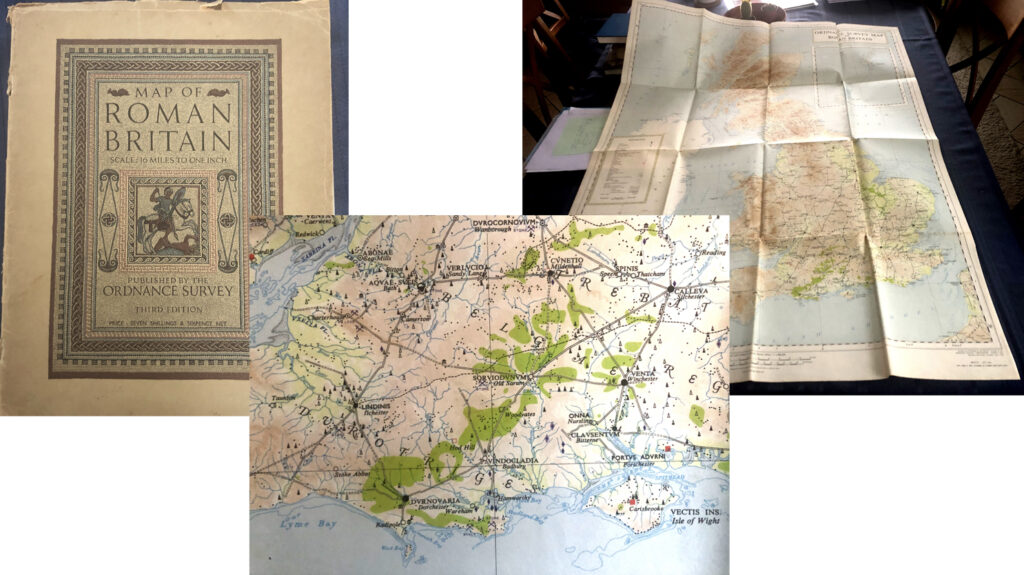
Apart from the treasure of knowledge within it, the sheer pleasure of laying it out on a table and following in the steps of Romans. No scrolling or zooming in the 1960s, but even with those facilities now, I still prefer the paper version.
So what has this to do with JULIA PRIMA?
I don’t think it’s a spoiler to admit Julia’s going on a journey. 😉 I had the benefit of working it all out on a map when I was writing (and went down several rabbit holes in the process – map thrall). But I realise that my readers would necessarily know the area she travelled through or the Latin names of the towns, villages or rivers. Time for a map!
While royalty-free outlines were available on the Internet, practically all other ones were not. This is how it should be, as it takes a LOT of work to produce maps as I was to find out…
First of all, I printed off an outline of central southern Europe and using modern maps for reference, traced the course of rivers Danuvius (Danube), Dravus (Drava) and Aesontius (Soča/Isonzo) for the first part of Julia’s journey. Once fixed, I could use them as reference for the towns. I spent hours researching the names of what the towns were called in late Roman times. The bigger ones like Virunum, Tergeste (modern Trieste), Aquileia – no problem as I had the wonderful ORBIS and the DARE online maps.
The smaller settlements such as Caporetum (modern Kobarid in mountainous Slovenia) or Vallicula (Barcola in modern Italy) were a bit of a nightmare as sometimes they weren’t on the online map systems and required diving deep into obscure texts to dig out their existence, let alone names. Much joy on finding them! Some places changed their names such as Pietas Julia which was known in the late Empire as Pola (modern Pula).
I gave a chuckle when I found out that the Roman settlement of Pucinum/Castellum Pucinum was today the location for the modern Italian town of Prosecco! A “nobile vinum pucinum” is mentioned by Pliny the Elder in his “Naturalis Historia” as ‘rich in therapeutic properties’ produced ‘in the gulf of the Adriatic Sea, not far from the stony hill of the source of the Timavo river’. In the 1st century, Livia Drusilla, Augustus’s wife is said to have regularly purchased the wine. At the end of her long life (she was 86), she attributed her old age to its regular consumption.
And maps aren’t fun? I rest my case.
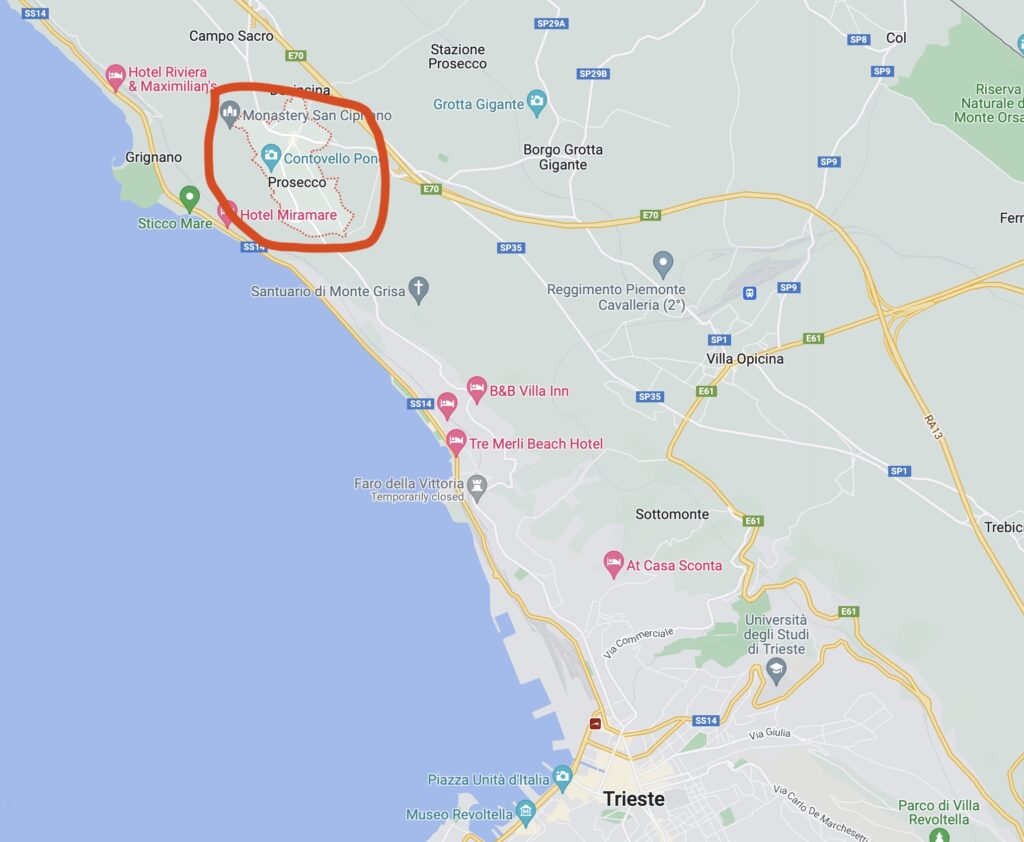 Google Maps 2022 I eventually found royalty free physical maps online (Hooray!) so from this stage, I went digital. Using Pixelmator software I turned them into black and white, bringing up the contrast to show mountainous areas. I then transferred all the information from my paper sketches and research onto a high resolution digital version. I only had to draw one river in digitally, the Aesontius, but it does wiggle round the mountains! Next came place names for which I used the trusty text boxes and finally the route which I inserted as dots with the digital pen tool.
Then I went and drank a glass of bubbly (Crémant de Loire which I prefer to Prosecco, may Livia and Pliny forgive me).
Here’s the final result which is the first of three maps in both the ebook and paperback versions of JULIA PRIMA.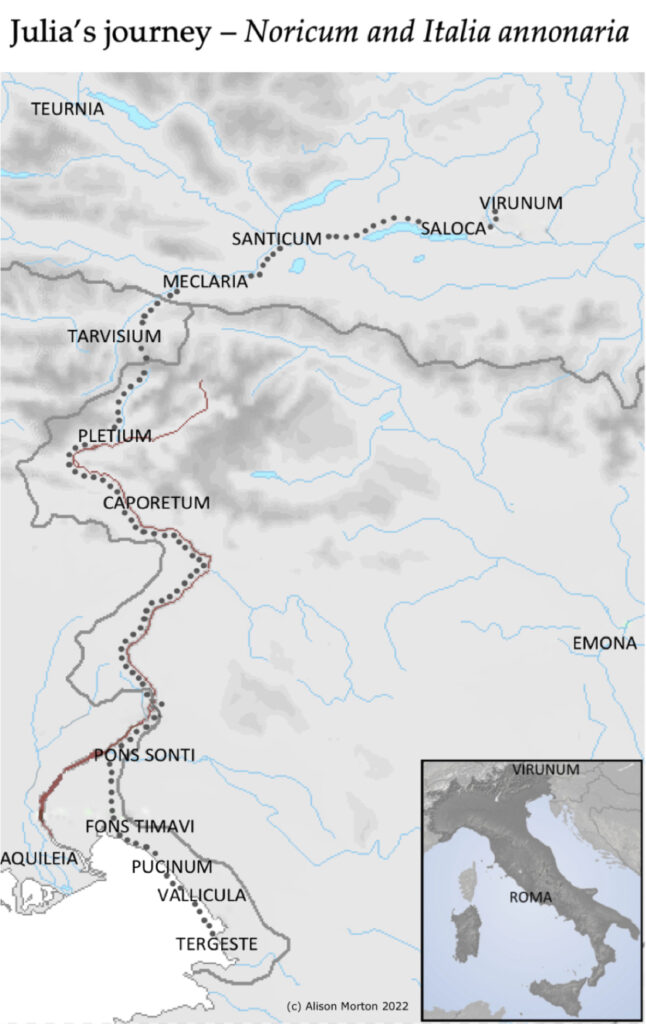
Yes, it was a fair amount of work for an amateur mapmaker, but I enjoy fiddling around on the computer. Putting all those dots in to show the route made my eyes cross over at times!
Then I started on the Italian job…
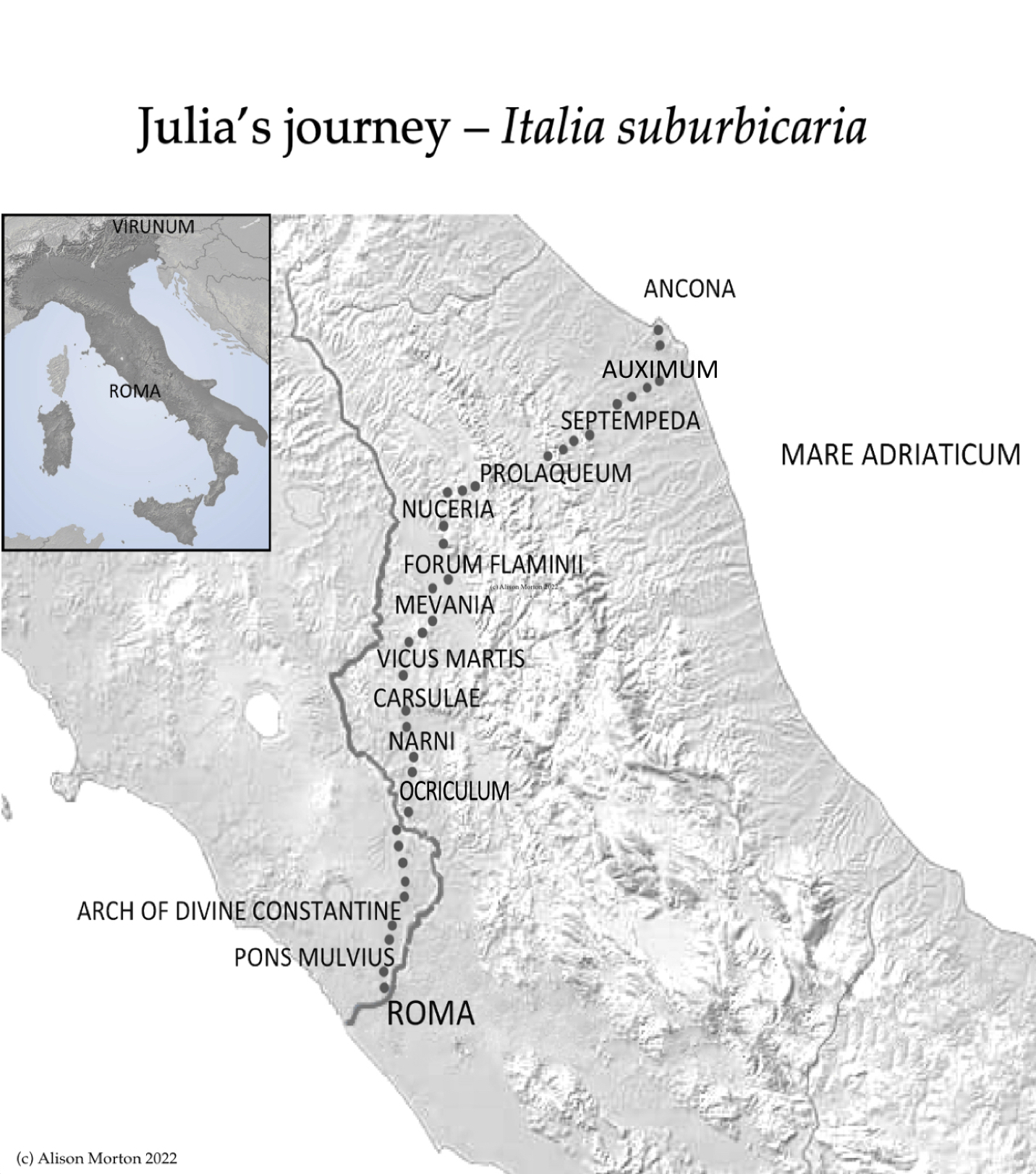
Maps tells us so much about a country. In this instance I wanted to make Julia’s 4th century journey easier to follow for my readers.
And yes, I will be putting a map in my next book EXSILIUM. 😉
Discover more about JULIA PRIMA
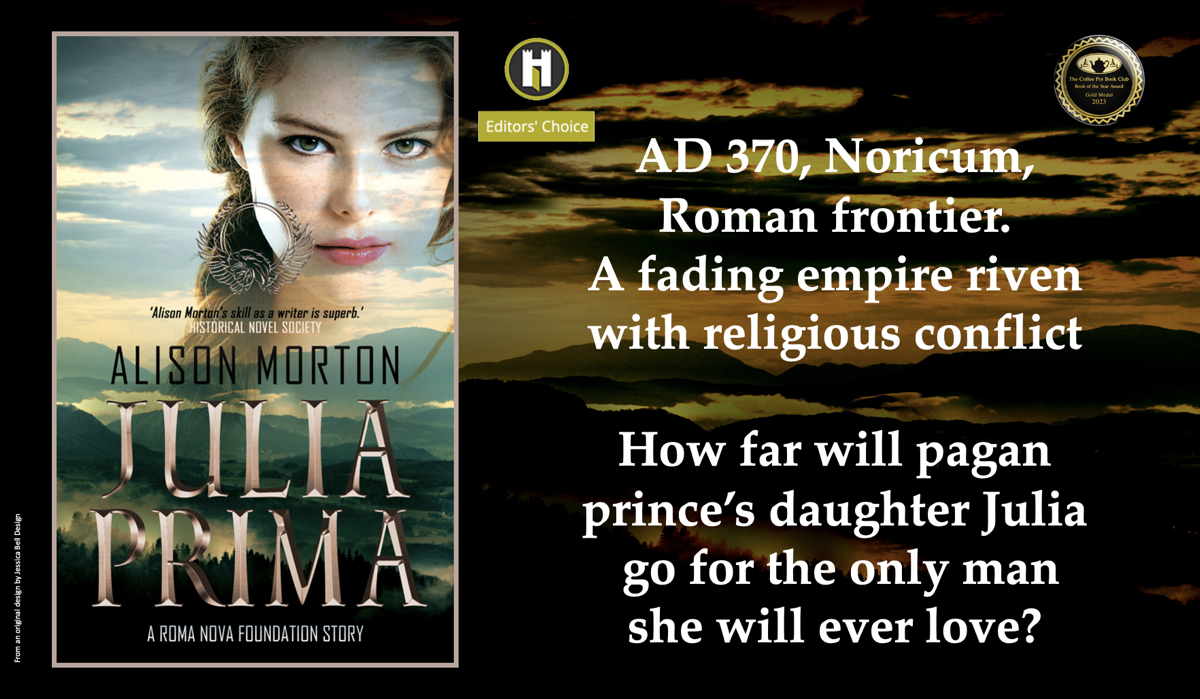
Alison Morton is the author of Roma Nova thrillers – INCEPTIO, CARINA (novella), PERFIDITAS, SUCCESSIO, AURELIA, NEXUS (novella), INSURRECTIO and RETALIO, and ROMA NOVA EXTRA, a collection of short stories. Audiobooks are available for four of the series. Double Identity, a contemporary conspiracy, starts a new series of thrillers. JULIA PRIMA, Roma Nova story set in the late 4th century, starts the Foundation stories. The sequel, EXSILIUM, will be out on 27 February 2024.
Download ‘Welcome to Alison Morton’s Thriller Worlds’, a FREE eBook, as a thank you gift when you sign up to Alison’s monthly email update. You’ll also be among the first to know about news and book progress before everybody else, and take part in giveaways.
If you enjoyed this post, do share it with your friends!
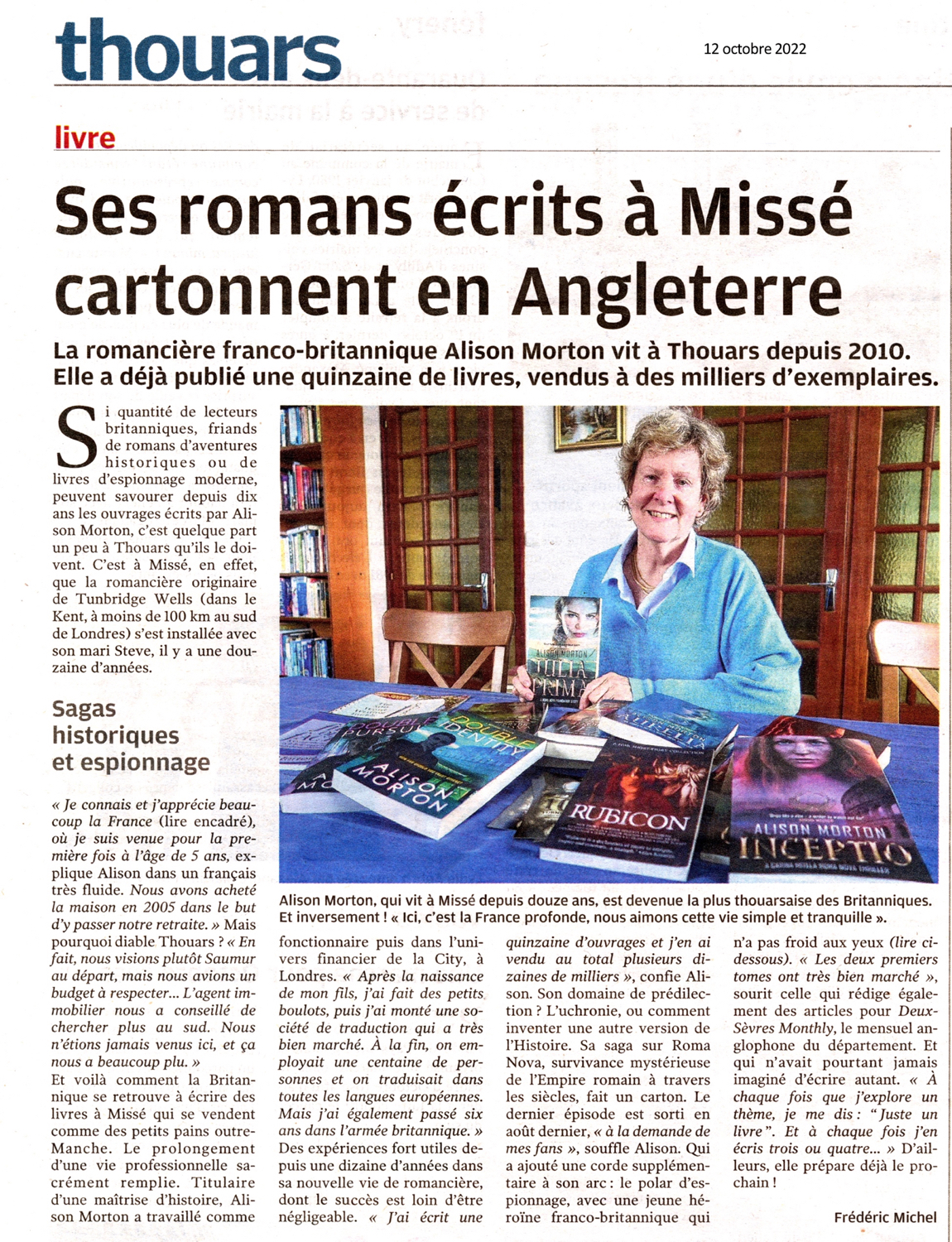 In October, I was interviewed by the regional press La Nouvelle République. As soon as I received the email from the reporter, I dashed into town to grab a paper copy. In October, I was interviewed by the regional press La Nouvelle République. As soon as I received the email from the reporter, I dashed into town to grab a paper copy.
Now I expected an eighth page at the bottom of the page. I’m an English author writing in English , even though I’ve lived in France for many years and become a French citizen. Imagine my surprise when I found my interview covered a whole page! A bit shocked, I paid the newsagent the 1€ 20 cents and staggered out the door. Perhaps I should have had a stiff brandy in the adjoining bar…
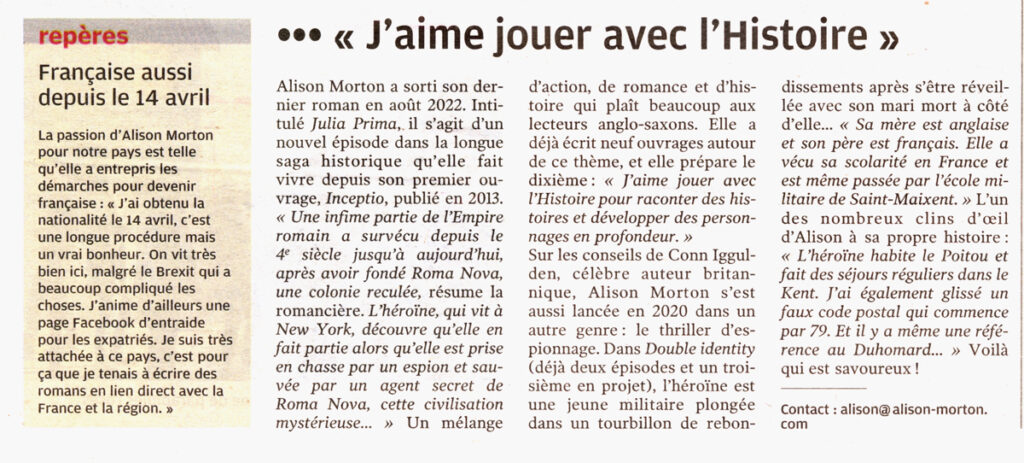
Even though the article is in French, regular readers of this blog will probably know most of the content inside out. But Roma Nova seems to have found friends in France. My neighbour had even cut out the article and saved it for me in case I hadn’t been able to get a paper copy.
If you’d like to read the online version, it’s here: https://www.lanouvellerepublique.fr//thouars/thouars-ses-romans-ecrits-a-misse-cartonnent-en-angleterre (May be behind a paywall.)
Onward Roma Nova! 😉
Alison Morton is the author of Roma Nova thrillers – INCEPTIO, CARINA (novella), PERFIDITAS, SUCCESSIO, AURELIA, NEXUS (novella), INSURRECTIO and RETALIO, and ROMA NOVA EXTRA, a collection of short stories. Audiobooks are available for four of the series. Double Identity, a contemporary conspiracy, starts a new series of thrillers. JULIA PRIMA, a new Roma Nova story set in the late 4th century, is now out.
Download ‘Welcome to Alison Morton’s Thriller Worlds’, a FREE eBook, as a thank you gift when you sign up to Alison’s monthly email update. You’ll also be among the first to know about news and book progress before everybody else, and take part in giveaways.
If you enjoyed this post, do share it with your friends!
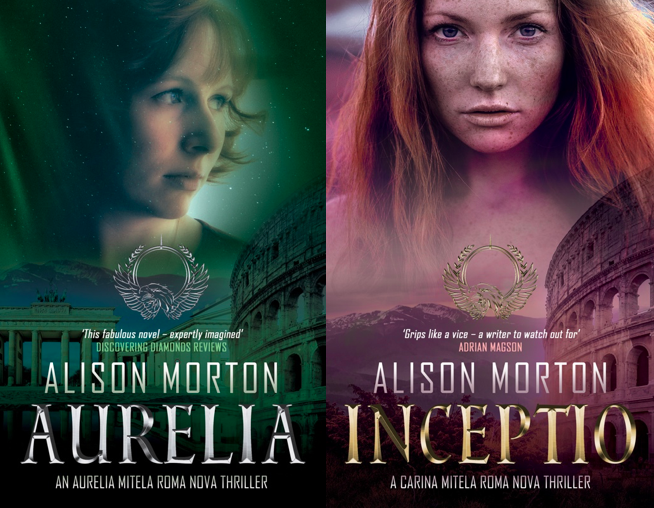 I’m known as a writer of alternative history thrillers featuring modern Praetorian heroines, Carina and Aurelia. That’s my “brand” and my deep interest. Not always a wise commercial decision, but these have been the stories I’ve itched to write. I’m known as a writer of alternative history thrillers featuring modern Praetorian heroines, Carina and Aurelia. That’s my “brand” and my deep interest. Not always a wise commercial decision, but these have been the stories I’ve itched to write.
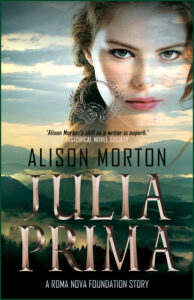
But since JULIA PRIMA came out in August, I’ve been asked frequently what made me go back to the real timeline in the 4th century to write about the founders of Roma Nova.
JULIA PRIMA was inspired by my readers. They wanted to know how and why the 21st century Roma Nova originated back in the 4th century. Most of all, they were more than curious about the people who had stood up for their values in the face of lethal threats and eventually torn themselves away from everything they knew.
At the time of JULIA PRIMA, we are still in the normal timeline – history as we know it is exactly the same – so this story is a standard, real historical novel. Well, as much as any historical fiction is standard or real where the sources are not brilliant. And writing within those “constraints” was an interesting experience, to say the least.
The difference comes twenty five years later in AD 395, when the timeline does diverge and create an alternative path through the centuries. However, the research is absolutely necessary in order to set the framework for the point of divergence from the timeline. Believe me, the last three decades of the fourth century were complex, unstable and not always well-documented!
How different is it writing standard historical fiction from writing alternative history stories?
JULIA PRIMA is set in our historical timeline between AD 369 and 371 when the Roman world was riddled with religious strife and on the brink of transformation. That transformation hasn’t kicked off yet, but it’s hovering. No moment in history is fixed; it has its causes – direct and indirect – and its consequences – short term and long term. Behind the personal story of Julia and Lucius, this new book shows how the signs of decline are well and truly there and sets the scene for the start of the collapse.
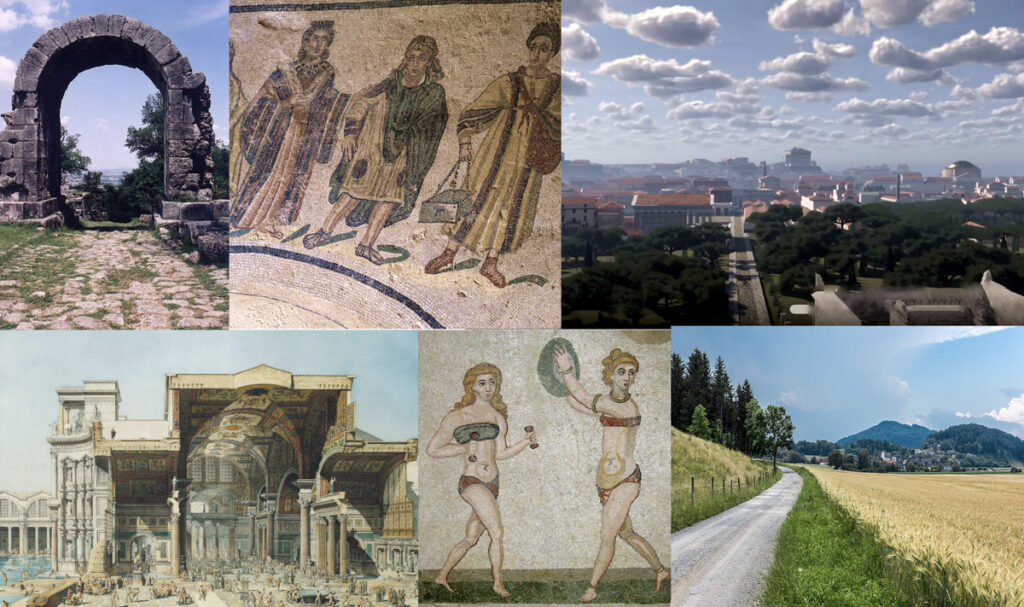 Julia’s world in AD 400 Alternat(iv)e history takes off from a point of departure (POD) triggered by an event, large or small. Writers should use the conditions prevailing at that point as the basis for developing their alternative timeline along historically logic lines. But essentially, you are writing in a void. With historical fiction, there are sources, both documentary and archaeological, sometimes sparse and often biased, but they are something available for reference and consultation, even though analysis of these sometimes causes strong arguments!
So, on the one hand, historical fiction writers have a skeleton, sometimes a whole body of research to mine for research. But opposite that, the good historical fiction writer is constrained by being obliged to search out and check with existing sources and in my opinion, not wander too far off verifiable facts. You can’t invent new Roman emperors, for example and retain credibility – we know who they all were!
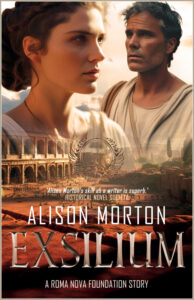
Will the next book, EXSILIUM, the sequel to JULIA PRIMA, be standard historical fiction or alternative history fiction?
Both. 😉 The first part continues in our timeline until the first ox-cart and group of riders leave Rome.
After that, we launch into the Roma Nova void and undertake the journey that will form the background legend to the whole Roma Nova series.
Then everything comes back full circle to the 21st century and INCEPTIO.
Updated February 2024: Alison Morton is the author of Roma Nova thrillers – INCEPTIO, CARINA (novella), PERFIDITAS, SUCCESSIO, AURELIA, NEXUS (novella), INSURRECTIO and RETALIO, and ROMA NOVA EXTRA, a collection of short stories. Audiobooks are available for four of the series. Double Identity, a contemporary conspiracy, starts a new series of thrillers. JULIA PRIMA, Roma Nova story set in the late 4th century, starts the Foundation stories. The sequel, EXSILIUM, is out on 27 February 2024.
Download ‘Welcome to Alison Morton’s Thriller Worlds’, a FREE eBook, as a thank you gift when you sign up to Alison’s monthly email update. You’ll also be among the first to know about news and book progress before everybody else, and take part in giveaways.
If you enjoyed this post, do share it with your friends!
|
Subscribe to Blog via Email
Join 37 other subscribers.
Buy AURELIA from Apple!
UK

US
|