Meet Aurelia Mitela – warrior, diplomat, spy

The three ages of Aurelia

The three ages of Aurelia

Aurelia Mitela, archetype Roma Novan, came to life when I was writing the first Roma Nova book, INCEPTIO. Then, she was the clever, experienced grandmother of Carina, the book’s heroine. But she had secrets behind her contained exterior. By the time I was halfway drafting SUCCESSIO, I was consumed with the need to know her story.

Her granddaughter, Carina, lives and works in New York in the Eastern United States and until the events in the first chapters of INCEPTIO has hardly registered this unknown grandmother ‘somewhere in Europe.’  Then she talks by internet to Aurelia and both lives change.

Carina’s first impression of Aurelia 

She’d been so concerned for me, but not in a soppy way. Direct and ‘no-nonsense’ fitted her perfectly, but her smile had been warm. I couldn’t help speculating how it would have been to grow up with her instead of the Browns. 
I started tapping the keys, surfing for Roma Nova while I was drinking and thinking. I couldn’t leave it alone. My grandmother’s name shot out at me. Fascinated, I loaded the English translation. The screen displayed a list of her business interests. Sketchy on detail, it gave some personal stuff at the end: head of the influential Mitela family, senator and government advisor, cousin to the current imperatrix. She really was a big hitter.

In PERFIDITAS, we see Aurelia, the cool ex-Praetorian, holding the family together after they’d been falsely arrested by would-be usurpers:
[Aurelia to Carina] ‘I’ve been through a great deal worse. I’m not a little old lady out of a genteel novel.’ 

No, she truly wasn’t. She’d been PGSF [Praetorian Guard Special Forces] in her time, even led the attack to retake the city during the civil war. Although now in her mid-seventies, she definitely belonged to the “tough gals” league. 

She gave me a close description of the arresting party. What a difference it made when the victim was a trained professional and could give you precise, detailed information. She’d printed off her statement and signed it already.

Throughout INCEPTIO, PERFIDITAS and SUCCESSIO we catch glimpses of Aurelia’s early life, but even more, a whole range of questions are thrown up. What did she do in the Great Rebellion nearly twenty-three years before the time of INCEPTIO? Why is she so anxious when she compares the villain in SUCCESSIO to Caius Tellus, the brutal ‘First Consul’ who instigated the rebellion all those years ago? Who was the great love of Aurelia’s life that Carina only learns about in SUCCESSIO?

Aurelia, her lover and her nemesis

Aurelia, her lover and her nemesis

Under the test spotlight

In AURELIA, the first book in the Aurelia strand of the Roma Nova series, we go back to the late 1960s where she’s accused of murder while on a mission to Berlin. Detained in a grim remand prison, she undergoes a hostile psychological assessment. The assessor cannot believe that as a woman she has been a successful military commander and is now a ranking diplomat. Here’s the report:

Subject is highly rational, quick-minded and a natural leader. She sees nothing is impossible given enough time and resources. Subject has the confident personality and willpower to pursue and implement her goals, easily bringing others with her. A dominant personality.

Strategic thinker, curious, innovative, able to grasp and deal with problems with determination and precision. Energetic and excellent communication skills, happy to confront and negotiate with others. Intelligent enough to recognise other people’s talents, and work with them. Requires challenges and even failures, or her self-confidence could easily turn into arrogance and condescension.

Personalities of this type cannot tolerate inefficiency or those whom they perceive as lazy or incompetent. They can be chillingly cold and ruthless when the situation arises, operating purely on logic and rationality. 

They interact very well with others, often charming them to their cause, and paying attention to other people’s feelings – or at least pretending that they do. Most mature and successful personalities of this type are genuine in this aspect to some extent, even though their sensitivity may hide a cold and calculating mind.

This is a slant on the classic ENTJ personality  profile from the Myers-Briggs Type Indicator, a psychometric test system popular in business to indicate psychological preferences about how people perceive the world and make decisions. I needed to make the report negative for the story, which I hated doing!

However, positive aspects of this type of personality are that they are conceptual and global thinkers, able to see connections where others don’t, and to think ahead. Couple this with the intuition and sense of fair play many ENTJs possess, it  can make life frustrating for this personality when people around them don’t  grasp things the way they do. Aurelia has this characteristic in spades and one of her life lessons is to learn how to deal with it.

Of course, this internal conflict is a gift for a writer… 😉

In essence, Aurelia is a blood-and-bone Roma Novan whose values are based on traditional ancient Roman ones; tough, loyal with a strong sense of duty and fully aware of her responsibilities as head of a great family. But her desire to keep all the balls juggling in the air with precise timing leads to her being riven by guilt if she doesn’t perform a hundred percent as she perceives it. But then she has a lot to contend with including her lethal struggle with Caius Tellus, her enemy since childhood and who both desires her and wants to destroy her.

Aurelia and Marina

Aurelia has a major vulnerability, her love for her frail daughter, Marina. She will do anything to protect Marina, especially from her nemesis, Caius Tellus. But this vulnerability, and willingness to sacrifice everything for Marina, is also her greatest strength, along with her determination to serve her country. Even in a cynical age, I believe this resonates so much with us and with our love for our children and parents.

Is she sympathetic? Yes, because under all that resolution and toughness, she is still a human being who experiences fear, love, despair and grief. She bitterly misses the strong comradeship of her earlier military career, and is exhilarated when going back into action.

And then, there is her devotion to her life-long love, elusive though he sometimes is…


AURELIA,
the first of her adventures is available now
– eBook from all the usual stores via this link: https://books2read.com/AURELIARomaNova
– audiobook from Audible and iTunes
– paperback from these retailers

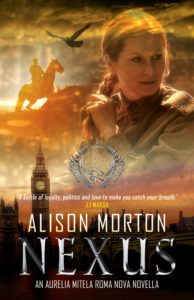
NEXUS, the second adventure, is a novella packed with murder, spies, 20th century Romans, tough women and love. It starts in a London with strong echoes to its Roman past…
Available now
– eBook from all the usual stores via this universal link: https://books2read.com/NEXUSRomaNova
– paperback from these retailers

In INSURRECTIO, the third adventure, Aurelia Mitela struggles against a manipulative tyrant attempting to grab power. But despite her efforts, it may already be too late to save Roma Nova…
Available as an ebook from your favourite retailer: https://books2read.com/INSURRECTIO
Paperback from these retailers

RETALIO, a classic tale of resistance and retribution, is the fourth and final Aurelia adventure – the endgame between Aurelia and Caius…
Available as an ebook from your favourite retailer via this link: https://books2read.com/RETALIO
Paperback from these retailers


Alison Morton is the author of Roma Nova thrillers –  INCEPTIO, CARINA (novella), PERFIDITAS, SUCCESSIO,  AURELIA, NEXUS (novella), INSURRECTIO  and RETALIO,  and ROMA NOVA EXTRA, a collection of short stories.  Audiobooks are available for four of the series. Double Identity, a contemporary conspiracy, starts a new series of thrillers. JULIA PRIMA,  Roma Nova story set in the late 4th century, starts the Foundation stories. The sequel, EXSILIUM, is now out.

Download ‘Welcome to Alison Morton’s Thriller Worlds’, a FREE eBook, as a thank you gift when you sign up to Alison’s monthly email update. As a result, you’ll be among the first to know about news and book progress before everybody else, and take part in giveaways.
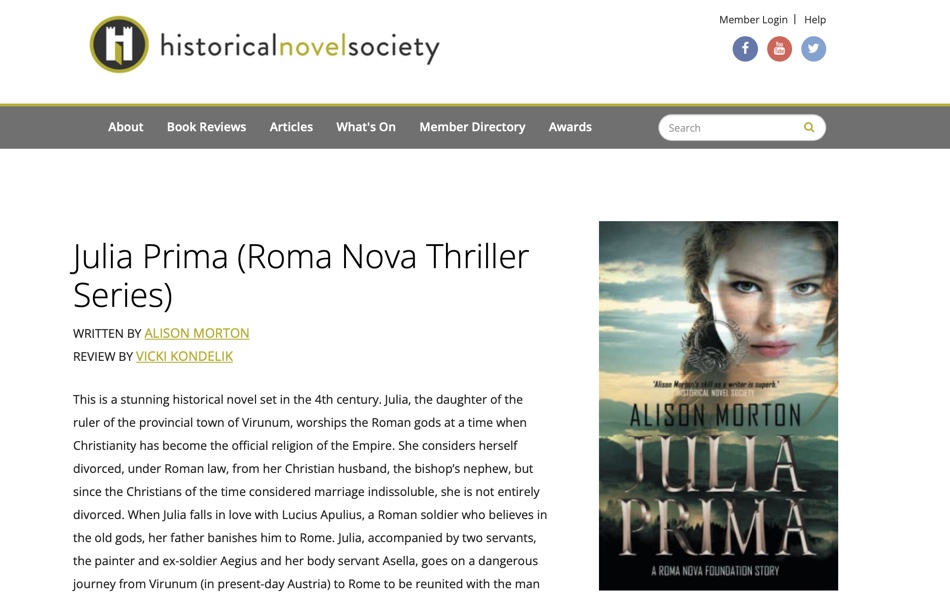
JULIA PRIMA gets a top notch accolade from the HNS!

The Historical Novel Society has just released its batch of new reviews and JULIA PRIMA has not only been given a stonking review (“stunning“!), but also selected as Editors’ Choice!
https://historicalnovelsociety.org/reviews/julia-prima-roma-nova-thriller-series/

It’s a pleasure to have your book reviewed in the Historical Novels Review – a sign that the reviewers enjoyed your book, found it historically interesting and relevant, and fit to be recommended to readers.

But when it’s selected as an Editors’ Choice from among hundreds of books submitted each quarter, it does indeed give you a very warm feeling. I was even impelled to do a happy dance round my office when I learnt about it.

I’m deep into research for the sequel and currently bogged down by Roman land law in the last decade of the fourth century, so this was very motivating news.

You can find out more about JULIA PRIMA here, but if you fancy buying it straight away 😉, here are some links:
Ebook:  Amazon     Apple     Kobo    B&N Nook
Paperback: Waterstones   Book Depository   Barnes & Noble   Other retailers

Off to pop open the bubbly!


Alison Morton is the author of Roma Nova thrillers –  INCEPTIO, CARINA (novella), PERFIDITAS, SUCCESSIO,  AURELIA, NEXUS (novella), INSURRECTIO  and RETALIO,  and ROMA NOVA EXTRA, a collection of short stories.  Audiobooks are available for four of the series. Double Identity, a contemporary conspiracy, starts a new series of thrillers. JULIA PRIMA, a new Roma Nova story set in the late 4th century, is now out.

Download ‘Welcome to Alison Morton’s Thriller Worlds’, a FREE eBook, as a thank you gift when you sign up to Alison’s monthly email update. You’ll also be among the first to know about news and book progress before everybody else, and take part in giveaways.

4th century Roman travel

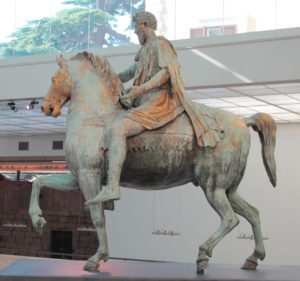
Roman horseman (Author photo)

Roman horseman (Author photo of Marcus Aurelius in the Capitoline)

Travelling in the ancient world was different, fundamentally different. Young (and not so young) men were by far the most mobile in the Ancient Rome over the whole period whether you count it to AD 476 (west) or 1453 (east) because they fought in armies.

Next came the administrators, posted in a similar way to the military, to freeze their extremities off in Germania or Britannia for boil their brains in the provinces of Syria or Egypt. Both would be served by official couriers, messengers and supply chains speeding along the famous Roman roads serviced by way stations with basic personal resupply and accommodation facilities (mansiones).

Merchants, of course, were very familiar with trade routes; the same ones were used for hundreds of years. Wealthier individuals made journeys for education and recreation and their households (free or slave) went with them. 

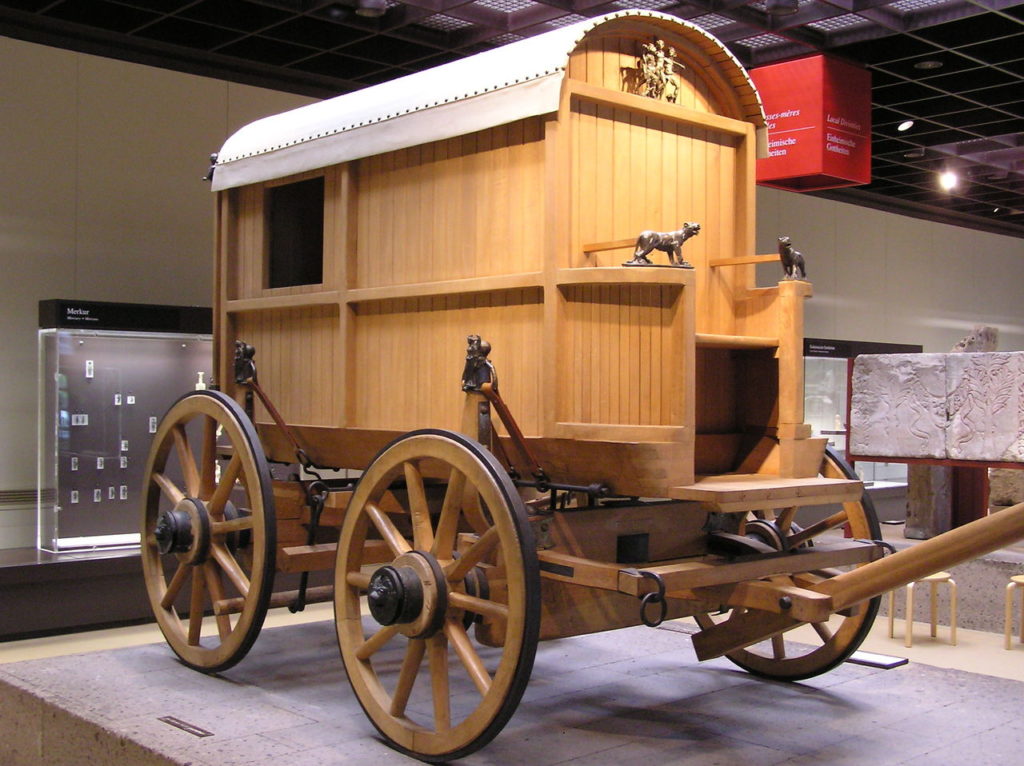
Roman travelling coach carpentum (reconstruction), in the Römsich-Germanischen Museum in Cologne, Germany

How did people travel?

Travel could be on horseback, ox cart, litters, travelling coaches, ship, barge, mules or Shanks’s pony (on foot). Soldiers just yomped with baggage trains trailing behind them, although to keep these baggage trains from becoming too large, in 107 BC General Gaius Marius made each man carry his own armour, weapons, personal equipment and 15 days’ rations, about 50–60 pounds (22.5–27 kg) in total.

Legionaries were issued with a forked stick to carry their load on their shoulders and were nicknamed Marius’ Mules (muli mariani in Latin) due to the amount of gear they had to carry themselves.

A Roman officer on the road

Officers like my tribune Lucius Apulius in JULIA PRIMA would have ridden a horse, had a servant riding a mule and made use of the mansiones if travelling away from his unit or between postings. At a fort, they would be lodged with other officers and even dine with the commander. Which is what happens to Apulius on his long journey from Britannia to Virunum in Roman Noricum (approximately modern Austria). But he was rained on and hated sleet and snow like any other serving soldier and was pleased to be wearing his paenula scortea, leather poncho as he rode along.

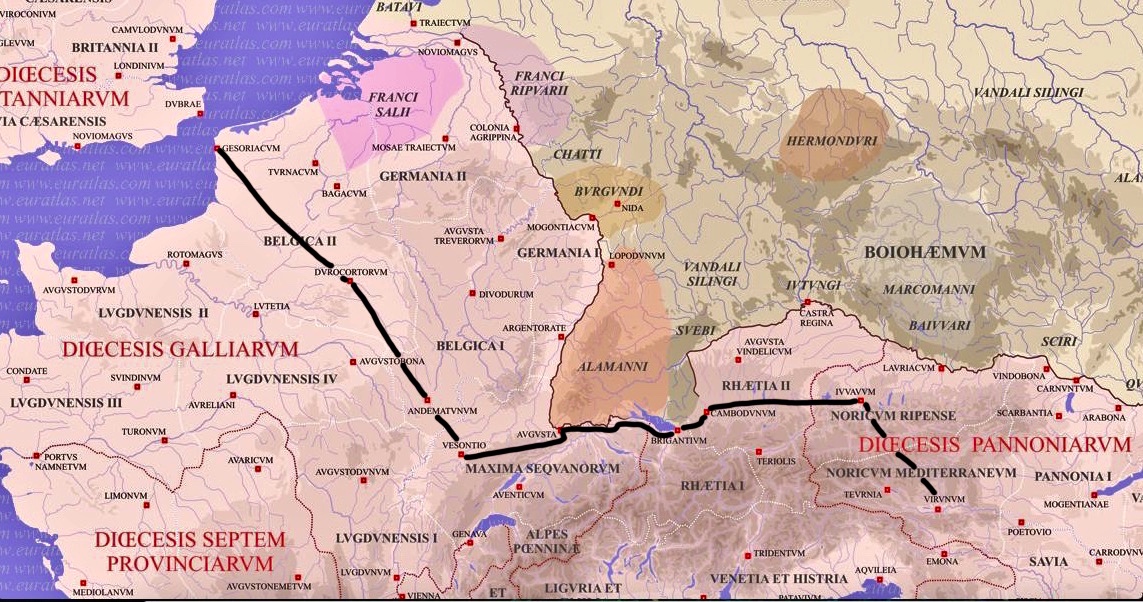
So what route did Apulius take in AD 370?

Firstly, he took a ship (military transport) across the Oeanus Britannicus from Dubris to Bononia (called Gesoriacum until the end of the third century), then on to Durocortorum (Rheims) and Vesontio (Besançon) on horseback. Apart from his own horse and the mule his servant rode, Apulius hired a travelling cart with driver and relief driver for his belongings and equipment.

Then it started to get sticky…

Apulius's journey

Apulius’s journey (Original map www.euratlas.com)

The Roman Empire’s effective northern border (limes) in AD 370 ran along the line of the the Rhine and Danube rivers. Today, the passage along the upper Rhine valley via Basel is an important transalpine route with a multi-lane motorway and railway line. In Apulius’s time it was a vital axis between Gaul and the East. If control of that passage was lost, the empire would be split in two.

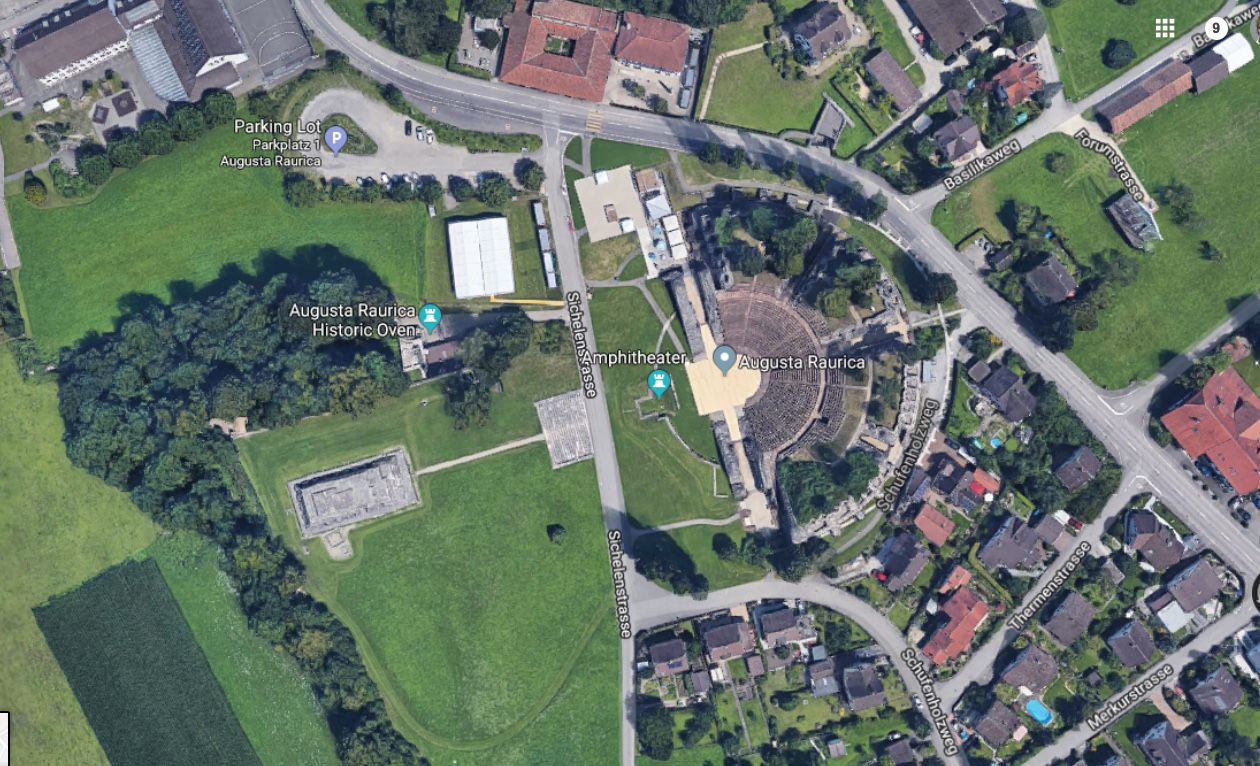
The city of Augusta Raurica to the east of today’s Basel was a prosperous trading town whose innkeepers and traders probably made a tidy profit from passing trade. However, about AD 300, following the loss of  the right bank of the Rhine, the Roman army built a fort nearby called Castrum Rauracense.

During the 4th century, it grew in strategic importance; emperors Constantius II and Julian assembled their armies at there before marching to battle against the Alemanni, the ‘barbarians’ to the north. But Augusta Raurica’s  physical vulnerability was shown up after its sacking by the Alemanni in 260 AD, so was resettled on a much smaller scale on the site of the castrum (modern Kaiseraugst).

Augusta Raurica (Kaiseraugst, Google Maps extract)

Augusta Raurica (Kaiseraugst, Google Maps extract)

Here, Apulius was forced to change to mule trains and military escort. By 370 AD, slow moving carts and sole travellers (servants not counted) would have been easy pickings for any raiding parties. But the route was still relatively safe to Brigantium (Bregenz) where a Roman fleet was based to patrol Lake Constance. Not the easiest command with the ferocious Alemanni across the water, just waiting…

For the next stage, he needed a larger escort as he was crossing an open frontier zone where the risk of conflict with Alemanni war parties was almost inevitable, but once in Cambodumum (Kempten), he was back in Roman territory and relative safety on his way to Iuvavum (Salzburg) and Virunum, his posting in Noricum.

Contrast with today

Conveying belongings is easy for us today. We chuck them in the car, or a strong suitcase, a high tech backpack with Wi-Fi connectivity and take a plane or train. Luggage in Apulius’s time was roped packs, panniers on mules, wooden chests on carriages or wagons, none of which was guaranteed waterproof unless covered by leather. (My sincere thanks to fellow scribe Ruth Downie for sending me copies from Lionel Casson’s ‘Travel in the Ancient World’ and Ann Hyland’s ‘Equus: the Horse in the Roman World’ to clarify this.)

And time – it took time. Using Stanford University’s ORBIS and the Italian https://omnesviae.org, I calculated the journey time by each form of transport, double checking  distances and physical landscape. And the more obvious routes in the area were starting to be inaccessible, not only from the weather, but as the empire literally lost ground. Apulius took about six weeks altogether. 

Virunum today (Photo: Wikipedia)

Virunum amphitheatre during excavation (Photo: Wikipedia). Current photos (and video): https://www.alison-morton.com/2023/06/17/feeling-the-virunum-amphitheatre/

Today, to get to Maria Saal (nearest modern place to the site of Virunum), you can hop on a plane to Vienna, then one to Klagenfurt, hire a car and be there the same day seeing the same mountains Apulius would have seen. He may even have watched games in the amphitheatre being excavated in the photo above.

Find out what happened when the newly arrived Lucius met Julia, the daughter of Prince Bacausus in Virunum.

Hint – it didn’t go smoothly…

Alison Morton is the author of Roma Nova thrillers –  INCEPTIO, CARINA (novella), PERFIDITAS, SUCCESSIO,  AURELIA, NEXUS (novella), INSURRECTIO  and RETALIO,  and ROMA NOVA EXTRA, a collection of short stories.  Audiobooks are available for four of the series. Double Identity, a contemporary conspiracy, starts a new series of thrillers. JULIA PRIMA,  Roma Nova story set in the late 4th century, starts the Foundation stories. The sequel, EXSILIUM, is now out.

Download ‘Welcome to Alison Morton’s Thriller Worlds’, a FREE eBook, as a thank you gift when you sign up to Alison’s monthly email update. As a result, you’ll be among the first to know about news and book progress before everybody else, and take part in giveaways.