


Are ebooks and print books in some sort of fierce battle to the death with one another in which the only outcome is total dominance?
Will ebooks soon drive their dinosaur cousin to extinction or will print books will see ebooks off and show the whole digital phenomenon to be a mere flash in the pan?
Neither of these outcomes is likely
I’m a typical fence-sitting Libran and love both; I don’t see it as a battle to be ‘won’, but as providing a choice.
Once a story is written and edited, an ebook version can be produced relatively easily, and then uploaded to a digital retail outlet within minutes. Stories in some genres, such as romance and science fiction, are often only produced in this format. Authors often use a short story or novella in digital format to test out a series idea or to supplement an established series.
If the ebook sells well, then it can be produced in print format (after reformatting) either as a print run of a few hundred or thousand or individually as print-on-demand. And this is not the exclusive domain of indie authors/publishers; some traditional publishing houses have adopted print-on-demand.
From the reader’s point of view
Limiting your book to one format cuts your potential audience. Readers may have a strong preference for one format or other. Writers shouldn’t assume they know how the reader wants to read their books.
Hybrid readers may enjoy a physical book relaxing at home then switch to an e-reader while travelling, especially if they have cabin luggage only. When I was younger in pre-digital times, my brother and I were rationed to six books each for a holiday of three weeks; I was usually done within the first ten days – horrendous. If only ebooks had existed then!
Physical books take up space and are heavy. But a book chosen at an event and signed by an author is very special. I’m there in the queue and literary festivals and conferences waiting for my minute with the star author. The smell of fresh paper and the crisp pages all contained in a beautiful cover – heaven!
Ebooks may not be the miracle they’re cracked up to be
Backlit e-readers are said to have an adverse impact on overall health, alertness and the circadian clock, which synchronises the daily rhythm of sleep to external environmental time cues. People go to bed later and are much tireder the next day. And when sleeping, they spend less time in REM sleep. Even though they were still getting eight hours of sleep, they feel significantly less rested than when they read a print book. And apparently we remember less about stories we read on ereaders than those read from a hard copy.
Frontlight technology (the vast majority of e-readers today) projects light onto the screen from the front, mainly used in E Ink readers and tablets and are more eye-friendly. Light is distributed across the screen via a guide layer. LEDs sit around the bezel or frame and shine light down across the surface of the screen, mimicking reflected light. This reduces direct glare which helps minimise fatigue. This approach creates a paper-like viewing effect without shining directly into the eyes. It significantly reduces blue light, making it ideal for comfortable reading in various lighting conditions.
However, while ebooks can’t be loaned or shared and the e-reader needs charging, ebooks are much cheaper than print books. Ebooks can be bought instantly from your desk or armchair and you’re reading in seconds. Unlike printed books, ebooks don’t require trees for paper and petroleum for ink.
I should say that very many people read now on their phone or tablet such as iPad. I really should do a survey on this!
However…
The joy of spending time wandering round a bookshop
You can feel books, look at a beautiful cover design spread over the front and back, dip in, settle down in a chair (at the best bookshops!) and find a new world. Taking a new book home with you is one of life’s pleasures. I am incapable of walking past a bookshop in any town. I must go in and browse.
In print books, maps, place names, cast of characters, glossaries, etc. are far easier to access – you just flick back – and they are in full (readable) size. It’s so frustrating when on my e-reader they don’t expand and I end up squinting at tiny print and often give up. I included all of the above additional elements in, for instance, JULIA PRIMA, and because of the squinting problem, I ensured the maps were readable in the ebook format. I wish every publisher did that!
At literary festivals and conferences, I love to browse the speakers’ books after I’ve heard their presentations. There’s the added bonus of having a personalised signature from the author as well!
As an author, I love it when somebody buys a print book I’ve written and asks me to sign it. I always personalise it to make it special to that reader.
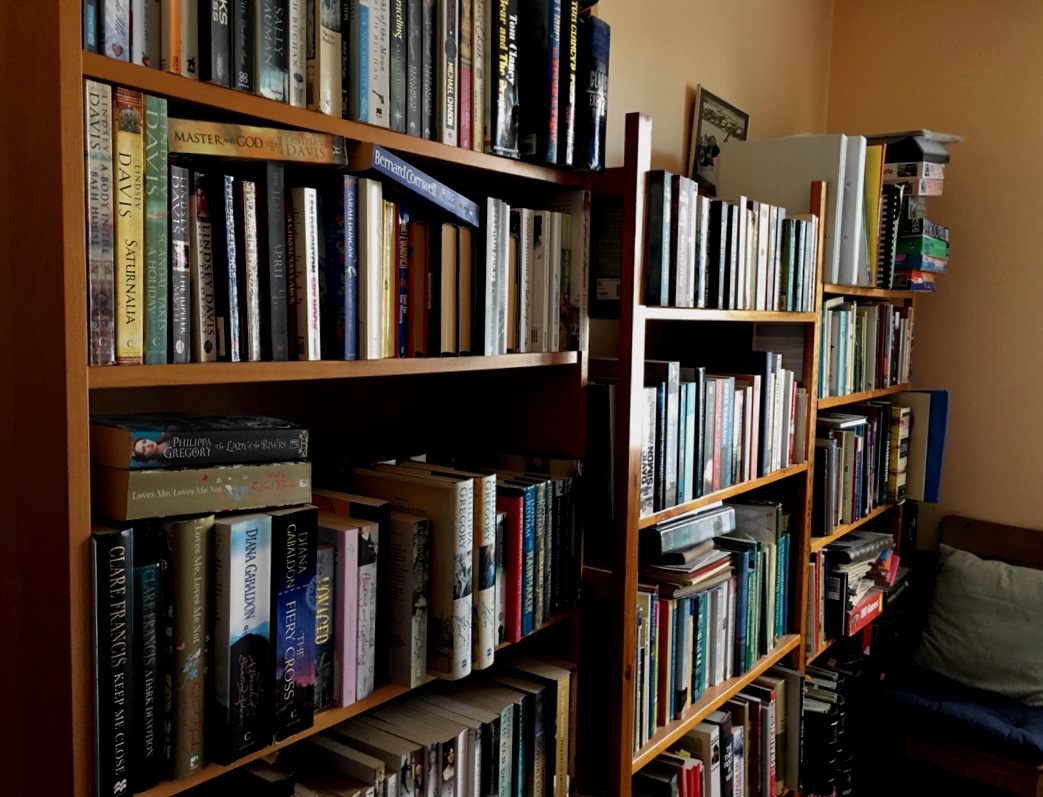
Shelves of books are like piles of treasure you can explore on a rainy day and re-discover that book you enjoyed on a holiday or bought at a special time. An ebook doesn’t do that for me.
So each format has its pros and cons
My woolly wandering around the topic shows how unclear the whole thing is. When the Kindle came out, minor tech nerd me bought one straight away, even before my major tech nerds husband and son. Ha!
I’ve heard anecdotally that sales of print books are increasing especially by Millennium and GenZ readers. This is very good news!
I’ll be buying and reading both for the foreseeable future.
Which do you prefer? Or are you another hybrid reader?
Do leave a comment and tell me why. I’m intrigued by what you think.
__________________
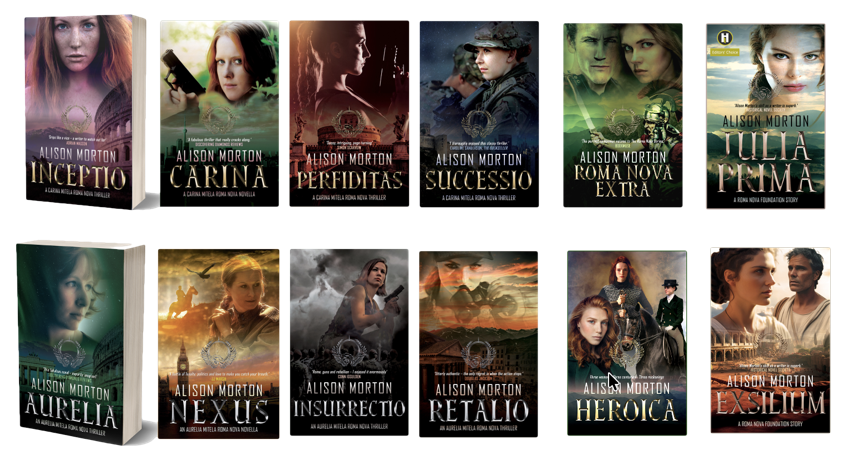
And the INCEPTIO 10th Anniversary special hardback with bonus material!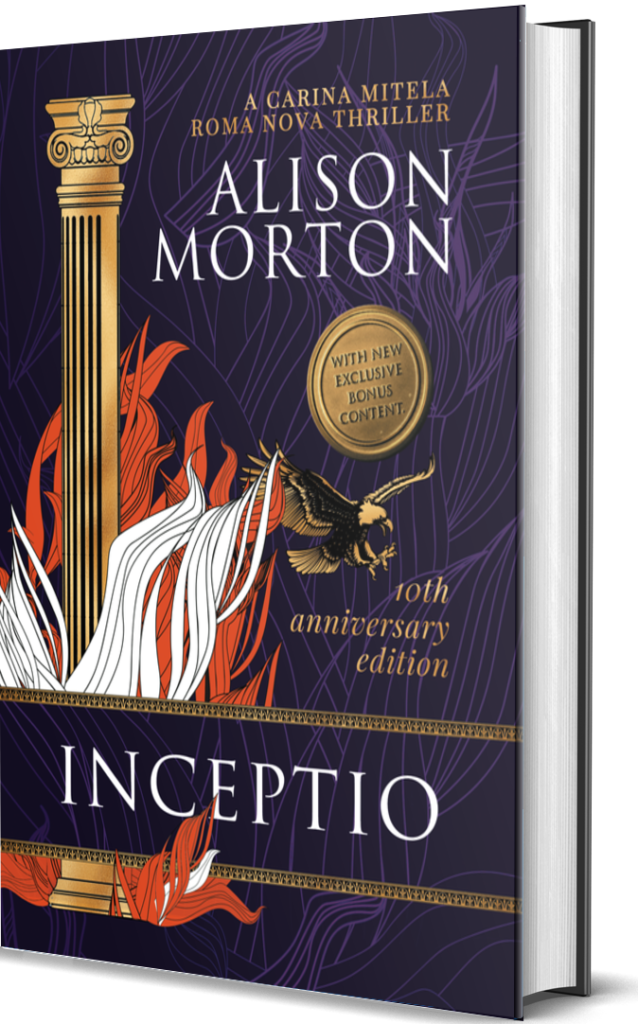
Not forgetting the Mélisende ‘Doubles’ crime thriller series
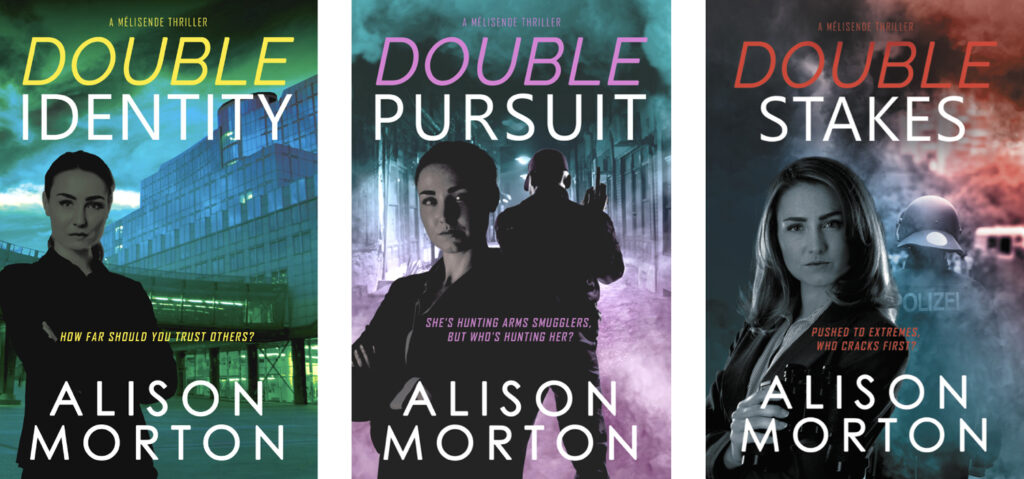
All the individual Roma Nova books and the Mélisende Doubles thrillers are available in paperback through bookshops, libraries or from online retailers. To buy, select the book of your choice on the Books page to find direct links to various retailers for that book. If you prefer to buy at a book shop, just order quoting the ISBN number you can find on each book page.
Or stroll down to your local library and if it’s not there, put in a request and they’ll get it for you.
______________
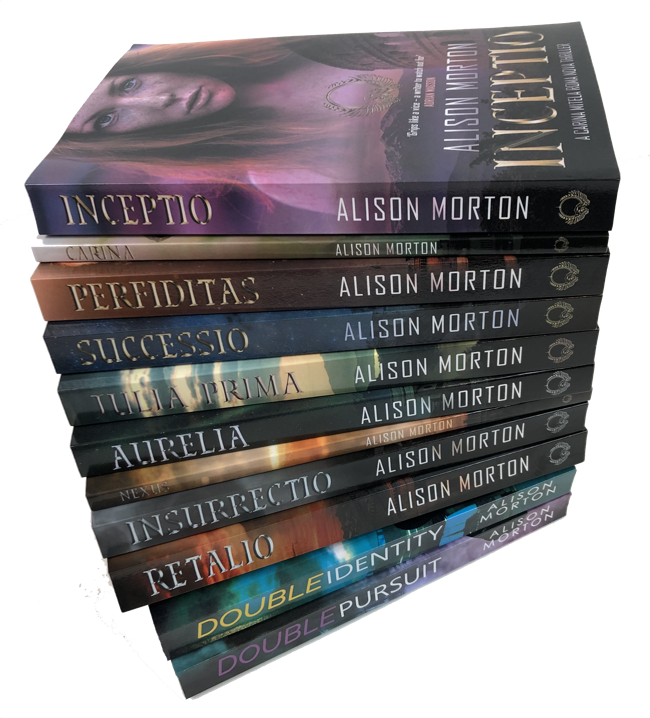
Alison Morton is the author of Roma Nova thrillers – INCEPTIO, CARINA (novella), PERFIDITAS, SUCCESSIO, AURELIA, NEXUS (novella), INSURRECTIO and RETALIO, and ROMA NOVA EXTRA, a collection of short stories. JULIA PRIMA and EXSILIUM, set in the late 4th century, tell the story of Roma Nova’s foundation. Audiobooks are available for four of the series. Double Identity, Double Pursuit and Double Stakes form a new contemporary thriller series. A new collection of Roma Nova short stories, HEROICA, is now out.
Download ‘Welcome to Alison Morton’s Thriller Worlds’, a FREE eBook, as a thank you gift when you sign up to Alison’s monthly email update. As a result, you’ll be among the first to know about news and book progress before everybody else, and take part in giveaways.



Leave a Reply