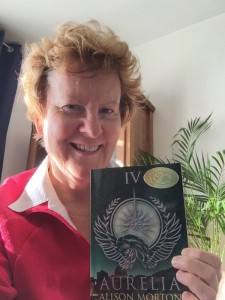
 You know when there’s a 90% chance against, but you do succeed? You know when there’s a 90% chance against, but you do succeed?
Well, that.
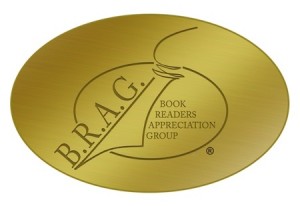
Book 4 in the Roma Nova series, AURELIA, has just been awarded the B.R.A.G. Medallion.
The what?
In the large sea of self/independently published work, there is a lot of flotsam and jetsam and, sadly, a good proportion of it that isn’t worth picking up. How to tell? Well, indieBRAG, a privately held organisation, has brought together a large group of readers, both individuals and members of book clubs, located throughout the United States, Canada, and the European Union to address this.
Their mission is to recognise quality on the part of authors who self-publish both print and digital books, principally fiction. They are looking for ‘a good, quality read’ that’s commercially and widely available.
So how do they do it?
 After the initial selection process to screen out the obvious ‘no’ candidates of the unedited first draft kind, Indie BRAG choose ten members from their reader group to evaluate and judge the merits of each book based on their list of criteria (plot, characters, dialogue, writing style, copy editing, cover/interior layout). The single most important criterion they ask their readers to use in judging a book is whether or not they would recommend it to their best friend. After the initial selection process to screen out the obvious ‘no’ candidates of the unedited first draft kind, Indie BRAG choose ten members from their reader group to evaluate and judge the merits of each book based on their list of criteria (plot, characters, dialogue, writing style, copy editing, cover/interior layout). The single most important criterion they ask their readers to use in judging a book is whether or not they would recommend it to their best friend.
And all ten have to agree!
Once a book meets this standard of quality, they award it the B.R.A.G. MedallionTM. IndieBRAG have gained considerable traction now as a gatekeeper and because of the flood of demand, they are evolving their structure. Read more here
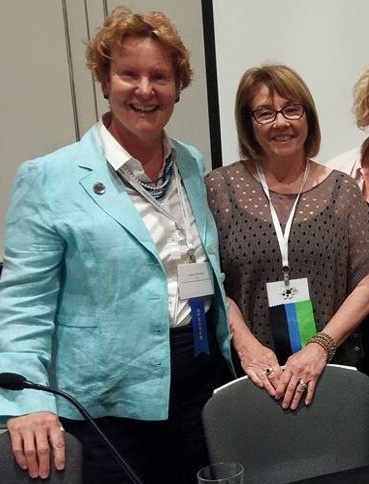 You can gather how passionate IndieBRAG is about quality in my interview with Geri Clouston, their president. And I had the pleasure of meeting Geri in person at the Historical Novel Society conference in Denver this year when we were both members of an expert panel on self-publishing. You can gather how passionate IndieBRAG is about quality in my interview with Geri Clouston, their president. And I had the pleasure of meeting Geri in person at the Historical Novel Society conference in Denver this year when we were both members of an expert panel on self-publishing.
So, yes, the bubbly’s out again tonight…
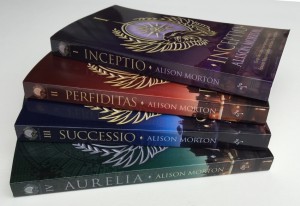
And here are the other B.R.A.G. Medallion holders INCEPTIO, PERFIDITAS, SUCCESSIO.
Alison Morton is the author of Roma Nova thrillers, INCEPTIO, PERFIDITAS, SUCCESSIO and AURELIA
Find out Roma Nova news and book progress before everybody else, and take part in giveaways by signing up for her free monthly email newsletter.
If you enjoyed this post, do share it with your friends!
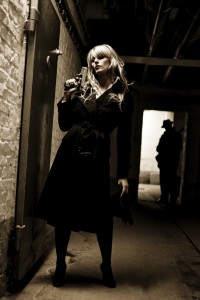 Boldly going? Adrenaline rush? Stepping in harm’s way? When events or series of events explode into a character’s ordinary life and are accompanied by a hefty dash of danger, often by physical action and a chunk of emotional stress, then you’re in an adventure story. And they’re not just for children, as we have seen in the Roma Nova stories. 😉 Boldly going? Adrenaline rush? Stepping in harm’s way? When events or series of events explode into a character’s ordinary life and are accompanied by a hefty dash of danger, often by physical action and a chunk of emotional stress, then you’re in an adventure story. And they’re not just for children, as we have seen in the Roma Nova stories. 😉
Strong pace is a crucial element of adventure stories. Sometimes, regrettably, the action is at the expense of characterisation and setting. Even a few words and a carefully placed sentence here and there can add immeasurably to the enjoyment of a story. Yes, we want to keep up with the heart-thudding action, but as readers, knowing when and where we are and what the character is thinking deepens the experience.
Adventure has been a common theme since the earliest days of written fiction; Homer’s Iliad and Odyssey and the stories of King Arthur are classic examples of adventures. Often a hero would undergo a set of adventures, sometimes to fulfil a challenge, discover lost treasure or win a ‘fair lady’. A separation would follow, with a second set of adventures leading to a final reunion. These days it’s just as likely to be a heroine undertaking high adventure for additional reasons, including proving herself, fulfilling a promise or redeeming a lover’s or father’s reputation.
Adventure fiction often overlaps with other genres, notably crime novels, historical fiction, high sea yarns, spy stories, science fiction, fantasy, caper stories, romantic suspense and coming of age stories.
With a few notable exceptions (such as Baroness Orczy, Leigh Brackett and Marion Zimmer Bradley) classic adventure fiction has been dominated by male writers, though female writers are now becoming much more usual. Zoe Sharp’s Charlie Fox, J F Penn’s Morgan Sierra, Susanne Collins’ Katniss Everdene (Hunger Games) and, of course, my own Carina Mitela and before her Aurelia Mitela are all kick-ass heroines written by women. Today, ‘women’s adventure’ is a category at Amazon.
So what do adventure stories do for us?
escapist – they allow us to be yanked out of our routine lives
safe – we can experience excitement, danger, nerve-wracking life and death situations from the safety of our armchair or tucked up in bed
liberating – we can experience things and places we would never otherwise know about
reassuring – we know we’ll never have to face these kinds of danger.
Or are we so sure…?
Updated 2022: Alison Morton is the author of Roma Nova thrillers – INCEPTIO, CARINA (novella), PERFIDITAS, SUCCESSIO, AURELIA, NEXUS (novella), INSURRECTIO and RETALIO, and ROMA NOVA EXTRA, a collection of short stories. Audiobooks are available for four of the series.Double Identity, a contemporary conspiracy, starts a new series of thrillers. Double Pursuit, the sequel, is now out!
Find out more about Roma Nova, its origins, stories and heroines and taste world the latest contemporary thriller Double Identity… Download ‘Welcome to Alison Morton’s Thriller Worlds’, a FREE eBook, as a thank you gift when you sign up to Alison’s monthly email update. You’ll also be among the first to know about news and book progress before everybody else, and take part in giveaways.
If you enjoyed this post, do share it with your friends!
 Historical fiction is a broad church; a re-telling real events, quasi-biographical fiction, romantic, adventure, fantastical and detective stories, tales from the cave to the 1960s and set in every country and social situation you can imagine. And within that mix are counter-factual, alternative history stories, the ‘what ifs’ which project a possible different timeline from our own. Historical fiction is a broad church; a re-telling real events, quasi-biographical fiction, romantic, adventure, fantastical and detective stories, tales from the cave to the 1960s and set in every country and social situation you can imagine. And within that mix are counter-factual, alternative history stories, the ‘what ifs’ which project a possible different timeline from our own.
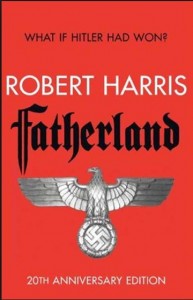
Suppose the Spanish Armada had succeeded (Pavane, Keith Roberts)? Perhaps Napoleon had escaped from St Helena (Napoléon in America, Shannon Selin)? Or Germany had won the Second World War as in Robert Harris’s gripping Fatherland?
These are grand scale events, but historical fiction is also about ‘small people’. Ever since I walked on my first Roman mosaic at age eleven, I’ve been mesmerised by the complex, powerful and technological civilisation that was Rome. But even at eleven I wasn’t content with the part played by women in their society: influencers, eminences grises, heiresses and mothers, but de facto as well as de jure powerless.
Enter Roma Nova, a modern, alternate version of a Roman society where women play the prominent role.

Is it historical fiction? Alternate (or alternative) history has two parents: history and speculative fiction. Alternate historical fiction can sit anywhere along a sliding scale from the well-researched counter-factual following historical logic and methodology to the completely bonkers story designed only to be cool. I explain the types in full detail here; I stand at the historical end because I’m a historian.
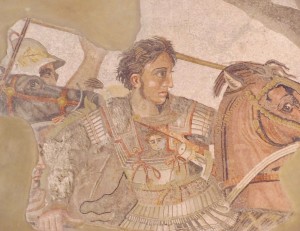 Alexander the Great mosaic from Pompeii (Naples Museum, author photo) Alternate history is nothing new – Roman historian Livy speculates on the idea that the Romans would have eventually beaten Alexander the Great if he had lived longer and turned west to attack them (Book IX, sections 17-19 Ab urbe condita libri (The History of Rome, Titus Livius).
The basic characteristics of alternative history are three-fold: firstly, the event that turned history from the path we know – the point of divergence – must be in the past. Secondly, the new timeline follows a different path forever – there is no going back. Thirdly, stories should show the ramifications of the divergence and how the new reality functions.
The world can partially resemble our timeline or be very different. Sometimes there are documented historical characters, sometimes entirely fictional ones or a mixture of both. In no case are alternate history stories parallel or secret histories such as The Da Vinci Code or fantasy like Noami Novik’s Temeraire series.
But isn’t alternative history all invention? Yes and no. Plausibility and consistency are, as in all historical fiction, the key guidelines so that the reader is not lost or alienated. Local colour and period detail are essential, but only where necessary and when relevant.
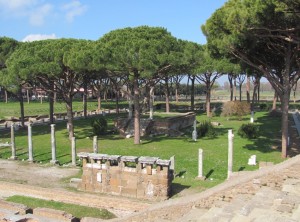 A sacred grove (Ostia Antica, author photo) The foundation step is to identify the point of divergence and make it a logical point where history could split and cause an alternative time line to emerge.
My books are set in Roma Nova in the 20th and 21st centuries, but the country’s origin stretches back to a divergence point in AD 395 when the Roma Nova founders fled Rome after the Christian Roman emperor Theodosius issued the final edict outlawing all pagan religions.
‘Rome’ was significantly different in AD 395 from how it had been in 200 BC. For instance, the sestertius, the archetypal silver Roman coin that pops up in TV and films, had disappeared by the late fourth century. The gold solidus served as the standard unit at that time, so my modern Roma Novans use solidi.
Roma Novans hold their culture and history very dear and see it as both a purpose and method of survival. In INCEPTIO, our heroine finds a forum, senate, a family based social system, all ruled by an imperatrix. The military elite is called the Praetorian Guard and service to the state is valued before personal pleasure or gain. Well, in theory!
Roman homes are based around an atrium with a set of ancestor busts and statues (imagines, pronounced imagine-ays) in the hallway. Although Latin is the official language, naming conventions have evolved along with the social system.
And finally, as with all historical fiction, my characters must act, think and feel like real people. The most credible ones live naturally within their world, i.e. consistently reflecting their unique environment and the prevailing social attitudes. Thus Roma Novans are tough and ingenious and their language, including slang and cursing, reflects this.
Of course, it makes a stronger story if the permissions and constraints of their world conflict with their personal wishes and aims. But that’s what happens in all good fiction!
Alison Morton is the author of Roma Nova thrillers – INCEPTIO, CARINA (novella), PERFIDITAS, SUCCESSIO, AURELIA, NEXUS (novella), INSURRECTIO and RETALIO, and ROMA NOVA EXTRA, a collection of short stories. Audiobooks are available for four of the series. Double Identity, a contemporary conspiracy, starts a new series of thrillers. JULIA PRIMA, Roma Nova story set in the late 4th century, starts the Foundation stories. The sequel, EXSILIUM, is now out.
Download ‘Welcome to Alison Morton’s Thriller Worlds’, a FREE eBook, as a thank you gift when you sign up to Alison’s monthly email update. As a result, you’ll be among the first to know about news and book progress before everybody else, and take part in giveaways.
If you enjoyed this post, do share it with your friends!
|
Subscribe to Blog via Email
Join 37 other subscribers.
Buy AURELIA from Apple!
UK

US
|