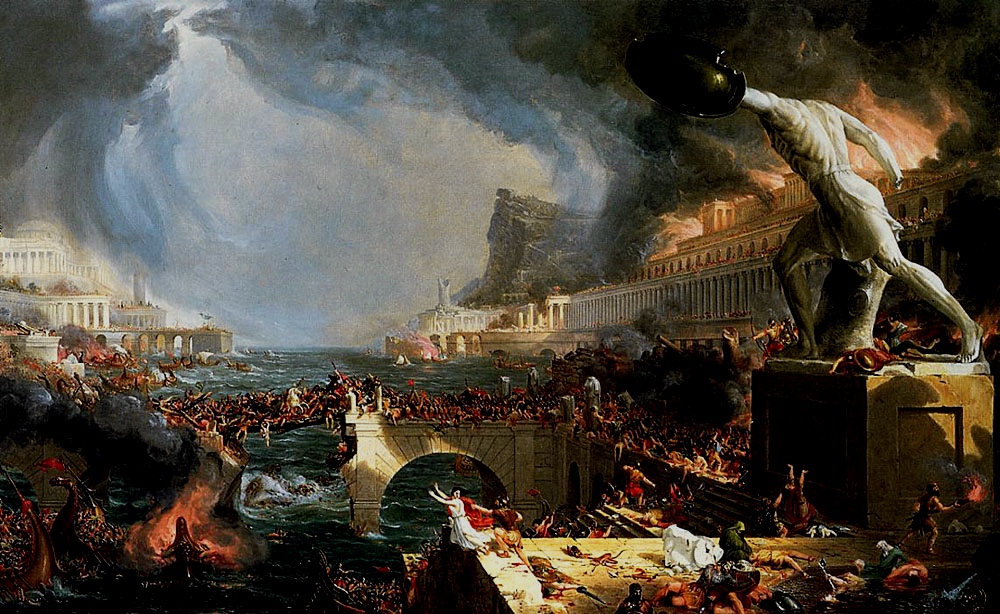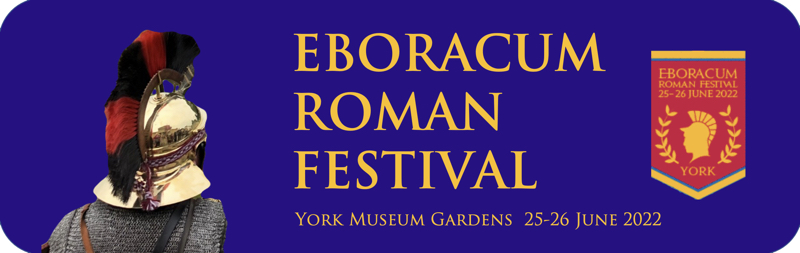
Yes, it’s the time of year the Romans invade York. Along with the governor of Britannia and the mighty marching men of six legions (escaping from their humdrum 21st century lives) come a load of riff-raff and camp followers including a bunch of scribblers.
But the good news is that these are nine of the best scribblers. They’ll be lurking in the Tempest Anderson Hall next to the Yorkshire Museum during Saturday and Sunday 10 am-4pm each day. If you’re not completely taken over by the Roman living history camp, kids’ army, demonstrations, Roman parades and activities for all ages, come and discover some fascinating fiction and non-fiction. Plus, the authors will be delighted to sign the books you buy.
Simon Turney (S J A Turney)
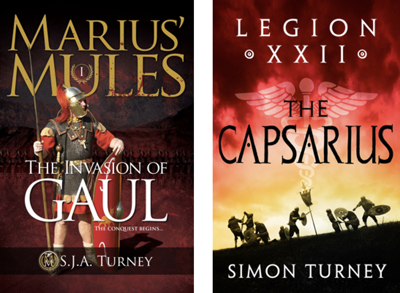
 With in excess of 40 books to his name, Simon is a prolific writer, spanning genres and eras and releasing novels both independently and through renowned publishers including Head of Zeus, Canelo and Orion. Look for his Roman military novels featuring Caesar’s Gallic Wars in the form of the bestselling Marius’ Mules series, Roman thrillers in the Praetorian series, set during the troubled reign of Commodus, a series of fictionalised biographies of damned Roman emperors, the Legion XXII books in Roman Egypt and a rollicking Viking series: Wolves of Odin. https://simonturney.com
Ruth Downie

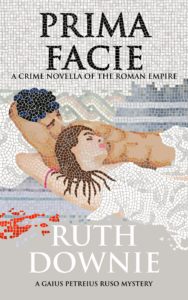 In her own words, Ruth wasn’t looking for the Romans. ‘We only went to Hadrian’s Wall because we thought our children should do something educational on holiday.
Sheltering from the rain in a museum, I read, “Roman soldiers were allowed to have relationships with local women, but they were not allowed to marry them.” Obviously, here was a terrific story waiting to be told. All I had to do was find out everything there was to know about Roman Britain, invent things to fill the gaps, and work out how to put it all together in a novel…‘
So arose the Ruso (and Tilla) Medicus series of now nine books.
When she’s not researching or writing the Ruso novels, Ruth spends the occasional joyous week grovelling in mud with an archaeological trowel, because Roman Britain is still there. Underneath our feet. https://ruthdownie.com
Alex Gough
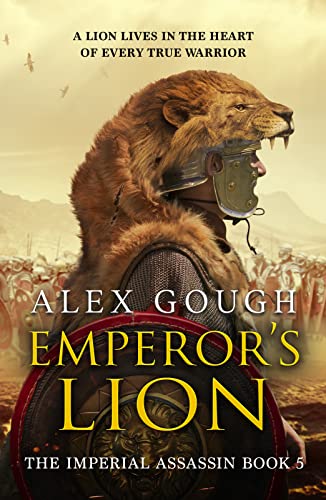
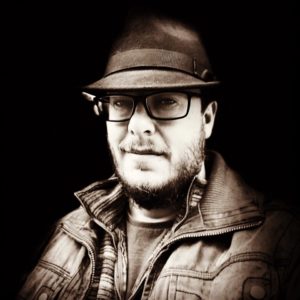
Alex’s latest series of books are based around the adventures of Silus and Atius, spies and assassins for the controversial Emperor Caracalla. In non-writing time, he is studying for a PhD in Applied Health Research. He confesses to a decades long interest in Ancient Roman history, and his two series, the Carbo of Rome trilogy, and the Imperial Assassins hexology are the culmination of a lot of research into the underclasses of Ancient Rome. www.romanfiction.com
His latest book, Emperor’s Lion (Imperial Assassin Book 5) sees Silus, inducted into Caracalla’s bodyguard, penetrating a conspiracy that could bring down Rome.
Paul Chrystal
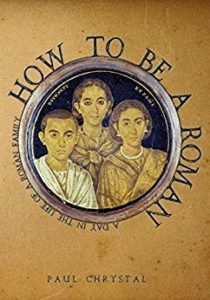
 Paul works in medical publishing, but combines it with being history advisor to local visitor attractions such as the National Trust in York and ‘York’s Chocolate Story’, writing features for national newspapers and broadcasting on BBC radio.
A contributor to several history magazines, he’s the author of over 100 books published since 2010 on classical history, social histories of chocolate, coffee and tea, transport and local history of towns and cities in Yorkshire, Durham and Greater Manchester.
He regularly reviews for and contributes to ‘Classics for All’ and has contributed to a 6-part series for BBC2 ‘celebrating the history of some of Britain’s most iconic craft industries’, in this case chocolate in York. From 2019 he’s edited York Historian, the journal of the Yorkshire Architectural and York Archaeological Society. http://www.paulchrystal.com
Jane Finnis
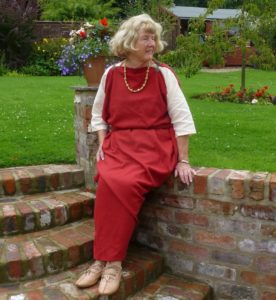
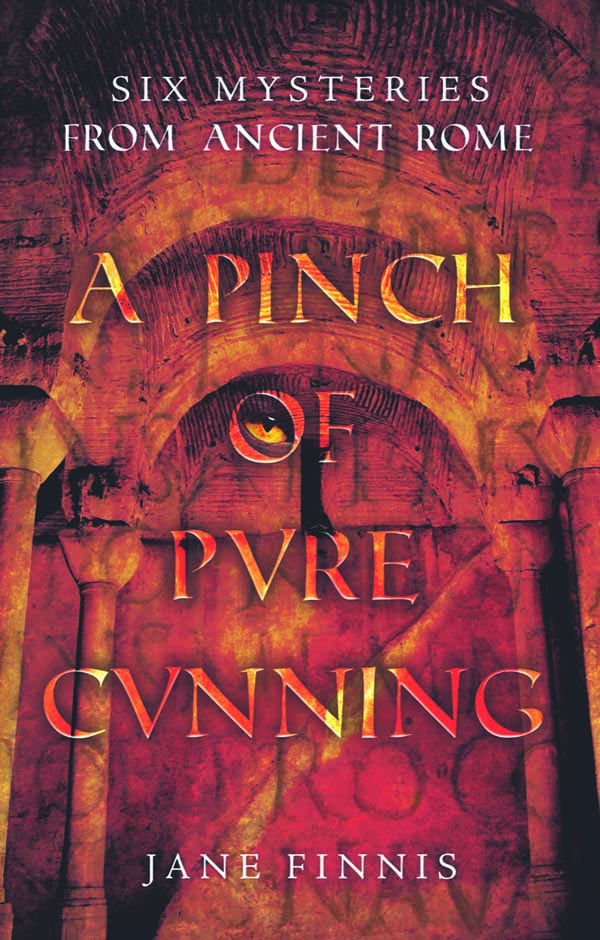 “Write something about yourself,” they said, and I thought wow, at last I can tell the world how brilliant, charming and beautiful I am. Then they spoilt it all by saying, “But stick to the truth.” Oh well…
Jane’s been fascinated by the past ever since as a child she walked along the Roman roads of East Yorkshire and discovered that York’s medieval Minister was built over something even older, a Roman fortress.
At school she became completely hooked on Roman history when she read t Robert Graves’s I, Claudius and Claudius the God. After studying history at London University, she worked for some years in radio, mostly as a freelance broadcaster for the BBC.
Her Aurelia Marcella novels and short stories are set in Yorkshire around a mansio, an official inn/way station and there’s a lot of murder about… http://www.janefinnis.com/books/
Nancy Jardine
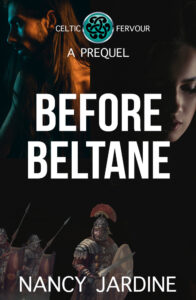
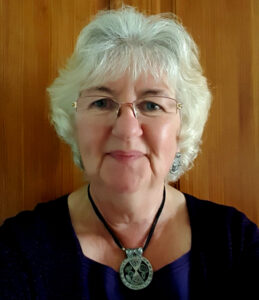 Can you imagine Roman soldiers tramping all over your garden?
Nancy Jardine lives beside the now-flattened ramparts of a large Agricolan Temporary Encampment in Aberdeenshire. On discovering it sheltered around 10,000 soldiers, she felt compelled to write about those Roman invaders – though writing and publishing didn’t happen till after she retired from primary teaching. The six novels of her Celtic Fervour Series are set in late 1st Century North Britannia. The adventure stories showcase members of a clan from Brigantia who find ways to resist their Roman usurpers. However…Britannic Governor Gnaeus Iulius Agricola also features in the series, and some of the action takes place in the very first Eboracum Roman Fortress.
Nancy’s other published work includes a time-travel adventure about Emperor Severus’ invasion of Aberdeenshire in AD 210 and contemporary mystery novels, where unlocking an ancestral tree provides the solutions. Current writing is set in Victorian Scotland, done at her desk where she awaits the muse while staring blankly out of the window at the fairy house in her garden. http://www.nancyjardineauthor.com/
Clive Ashman
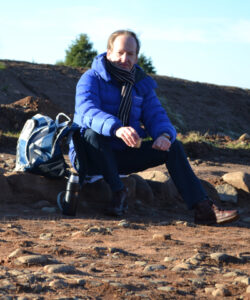
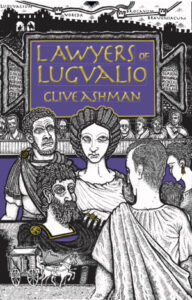 Clive Ashman is fairly described as ‘artist, writer, motor mechanic and qualified lawyer’. He discovered the unsolved heritage crime in his first novel ‘MOSAIC‘ (the 1940’s theft of a pavement from a lost Roman villa in East Yorkshire) whilst practising as a criminal lawyer.
Its blockbuster sequel, ‘TWO-EIGHT-SIX’, concentrates on Carausius – charismatic commander of their navy in Britain, whose Third Century ‘Brexit‘ and rebellion against Rome parallels more modern themes. Published in 2021 by Voreda Books, Clive’s third book, ‘LAWYERS of LUGVALIO’ starts-off in Scotland, but uses a genuine Roman court-case and York-based advocate to take its action forward. www.voredabooks.com
Edwin Pace
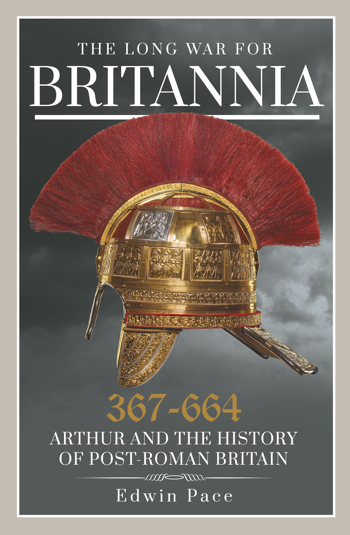
 Edwin Pace was first an armour officer, and then a career intelligence officer–the perfect combination for writing his latest book, The Long War for Britannia. Now in its second printing, it is the definitive history of Late Roman and Early Medieval Britain. It reveals just how the Roman diocese of Britannia became England and Wales.
The book shows that Britain was a powerful state in the mid-fifth century, able to deal with Rome on an equal basis. However, ethnic tensions between Briton and Saxon led to centuries of civil war. Still, memories of this brief era—embodied in the figure of Arthur—persist down to the present day. https://www.pen-and-sword.co.uk/The-Long-War-for-Britannia-367664-Hardback/p/19205
Edwin is the author of a previous work of history, Arthur and the Fall of Roman Britain, as well as the novel Rhinelord, a retelling of the Siegfried myth. A member in good standing of the International Arthurian Society, he has contributed many articles to its journal, Arthuriana. https://independent.academia.edu/EdwinPace
Alison Morton (That’s me!)
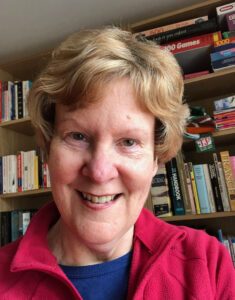 Alison Morton writes the award-winning Roma Nova alternative history thriller series featuring modern Praetorian heroines.
She blends her deep love of Roman history with six years’ military service and a life of reading historical, adventure and thriller fiction. On the way, she collected an MA History.
A ‘Roman nut’ since age 11, Alison misspent decades clambering over Roman sites throughout Europe. Fascinated by the mosaics at Ampurias (Spain), at their creation by the complex, power and value-driven Roman civilisation, she started wondering what a modern Roman society would be like if run by strong women… The Roma Nova series is the result!
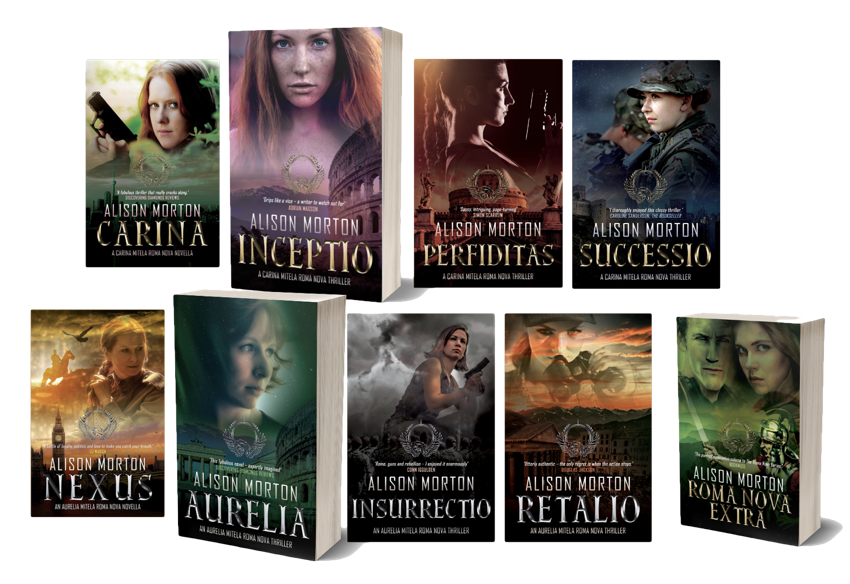
Now she continues to write thrillers, cultivates a Roman herb garden and drinks wine in France with her husband. (This is my blog 😉 )
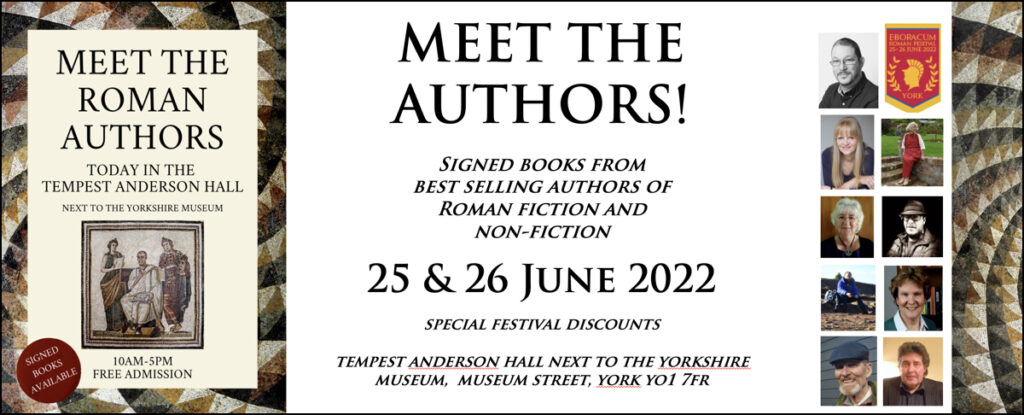
Do come to the Tempest Anderson Hall next to the Yorkshire Museum and say salve! – we’re all quite nice people really – or we’ll start a coup, force feed each other with fish garum sauce or possibly fall on our swords. See you there!
Alison Morton is the author of Roma Nova thrillers – INCEPTIO, CARINA (novella), PERFIDITAS, SUCCESSIO, AURELIA, NEXUS (novella), INSURRECTIO and RETALIO, and ROMA NOVA EXTRA, a collection of short stories. Audiobooks are available for four of the series. Double Identity, a contemporary conspiracy, starts a new series of thrillers. Double Pursuit, the sequel, is now out!
Download ‘Welcome to Alison Morton’s Thriller Worlds’, a FREE eBook, as a thank you gift when you sign up to Alison’s monthly email update. You’ll also be among the first to know about news and book progress before everybody else, and take part in giveaways.