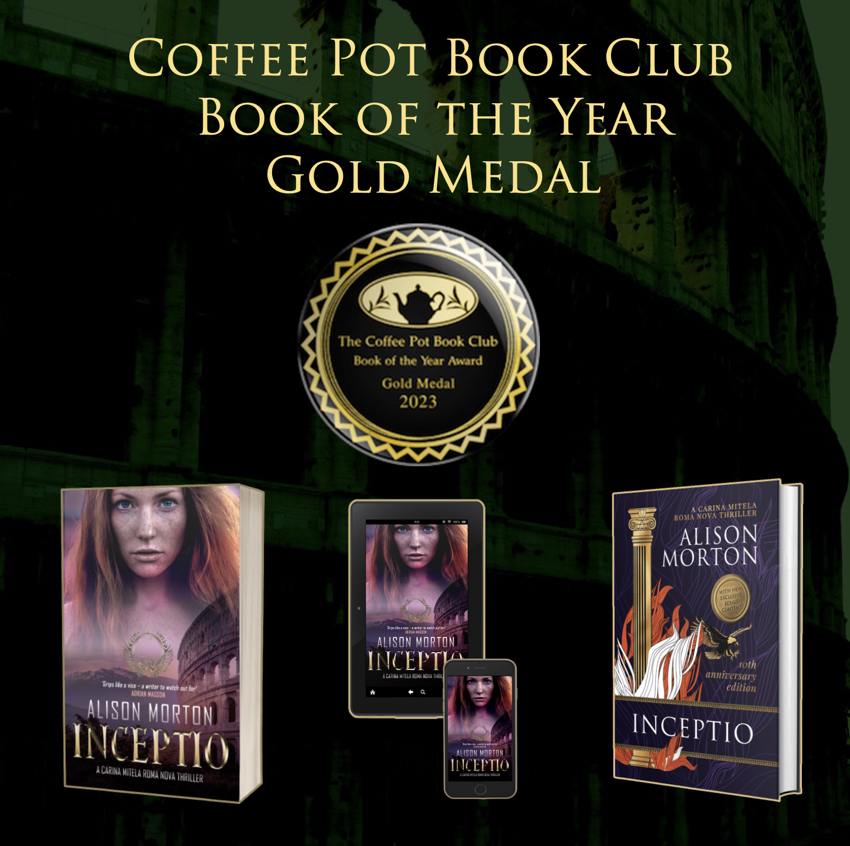
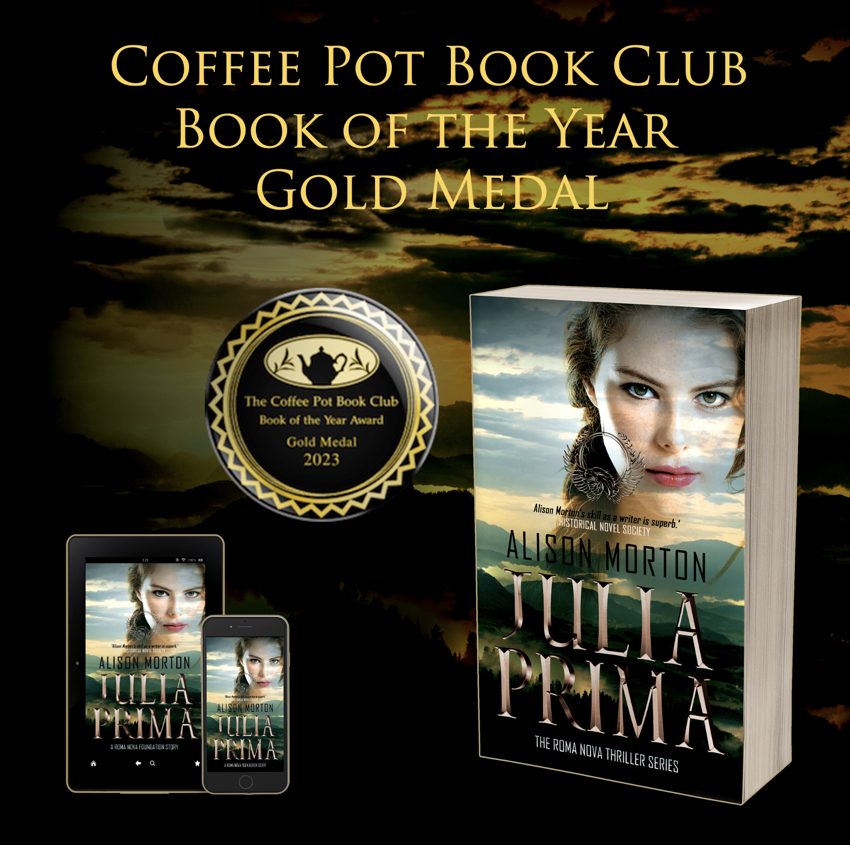
Completely unexpected, but thrilling news – two Roma Nova books have been given a gold medal each in the much esteemed Coffee Pot Book Club Book of the Year awards for historical fiction.
Even I was rendered speechless for at least five minutes. This book club focuses on historical fiction across all sub-genres: JULIA PRIMA won in the Ancient World category and INCEPTIO in Alternative History.
What do awards mean?
I wrote a post over six years ago when I had only a few books out and I was keen to accumulate those lovely badges and accreditations. And in that last word lies a big fat clue.
Recognition, validation, acknowledgement of your ability and achievement – these are the reasons we love to gain awards. When self- or indie publishing first emerged, there were no ways of showing which books were worth readers paying and which were not. Readers were and are the final judges, of course.
Indie published books are a firm part of the book world; some have been developed for the screen such as Andy Weir’s The Martian, others have even made their authors millionaires. But as with traditional publishing, most authors are not at those heights. However, most competitions and award schemes in the early days were closed to indies (😢 Some still are.).
To remedy the lack of ways in which to indicate high quality indie reads, a variety of award schemes emerged in order to sift out the not-so-good from the excellent. Some such as Discovering Diamonds Reviews and Chill with a Book run by prominent writers have since closed as they devoured a lot of time and needed full-time dedicated work. Others like the venerable Indie BRAG now charge an admin fee to cover time and costs, while the Historical Novel Society now mixes everything together.
But that doesn’t negate the awards/accolades given by them in the past.
The Coffee Pot Book Club Book of the Year awards have gone from strength to strength in nurturing and promoting historical fiction. The authors strive to be the best – who doesn’t like a shiny medal? – and readers can be reassured they will get a good quality experience from reading these books.
My thanks go to Cathie Dunn and dedicated team in managing these awards. It must involve the judgement of Solomon!
Meanwhile, I’ve off to polish these lovely medals…

Alison Morton is the author of Roma Nova thrillers – INCEPTIO, CARINA (novella), PERFIDITAS, SUCCESSIO, AURELIA, NEXUS (novella), INSURRECTIO and RETALIO, and ROMA NOVA EXTRA, a collection of short stories. Audiobooks are available for four of the series. Double Identity, a contemporary conspiracy, starts a new series of thrillers. JULIA PRIMA, Roma Nova story set in the late 4th century, starts the Foundation stories. The sequel, EXSILIUM, will be out in February 2024.
Download ‘Welcome to Alison Morton’s Thriller Worlds’, a FREE eBook, as a thank you gift when you sign up to Alison’s monthly email update. You’ll also be among the first to know about news and book progress before everybody else, and take part in giveaways.
If you enjoyed this post, do share it with your friends!
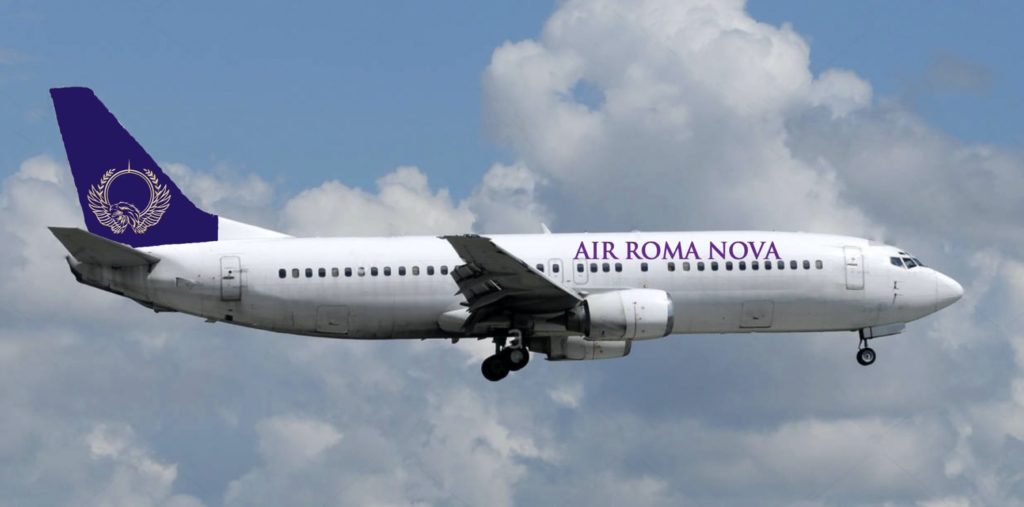 Roman planes? Well no, but definitely Roma Novan ones. Roman planes? Well no, but definitely Roma Novan ones.
Air Roma Nova is the national carrier and mostly flies to other European capitals – Vienna, London, Paris, Rome – but also has a transatlantic service three times a week at the time of INCEPTIO.
Like many smaller airports, PORTUS – Latin for port(!) – has a fenced-off military section and a private, or general, aviation area. It’s here that Carina first sees her new homeland in INCEPTIO.
“We landed early afternoon local time and thirsty for a view of my new home, I glued my face to the window. Mountains stretched up into the sky in the background, conifers clinging to them under the snow line, fields and isolated houses below them. As the tyres touched the runway, I was disappointed to see it looked like any other airport, until I saw the terminal building with the sign PORTUS – ROMA NOVA. It was true, then.
We taxied past the main glass-fronted building to a smaller single-storey one with three wide shallow steps and glass doors. A gold eagle crested the arch above the doorway. Two men in suits and a woman in a blue uniform stood waiting on the tarmac for our plane to stop. Fresh air flooded in as the door opened.
‘Ready?’ Conrad smiled at me and held out his hand. He stood awkwardly, leaning on a cane. His leg must have been so sore.
Nervous didn’t describe it; I was extremely reluctant to leave the comfort of my leather seat.
‘Yes, of course.’ I was wearing a new cream designer pants suit. I checked my hair and face for the hundredth time. I thanked the French crew as I stood hesitating in the doorway. I swallowed and placed my foot on the first step.
Outside, it was warm, but not as oppressively hot as Washington had been. Above the sour smells of fuel and tyre rubber, I caught a fresh, sharp tang of pine resin.”
At the beginning of INSURRECTIO, Aurelia watches as her enemy, Caius Tellus, deported from Berlin after serving his sentence for murder, lands at PORTUS.
“I waited airside behind the smoked glass of the service vehicle as the Prussian aircraft landed at PORTUS Airport. Two green-uniformed Royal Prussian Police officers escorted Caius Tellus down the steps. He ambled across the tarmac with his escorts as if he were on a Sunday afternoon stroll. Two of our vigiles were waiting for him. He held out his handcuffed hands and raised one eyebrow, obviously expecting them to remove the restraints, but they ignored him. One vigilis grabbed him by the upper arm and pulled him to the waiting truck. They shoved him in the back and slammed the doors.”
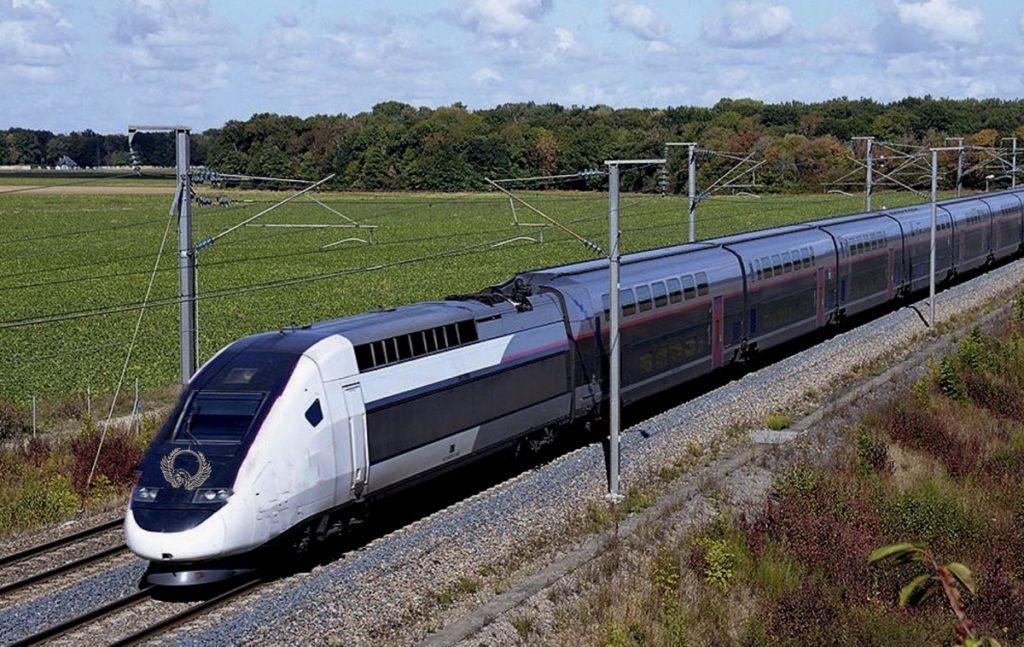 Trains? Very important for getting from Aquae Caesaris in the west to Brancadorum in the east and from Castra Lucilla in the south to the city of Roma Nova. And then there’s the line north to Graz in New Austria, and then to Vienna which is a vital international connection. Trains? Very important for getting from Aquae Caesaris in the west to Brancadorum in the east and from Castra Lucilla in the south to the city of Roma Nova. And then there’s the line north to Graz in New Austria, and then to Vienna which is a vital international connection.
In NEXUS, Aurelia and her team are staking out the station hoping to trap one of the bad guys:
“A yellow engineering maintenance engine chuntered through, emitting diesel fumes and noise. I checked my watch. Five minutes to go. Stopping only at Graz on its way from Vienna and then the border with Roma Nova, this train terminated here. It would disgorge its passengers on this platform. Hartl’s people had recorded no sightings at the border, but we wouldn’t let it rest there.
A buzz on my radio. The red and white engine of the Neuösterreichische Staatsbahn was crawling towards us. It ground to a stop amidst screeching brakes. Doors swung open from its four passenger carriages. We could be looking at two hundred people, but only about half of that number stepped out. Some were women with children, the usual business types, some students, tourists heaving cases down, three fashionable young women accompanied by a camera crew with large black boxes on a hand wagon, and obvious hikers with backpacks and mountain gear.”
In PERFIDITAS, Carina uses the train to remain anonymous:
“The train south left in ten minutes, and I hung around behind the luggage carts until the door warning sounded. I jumped on, catching a frown from the guard. She checked my ticket there and then. I shrugged and plunked myself down on a spare seat next to a suit. I stepped off at each of the next two stops, walking a few cars further up or down the platform each time, turning my coat inside out and putting my hair up or loosening it. I couldn’t see anybody following. Nobody paid any attention: they just wanted to get home after work.
I finally quit the train at Castra Lucilla. Although we came here every summer and in between, I’d never been to the train station: we always travelled in Aurelia’s Mercedes.”
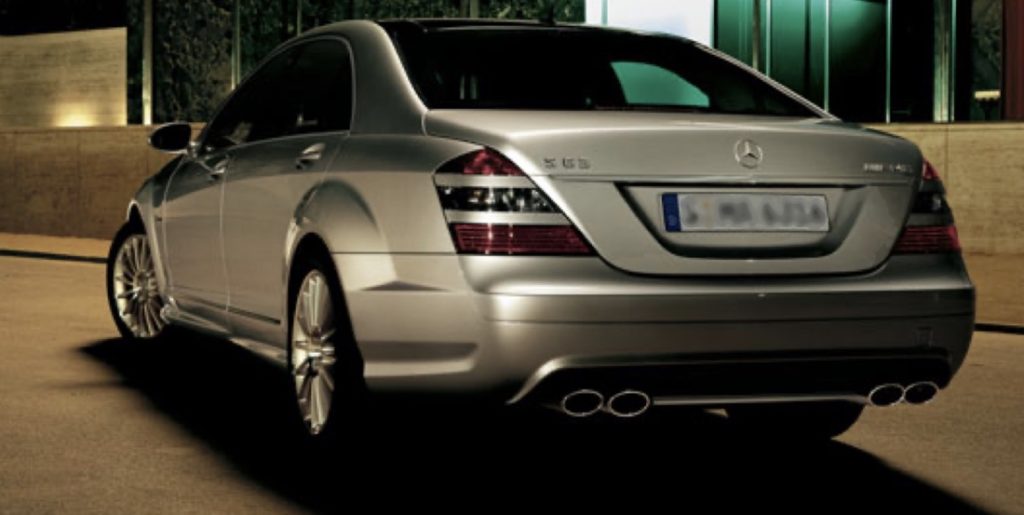 Ah, Aurelia’s Mercedes! Generally, I try to keep car makes generic but there’s something about a Mercedes that oozes luxurious comfort – exactly what the older Aurelia would travel in. Generally, cars are cars. Sorry, pertrolheads! Only if the person’s character is to be aware of such differences do I make any kind of nod towards a make or model. Renschman, a ruthless government black ops fixer in INCEPTIO would naturally notice Helena and Carina’s car was an Audi A5; to Carina it was just a car. Ah, Aurelia’s Mercedes! Generally, I try to keep car makes generic but there’s something about a Mercedes that oozes luxurious comfort – exactly what the older Aurelia would travel in. Generally, cars are cars. Sorry, pertrolheads! Only if the person’s character is to be aware of such differences do I make any kind of nod towards a make or model. Renschman, a ruthless government black ops fixer in INCEPTIO would naturally notice Helena and Carina’s car was an Audi A5; to Carina it was just a car.
In INSURRECTIO, Aurelia and Calavia hide from the rebels near the autovia – the Roman Novan name for motorway.
“As we neared the autovia, it was unnerving. The dual carriageways usually buzzed with freight lorries, cars and small vans weaving in and out. Now, I heard nothing. We crouched in the trees on top of the embankment looking down at four empty lanes, curving in a wide arc, the white road markings glimmering in the faint moonlight. Not a truck, nor tanker, nor private car. Zero.
Breaking the silence, the noise of an engine accelerating. It grew louder, deepening into the rhythmic thudding of a powerful diesel engine.
‘Back!’ Calavia hissed. But I was already lying flush to the ground and pulled Quirinia with me. An armoured personnel carrier, one of the new Agrippa wheeled models scarcely out of the factory, appeared, travelling at around 50 kph. Aside from the gunner, there was another figure, the commander, scanning both sides of the road with a pair of heavy night vision binoculars. She, or now more likely he, was looking purposefully. My stomach churned.
‘Calavia,’ I whispered as soon as it had disappeared into the distance. ‘They know we’re out here, but not where.’
‘Agreed.’
‘With their numbers it’s only a matter of time before they find us. We have to move now and fast.’ “
Sometimes, Carina and Conrad take to two wheels as in SUCCESSIO:
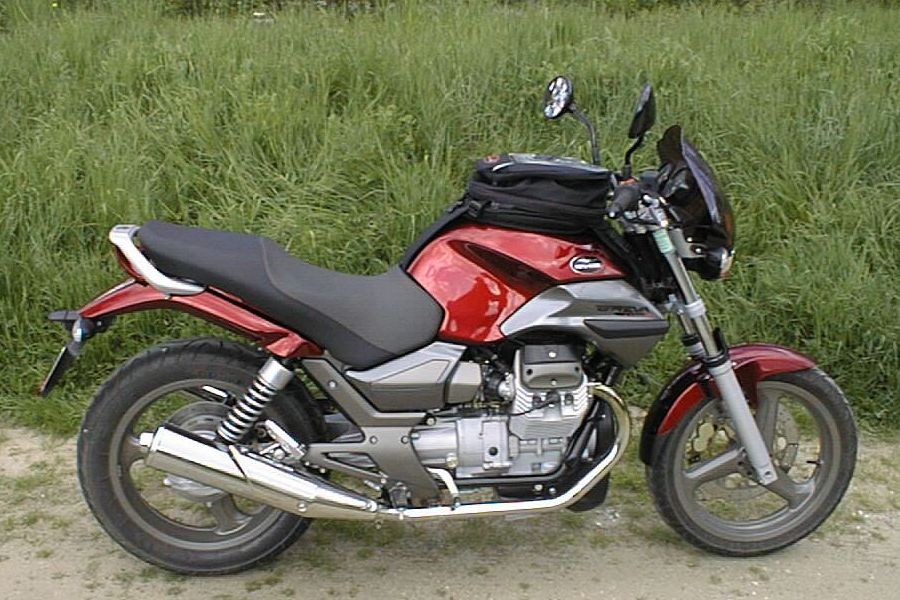 ” ‘And what exactly did you mean by that crack about Fausta?’ I shouted in Conrad’s ear as I clung to his leather-clad back as we tore back along the Aquae Caesaris road to the city. ” ‘And what exactly did you mean by that crack about Fausta?’ I shouted in Conrad’s ear as I clung to his leather-clad back as we tore back along the Aquae Caesaris road to the city.
He didn’t answer, but I felt rumbling in his back; he must have been laughing.
We glided to a stop by the tall gates, passed through the security system and coasted into the courtyard where the night team were coming on shift. I swung off the back of the Moto Guzzi and went to talk to the security chief.”
And yes, they have traffic problems as in AURELIA:
“The car crawled along the Dec Max, stopping and starting intermittently. The engine coughed and revved under the strain. Why in Hades this high street hadn’t been made one-way defeated me. They could easily loop it with the parallel street taking the eastbound traffic. I rubbed the window to wipe away the condensation. People were huddled up against the still frosty late morning, youngsters with hands in their pockets, older citizens swathed in hats, deep scarves and thick gloves.
Then I saw him. The little runt who’d followed me in Berlin. Last time I’d seen him was at the Anhalter station when I packed him off on the train to Bavaria. Now he was ambling along the Dec Max as if he were a summer tourist. Far too casually.”
Transport is essential in any country but when you’re building an alternative world it brings readers in. We can relate to travelling on planes, trains and automobiles. Not so sure about the motor bike…
Transport not only gets the character from A to B (or not), but can often be crucial to the plot.
And lastly, words like PORTUS, autovia and Dec Max (Decumanus Maximus – High Street) reinforce the Roman link, something that’s ever-present in in the modern mini-state of Roma Nova.
Alison Morton is the author of Roma Nova thrillers – INCEPTIO, CARINA (novella), PERFIDITAS, SUCCESSIO, AURELIA, NEXUS (novella), INSURRECTIO and RETALIO, and ROMA NOVA EXTRA, a collection of short stories. Audiobooks are available for four of the series. Double Identity, a contemporary conspiracy, starts a new series of thrillers. JULIA PRIMA, Roma Nova story set in the late 4th century, starts the Foundation stories. The sequel, EXSILIUM, will be out in February 2024.
Download ‘Welcome to Alison Morton’s Thriller Worlds’, a FREE eBook, as a thank you gift when you sign up to Alison’s monthly email update. You’ll also be among the first to know about news and book progress before everybody else, and take part in giveaways.
If you enjoyed this post, do share it with your friends!
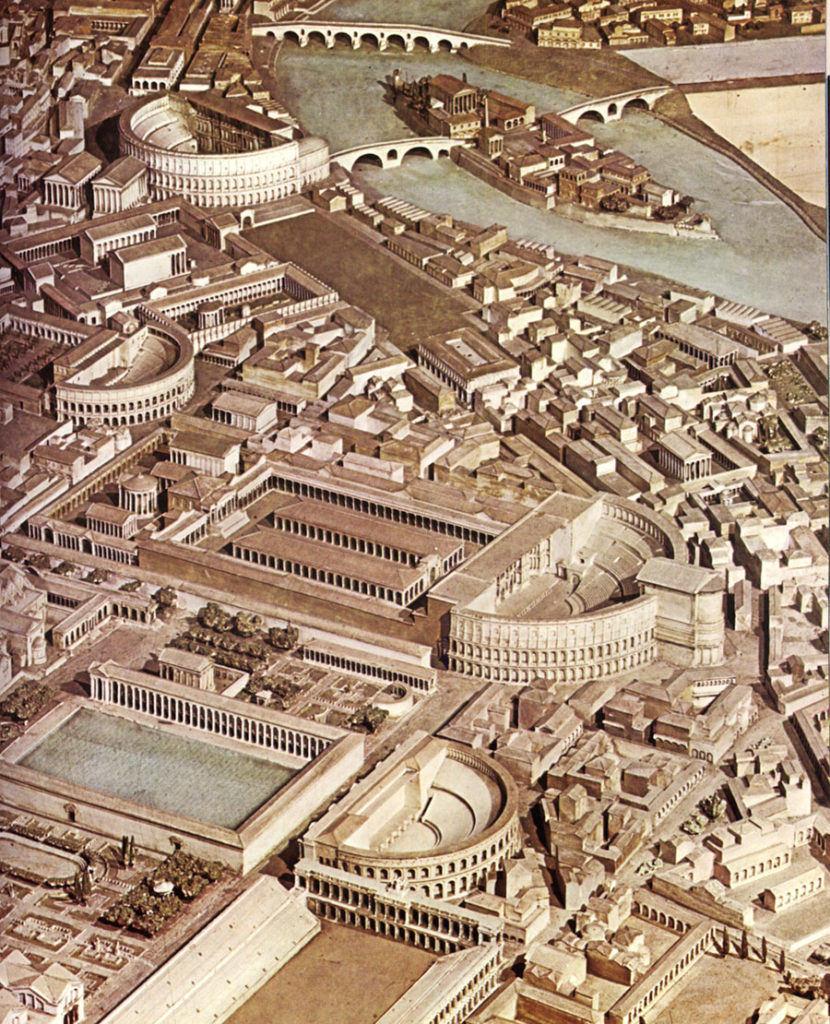 Campus Martius Rome, AD 300 (reconstruction) Shopping is a national obsession in many countries and December is the peak of the frenzy. In a way, it’s a sign of the relative wealth of 21st century people, but in another it plays to the instincts of acquisition and, somewhere in the lizard brain –survival.
Everybody dreads being poor. However, it seems that comparative or relative poverty plays a larger part. It seems we must have the ‘stuff’ that others have in order to hold our heads up. And never more so than in mid-winter, it seems.
Christmas markets which now spring up in every self-respecting town and city may have their modern origins from those in Germany – a throwback itself to medieval winter markets and fairs – but December markets were a tradition in ancient Rome.
Saturnalia excess
From the 17 December for a varying number of days, Romans of many centuries celebrated the festival of Saturnalia in honour of the god Saturn. Formal dress like the toga was abandoned for brighter, (the brighter the better) and looser tunics. Eating and drinking increased as did gambling, masters, mistresses and slaves swapped places in the pecking order (even if for only a day) and family members and friends exchanged presents.
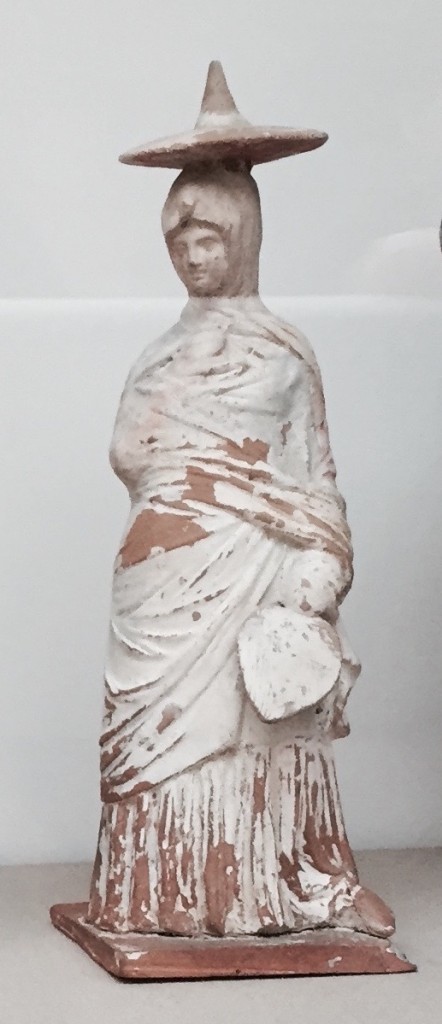 Terracotta sigillarium After days of public festivities, family parties, raucous horseplay and general laxity, the festival of Sigillaria around 23 December was a quieter day, not just to get over hangovers, but to exchange gifts of sigilla, small clay figurines, small pieces of jewellery, scarves and candles. Sometimes, the gifts were rather more sumptuous.
In the run-up to the festival season, traders sold gifts in all price ranges from temporary stalls and booths in the Campus Martius or earlier in the Porticus Argonautarum, built by the Agrippa in 25 BC.
Juvenal complains that women, always anxious to keep up with their neighbours, demanded crystal vases and diamond rings from the stalls in this market. But Juvenal was always moaning about women…
December markets would have added to the holiday atmosphere in the city, with adults giving children money to spend, probably to slake some of the latter’s mounting excitement or simply to get them out of the house. Nothing new, then.
Was Ancient Rome a shopping paradise?
By the late first century BC, there were a million inhabitants in Rome, an urban population not reached again in the western world until early Victorian times with London. Like most urban residents, the people of Rome relied on retailers to provide them with food, clothing and other goods. Both documentary and archaeological evidence point to a complex and flourishing retail trade. The sheer number of retailers and shoppers must have been one of the most striking aspects of the city.
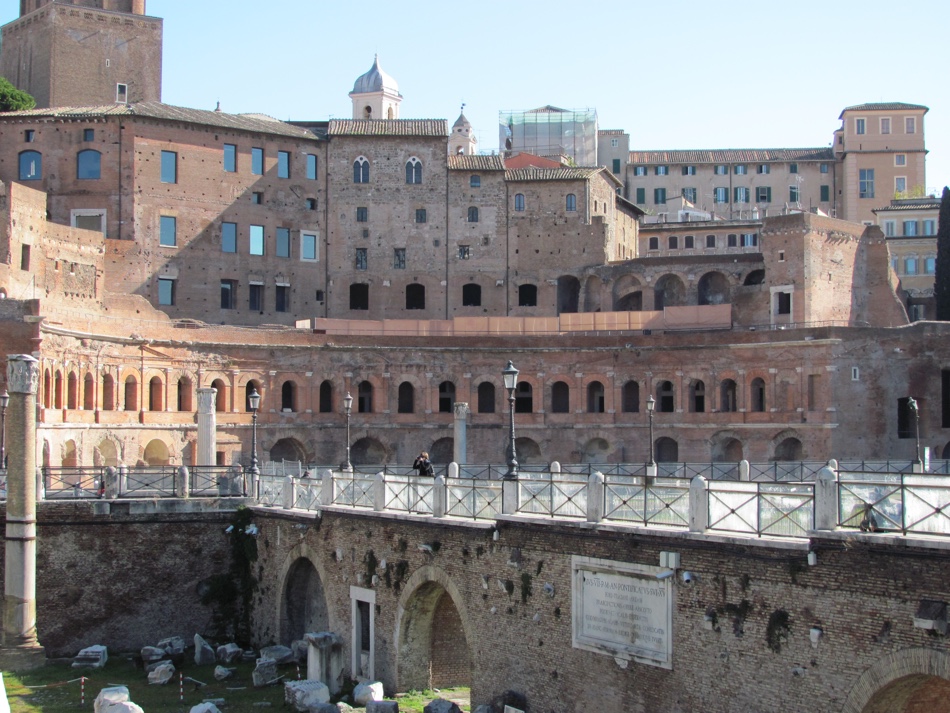 Trajan’s Market with medieval additions above Trajan’s Market, built 100-110 AD as an integral part of Trajan’s forum, was thought to be the world’s oldest shopping mall, but the surviving arcades are now believed by many to be administrative offices for Emperor Trajan. The shops and apartments were built in a multi-level structure and you can still walk through several of the levels. Highlights include delicate marble floors and the remains of a library.
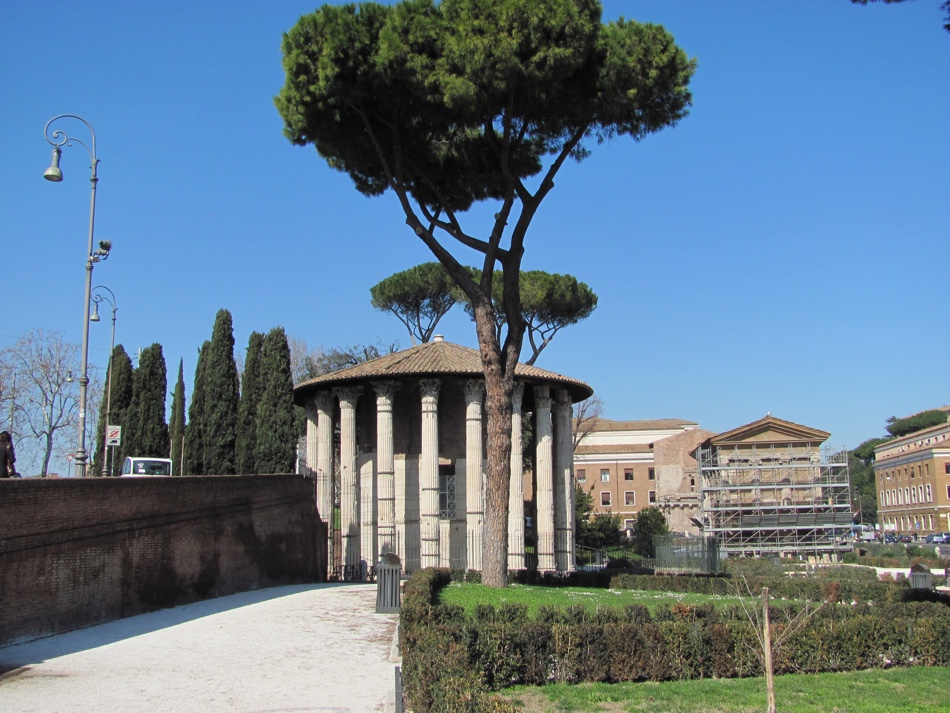 Temple of Hercules on the edge of the former Forum Boarium Markets were the backbone of retail and were found in every district of the city, even in the poor ones where basics such as fruit, vegetables, pulses and chickens were sold daily.
The forum was a meeting place, marketplace and political centre of any town, generally rectangular, surrounded by public buildings, often with a colonnaded portico with shops and offices. In larger towns and, of course, the city of Rome itself, additional specialist fora such as forum boarium (meat), forum piscarium (fish) and forurum cuppedinis (‘dainties’) existed as did the macella – purpose-built shopping centres crammed with more expensive food luxuries from home and across the empire.
At the mundane level, shops sold food, spices, shoes, wool, books, household goods, clothes, tools. Interspersed were barber shops, blacksmiths, copper beaters, scribes, laundries, bars, eateries and the odd brothel.
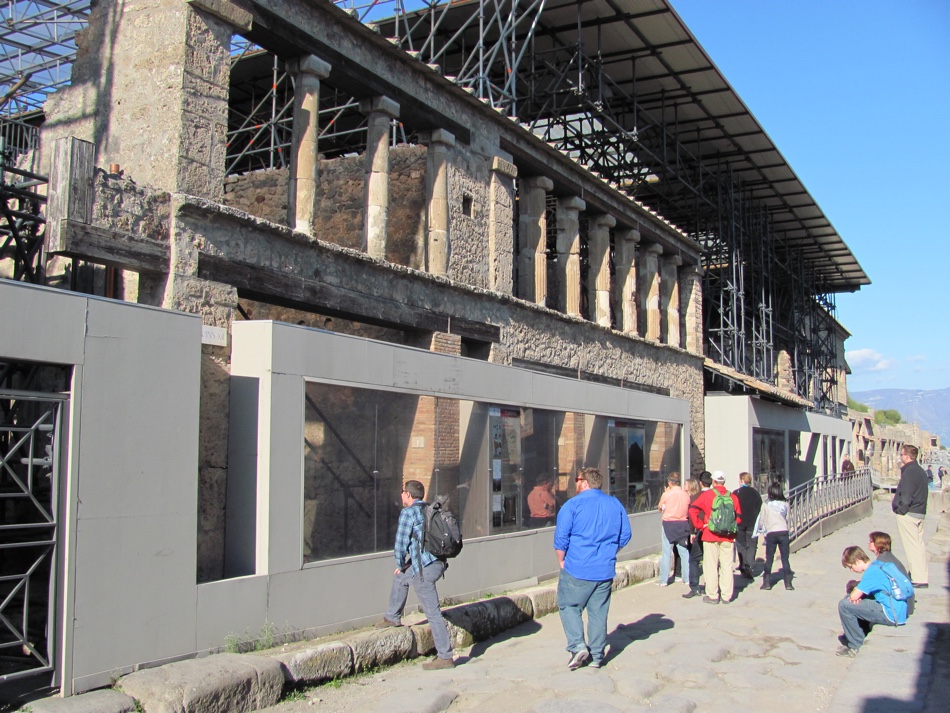 Street in Pompeii Shops were more often than not single-units, often single rooms, usually occupying most of the frontage of townhouses or apartment blocks. Sometimes shops fronted the street with workshops and storage behind and living quarters above. For example, a bakery would have milling area, ovens and storage to the rear, away from the front counter.
Retailers were everywhere, but concentrated in the busiest areas of the city. Footfall – the holy grail of the modern retail sector – was equally important then. The shops needed a licence which was engraved on a piece of marble and displayed publicly. Small shops and workshops lined the main thoroughfares, spilling out over their thresholds into the streets and colonnades. The poet Martial remarked that until the emperor Domitian issued an edict banning this practice, Rome looked like one big shop. (Remind anyone of a giant modern equivalent retail entity?)
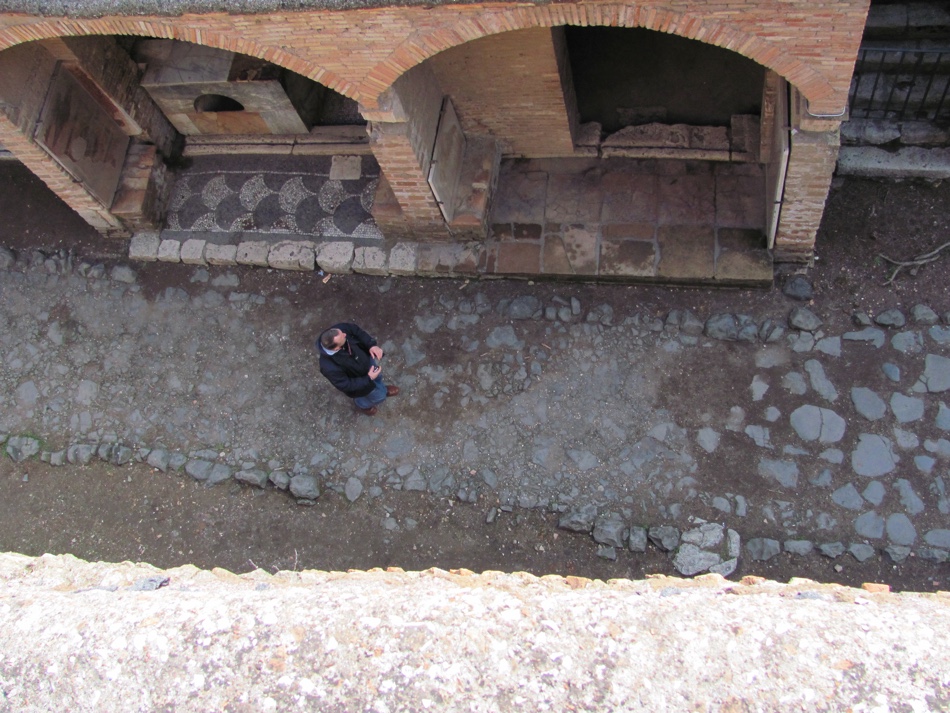 Looking down to street bar, Pompeii Market traders, street sellers and ambulant hawkers tended to be found in central areas around temples, bathhouses, forums, circuses, amphitheatres and theatres, attracted by the commercial opportunities offered by good footfall. Perishable items that could be eaten straight away – bread, hot sausages, pastries, and chickpeas – were perfect for a busy Roman on the run. Lindsey Davis’s Roman detective Falco is always picking up street food to munch while on an investigation.
The economic divide
Men and women mixed freely in the Roman retail environment as both buyers and sellers at all levels. At one end, street traders sold everyday food and cheap products at low prices, probably catering for customers of limited means. Many of these traders would probably have themselves been poor, retailing home-produced or grown items on a small, sometimes part-time, basis in order to survive.
At the other end, wealthy shoppers who wanted to buy exotic food to impress their dinner guests could visit a macellumto bag a turbot or red mullet at eye-watering prices, or perhaps a few dormice or dozen songbirds.
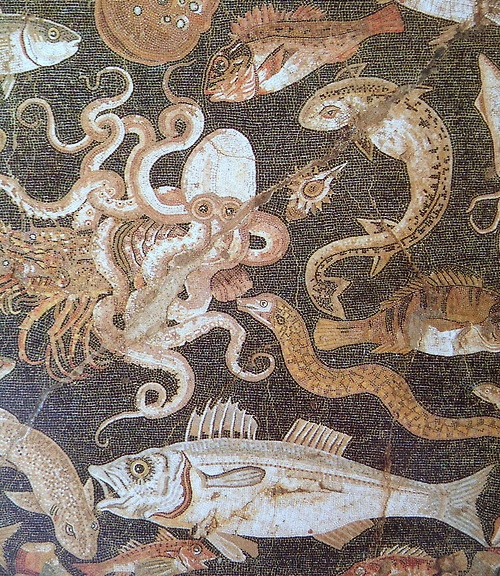
Enterprising retailers would visit wealthier citizens in their own homes, sometimes speculatively, bringing silks, ivory combs, gold jewellery, jade and amber for the ladies of the house. No ready cash? Sellers would be happy to take a credit note knowing the pater familias would pay up when he got home or when the trader genteelly threatened to foreclose or expose profligacy and debt incurred by the household. Modern plastic, anyone?
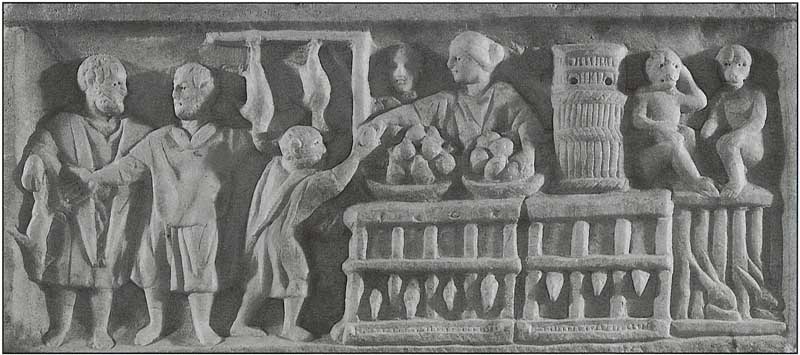
As with today, retail trade in Ancient Rome was one of the most visible sectors of the urban economy, with retailers locked in a fierce competition to relieve customers of their limited and taxed money. So either we are responding to a basic human instinct when we over-shop or Rome was a very modern metropolis indeed.
(Re-published)
Alison Morton is the author of Roma Nova thrillers – INCEPTIO, CARINA (novella), PERFIDITAS, SUCCESSIO, AURELIA, NEXUS (novella), INSURRECTIO and RETALIO, and ROMA NOVA EXTRA, a collection of short stories. Audiobooks are available for four of the series. Double Identity, a contemporary conspiracy, starts a new series of thrillers. JULIA PRIMA, Roma Nova story set in the late 4th century, starts the Foundation stories. The sequel, EXSILIUM, is now out.
Download ‘Welcome to Alison Morton’s Thriller Worlds’, a FREE eBook, as a thank you gift when you sign up to Alison’s monthly email update. As a result, you’ll be among the first to know about news and book progress before everybody else, and take part in giveaways.
If you enjoyed this post, do share it with your friends!
|
Subscribe to Blog via Email
Join 37 other subscribers.
Buy AURELIA from Apple!
UK

US
|