 What does Roma Nova look like? What does Roma Nova look like?
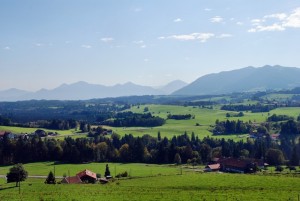
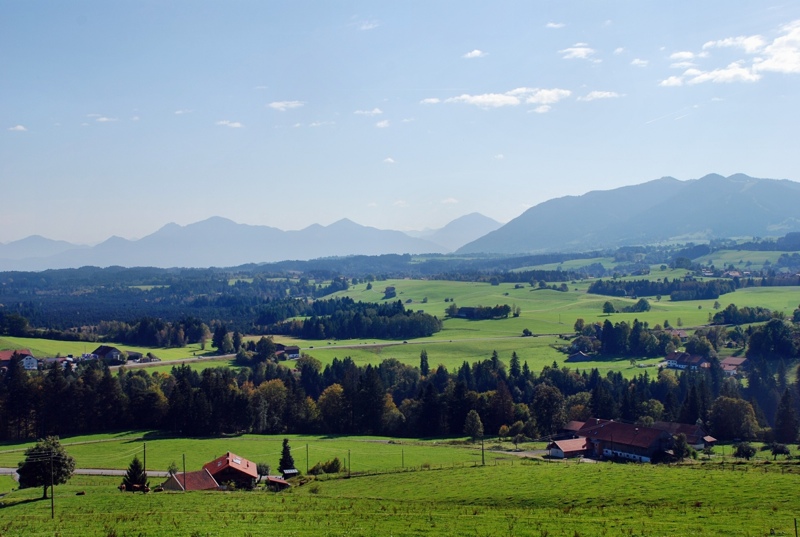
It’s an alpine country with lower lying valleys a few small towns (Castra Lucilla to the south of the main city, Brancadorum at the east, Aquae Caesaris to the west) and a river city full of columns, a forum, Senate house and temples.
There are high mountains and hills to three sides which although very useful for defence in past ages, keeps the 21st century pilots from Air Roma Nova (and most international airlines on their toes when landing their passenger aircraft after a long haul flight!
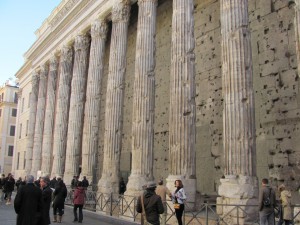
Roma Novans don’t have a different name for their capital; like the ancients who called the city of Rome the “urbs“, their descendants just call it “the city”. (If in the books I need to distinguish the city from the country of Roma Nova, I occasionally have to use Roma Nova City, but I try to get round it win other ways as it wouldn’t really be authentic in Roma Novan terms.)
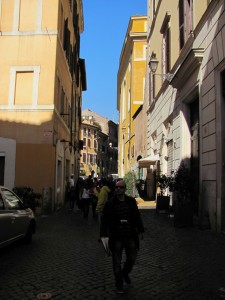
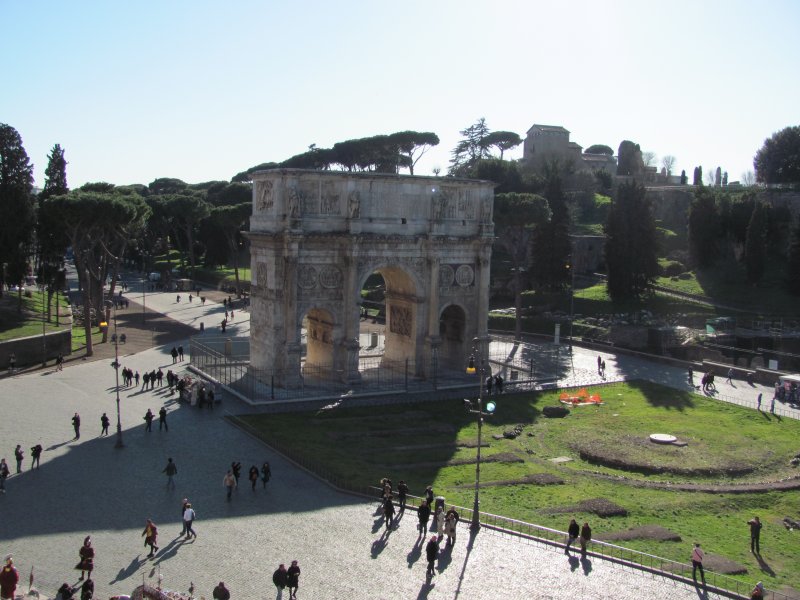
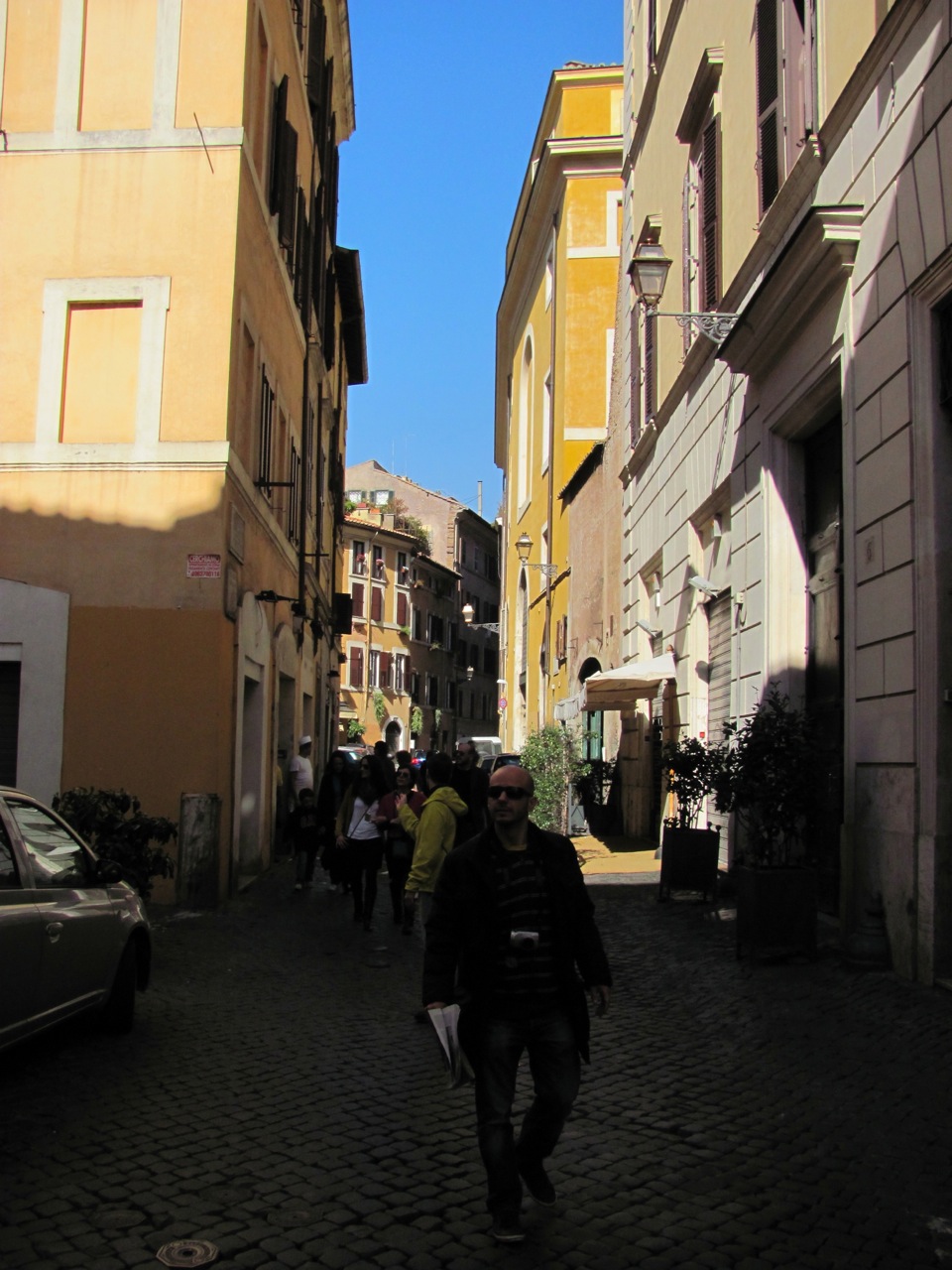
The original Roman architecture from the late 4th century is surrounded by buildings from the intervening ages, so you’ll see local mixed styles, some Eastern Roman (Byzantine), medieval, Renaissance, Biedermeier (Regency in English) and later. More photos here.
They have temples, offices, admin buildings, theatres, even an amphitheatre (no blood sports or executions in modern Roma Nova!). and people need to live somewhere, so there are apartments and houses in towns and farms and villas in the country.
If it’s not a real country, how did you dream it up?
Sadly, you can’t use Google Maps to view Roma Nova’s geography from space nor load a Wikipedia page for its history. But inventing a country doesn’t mean you can throw any old facts into your book. They have to hang together. Geography is very important as you need to know what crops they can grow – spelt, oats, olives in sheltered areas, vines, vegetables and fruit – and what animals they raise – cows, sheep, horses, pigs, poultry, etc.
 To look back to when those first Roman dissidents left Italy in AD 395 and trekked north to found Roma Nova, you can find out quite a bit about Roman life and culture at that time. To look back to when those first Roman dissidents left Italy in AD 395 and trekked north to found Roma Nova, you can find out quite a bit about Roman life and culture at that time.
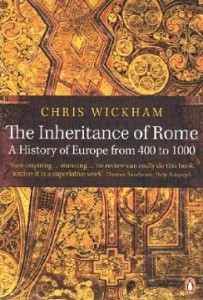
This gives a firm starting point: their mindset, their customs, their concerns, their ways of doing things. For instance, the first chapters of Christopher Wickham’s book The Inheritance of Rome draws a clear and detailed picture.
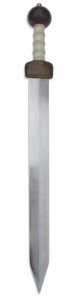
With the Roma Nova books, I’ve used terms that people might already know like the Roman sword, gladius, greeting such as salve, solidi as money, ranks like legate and centurion. But I’ve made the gladius carbon steel, the solidi have currency notes, debit cards and apps as well as coins, and I’ve mixed in other European military ranks such as captain in with traditional Roman ranks. It gives a sense of history that’s gone forward and adapted to the modern age.
Ancient Romans were fabulous engineers and technologists, organised and determined to apply practical solutions to the needs of their complex and demanding civilisation, so I’ve positioned them in the 21st century at the forefront of the communications and digital revolutions.
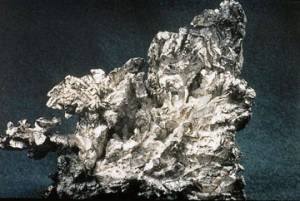 The silver mines and processing industry that underpinned Roma Nova’s early economy, and still play an extremely important role in 21st century Roma Nova, are another allusion to ancient Rome. The silver mines and processing industry that underpinned Roma Nova’s early economy, and still play an extremely important role in 21st century Roma Nova, are another allusion to ancient Rome.
Silver was a big reason the Romans wanted Britannia. Dacia (Romania) and Noricum (Austria) in central Europe were of special significance, as they were very rich in high quality deposits of silver, as well as iron ore, some gold and rare earths.
Giving Roma Nova rich veins of silver provides a plausible reason for its economic survival through the ages.
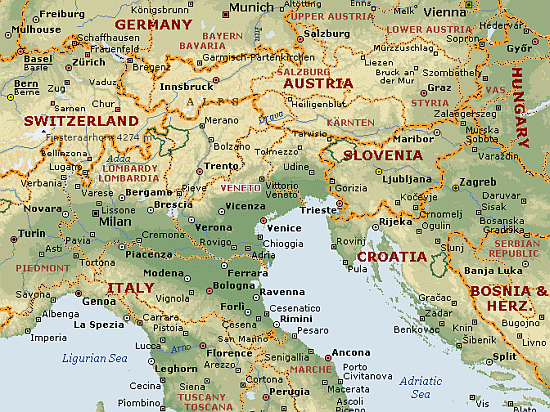
I also wanted my imaginary country to be near Italy and Austria for international connections. So it had to be in south central Europe. In the end, I pinched Carinthia in southern Austria, and northern Slovenia as my models.
This and the previous post give you a glimpse into the world of Roma Nova. What else would you like to know?
Updated January 2024: Alison Morton is the author of Roma Nova thrillers – INCEPTIO, CARINA (novella), PERFIDITAS, SUCCESSIO, AURELIA, NEXUS (novella), INSURRECTIO and RETALIO, and ROMA NOVA EXTRA, a collection of short stories. Audiobooks are available for four of the series. Double Identity, a contemporary conspiracy, starts a new series of thrillers. JULIA PRIMA, Roma Nova story set in the late 4th century, starts the Foundation stories. The sequel, EXSILIUM, is now out.
Download ‘Welcome to Alison Morton’s Thriller Worlds’, a FREE eBook, as a thank you gift when you sign up to Alison’s monthly email update. You’ll also be among the first to know about news and book progress before everybody else, and take part in giveaways.
If you enjoyed this post, do share it with your friends!
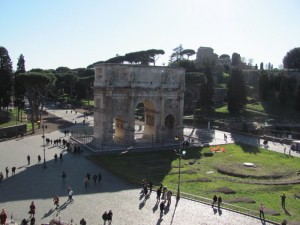 When I began writing the adventures of Karen/Carina, readers became very interested in Roma Nova and its people. Some wanted to visit and others wanted to sign up to live there! I thought I’d share some of the questions they’ve asked… When I began writing the adventures of Karen/Carina, readers became very interested in Roma Nova and its people. Some wanted to visit and others wanted to sign up to live there! I thought I’d share some of the questions they’ve asked…
Why does the heroine change name?
Carina is Karen’s real name. Her mother, who ran off to marry William Brown and live in the Eastern United States, registered Carina’s birth at the Roma Nova legation in Washington. But as their child was being brought up in the Eastern United States, her parents decided to anglicise her name to Karen. Of course, things changed when Karen was forced to flee to Roma Nova in INCEPTIO when a bad guy tried to terminate her.
What does our heroine do on her day off?
Swims, watches movies and sleeps!
What do Roma Novans eat?
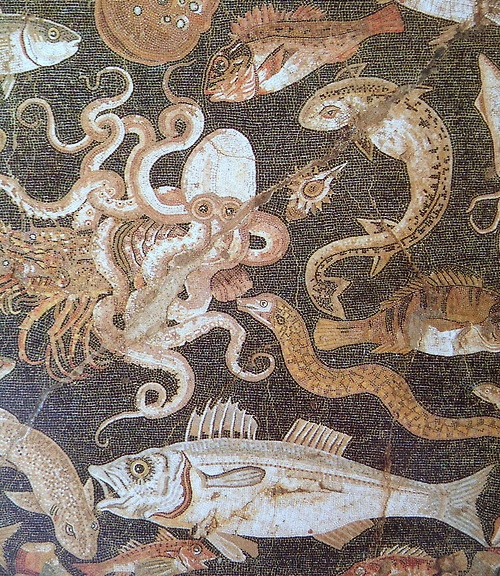
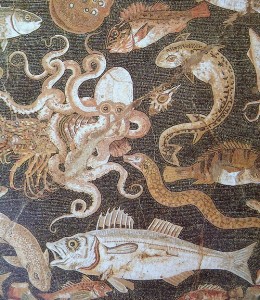
Anything! Well, standard European food, but with a bias to a Mediterranean diet, not forgetting the Roman staples of beans, olives, fish and honey.
But I don’t think Carina’s diet includes garum, the traditional Roman fermented fish sauce which sounds pretty yucky to her.
As for drink, Carina’s family farm at Castra Lucilla does produce some very popular white wine and to the east of the capital, the famous Brancadorum champagne is very much appreciated!
 Why do the characters swear so much, and by so many gods? Why do the characters swear so much, and by so many gods?
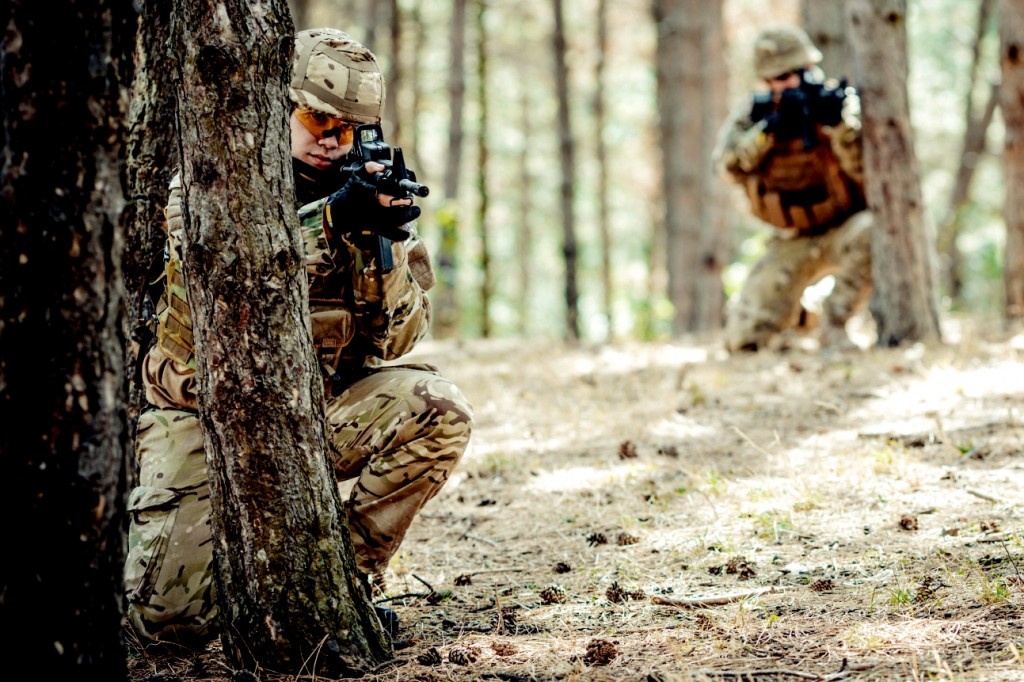
Many of my characters are in the police service or the military, particularly the Praetorian Guard Special Forces and like many similar services in other countries, they swear a lot between themselves – sorry! I have reduced the amount you would normally expect by about 70%.
Using the Roman (and sometimes Greek) gods means I’m free from using the more Anglo-Saxon expressions in many thriller and crime stories which can upset readers. Yes, it’s a cop-out in one way, but authentic for Roma Novans in their society!
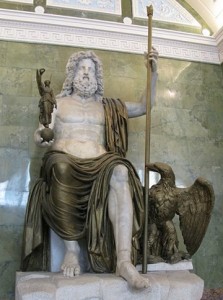
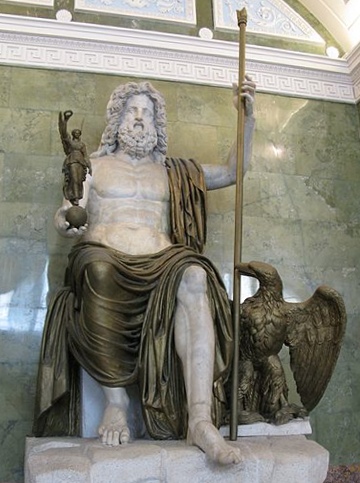
And who else would they swear by if not Juno, Mars, Jupiter or Mercury? “Mars’ balls!” is especially used in moments of surprise or frustration.
Juno and Venus are particularly favoured by women. The bar owner, Dania, who becomes Carina’s friend, loves using “Venus’ tits!” on (in)appropriate moments. Romans were and are fairly forthright.
What’s Roma Nova’s history?
Oh, this goes back to the end of the 4th century when four hundred Romans trekked out of Italy to found a new settlement in the mountains of Noricum. You can read this or find out far more in JULIA PRIMA and EXSILIUM where you can plunge into the whole story.
How does the heroine learn Latin so quickly?
Her mother spoke Latin to her as a baby and toddler, and she went to Latin classes when younger, a little like the heroine in My Big Fat Greek Wedding who went to Greek class every Saturday.
Karen’s Latin’s rusty, but it comes back… If a language is learned in the early years, it does tend to stick in the back of the brain and the ability resurfaces when it’s triggered by the person being immersed again in that language environment. I know this from personal experience with French which I started at age five.
Of course, our heroine has two invaluable aids: a smart mouthed teenager (Aelia in the Washington Legation), and the fascinating Conrad…
Read more about world building here (Part 2)…
Updated January 2024: Alison Morton is the author of Roma Nova thrillers – INCEPTIO, CARINA (novella), PERFIDITAS, SUCCESSIO, AURELIA, NEXUS (novella), INSURRECTIO and RETALIO, and ROMA NOVA EXTRA, a collection of short stories. Audiobooks are available for four of the series. Double Identity, a contemporary conspiracy, starts a new series of thrillers. JULIA PRIMA, Roma Nova story set in the late 4th century, starts the Foundation stories. The sequel, EXSILIUM, is now out.
Download ‘Welcome to Alison Morton’s Thriller Worlds’, a FREE eBook, as a thank you gift when you sign up to Alison’s monthly email update. You’ll also be among the first to know about news and book progress before everybody else, and take part in giveaways.
If you enjoyed this post, do share it with your friends!
Our first encounter with Romans is often a film or TV series depicting soldiers marching in armour, being tough, shouting and thrusting a sword into some barbarian in a dark, wet and enemy-infested wood. Or perhaps we think about the ruins left of magnificent imperial or public buildings?
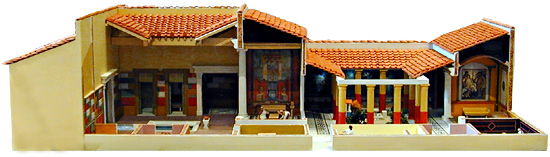
But what about the calmer side of Roman life? Where did the civilian Romans live? The very rich and/or powerful lived in palaces or extensive town villas, but the middle-class merchants who had done well, or professional families, lived in something like this:
Model of a Roman townhouse (domus)
 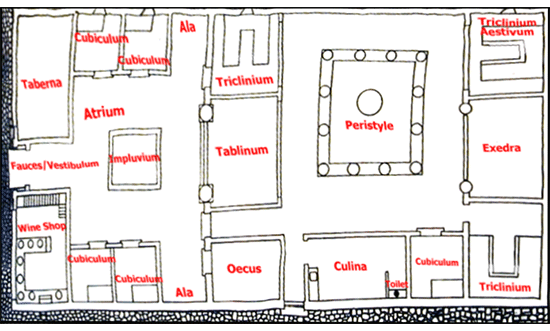
| Atrium |
formal reception hall |
| Ala |
wings/large alcoves opening from the atrium |
| Cubiculum |
small room/bedroom |
| Culina |
kitchen |
| Exedra |
garden room |
| Impluvium |
sunken part of the atrium in to catch and carry away rainwater |
| Oecus |
salon/large dining room |
| Peristylium |
colonnaded garden |
| Taverna |
(wine) shop |
| Tablinium |
office/study |
| Triclinium |
dining room |
| Vestibulum |
entrance hall |
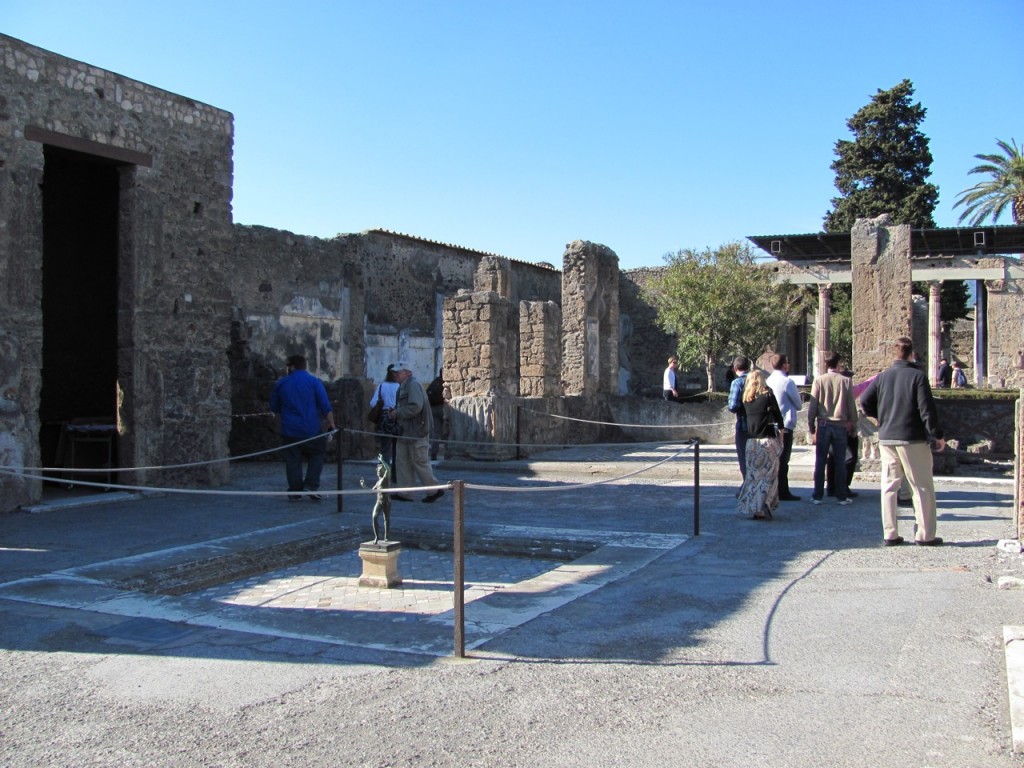 Impluvium and atrium This is based on a house lived in by a middle ranking Roman in Pompeii.
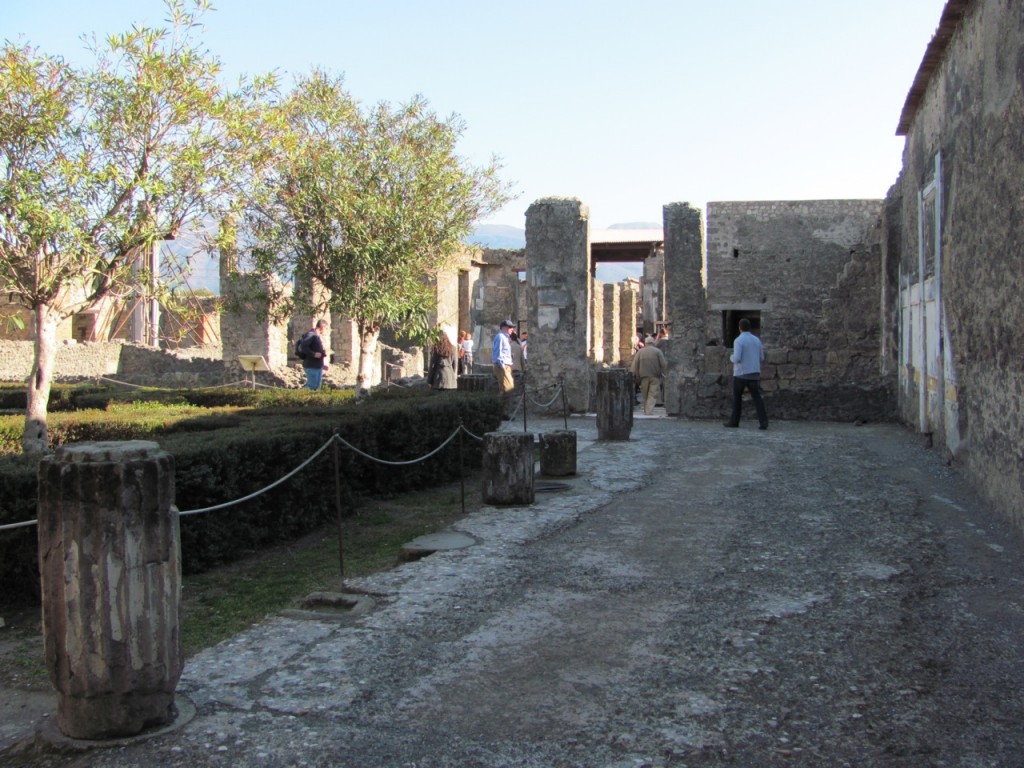 Peristylium Most families, in more modest circumstances, lived in one or cramped two rooms in apartment blocks of varying stability called insulae. Although kitchen and latrines could be shared, the blocks often had running water and sanitation. Rooms could be owned or rented. They were built in timber, mud brick, and later primitive concrete and supposed to be restricted in height to about 20 metres. Some rare examples survive in Rome at the foot of the Capitoline Hill and in Ostia Antica, Rome’s ancient port.
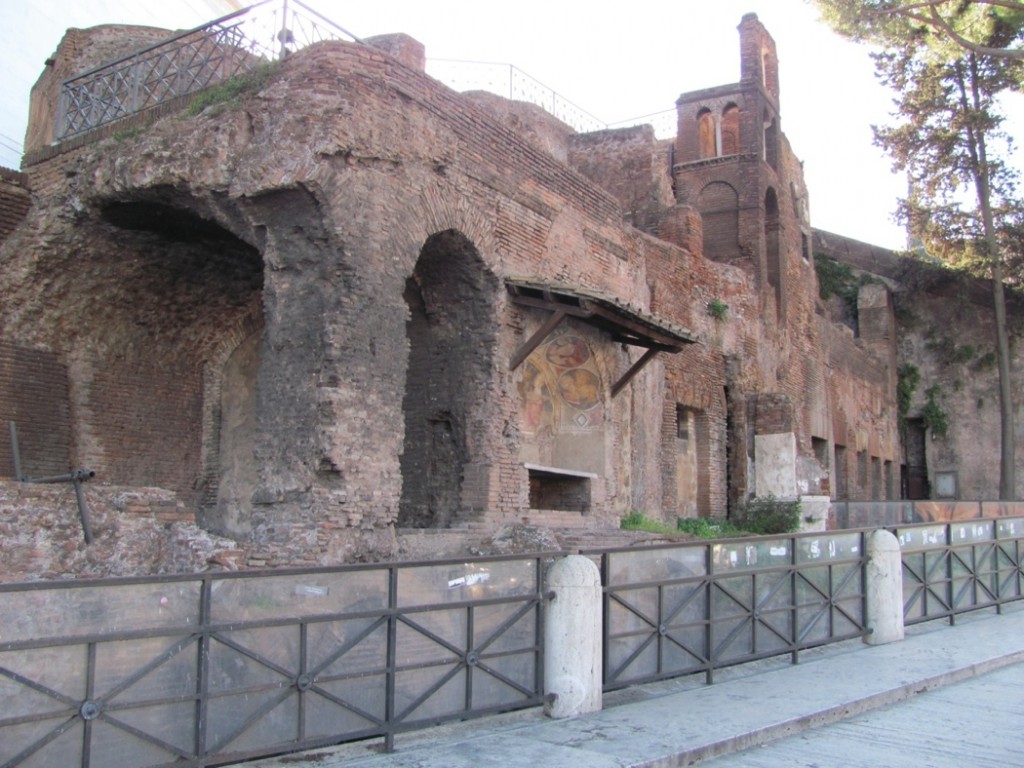 Insulae (apartment blocks) at the foot of the Capitoline Hill, Rome 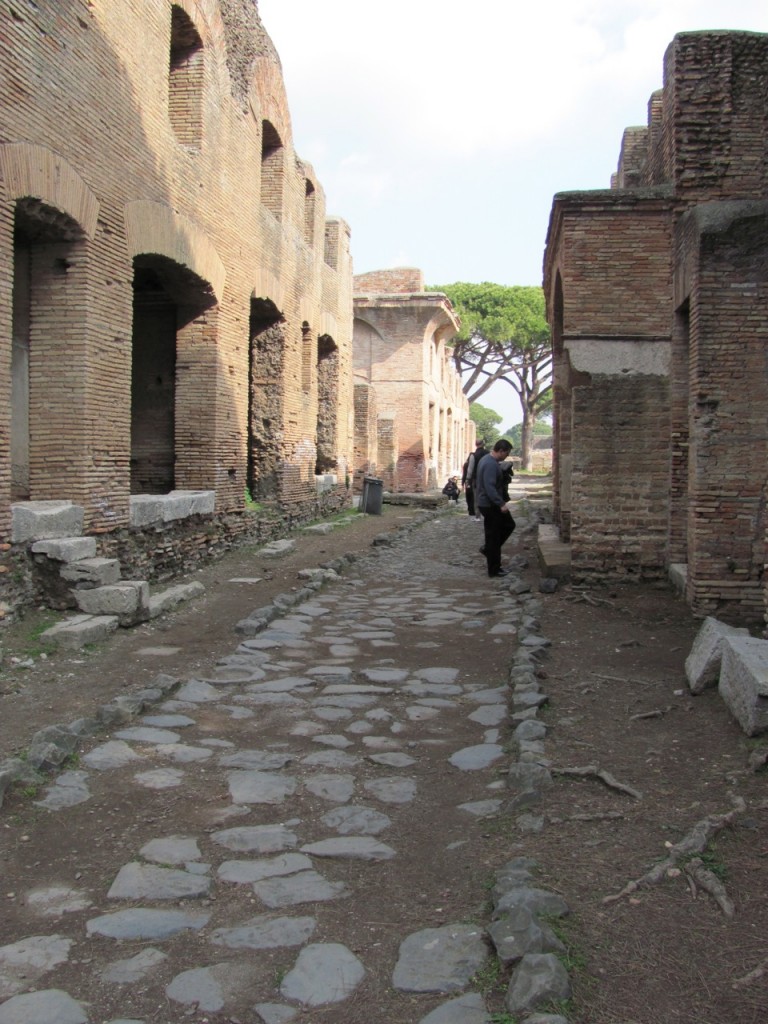 Insulae in Ostia Antica Carina and her family in 21st century Roma Nova live in a large townhouse still called a domus – Domus Mitelarum – which has an atrium with an oculus – a bull’s eye – in the roof to let in light, but no longer rainwater – it’s been glazed over as has the impluvium. Roma Nova is an Alpine country and nobody wants snow in their main living room! But there are alcoves (ala) to sit in and a peristyle garden in the old part of the house.
A house is very much part of a book’s setting, but it always expresses its inhabitants’ ideas and attitudes, however grand or lowly the building may be.
Model and map courtesy of the University of Pennsylvania Museum of Archaeology via http://www.vroma.org/~bmcmanus/house.html
Alison Morton is the author of Roma Nova thrillers – INCEPTIO, CARINA (novella), PERFIDITAS, SUCCESSIO, AURELIA, NEXUS (novella), INSURRECTIO and RETALIO, and ROMA NOVA EXTRA, a collection of short stories. Audiobooks are available for four of the series. Double Identity, a contemporary conspiracy, starts a new series of thrillers. JULIA PRIMA, Roma Nova story set in the late 4th century, starts the Foundation stories. The sequel, EXSILIUM, is now out.
Download ‘Welcome to Alison Morton’s Thriller Worlds’, a FREE eBook, as a thank you gift when you sign up to Alison’s monthly email update. You’ll also be among the first to know about news and book progress before everybody else, and take part in giveaways.
If you enjoyed this post, do share it with your friends!
|
Subscribe to Blog via Email
Join 37 other subscribers.
Buy AURELIA from Apple!
UK

US
|


 What does Roma Nova look like?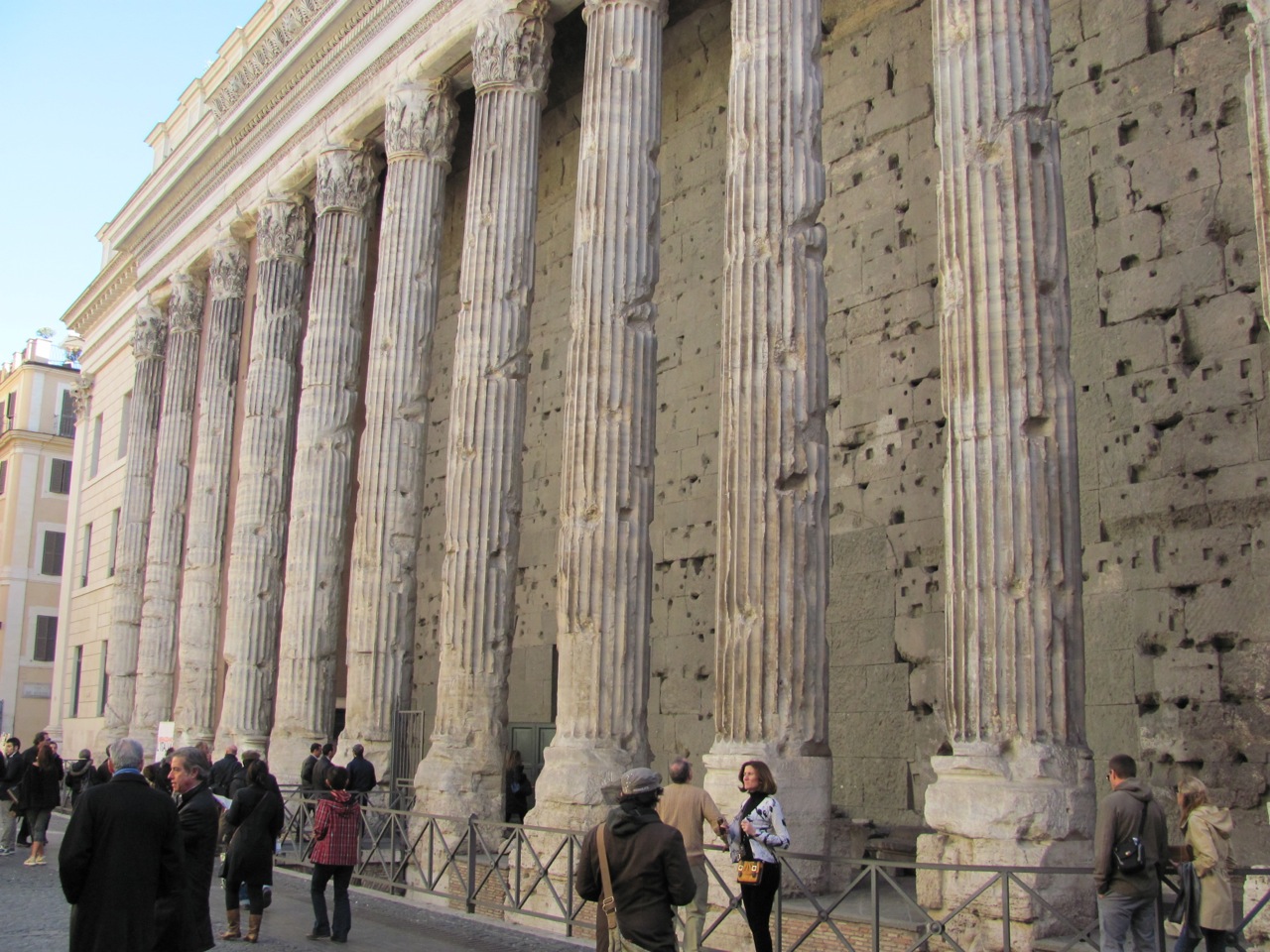

 The silver mines and processing industry that underpinned Roma Nova’s early economy, and still play an extremely important role in 21st century Roma Nova, are another allusion to ancient Rome.