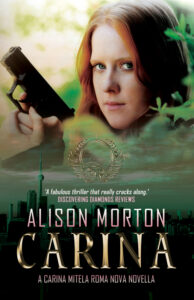
 2021 cover Good question! I’ll try and explain…
We’re still in Roma Nova, the remnant of the Roman Empire that has toughed it out into the modern age. It’s an alternative 21st century with many aspects exactly the same as in our own timeline, but some are very very different; Praetorian Guards for one. They guard the imperatrix of Roma Nova and act as an intelligence and special forces service.
INCEPTIO, PERFIDITAS and SUCCESSIO tell of episodes in Roma Novan Carina Mitela’s life at ages 24/25, 32 and 39/40. I chose to skip other years as her life wasn’t at a special crisis point until the time of each of the stories in those three books. This reflects our own lives with brief highs in a continuous flow. I would think, though, that Carina’s life is generally more exciting than our own, even in the more mundane periods.
At the end of INCEPTIO, we leave Carina as a newly minted Praetorian officer off on a mission in the borderlands of Roma Nova. (Sorry if that’s a spoiler, but it’s a series; she has to survive the first book.) When we meet her at the beginning of PERFIDITAS, she’s a captain, heading her own branch and part of the command group, albeit as a junior member. She’s confident and competent with a record of success. A bridge across those six years seemed a good idea.
In PERFIDITAS and SUCCESSIO, I make allusions to past incidents when Carina skated near the edge or crossed the line, such as the climbing race with Daniel when she was punished for disobeying standing orders. Not only did she catch seven days in the cells, but also missed her daughter’s fourth birthday. In CARINA, we see how this happened and the consequences…
Readers have asked me what happened to various characters in INCEPTIO. It’s been a real pleasure seeing some of them again from the perspective of six books later. I re-read INCEPTIO and PERFIDITAS in an almost studious way to check some of the references and loved meeting these characters again. Readers will also find in CARINA brief touches of foreshadowing for characters in PERFIDITAS. Interweaving the stories behind the stories in alternative history gives the characters their own backstory and history.
 Original photo used for the cover cityscape About half of CARINA is set in ‘North America’; even the cityscape on the cover reflects this. (Leave a comment if you recognise this 😉 ) Here, the République Québecoise has just won its autonomy from France, although Napoleon VI’s face stares out from the old currency notes still in circulation. The Eastern United States with its federated system and autonomous city states still remains a danger for Carina, so it was very tempting to bring that potential disaster into the story. On a personal note, I’ve loved weaving the experience of my 2015 seven week trip to the US and Canada into this story. More about the world of CARINA
So why a shorter book?
I wanted to write a standalone adventure for Carina – she deserved it – but not one with the same complexity and depth of disaster for Roma Nova. When I read, I can’t bear ‘padding’ or dragging out for artificial reasons. I wrote the story as it came out of my mind and its length reflects the action within it. I did set a target word count between 30,000 words and 40,000 as I wanted to see if I could do it and that’s exactly what happened!
Readers seem to like short, sharp reads and I hope I’ve given them this and also added to the Roma Nova canon. Over to you!
Available on Amazon Kobo iBooks B&N NOOK and in print through your local independent bookshop or favourite online site.
Alison Morton is the author of Roma Nova thrillers – INCEPTIO, CARINA (novella), PERFIDITAS, SUCCESSIO, AURELIA, NEXUS (novella), INSURRECTIO and RETALIO, and ROMA NOVA EXTRA, a collection of short stories. Audiobooks are available for four of the series. Double Identity, a contemporary conspiracy, starts a new series of thrillers.
Download ‘Welcome to Alison Morton’s Thriller Worlds’, a FREE eBook, as a thank you gift when you sign up to Alison’s monthly email newsletter. You’ll also be among the first to know about news and book progress before everybody else, and take part in giveaways.
If you enjoyed this post, do share it with your friends!Like this:Like Loading...
The old clichéd saying that ‘Rome wasn’t built in a day’ is true, but so was its ‘decline and fall’ equally slow. Going from its traditionally accepted date of foundation the Roman Empire in the West of 753 BC, it lasted 1229 years in the West until the abdication of Romulus Augustulus in 476 AD.
Maps can show us the passing of that time from the period when Rome was a scruffy village, then under Etruscan influence, then starting to break out in Italy by 400 BC. But it was still not a power in any sense; its neighbours were bigger and better established.
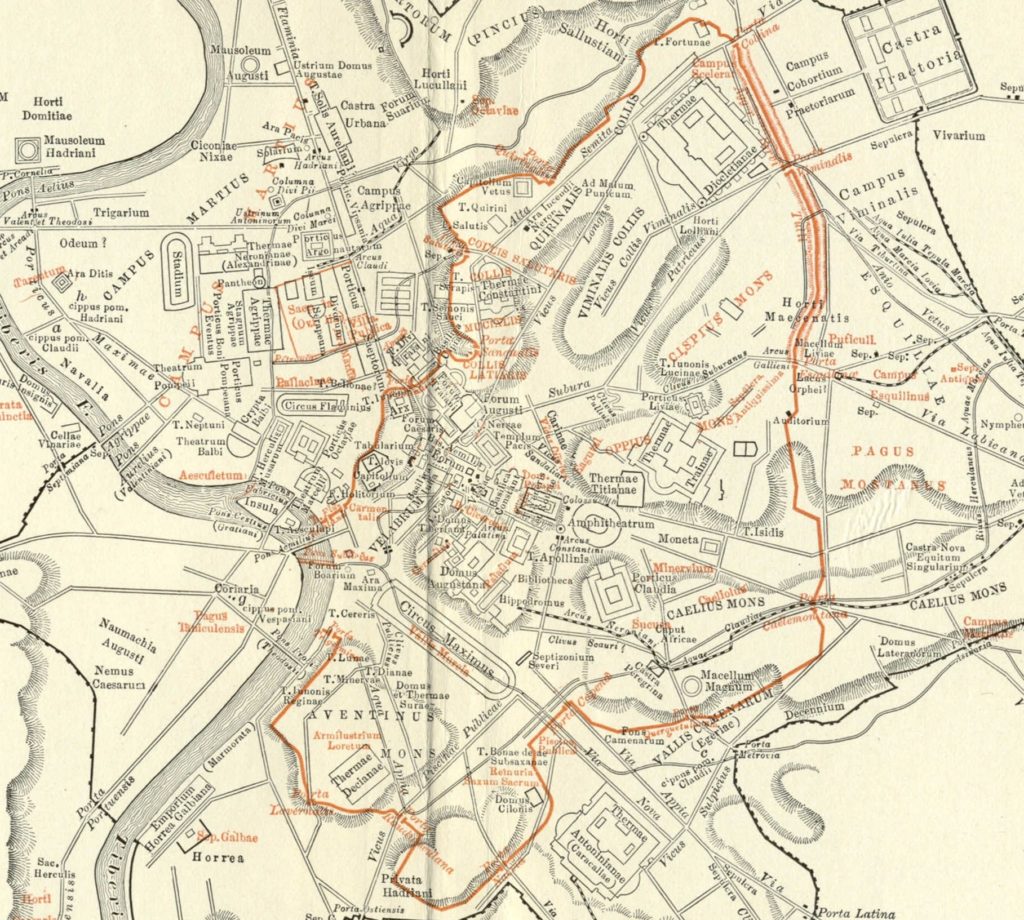
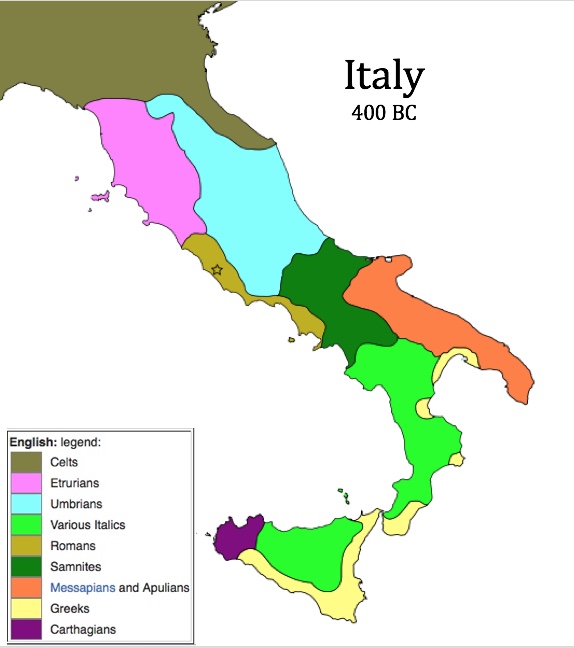 [CC BY-SA 3.0], via Wikimedia Commons Maps also show the complexity of the Roman Empire. Rome eventually grew to a city with a population of over 1 million, something not seen again until the 19th century when the Victorians ‘invented’ (read re-discovered) many aspects of life similar to that of the Ancient Romans, whether taps, cement or legal process. Anyway, back to Rome… The sheer number and complexity of public buildings is impressive as shown by this plan of Imperial Rome drawn up by Samual Platner in his 1904 study (Places and buildings in red date from the Republic):
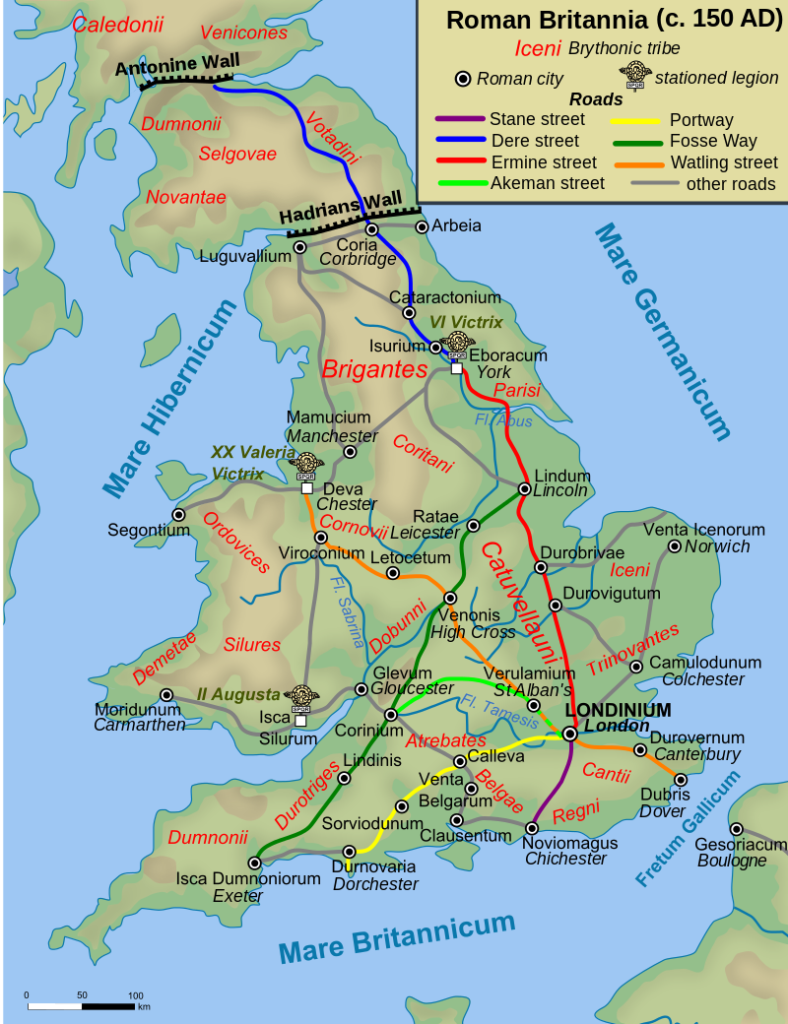
 Samuel Ball Platner’s The Topography and Monuments of Ancient Rome (Boston: Allyn and Bacon, 1904) Wherever Rome went, they built roads. We know that good infrastructure facilitates movement of people and goods, often resulting in increased trade, prosperity and life chances, but the Romans built them to move the military around quickly; everything else was a bonus. In an offshore island full of stroppy Britons, fast transport of troops was a strategic and tactical necessity.
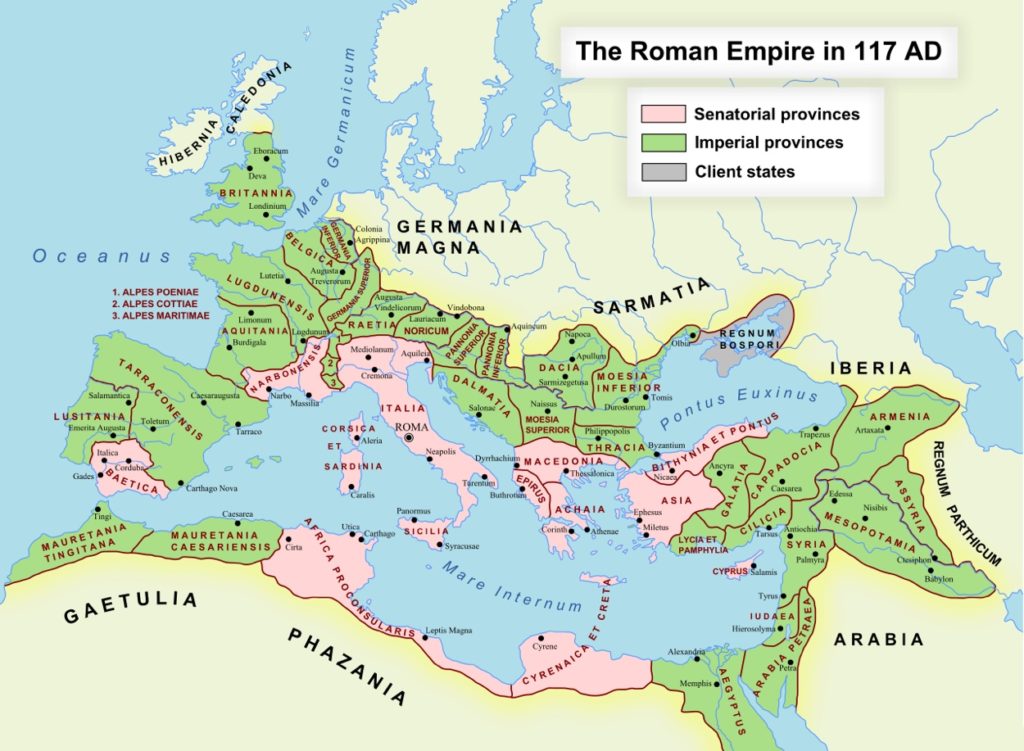
 Roman Roads in Britain around 150 AD/CE. (Public domain) Trajan (b. 53 AD, reigned 98 – 117 AD) was the soldier-emperor who presided over the greatest military expansion in Roman history; the empire reached its maximum territorial extent by the time of his death. He was also known for his philanthropic rule, extensive public building programs and implementing social welfare policies, which earned him a reputation as the second of the ‘Five Good Emperors’. The Romans had ‘never had it so good’, to misquote 1950s British prime minister Harold Macmillan.
 The Roman Empire at its greatest extent in the time of Trajan (Public domain) By the time the imaginary Roma Novans left the city of Rome, the Empire had split, re-formed, was on the point of definitively splitting into east and west, and was Christianised.
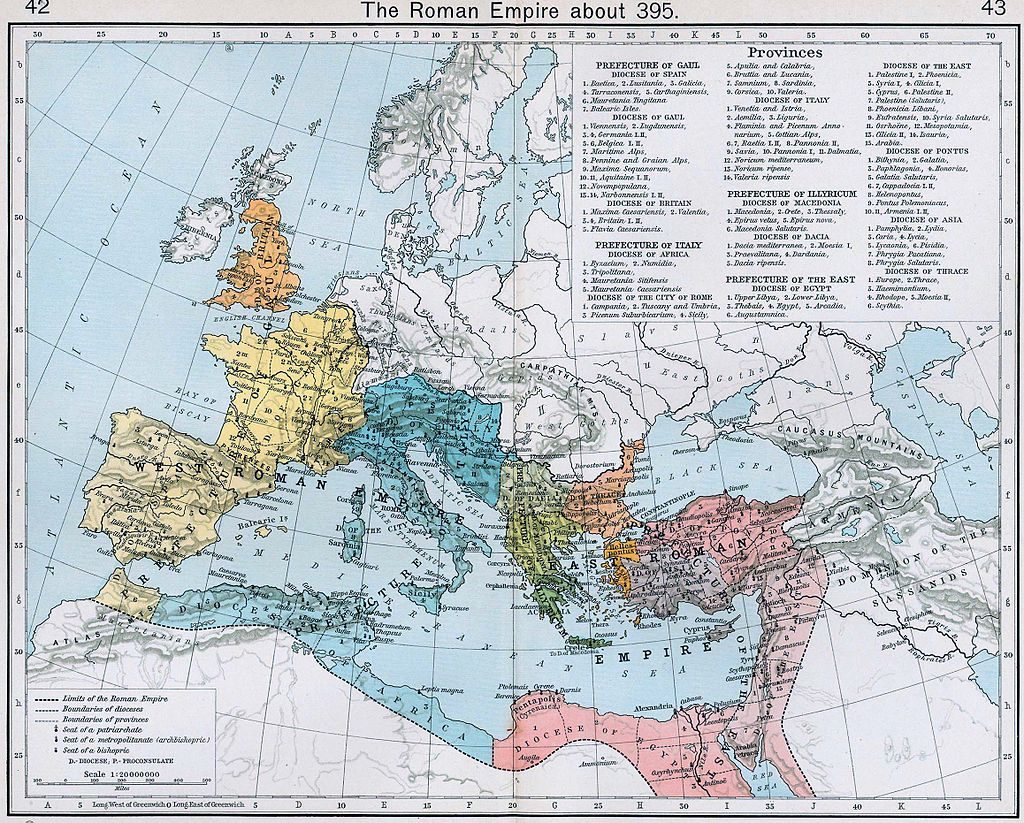 Historical Atlas, William R Shepherd, 1923 Over eighty years later, a year after the last western emperor abdicated, only rump states remained in the west.
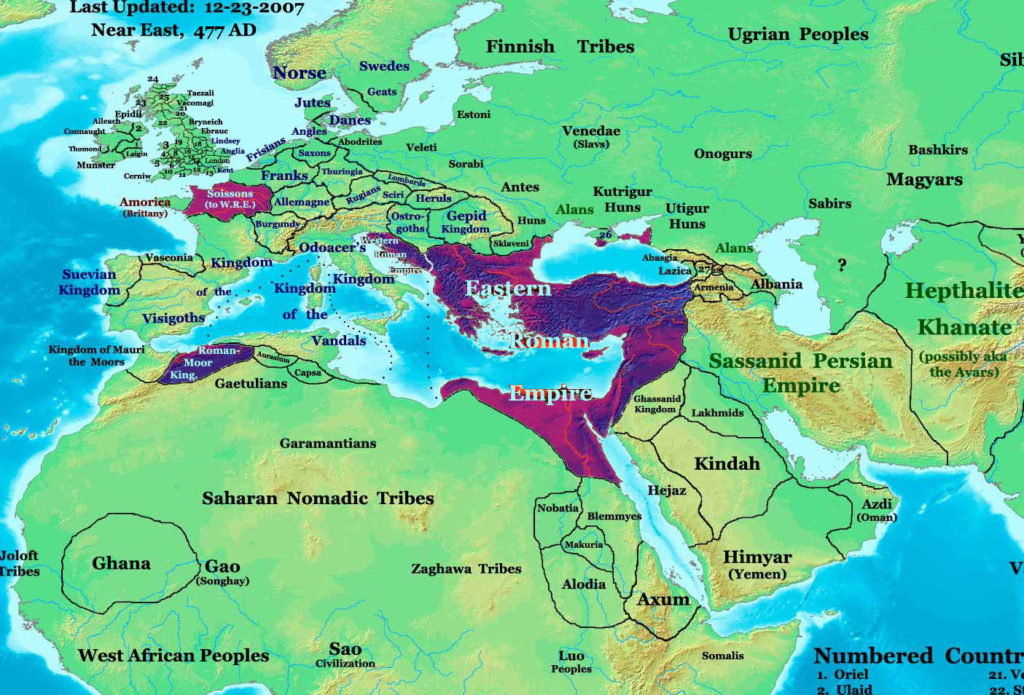 Europe in 477 AD. Highlighted areas are Roman lands that survived the deposition of Romulus Augustulus. (Thomas Lessman CC BY-SA 3.0)
Alison Morton is the author of Roma Nova thrillers INCEPTIO, PERFIDITAS, SUCCESSIO, AURELIA and INSURRECTIO. The sixth, RETALIO, came out in April 2017. Audiobooks now available for the first four of the series
Get INCEPTIO, the series starter, for FREE when you sign up to Alison’s free monthly email newsletter. You’ll also be first to know about Roma Nova news and book progress before everybody else, and take part in giveaways.
If you enjoyed this post, do share it with your friends!Like this:Like Loading...
 Click on the image for much more You see the subject line at the top of the email:
“BRAG Medallion Award”
You gnaw your nails.
You read the first line of the email:
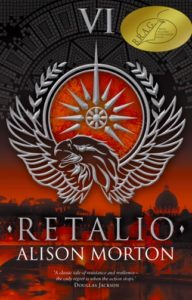
‘We have completed the review process for your book “RETALIO”
Oh, gods on Olympus!
You gnaw your nails down to the quick.
You read on:
“...and I am pleased to inform you that it has been selected to receive a B.R.A.G. Medallion.”
You kiss the computer screen and collapse back in your chain in relief. Then you pour out a large glass of bubbly, then a second.
More seriously, this is wonderful news. This is the toughest quality mark and award system I know for indie books; only 10% of books submitted make it to the award. Ten (yes, ten) readers have to give it their approval on the basis of title, cover, plot, characters, dialogue, writing style, chapters, copy editing, developmental editing and formatting. that’s one hell of a tall order.The ultimate question they have to answer: would they recommend it to their best friend? Think about that. If you gave your best friend a duff book recommendation there could be serious consequences for that relationship. That’s how sharp that risk is.
Oh, B.R.A.G.? It stands for Book Reader Appreciation Group, in case you wondered. I’ve always maintained that the readers are the final judges. In this case they truly are!
And I love the additional comment:
“Although I have not read the entire series, I did enjoy this book. I found the writing excellent and the characters and storyline well drawn. This creative account of fictional history is so believable that I had to remind myself it is made-up! It was full of action with a compelling story – I will go back now and read all of the series.”
Can’t really as for more, can you?
Alison Morton is the author of Roma Nova thrillers INCEPTIO, PERFIDITAS, SUCCESSIO, AURELIA and INSURRECTIO. The sixth, RETALIO, came out in April 2017. Audiobooks now available for the first four of the series
Get INCEPTIO, the series starter, for FREE when you sign up to Alison’s free monthly email newsletter. You’ll also be first to know about Roma Nova news and book progress before everybody else, and take part in giveaways.
If you enjoyed this post, do share it with your friends!Like this:Like Loading...
|
Subscribe to Blog via Email
Join 37 other subscribers.
Buy AURELIA from Apple!
UK

US
|