Carina's discovery of Aurelia's diaries

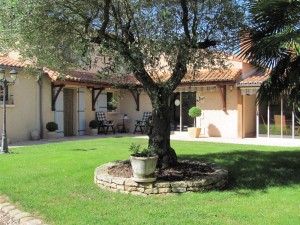
Castra Lucilla private courtyardI originally started AURELIA with Carina, the heroine of the first three books, discovering her grandmother Aurelia’s personal diaries at their family farm in the country near Castra Lucilla. I loved bringing Carina and Conrad back in for a ‘guest appearance’. But then I looked at those scenes again, as did my structural editor and my critique partner, and we all three realised they had to go. Good stories begin in the middle of the action, ‘in media res’, and don’t have a long lead-up. So I had to press the delete button.

The beginning of AURELIA is now tight, dramatic and full of instant conflict and introduces the main players, as it should in a thriller. But for you Roma Nova fans, I thought you might like to see the cut scenes. And I would love to have your opinion. So here goes…

——————–

A tingle of excitement passed through Carina Mitela the day she found her grandmother Aurelia’s personal diaries.
The summer was limping away; the family vacation was over and they’d soon be leaving the Castra Lucilla estate and heading back to the city. Carina’s eldest daughter, Allegra, had driven off in her coupé in the early afternoon, hood firmly attached to protect her new pale cream leather upholstered treasure against the summer storm. She was due back on duty at 18.00, and during her training and early service in the Praetorian Guard Special Forces, she had gathered only one minor blemish on her record so far. Which was more than could be said for her parents.

After Carina had checked that her son, Gil, was packing up his workshop in the outhouse and his twin, Tonia, was fully occupied saying goodbye to each horse in the stables, she had made herself clear up the study. She threw papers and files in a box and logged herself out of the local network. Somehow, she’d never got round to finishing sorting out her grandmother’s books. Piles of old leather-bound volumes smelling like stale biscuits stood waist high in higgledy-piggledy columns. Next time, I’ll finish them, she said to herself and sighed, knowing how unlikely that would be.

‘Hades take them,’ she muttered, as she knelt and grabbed random books from the nearest pile. She plunked them down on the lowest level of the old mahogany bookcase and pushed them back, but couldn’t get them to sit flush with the edge of the shelf. With an impatient grunt, she took them all out to start again. When she reached in to check she’d cleared them all out, she touched paper, several sheets of it. Yellowed, lined pages, bound with a brown leather lace and covered with a child’s handwriting.

“This is the journal of Aurelia Mitela, age 10 to – ”

Fascinated, Carina sank into a chair and started reading. It went in episodes, the longest lasting five weeks, and nearly a year’s gap when Aurelia was fourteen. Carina laughed at some of the things the little girl had noticed and nearly cried when she described her sadness, but determination to stay strong, after the passing of her cat.

She flicked through to the last page; Aurelia was sixteen now, jotting down her thoughts the morning of her emancipation ceremony.
“All my friends will be there. I’m the oldest so I’m going first. But I’m worried Q will turn up with C who’ll sneer as usual. He’d spoil anybody’s day.”
Carina stared at the last half-completed sheet, at the abrupt ending.

‘Carina! Where are you?’ A masculine voice was calling, bouncing between the stone walls of the corridor. Twenty seconds later  Carina’s husband, Conrad, arrived and stood in the archway. Optimistically dressed in lightweight chinos and short-sleeved shirt, he grinned at her.

‘I thought I’d find you here. How long are you going to be?’
‘Here, Conrad, look at this.’
He scanned the sheets quickly, thumbing the corner of each one, the skin around his hazel eyes crinkling when he laughed at the then child’s comments.
‘Any more?’
‘Not that I can see. But I’m going to take a few minutes to look.’
‘A few minutes? You’re joking. If Aurelia wanted to hide something, she’d have done it properly. You’ll have to tear the entire farm apart.’

Like Conrad, Carina had worked as an intelligence officer; it was a matter of getting into her grandmother’s head and thinking where she would hide something so private. Only a child would have stuffed a diary at the back of the old bookcase or a teenager suddenly interrupted. The adult Aurelia with years in the PGSF, then as a diplomat and politician, let alone astute businesswoman, would have been a great deal cleverer. However, Carina didn’t only carry Aurelia’s genes, she’d been mentored by her.

She dismissed obvious choices such as secret panels in the backs of the shallow cupboards; last year’s full survey of the farmhouse had revealed nothing but metre thick walls all round apart from window openings. Even the gaps between the inner and outer skins had been packed solid. Similarly, the original earth, gravelled and tiled floors had no secret compartments. Carina was sure Aurelia wouldn’t have left anything so personal in the farm offices, dormitories or outhouses or even in the roof space above the bedrooms.

Apart from furniture, which she and Conrad had gone through a few years ago after Aurelia’s death, there was nowhere else to look. She sighed and rolled her eyes in frustration, but her gaze stopped on the massive beam running across the sitting room. The farm was many centuries old, legend said some parts of it went back to when the original Mitelus had built it in the fifth century, but that was highly fanciful, in Carina’s opinion. She was no expert, but the farm manager thought it was mostly a medieval rebuild after the Aquileians had attacked ‘the heathen Roma Novans’ during the Crusades.
Carina squinted at the beam and jabbed a finger upward.

‘There. Get me a ladder.’
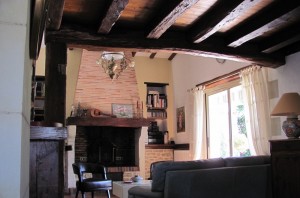
Old beam
Conrad came back with the steward who lugged a set of steps. The man held them as Carina clambered up. Conrad passed her a flashlight.
‘There’s a tiny crack running along.’
Domina, it’s an old beam,’ the steward said, ‘it’s only natural.’
‘Not a crack this straight.’ She looked down and smiled at Conrad who was caught looking at his watch.
‘I need something thin,’ she insisted, ‘to ease the crack.’
The steward handed Carina a slim round-ended kitchen knife, which she eased into the crack. At first, nothing happened. Under pressure, the thin blade flexed and bowed.
‘This is no good.’ She smiled again at Conrad. ‘Can you fetch me one of mine?’
‘As long as you don’t collapse the building around us,’ he said, only half-joking.

Even though she’d ceased to be an active special forces officer for several years, she couldn’t let go of her personal set of carbon-fibre combat knives, each blade centimetres of black meanness. She slid the blade in behind the kitchen knife. The wood almost groaned as she forced the two layers apart to reveal a long shallow compartment hollowed out in the top of the beam. She smiled to herself at the classic “hide it in plain sight” technique her grandmother had used.

Carina lifted out three leatherette-covered notebooks. No dust had got in but the smell of musty paper floated out. Sitting on the bottom step of the ladder, she opened one of the less scratched books. An old print photo fell out and fluttered to the floor. Carina picked it up, smoothed the creased corner of the white frame and studied the formal portrait of a young woman with a toddler on her lap. It was no doubt Aurelia: strong angular face, blue eyes, red-gold hair, almost the twin of Carina’s own face, but softer. Aurelia could only have been in her early twenties. And the toddler must have been Marina, Aurelia’s only child. Carina swallowed hard. That baby, her own mother, would be dead twenty-two years later.

The same precise, condensed writing she’d known so well in Aurelia’s later years; every trace of childish roundness in the first bunch of paper had disappeared. Her grandmother described entering the ruined city with the first troops in after the Great Rebellion to take Roma Nova back from the tyrant Caius Tellus. They’d stopped just short of the forum and cut the engines: the silence, the deserted streets, dust and filth everywhere. Then the first scurrying movements, a child clambering out from under a tarpaulin in a half-demolished house, the rounded, pleading eyes and outstretched skinny hand.

Juno.

Carina flicked through the second notebook and stopped abruptly when she saw the name William Brown. Her own father. A tall man, sturdy as a farmer, light eyes, hazel, Aurelia had written, something that seemed to puzzle her. Carina made a moue. What was to puzzle? Aurelia wasn’t happy that he and her daughter, Carina’s mother, were leaving Roma Nova and going to live in Eastern America. There was some kind of scene with her mother crying and pleading.
Carina turned the next page, fascinated, eager to continue. She nearly jumped when Conrad touched her shoulder.
‘Hey, come on, everything’s loaded up.’
‘But—‘
‘Bring them with you, otherwise we’re going to be back really late.’
In the car, windows up against the rain, seatbelt on, Carina leaned forward and picked the journals up again.

———————

What did you think?

Read how the final version of AURELIA actually began!

Alison Morton is the author of Roma Nova thrillers, INCEPTIO,  PERFIDITAS and SUCCESSIO. The fourth book, AURELIA, is now out.

Find out Roma Nova news and book progress before everybody else, and take part in giveaways by signing up for her free monthly email newsletter.
1960s research and an alternate German federation

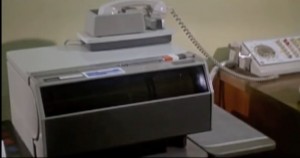
1960s fax machine

1960s fax machine

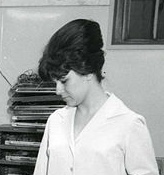
The most difficult things about writing a story in the late 1960s/early 1970s weren’t the clothes, hairdos, lack of traffic, old fashioned weaponry or spying techniques, but the technology and social attitudes. Mobile phones, laptops and social media just weren’t available. If you wanted people to know something, you put a notice up on a board, circulated a memo or posted a letter. For national news, there was broadcast radio and television. The forces of law and order could use fax and secure telex, plus walkie talkies or car radios.

1960 beehive

1960s beehive

The younger of my editors asked why it was the Post Office who held records of long distance telephone calls. I explained that all telephone services were still run by the state owned post offices in the 1960s. The Post Office in the UK (formerly known as the GPO) only ceased to be a government department in 1969 when it became a public corporation, but retained its telecommunications monopoly until 1984. I think it was the first in Europe to split post and telephone departments and later deregulate. (I am old enough to remember!)

And as for social attitudes, they were the times just out of the Ark. If you think everyday sexism is bad now…

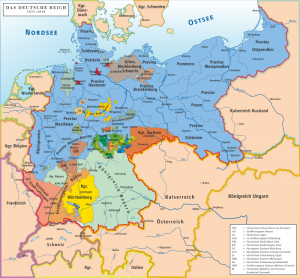
Deutsches_Reich1913.svg

“Deutsches Reich” 1913 Historischer Weltatlas, 89. Auflage, 1965. Licensed under CC BY-SA 3.0 via Wikimedia Commons

On the alternative history front, I’ve made Germany, where a significant part of the action in AURELIA is set, into a loose federation of individual states. After the (real timeline) First World War, social unrest, a communist revolution, right-wing Freikorps fightback and the bitter tea of being losers meant Germany was in turmoil. In the Roma Novan world,  the Great War in the 20th century lasted from 1925-35. The victorious Allies decided to split Greater Germany back into smaller states the old ‘divide and rule’ imperative. The maxim divide et impera has been attributed to Philip II of Macedon, Alexander the Great’s father, and as divide ut regnes was used by our old Roman friend G.J. Caesar and the French emperor Napoleon, so not exactly a new idea.

Some of the new/revived/re-drawn states even had their monarchs restored. As Aurelia Mitela herself says, “The plan had worked; despite a loose federation for certain strictly defined functions, the little dukedoms, princedoms and mini-republics argued about everything between themselves and didn’t have time or motivation to threaten the rest of Europe again.” The map shows the real Greater Germany in 1913, just for information, but gives you an idea of what it could look like in the Roma Novan world.

Of course, you can find out more about both of these if you read AURELIA… 😉


Alison Morton is the author of Roma Nova thrillers –  INCEPTIO,  PERFIDITAS,  SUCCESSIO,  AURELIA,  INSURRECTIO  and RETALIO.  CARINA, a novella, and ROMA NOVA EXTRA, a collection of short stories, are now available.  Audiobooks are available for four of the series. NEXUS, an Aurelia Mitela novella, will be out on 12 September 2019.

Download ‘Welcome to Roma Nova’, a FREE eBook, as a thank you gift when you sign up to Alison’s monthly email newsletter. You’ll also be first to know about Roma Nova news and book progress before everybody else, and take part in giveaways.

AURELIA - excerpt

I left my side-arm in the safe box in the vestibule and walked on past the marble and plaster imagines, the painted statues and busts of dead Mitelae from the gods knew how many hundreds of years. Only the under-steward was allowed to dust them; I’d never been allowed to touch them as a child.

My all-terrain boots made soft squelching sounds as I crossed the marble floor. This was the last private time I’d share with my mother and daughter for three weeks. A glance at my watch confirmed I had a precious hour.

Through the double doors, the atrium rose up for three storeys. Light from the late spring sun beat down through the central glass roof on to luxuriant green planting at the centre of the room like rays from an intense spotlight.

My mother disliked the vastness of the atrium and had partitioned a part of it off with tall bookcases, to make a cosier area, she said. Unfortunately, because of the almost complete square of tall units with only a body-width entrance at the far corner, and the way the shelving inside was arranged, you couldn’t see who was there until you were on top of them. I’d been trapped by some of her tea-drinking cronies more than once.

My mother, sitting on her favourite chintz sofa facing the entrance, looked up as I appeared in the gap. Two tiny creases on her forehead vanished when she stood and walked towards me with her arms extended. She greeted me with an over-bright smile.

‘Aurelia, darling.’

I bent and kissed her cheek in a formal salute then looked over her shoulder to where my daughter, Marina, was sitting on the sofa, her small figure almost drowned by the large flowers. She was twisting her hands together and glancing in as many different directions as she could.

‘Marina, whatever is the matter, sweetheart?’ I strode over and crouched down by her. She stretched one hand out to grab mine and with the other pointed at the chair in the far corner.

Caius Tellus.

Hades in Pluto.

‘Aurelia, how lovely to see you,’ he said in a warm urbane voice. Taller than his brother Quintus who nearly topped two metres, Caius was well built without being overweight. Sitting at his ease, one leg crossed over the other, he ran his eyes over my face and body. His hazel eyes shone and his smile was wide, showing a glimpse of over-white teeth through generous lips. Nothing in his tanned face with classic cheekbones would repel you on the surface. Others considered him very good-looking with almost film star glamour and charm. I knew better what kind of creature lay underneath.

Even as a kid he’d had a vicious streak; I’d never forget his hand clamping my neck, forcing my face down into the scullery drain, him saying he’d drown me in filth. I’d retched and retched at the smell of animal blood, the grease and dirty water. In the end, the cook had found us and hauled Caius off. I crouched there sweating and trembling; only horseplay, Caius said and laughed. The cook had given him a hard look, but the other servants were won over by Caius’s boyish smile. But when he’d stuck his hand up my skirt and tried to force me at Aquilia’s emancipation party, I’d kneed him in the groin so hard he couldn’t stand up for hours. I’d been in the military cadets for a year by then. But the others, woozy from wine and good spirits, gave him more sympathy as he writhed around on the terrace, playing to the audience.

After I joined the guard at eighteen, I hardly saw him except at formal Twelve Families events and even there, he’d smarm his way to the head of the food queue or make a beeline for the most vulnerable in the room, be it male or female. He was a taker in life, a callous one, and I loathed him with all my heart and soul.

I stood up, shielding Marina behind me.

‘Dear me,’ he said, ‘are you off playing soldiers again?’

I should have been given top marks for not slapping the smirk off his face.

‘Caius,’ I said, keeping my voice as cool as possible. ‘We’re having a private family lunch before I go on an extended operation, so I hope you’ll excuse us.’

My mother cast a pleading look at me. I closed my eyes for a second. She’d invited him to join us. How could she have?

I chewed my food slowly to try to reduce my tension. I was irritated Mama had chosen the breakfast room – a private family place – to eat in rather than the formal dining room. The servants flitted in and out with the food, and I said very little except to Marina, who pecked at her food.

‘Aurelia, you’re quieter than usual. I hope nothing’s wrong?’ my mother said too cheerfully.

Before I could answer, Caius intervened. ‘She does look a little pale. Don’t you worry, Felicia, that she takes too much on sometimes?’ He tilted his head sideways and pasted a concerned expression on to his face.

I speared a piece of pork and sawed through it like a barbarian, scraping the plate glaze below. I knew Caius was trying to make me rise to his bait, but I refused to play. At least my work as a Praetorian soldier was serving the state. He served himself with his gambling and whoring. He put in just enough hours at the charity committees he nominally sat on to appear to be contributing to Roma Novan life.

My mother smiled at him. ‘Yes, I do wonder. She was so exhausted after that last exercise abroad. You really understand, don’t you, Caius?’

He extended his hand and grasped hers and smiled. I was nearly sick.

‘“She” wasn’t exhausted,’ I cut across. ‘It was food poisoning, as you know very well, Mama. And it was all over within thirty-six hours.’

Caius smiled at me this time, but it didn’t reach his eyes. ‘Your mother’s right, you know. You have a duty to look after your rather, er, small family.’

I stood up and threw my napkin on the table. ‘The day I need you to teach me my duty doesn’t exist, Caius. Keep your nose out of my family affairs.’ I held my hand out to Marina, but fixed my gaze on my mother’s face. ‘I’m sure Nonna will allow you to leave the table now, Marina. We’re going for a walk outside in the fresh air.’

My mother gave a brief nod. I caught Caius’s second smirk out of the corner of my eye. One of these days…

*

Marina and I crossed the terrace and wound through the formal parterres and reached the swings at the side.

‘Nonna wants me to be friends with Caius Tellus,’ she said, ‘but I don’t like him. He makes me feel funny.’ I hugged her to me. She was so fragile; fine red-brown hair and a delicate face, light brown eyes like a frightened rabbit, not the bright Mitela blue like mine and my mother’s. Never robust, Marina had coughed and wheezed her way through infancy, floored by the least infection.

My heart constricted as I recalled yet again that terrible day when she was just two. I’d rushed back, heart pounding, from the training ground. Still in my dusty green and brown combats, I’d stared down at my daughter; white, inanimate. I’d dropped to my knees and touched her forehead. Damp, cold, sweating. Her hand was equally chill. The nurse had wrapped her in light wool blankets and bonnet to prevent body heat loss and a drip line ran from her nostril up to a suspended plastic bag on a steel stand. I was a major in the Praetorian Guard and commanded some of the toughest soldiers in Roma Nova with the most modern weaponry on the entire planet, but I’d never felt more powerless. Now I had to protect her against a subtler virus.

‘You don’t have to be friends with anybody you don’t want to, whatever anybody says – me and Nonna included.’

‘But Nonna said it was important. I have to get used to it for when he comes to live in our house.’

I stared at Marina. What in Hades was my mother hatching up now? All I could hear was an angry buzz in my head, soaring to deafening levels. Marina’s face tightened. She dropped my hand and shrank back.

‘It’s all right, darling. I’m sorry, I didn’t mean to scare you.’ I swallowed hard. ‘I was a bit surprised, that’s all.’ I delayed, struggling to keep my temper and not frighten my soft child. ‘When did Nonna say that?’

‘Before lunch.’ She dropped her gaze to the ground.
I crouched down in front of her and touched her cheek.

‘Look at me, Marina. I promise you here and now that I will never be friends with Caius Tellus. He will not come and live with me. If Nonna invites him, you and I will go and live on the farm together.’

She lifted her head, two tiny wet streaks on her cheeks. ‘Cross your heart?’

‘And hope to die in the arena.’

*

Caius was drinking coffee with my mother when I returned alone to the atrium. He gave a knowing little smile when I requested an urgent private word with my mother. We walked in silence to an unused office at the back of the house. Its virtue was that it was part of the ancient building and had very thick walls.

‘What the hell are you playing at?’ I said. ‘And how in Hades do you think you have the right to pressure my five-year-old child to cosy up to that slimy bastard Caius?’

I stood a body-length away from my mother, further than my fists could reach.

‘Don’t use your rough soldier’s language with me, my girl. I’ve dropped enough hints over the past year, but you’ve been ignoring them. You need another child. As insurance.’

‘I hope you’re not serious, Mama.’

‘You have responsibilities. House Mitela needs heirs and Marina isn’t strong.’

I stared at her for a full minute.

‘I’m twenty-eight – not exactly past it,’ I said. ‘And I have two male cousins in the first degree.’

‘Neither of whom could inherit except by imperial decree. That hasn’t happened to the Mitelae yet. And Imperatrix Justina would be hard to persuade on this. Take my word for it.’

‘She can’t insist.’

‘No, but she’d speak about duty and history and make you feel like a shirker.’

‘For Juno’s sake, it’s the nineteen sixties. I’m not a breeding filly.’

‘No, but you are the heir to the senior of the Twelve Families whose sworn duty is to support the Apulian imperatrix and the continued existence of Roma Nova. Caius is an ideal prospect, personable and intelligent. He belongs to a good family that has been allied to ours for over fifteen hundred years.’

‘Don’t hide behind history, Mama. I know what you’re up to and the answer’s no. Not a hope. Ever.’

‘What’s wrong with him? I know you didn’t get on very well as children, but you’ve grown out of that awkward stage. You’re an adult now. Old Countess Tella would be pleased for an alliance with our family.’

No doubt Caius’s great-aunt would be thrilled. I was the bait for every other one of the Twelve. But I would choose my partner myself, not submit to some old girls’ cosy arrangement. I’d already had the dubious pleasure of one unsatisfactory companion in Marina’s father; I didn’t want a second one.

‘If you don’t get it, Mama, I don’t know where to start. Can’t you see how manipulative Caius is? He’s flashed his teeth at you, said a few smarmy phrases to lure you on to his side. Now he has you trying to finesse Marina.’ I snorted. ‘Look at his eyes sometime when he’s not trying to charm you. He’s mean and cruel. Ask his brother Quintus.’ I glanced at my watch. ‘I have to go now.’

‘Won’t you even talk to him?’

‘No. My mind’s made up. There is no more discussion.’

‘Well, have a think about it while you’re away.’

She made it sound like a holiday. We’d be freezing our arses off on a snow-covered mountain, grabbing three to four hours’ sleep, either bored out of our minds or targeted by tough criminals and snipers.

‘We’ll talk properly when I’m back, if you insist. But I don’t want Caius Tellus within fifty metres of Marina while I’m away. A hundred, preferably. Promise me that.’

Her eyes dropped under my intense stare.

‘Do you promise?’

‘Don’t be so angry, Aurelia. I’ll do as you ask. But try to calm down and think logically. You need more heirs.’

For a clever woman, my mother was sometimes so simple.

I tamped down the heat of anger rushing through my body.

‘Let me assure you, Mama, that even if Caius was the last man on earth, I’d rather kill myself than let him touch me.’

https://www.alison-morton.com/books-2/aurelia/


Alison Morton is the author of Roma Nova thrillers, INCEPTIO,  PERFIDITAS and SUCCESSIO. The fourth book, AURELIA, is now out.

Find out Roma Nova news and book progress before everybody else, and take part in giveaways by signing up for her free monthly email newsletter.