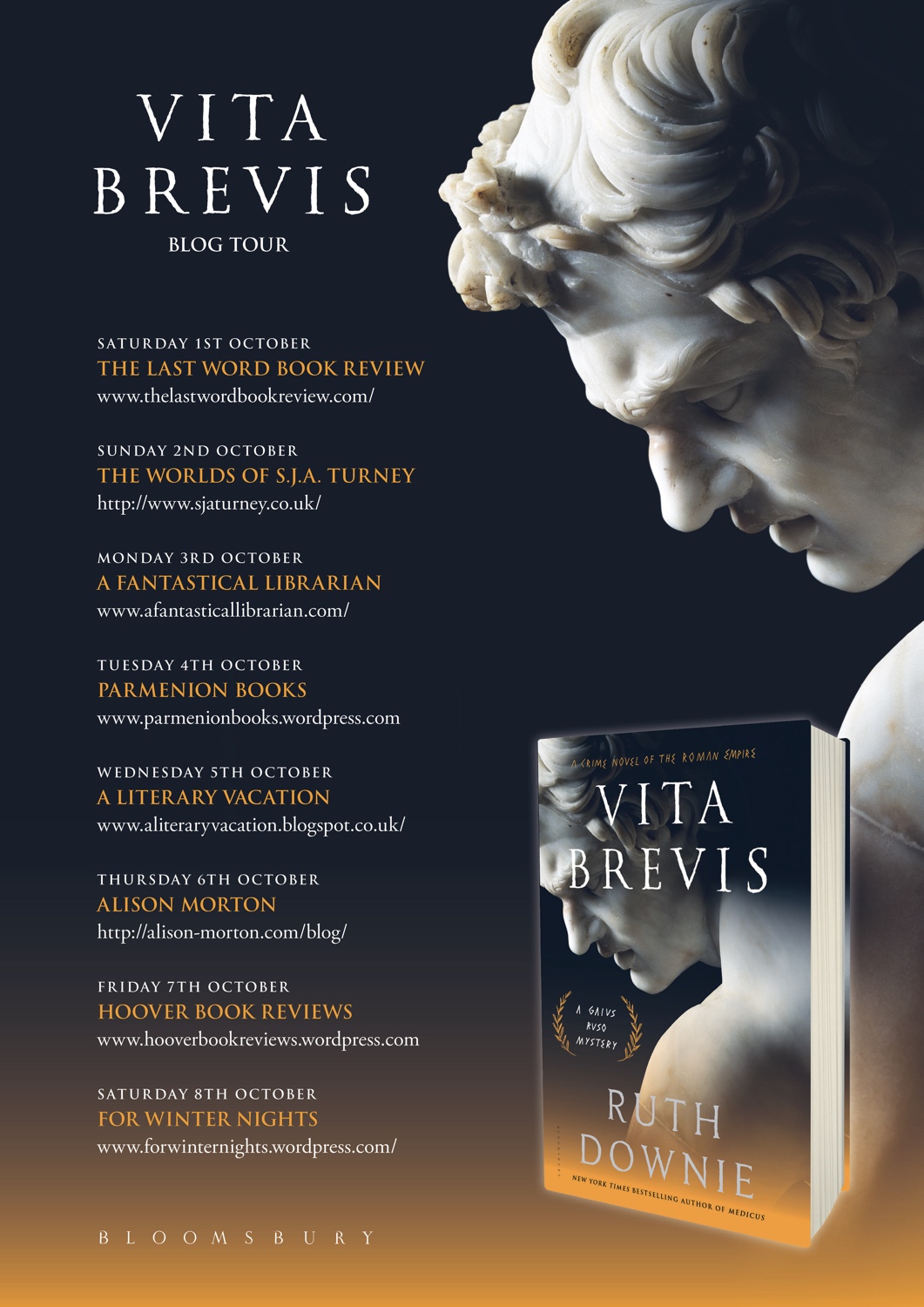
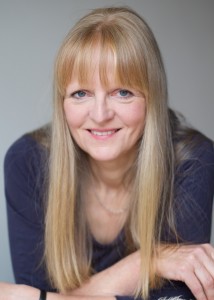
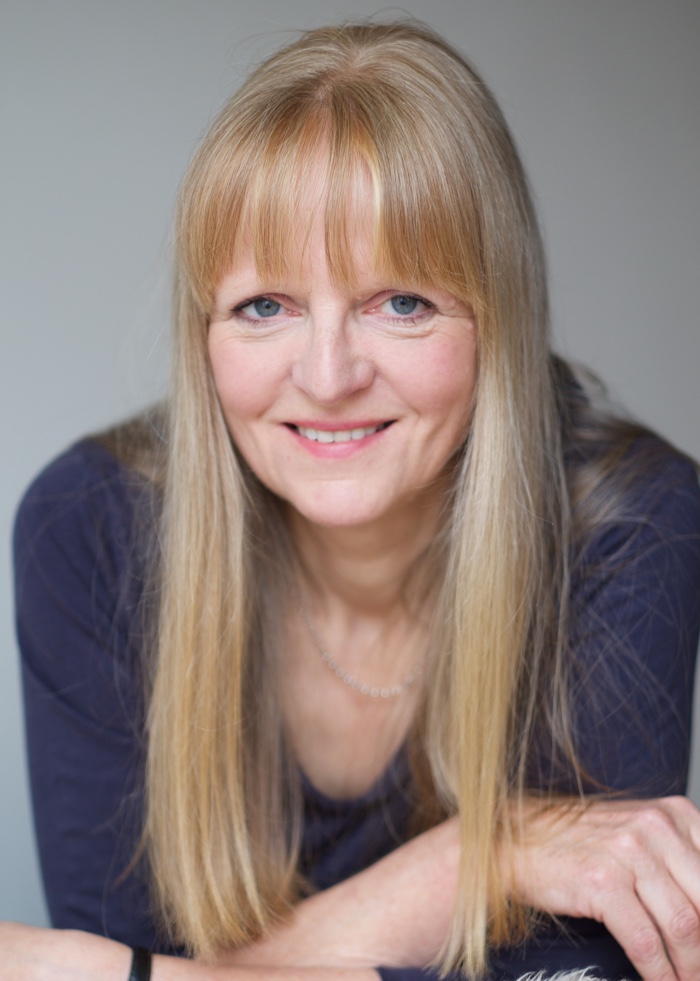
 Today, I’m delighted to welcome Ruth Downie back to the Roma Nova writing world. She’s talked before about historic truth and donkey poo, and wrote a poignant account ‘from below’ at the court of Boudica as part of A Year of Ravens. Of course, Roma Novans know her as the name on the endorsement for AURELIA. Today, I’m delighted to welcome Ruth Downie back to the Roma Nova writing world. She’s talked before about historic truth and donkey poo, and wrote a poignant account ‘from below’ at the court of Boudica as part of A Year of Ravens. Of course, Roma Novans know her as the name on the endorsement for AURELIA.
In 2004 Ruth was one of the winners in a televised short story competition, and the BBC’s threat to come back and see how her writing was going spurred her to finish her abandoned crime novel about a Roman army medic. To her great surprise that book—‘Medicus’—became a New York Times bestseller and The Times recommended it as one of their ‘Seven best thrillers for Christmas’. ‘Vita Brevis’, the seventh book in the acclaimed series, was published just recently. When she isn’t writing, Ruth’s happiest moments are spent grovelling in mud with an archaeological trowel.
Salve Ruth! Do tell us why you wrote VITA BREVIS!
Neither of my lead characters, Roman army doctor Ruso and his British partner, Tilla has ever been to Rome before (lots of ‘Roman’ citizens were born and died without ever seeing it) and I thought it would be fun to see what they made of it. Of course, there was a research trip involved, which helped… (Any excuse!)
Why do you think Ruso is like he is?
Poor old Ruso: he’s a man burdened with guilt. He’s the eldest son, but in following his own interests and becoming a doctor, he’s not only shocked his late father but landed his brother with the burden of the family farm — and the family. Perhaps he’s trying to make up for that guilt when he finds it very hard to say ‘no’ – to his patients, his woman, and to people who insist on presenting him with dead bodies and expecting him to do something about them. But if he doesn’t, who will?
Surrounded by men of ambition, he’s too honest to imagine himself as a success. The advances of modern medicine lie a long way in the future and like every other reputable doctor of his time, he’s aware that Fortune can be fickle and that there’s a huge amount he simply doesn’t know. Which is why charlatans who mislead patients with impossible promises make him very angry indeed.
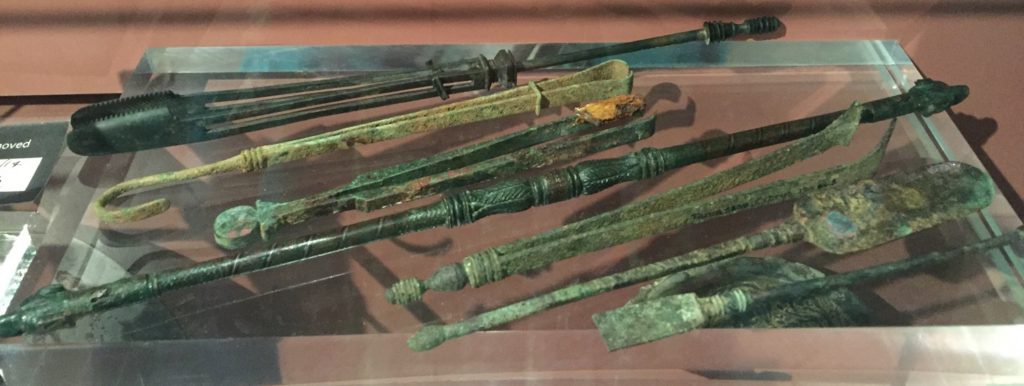 Roman medical instruments, Ashmoleon Museum What does he think he’s like?
Ruso sees himself as a man who’s doing his best in trying circumstances. He’s baffled by religion — especially his wife’s insistence on believing anything and everything — and tries to take consolation in philosophy, but people will keep interrupting.
He finds that being married to a native gives him useful insights into the minds of the Britons, which are not as clouded as his compatriots tend to assume. However, as the civilized member of the marriage he feels he has a duty to defend the superior values of Rome. This is more of a challenge than it needs to be because of Tilla’s stubborn insistence on asking awkward questions.
He’s not entirely comfortable in the company of women, having a vague suspicion they all know something he doesn’t. Being married to Tilla has helped with this, because he’s now beginning to think that whatever it is, Tilla doesn’t know it either.
Of one thing, though, he is certain. Every man has his limits. No matter what anyone else says, he is not going to make room for any more waifs, strays, unwanted slaves or other people’s unplanned babies. The Petreius household is full. (Oh, yes?)
What waits for us in Vita Brevis?
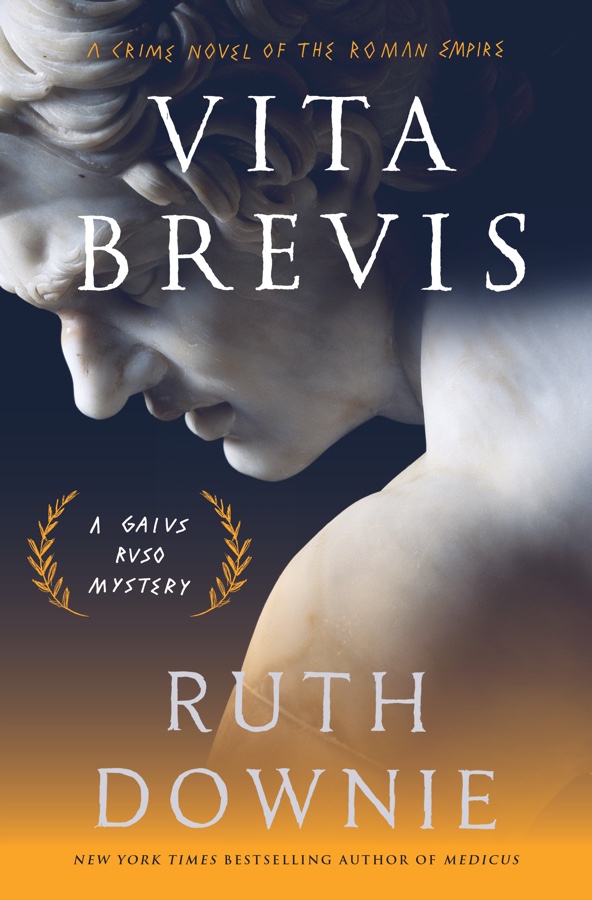
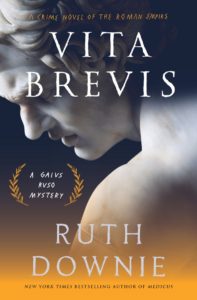 Ruso and Tilla and their new baby daughter have left Roman-occupied Britain for Rome itself. Their excitement is soon dulled by the discovery that the grand facades of polished marble mask an underworld of corrupt landlords and vermin-infested tenements. There are also far too many doctors—some skilled, but others positively dangerous. Ruso and Tilla and their new baby daughter have left Roman-occupied Britain for Rome itself. Their excitement is soon dulled by the discovery that the grand facades of polished marble mask an underworld of corrupt landlords and vermin-infested tenements. There are also far too many doctors—some skilled, but others positively dangerous.
Ruso thinks he has been offered a reputable medical practice only to find that his predecessor Doctor Kleitos has fled, leaving a dead man in a barrel on the doorstep and the warning, “Be careful who you trust.”
With Ruso’s reputation under threat, he and Tilla must protect their small family from Doctor Kleitos’s debt collectors and find allies in their new home while they track down the vanished doctor and find out the truth about the unfortunate man in the barrel.
******************
“Masterfully draws out its suspense, painting a vivid portrait of ancient Rome that feels persuasive and authentic”
—Kirkus Reviews
“Downie’s plotting is as engaging as ever… much more than a mystery novel”
—Historical Novel Society
“Reading Vita Brevis felt like catching up with old friends”
—Italophile Book Reviews
******************
Buying links: Amazon UK Book Depository Amazon US
Connect with Ruth: Website Twitter @RuthSDownie Facebook
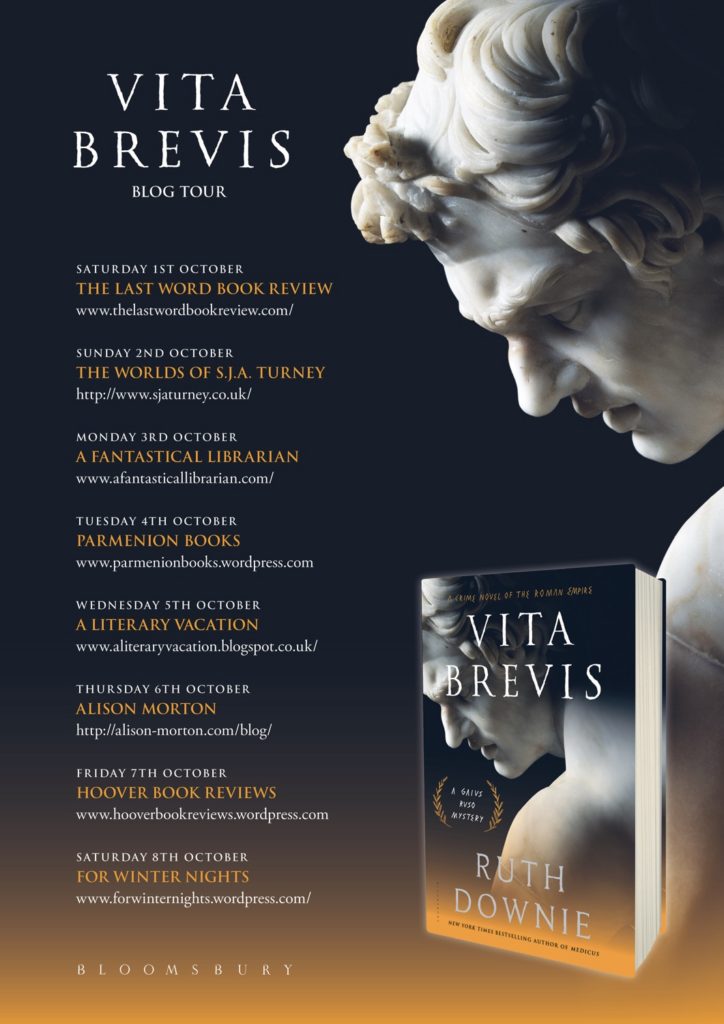
Thank you so much for stopping by today, Ruth and bona fortuna on the rest of your blog tour. Speaking of which, here is the onward route that Ruso and Tilla are taking…
Alison Morton is the author of Roma Nova thrillers, INCEPTIO, PERFIDITAS, SUCCESSIO and AURELIA. The fifth in the series, INSURRECTIO, was published in April 2016.
Find out Roma Nova news and book progress before everybody else, and take part in giveaways by signing up for her free monthly email newsletter.
If you enjoyed this post, do share it with your friends!
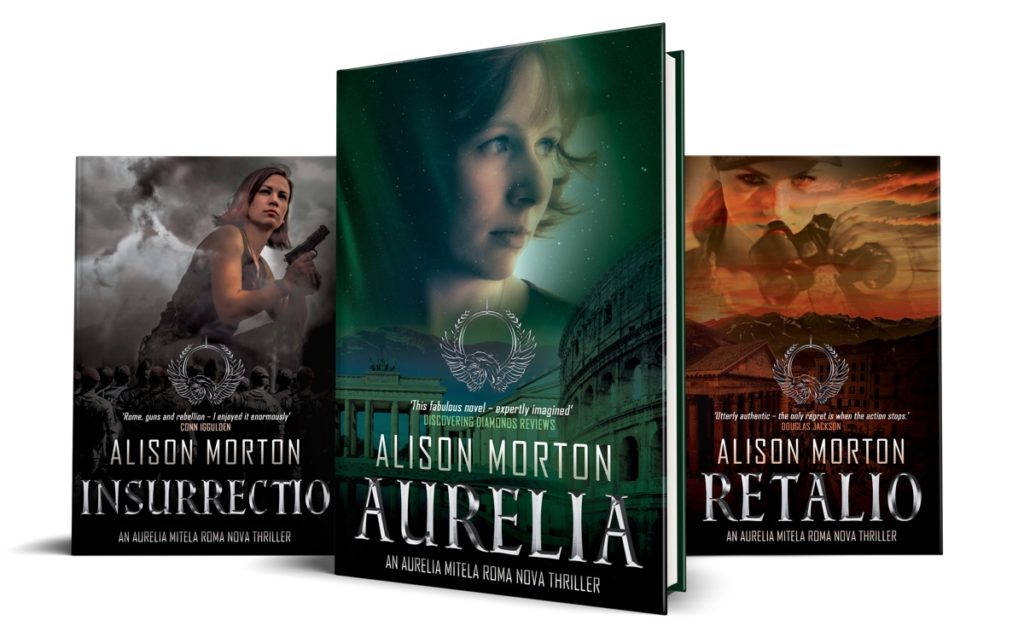 All writers sneak a look at their reviews – we are so human (Not sure I completely believe those who say they don’t 😉 ) Looking at INSURRECTIO’s, I was struck by this one: All writers sneak a look at their reviews – we are so human (Not sure I completely believe those who say they don’t 😉 ) Looking at INSURRECTIO’s, I was struck by this one:
“Although I enjoyed the first three, IV and V are disappointing; particularly this one. Because they are ‘backstory’, I already knew who did what to whom from the earlier novels.”
I appreciate them taking the time and trouble to write a review. I really do; people are so busy these days, they don’t always get round to it, however much they enjoyed a book. I’m very sorry this reader was disappointed, but I’m pleased they enjoyed Carina’s story in the first three. But this comment set me thinking.
Roma Nova is an imaginary country (Gasp!). The people who live there are not documented historical figures. But as a storyteller I try to make it as realistic as possible; characters do heroic and stupid things, the weather isn’t always sunny – it rains and snows, traffic jams alternate with beautiful scenery.
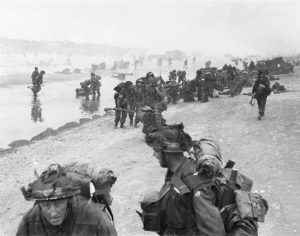
Like any country Roma Nova has its own history. In our real timeline, who today doesn’t have an older relative who remembers ‘the war’? We know exactly which war they are talking about because it was such a formative experience for that generation and the following one.
My father was at Dunkirk in 1940 and went to France on D-Day+4 in 1944; my mother, a teacher by day, drove ambulances during bombing raids by night.
For me, the grungy 1970s and growth-spurted 1980s when I spent time in uniform were my formative years.
So when I decided to build the world of Roma Nova in an alternative timeline, I incorporated its ‘long’ history back to the end of the 4th century AD as well as its ‘short’ history of the Great Rebellion in the early 1980s.
As Carina, brought up in the Eastern United States, was facing her challenges in INCEPTIO, PERFIDITAS and SUCCESSIO, her grandmother, Aurelia, and others such as Conrad and Quintus Tellus, and Imperatrix Silvia had strong, and grim, memories of that rebellion which coloured their behaviour, values and attitudes in those three stories. And they occasionally referred back to those times in the same way our parents and grandparents refer to ‘the war’.
We know what happened in the past. We know who won, and who lost.
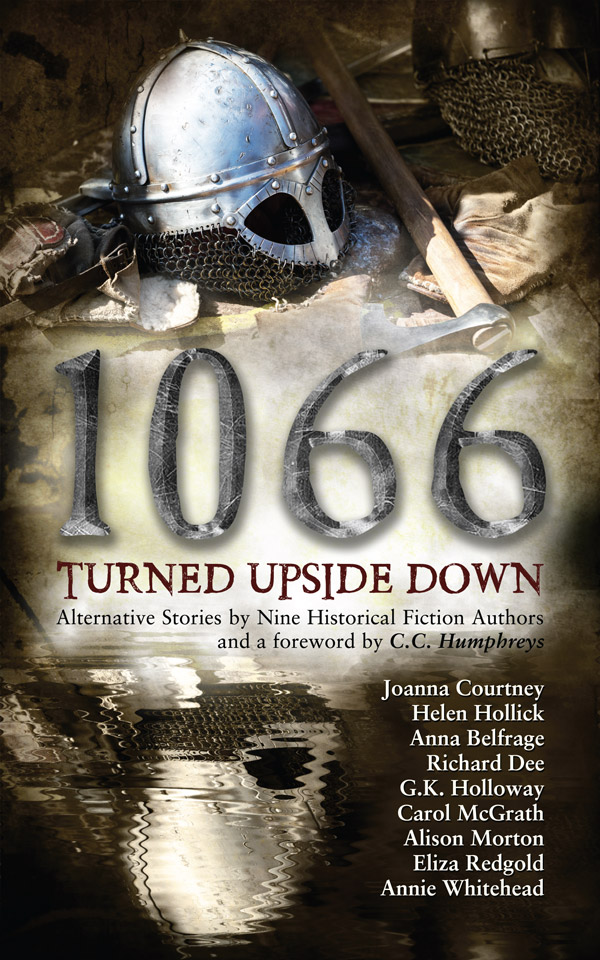 Look back at 1066. Much as we may dream or speculate about or devoutly wish for a Saxon England beyond that date, it didn’t happen. When my writing friend Helen Hollick wrote Harold the King, she couldn’t alter the outcome. But I was so caught up by the writing and characters, I was as optimistic as any Saxon that they would prevail. But in my logical brain I knew the outcome – it was probably the first date I learnt in school. However, it didn’t stop me enjoying the story. Look back at 1066. Much as we may dream or speculate about or devoutly wish for a Saxon England beyond that date, it didn’t happen. When my writing friend Helen Hollick wrote Harold the King, she couldn’t alter the outcome. But I was so caught up by the writing and characters, I was as optimistic as any Saxon that they would prevail. But in my logical brain I knew the outcome – it was probably the first date I learnt in school. However, it didn’t stop me enjoying the story.
But when she and fellow author Joanna Courtney invited me to join a group of writers to consider different possible outcomes for that tumultuous year in English history, I leapt at it. Alternative history was, and is, my special area of writing fiction. Perfect! The result, published in the run-up to the 950th anniversary of the Battle of Hastings, was 1066 Turned Upside Down.
Several stories are written by medieval fiction specialists, but some were by those of us who were not. I had a great deal of fun inserting an 11th century Roma Novan into the mix. We knew Roma Nova would survive into the 21st century, but it was under a great deal of pressure at that time as its big cousin, the Eastern Roman Empire (the ‘Byzantine Empire’ as we call it now) was exerting its power, wealth and influence across a very wide area.
When the second Roma Nova trilogy goes back to tell the story of Aurelia in the second half of the 1960s (AURELIA) and the early 1980s (INSURRECTIO, and RETALIO, we know she will survive, as will Quintus, Conrad and Silvia. The intrigue, I hope, is how and why they did what they did, whether they acted well or not, and what gains and sacrifices occurred. And what the consequences were for Carina’s generation. And I reveal some secrets from the past that only the characters themselves would know and which even puzzled me when I was writing the first trilogy.
Being inquisitive by temperament, I like to know the background to things, people and events; in short, why they are like they are. This is why I read historical fiction. I’m sorry my reader didn’t share this; perhaps they aren’t as nosy as I am. But as we edge toward the climax of the Aurelia trilogy, I hope the story will be sufficiently enticing for readers to want to know just what Aurelia had to sacrifice at the time of Roma Nova’s civil war.
And do have a look at 1066 Turned Upside Down – it may intrigue, infuriate or delight you; possibly all three! But although you know the outcome, just suppose it had been different…
(Updated June 2019)
Alison Morton is the author of Roma Nova thrillers – INCEPTIO, PERFIDITAS, SUCCESSIO, AURELIA, INSURRECTIO and RETALIO. CARINA, a novella, and ROMA NOVA EXTRA, a collection of short stories, are now available. Audiobooks are available for four of the series. NEXUS, an Aurelia Mitela novella, will be out on 12 September 2019.
Download ‘Welcome to Roma Nova’, a FREE eBook, as a thank you gift when you sign up to Alison’s monthly email newsletter. You’ll also be first to know about Roma Nova news and book progress before everybody else, and take part in giveaways.
If you enjoyed this post, do share it with your friends!
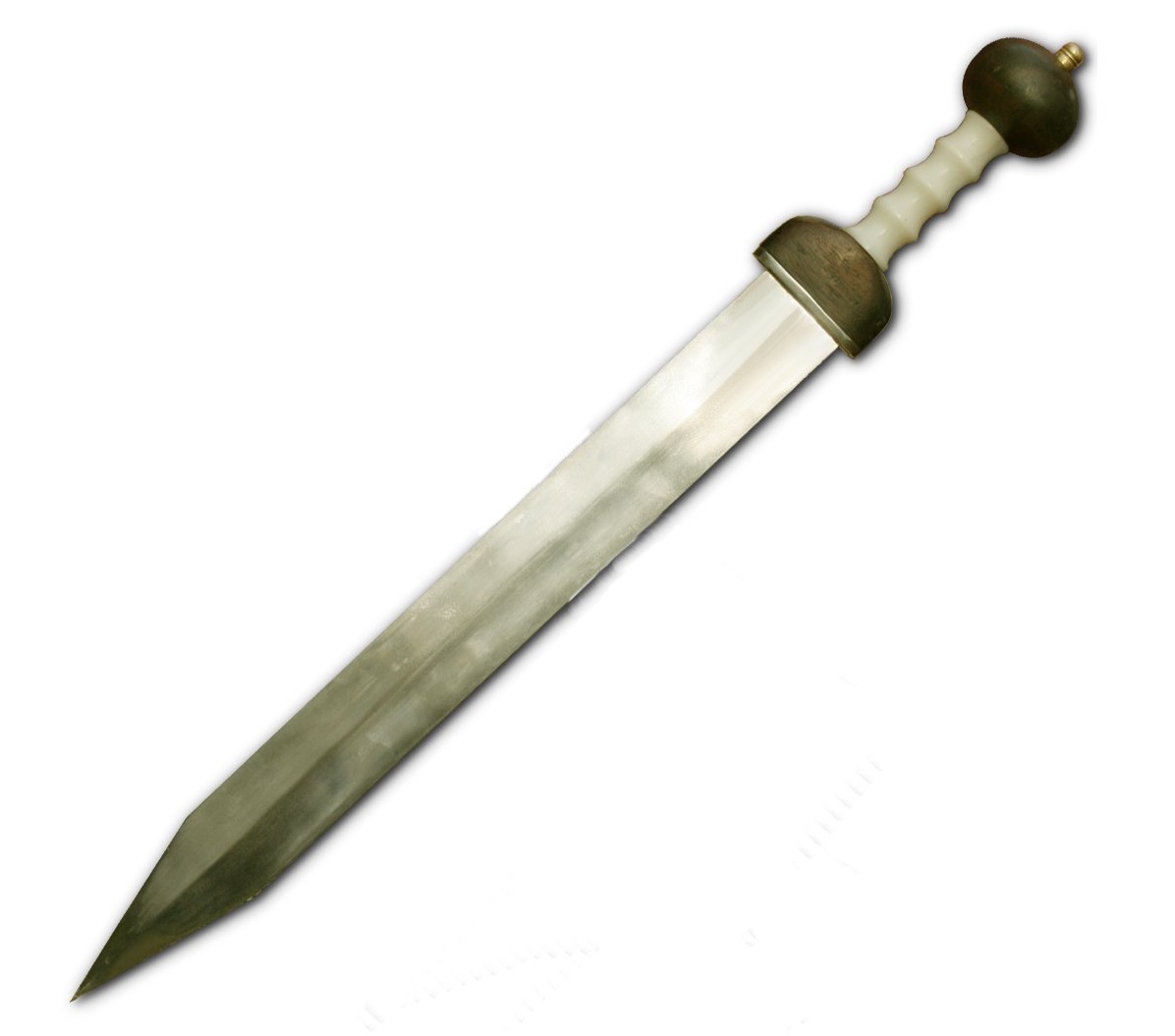 Twenty-first century Roma Nova military train with state of the art weaponry; their firepower and weapon handling are undoubted. But they also train on a ‘volunteer’ basis with a modern carbon steel version of the traditional Pompeii gladius, a short sword in use from at least AD 79 and not uncommon in the 4th century AD. Twenty-first century Roma Nova military train with state of the art weaponry; their firepower and weapon handling are undoubted. But they also train on a ‘volunteer’ basis with a modern carbon steel version of the traditional Pompeii gladius, a short sword in use from at least AD 79 and not uncommon in the 4th century AD.
Named by modern historians after the Roman town of Pompeii, where four instances of the sword type were found – they must have been made before AD 79 when Pompeii was buried in volcanic ash – they’ve been tentatively dated to around 64 AD.
The Pompeii sword had parallel cutting edges and a triangular tip and is the shortest of the gladii and not to be confused with the spatha which was a longer, slashing weapon used initially by mounted troops. Over the years, the Pompeii got longer; later versions are referred to as semi-spathas. Some surviving examples of the Pompeii style sword have reinforced points with raised ridges, possibly designed to punch through leather and thin metal armour.
Pompeii gladius vital statistics
Blade length: 45-50 cm (18-20 inches). Sword length (including grip) 60-65 cm (24-26 in). Blade width: 5 cm (2.0 in). Sword weight: 700g (1.5lb)
Flavius Vegetius Renatus in De Re Militari Book I: The Selection and Training of New Levies, 390 A.D, writes:
“They were likewise taught not to cut but to thrust with their swords. […] A stroke with the edges, though made with ever so much force, seldom kills, as the vital parts of the body are defended both by the bones and armour. On the contrary, a stab, though it penetrates but two inches, is generally fatal. Besides, in the attitude of striking, it is impossible to avoid exposing the right arm and side; but on the other hand, the body is covered while a thrust is given, and the adversary receives the point before he sees the sword. This was the method of fighting principally used by the Romans, and their reason for exercising recruits with arms of such a weight at first was, that when they came to carry the common ones so much lighter, the greater difference might enable them to act with greater security and alacrity in time of action.”
In Roma Nova, the concept of training harder than the fight you expect is still standard procedure.
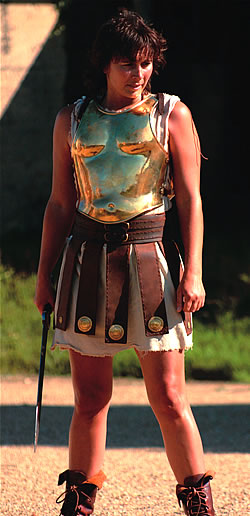 Photo courtesy of Britannia www.durolitum.co.uk INCEPTIO (Carina)
“Still smarting, I went for a session in the gym. I found Flav there and persuaded him to do a turn in the arena.
‘Not if you’re in a bad temper.’
‘I’m perfectly under control, thank you.’
He was cautious as we circled and only made a few exploratory jabs for the first few minutes. Training with a sharp, double-edged, fifty-centimetre carbon steel blade tended to concentrate the mind as well as honing reaction skills.
In a formal session, if you were cut, you were cut; then chewed out for being careless. At this precise moment, I needed to release and ground my tension. I was the trickier fighter, but Flavius more strategic. After fifteen minutes, I was lying on the ground with a nicked arm and calf. And still jumbled nerves.”
SUCCESSIO (Carina)
“Flavius got it all underway, with pairs demonstrating sword skills. Not practised these days outside the professional games arena except by the military, training with a sharp, double-edged fifty centimetre carbon steel blade tended to concentrate the mind as well as honing reaction skills.
Not mandatory – we used state of the art weaponry as normal – but all members of the unit were encouraged to become proficient with a gladius, if only to get used to close physical combat with an opponent. If you got cut, you got cut, then chewed out for being careless.
Contrary to popular belief, the Roman short sword was more than fine for cutting and chopping motions as well as for thrusting. Not much had changed in shape since the Pompeii pattern used in the fourth century which had been spectacularly successful.”
AURELIA (Aurelia)
“[Mercuria] twisted the combination lock on the grey steel cabinet and swung the door open. Inside were racks of short swords, fifty-centimetre blades modelled on the so-called Pompeii gladius pattern. While some late Roman armies used the longer spatha towards the end of the Western Empire, we’d kept the shorter gladius.
Now only the military or licensed gyms used them for training. But they were unrivalled for learning the sheer physicality of close-quarter combat. If you were careless and let your opponent cut you, then more fool you. This evening, I knew I was going to be that fool.”
Alison Morton is the author of Roma Nova thrillers, INCEPTIO, PERFIDITAS, SUCCESSIO and AURELIA. The fifth in the series, INSURRECTIO, was published in April 2016.
Find out Roma Nova news and book progress before everybody else, and take part in giveaways by signing up for her free monthly email newsletter.
If you enjoyed this post, do share it with your friends!
|
Subscribe to Blog via Email
Join 37 other subscribers.
Buy AURELIA from Apple!
UK

US
|


 Today, I’m delighted to welcome Ruth Downie back to the Roma Nova writing world. She’s talked before about historic truth and donkey poo, and wrote a poignant account ‘from below’ at the court of Boudica as part of A Year of Ravens. Of course, Roma Novans know her as the name on the endorsement for AURELIA.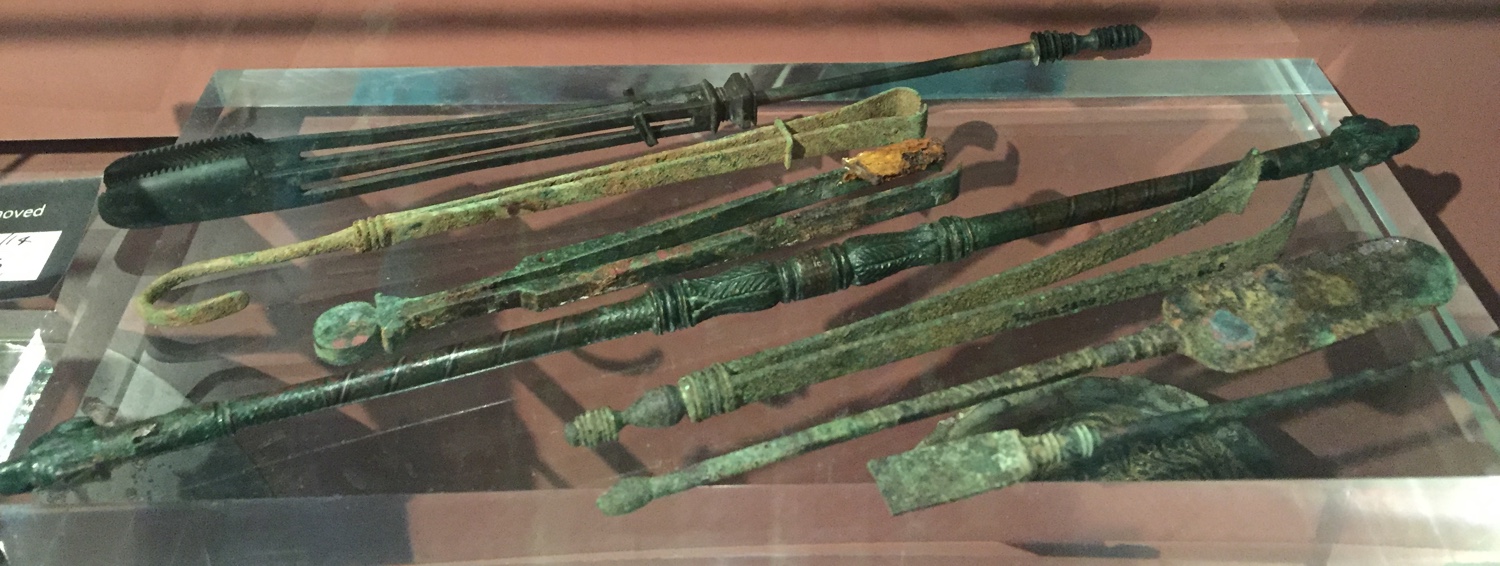
 Ruso and Tilla and their new baby daughter have left Roman-occupied Britain for Rome itself. Their excitement is soon dulled by the discovery that the grand facades of polished marble mask an underworld of corrupt landlords and vermin-infested tenements. There are also far too many doctors—some skilled, but others positively dangerous.