“Nero is known as one of Rome’s most infamous rulers, notorious for his cruelty, debauchery and madness.
The last male descendant of the emperor Augustus, Nero succeeded to the throne in AD 54 aged just 16 and died a violent death at 30. His turbulent rule saw momentous events including the Great Fire of Rome, Boudicca’s rebellion in Britain, the execution of his own mother and first wife, grand projects and extravagant excesses.
Drawing on the latest research, this major exhibition questions the traditional narrative of the ruthless tyrant and eccentric performer, revealing a different Nero, a populist leader at a time of great change in Roman society.
Through some 200 spectacular objects, from the imperial palace in Rome to the streets of Pompeii, follow the young emperor’s rise and fall and make up your own mind about Nero. Was he a young, inexperienced ruler trying his best in a divided society, or the merciless, matricidal megalomaniac history has painted him to be?”
(From the British Museum website: https://www.britishmuseum.org/exhibitions/nero-man-behind-myth)
Well, the BM does exhibitions well; I think that’s well-known, but this one drew in exhibits from several museums across the world including Pompeii/Naples and explained the man in his age, one full of political intrigue and jostling for power (as most Roman periods were!).
Emperors and groups of powerful people with vested interests (senators, army commanders, senior palace bureaucrats) tend to ‘damn the memory’ of the previous ruler so traditional accounts of Nero had followed the writings of those beholden to those vested interests.
This exhibition questioned all that and drew deep on the sources to reassess Nero and his actions in context. It wasn’t a whitewash, just a re-examination. Many visitors may not have been aware of the strong influence of Agrippina, Nero’s mother, on the very young emperor, or of the fact that Nero wasn’t in Rome at the time of the Great Fire in 64 CE*. As well as referencing great events such as the Boudiccan Revolt, war with the Parthians, the Great Fire, exhibits included scenes from Roman life as they applied to Nero’s time and reflecting his interests – building and arts, especially the theatre.
Although a great deal was familiar to me, I enjoyed the whole thing and was surprised that two hours had gone by when I left. The exhibition ends on October: I urge you to take the time to and go and see it.
A few photos…
-
-
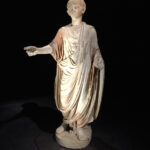
Young Nero
-
-
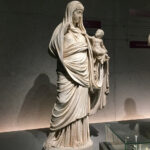
Agrippina, Nero’s mother
-
-
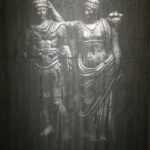
Agrippina ‘crowning’ Nero
-
-
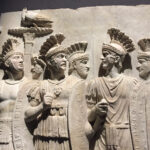
Praetorians – up close
-
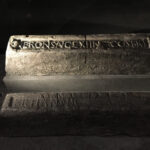
-
Lead ingots, Mendips, Roman Britain. Top one showing Nero’s name
-
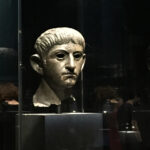
-
Bronze head of Nero found in a river near Colchester at the time of the Boudicccan revolt
There was so much more, including information about Nero as military commander, builder, artist and I was so absorbed that I forgot to take photos at some stages! Go and see it and/or order the highlights booklet or complete catalogue from the British Museum.
*(CE = Common Era, BCE = Before Common Era. These are now used instead of AD and BC)
Alison Morton is the author of Roma Nova thrillers – INCEPTIO, CARINA (novella), PERFIDITAS, SUCCESSIO, AURELIA, NEXUS (novella), INSURRECTIO and RETALIO, and ROMA NOVA EXTRA, a collection of short stories. Audiobooks are available for four of the series. Double Identity, a contemporary conspiracy, starts a new series of thrillers.
Download ‘Welcome to Alison Morton’s Thriller Worlds’, a FREE eBook, as a thank you gift when you sign up to Alison’s monthly email newsletter. You’ll also be among the first to know about news and book progress before everybody else, and take part in giveaways.
If you enjoyed this post, do share it with your friends!Like this:Like Loading...
 Confession time… Confession time…
I’ve been so absorbed in writing that I’ve neglected this blog. That’s a tad unsatisfactory. However, I have been entertaining some fascinating ‘writers abroad’ on my writing blog. I included myself but all the links are there to writers in Spain, France, Switzerland, Sweden who use their transferred homeland for inspiration.
Of course, some of us just make it up as in Roma Nova, but the Mélisende novels feature a heroine well-grounded in my region of France, Poitou.
And the good news is that the new book, Double Pursuit, will soon be on its way. The manuscript is with the editor at present and the cover is commissioned with the imaginative Jessica Bell Design. She’ll produce the cover for the ebook and paperback. I’m hoping for a late September publication date, but all these things take time.
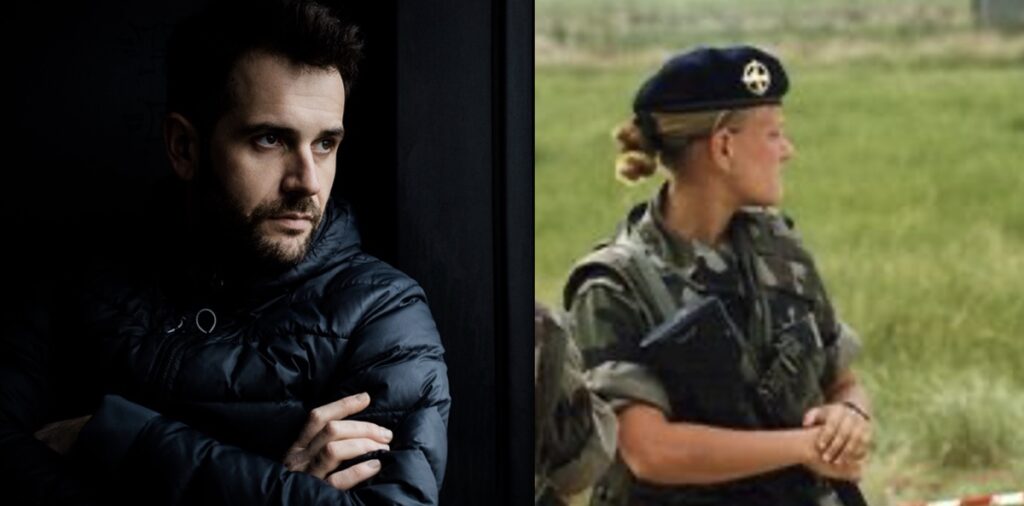
Both Mel and McCracken are back, but there are changes ahead…
In the meantime, this is what will appear on the back cover of the book:
—————
She’s hunting arms smugglers. But who is hunting her?
One dead body, two badly injured operatives and five crates of hijacked rifles.
In Rome, former French special forces intelligence analyst Mélisende des Pittones is frustrated by obnoxious local cops and ruthless thugs. Despite the backing of the powerful European Investigation and Regulation Service, her case is going nowhere. Then an unknown woman tries to blow her head off.
As Mel and fellow investigator Jeff McCracken attempt to discover the heart of the criminal network as well as their own unpredictable relationship, all roads point to the place she dreads – the arid and remote African Sahel – where she was once betrayed and nearly died.
Can Mel conquer her fear as she races to smash the network and save her colleague’s life?
—————
A little side note…
If you sign up to my monthly newsletter, you can download both the prequel to Double Identity and a Conrad and Carina Roma Nova short story.
Alison Morton is the author of Roma Nova thrillers – INCEPTIO, CARINA (novella), PERFIDITAS, SUCCESSIO, AURELIA, NEXUS (novella), INSURRECTIO and RETALIO, and ROMA NOVA EXTRA, a collection of short stories. Audiobooks are available for four of the series. Double Identity, a contemporary conspiracy, starts a new series of thrillers.
Download ‘Welcome to Alison Morton’s Thriller Worlds’, a FREE eBook, as a thank you gift when you sign up to Alison’s monthly email newsletter. You’ll also be among the first to know about news and book progress before everybody else, and take part in giveaways.
If you enjoyed this post, do share it with your friends!Like this:Like Loading...
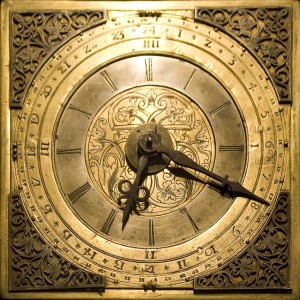 Time or alternate time? What if the Nazis had won the Second World War (Fatherland – Robert Harris, The Man in the High Castle – Philip K Dick) or England had remained Catholic (Pavane – Keith Roberts, The Alteration – Kingsley Amis) or if Alaska rather than Israel had become the Jewish homeland (The Yiddish Policemen’s Union – Michael Chabon)? Or perhaps if Roosevelt had lost the 1940 election and right-wing Charles Lindbergh had become US president (The Plot Against America – Philip Roth)?
These are serious works. No aliens, no time-travellers slipping back to points in history to change it, no fantasy or magic, just a development of history on a different course triggered sometimes by a very minor historical event. I recommend Erik Durschmied’s The Hinge Factor – How Chance and Stupidity Have Changed History which shows how easily this could, and has, happened.
So what if it did?
The trigger causes a “point of divergence” (POD) splitting it from “our timeline” i.e. the history we know and live in, to the “alternate timeline” in which some or many things have changed to create a new, alternate world. Quite a number of things in the alternate world will seem the same as the ones we know in our normal time which gives us a false anchor. Others, including social structures and attitudes as well as politics and nations, may be disturbingly different.
Scientific investigation into parallel universes and alternate worlds has prompted new thought and writing. With the advent of the Internet, wide-ranging discussion and speculation has appeared in newsgroups, blogs, and produced sites like Althistory Wiki, Alternative History Weekly Update and a well-respected magazine AltHist which publishes alternative and historical short stories. The Historical Novelists’ Society embraces alternative history in its remit and is including a session on alternative history in its September conference.
In books, film and television, alternate history has often been flavoured with time travel or timeslip, e.g. Sliding Doors or Eric Flint’s 1632 series of books or fantasy such as Susanna Clarke’s Jonathan Strange & Mr Norrell or Naomi Novik’s Temeraire series. Steampunk, which originated during the 1980s and early 1990s, incorporates elements of alternate history as well as science fiction, fantasy, horror and speculative fiction.
As with any other genre or sub-genre, the writing varies, as does the plausibility of themes and plots. Personally, I believe you have to know your own timeline history well, or know how to research it methodically and extensively before attempting to “alternate” it. New terms have been created in alternate history discussion groups to deal with anomalies. Said to have originated on the usenet group soc.history.what-if, the term “alien space bats” is used to criticise implausible alternate histories or an improbable deus ex machina. Dan Hartland in Strange Horizons called alien space bats “everyone’s favourite SF plot McGuffin”.
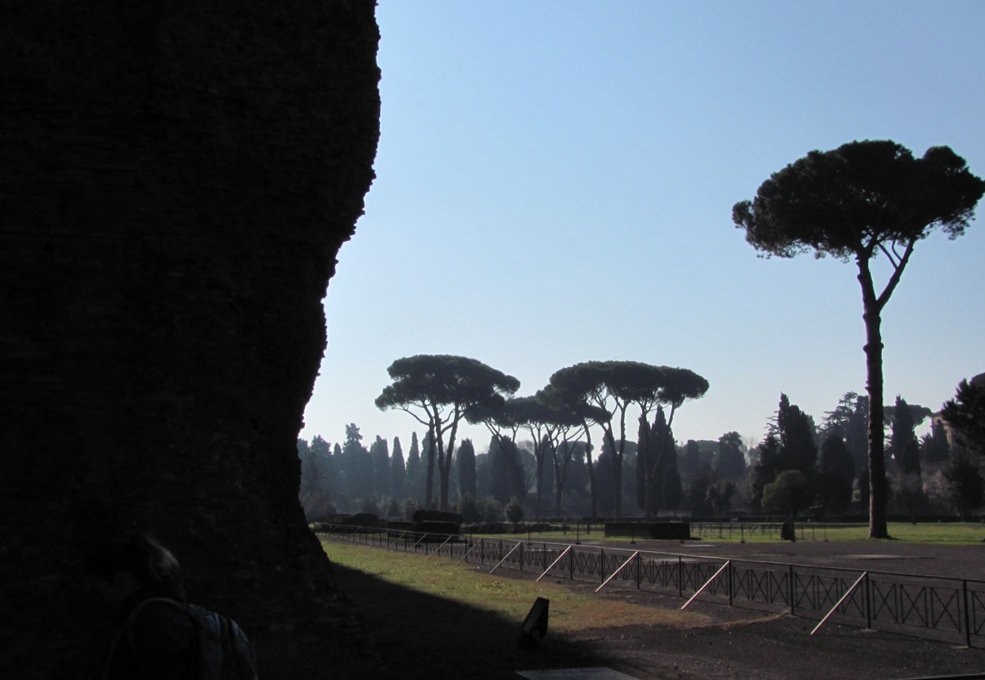 Dawn of an alternative time? For me, the most appealing alternate history stories are those set naturally in their world without info dumps or long explanations. Yes, we need some clues, and yes, we need character 1 to tell character 2 to duck when a steam-driven arquebusque loaded with a radiating bullet is about to blow their head off. But we don’t need a full explanation of how the technology was developed. Keith Robert’s Pavane suffers a tad from this. In her Eve Dallas detective series set in 2057 J D Robb effortlessly describes the futuristic elements as they arise, and only in bare, scraped detail. These are not alternate history as such, but crime stories set in a different, though possible future. I use them to illustrate the style I’m aiming for.
Writers can use techniques such as photos, pictures, the new person asking the long-standing resident, reading the info online, reading a map, or asking a guide, getting an older relative/mentor to recount something to fill in these gaps, but not in a dump-y way. The essential thing is to get the alternate world’s history right and then develop it around the story in a plausible way. This is not easy and the odd spreadsheet helps…
At its best, alternate history challenges fixed ideas while providing entertainment. Readers, especially those who haven’t tried an alt history book before, are intrigued by the different setting, but are still after the things I listed at the end of this post – in summary, a cracking good story with emotional grip. In my own books, where the POD was over 1,500 years ago. I use an alternate world not only as a setting but as an essential interactive layer – a mix of culture clash with temperament clash.
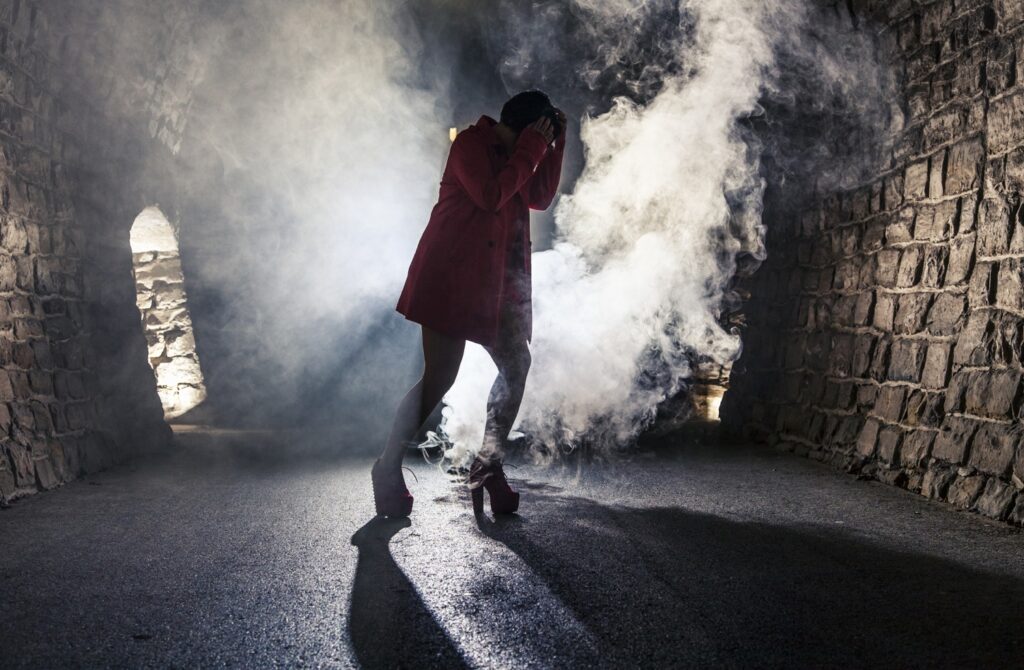 Running from her enemy And plot? In my first Roma Nova thriller, INCEPTIO, the heroine, from a version of the New World that looks reasonably familiar to us, is having enough trouble dealing with an uncompromising special forces officer from a very different Europe, let alone struggling to stay alive when a vengeful enforcer is attempting to obliterate her.
Alternative history gives us a rich environment in which to develop our storytelling. I’m taking full advantage of this, but above all, I’m aiming to give the reader some damn good thrillers!
More info:
Alt Hist: Historical Fiction and Alternate History -The new magazine of Historical Fiction and Alternate History
Alternative History Weekly Update
Wikipedia – Alternate history article
Uchronia: The Alternate History List is an online database that contains 2900 alternate history novels, stories, essays and other printed material
Althistory.wiki
Alison Morton is the author of Roma Nova thrillers – INCEPTIO, CARINA (novella), PERFIDITAS, SUCCESSIO, AURELIA, NEXUS (novella), INSURRECTIO and RETALIO, and ROMA NOVA EXTRA, a collection of short stories. Audiobooks are available for four of the series. Double Identity, a contemporary conspiracy, starts a new series of thrillers. JULIA PRIMA, a new Roma Nova story set in the late 4th century, is now out.
Download ‘Welcome to Alison Morton’s Thriller Worlds’, a FREE eBook, as a thank you gift when you sign up to Alison’s monthly email update. You’ll also be among the first to know about news and book progress before everybody else, and take part in giveaways.
If you enjoyed this post, do share it with your friends!Like this:Like Loading...
|
Subscribe to Blog via Email
Join 37 other subscribers.
Buy AURELIA from Apple!
UK

US
|