Where the senators lurk...

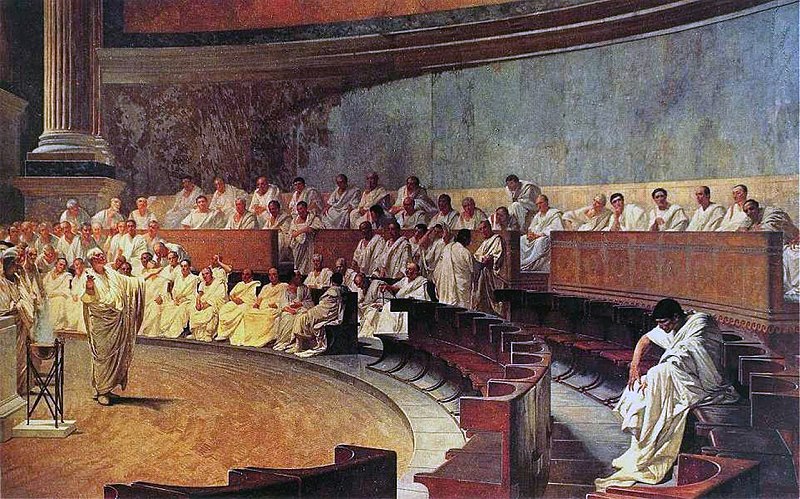
Cicero accusing Cataline, Maccari Hall, Italian Senate (Public domain)

Cicero accusing Cataline, Maccari Hall, Italian Senate (Public domain)

Roman senators: men in white togas, lots of waffle, drama, hot air and the odd good speech. Such is the (often wildly inaccurate) impression that we gain from television and film of Rome’s Senate.

The senatus romanus was one of the most enduring institutions of the Roman period, all 1229 years of it in the West, and beyond. Established in the first days of the city of Rome, (traditionally founded in 753 BC), it survived the overthrow of the kings in 509 BC, the end of the Roman Republic in the 1st century BC, the division of the Roman Empire in 395 AD, even the fall of the Western Roman Empire in 476 AD.  Plus it continued into the period of barbarian rule of Rome in the 5th, 6th, and 7th centuries.
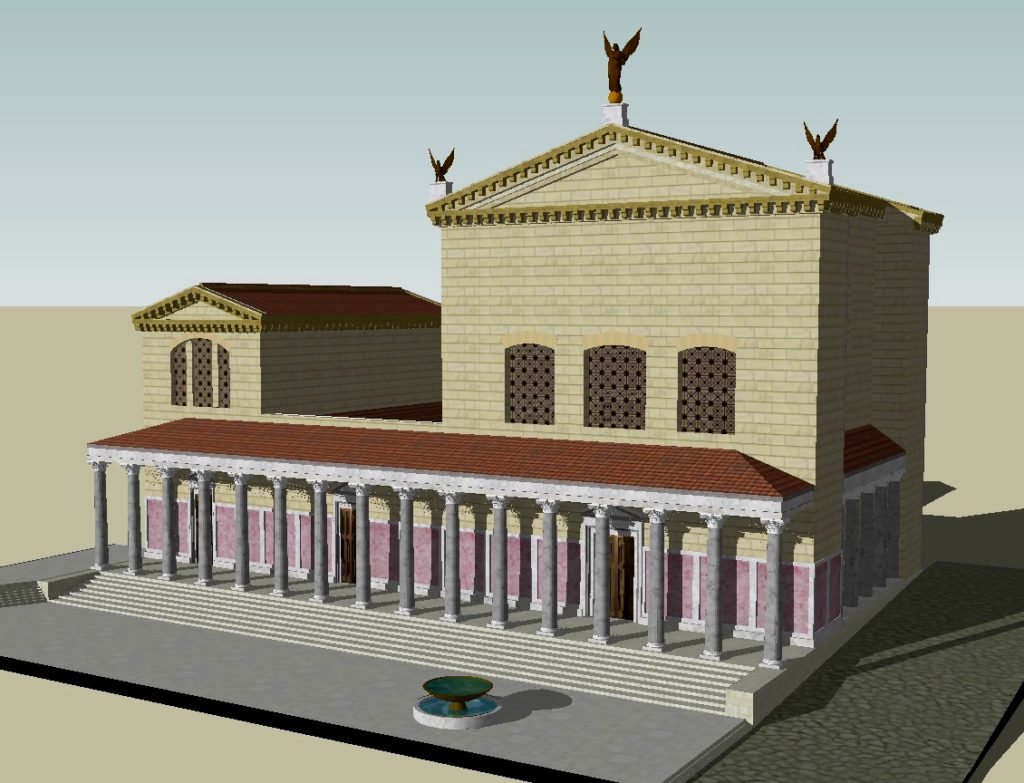
Computer generated image of the Curia Julia by the model maker, Lasha Tskhondia

Computer generated image of the Curia Julia by Lasha Tskhondia, (Creative Commons)

Said to have been created by Rome’s first king, Romulus, the Senate initially consisted of 100 men. Their descendants subsequently became the patrician class. Rome’s fifth king, Lucius Tarquinius Priscus, chose a further 100 senators from the minor leading families. During the days of the kingdom, it was the ultimate repository for the executive power, it served as the king’s council, and functioned as a legislative body in concert with the people of Rome. But its most important function was to elect new kings. Lucius Tarquinius Superbus, the last king of Rome, was overthrown in 509 BC in a coup d’état led by Lucius Junius Brutus.

During the early Republic, the Senate was politically weak and it took several generations before the Senate was able to assert itself over the executive magistrates by passing decrees, enabling legislation and controlling finances. By the middle Republic, the Senate had reached the apex of its republican power; senators directed the prosecution of military conflicts and the administration of provinces and could appoint a dictator or enact other emergency measures in time of national crisis.

Then along came Gaius Julius Caesar and his great-nephew Octavian, the future emperor Augustus…
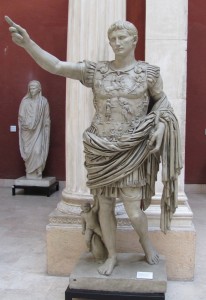
Augustus, National Museum of Roman Civilisation, Rome (Author photo)

Augustus, National Museum of Roman Civilisation, Rome (Author photo)

After the end of the Roman Republic, the constitutional balance of power shifted dramatically. Though retaining its legal position as under the Republic, in practice the authority of the imperial Senate was negligible, as the emperor held the true power in the state. As such, membership in the Senate became sought after by individuals seeking prestige and social standing, rather than actual authority.

During the reigns of the first emperors, legislative, judicial, and electoral powers were all transferred from the Roman assemblies to the Senate. However, since the emperor held control over the Senate, it acted as a vehicle through which he exercised his autocratic powers.

Stripped of much of its power and prestige under the Julio-Claudian and successive emperors, the Senate was on an inexorable downhill trajectory. Around 300 AD, Emperor Diocletian enacted a series of constitutional reforms including one where he asserted the right of the emperor to take power without even the theoretical consent of the Senate, thus depriving the Senate of its status as the ultimate depository of supreme power.

Diocletian’s reforms also ended whatever illusion had remained that the Senate had independent legislative, judicial, or electoral powers. The Senate did, however, retain its legislative powers over public games in Rome, and over the senatorial order, a fairly humiliating remnant of its former glory.

The Senate also retained the power to try treason cases, and to elect some magistrates, but only with the permission of the emperor. In the final years of the Western Empire, the Senate tried to appoint their own emperor, such as in the case of Eugenius, who was later defeated by forces loyal to Theodosius I.

The Senate remained the last stronghold of the traditional Roman religion in the face of the spreading Christianity, and several times attempted to facilitate the return of the Altar of Victory to the senatorial curia. (The altar and statue disappeared from history, but you can read one theory about what happened to it in Victory Speaks.)

After Romulus Augustulus was deposed in 476 the Senate in the West functioned under the rule of Odovacer, 476–489 and during Ostrogothic rule, 489–535. It was restored after the reconquest of Italy by Eastern Emperor Justinian I.
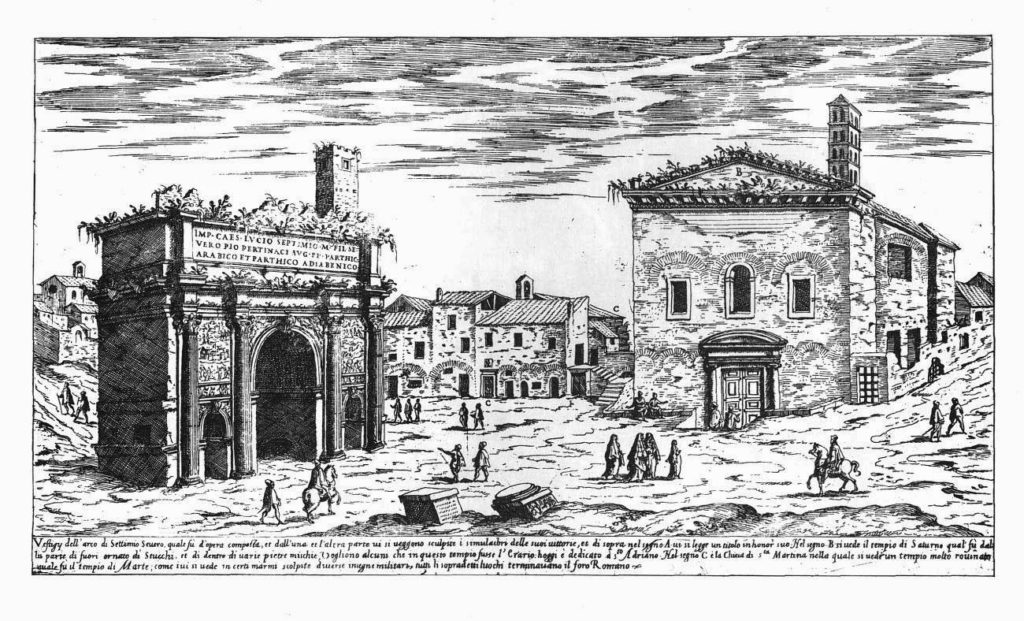
Curia Julia as Sant'Adriano al Foro (Etienne Dupérac c. 1575) (Public domain)

Curia Julia as Sant’Adriano al Foro (Etienne Dupérac c. 1575) (Public domain)

However, the Senate in Rome ultimately disappeared at some point after AD 603 (the year in which the last known senator was mentioned). Despite this, the title “senator” was still used well into the Middle Ages as a largely meaningless honorific. However, the Eastern Senate survived in Constantinople, until the ancient institution finally vanished there in the 14th century.

The Roman Senate building today

When I visited Rome, I was curious to see where the Senate had met, the Curia Julia, built in 44 BC, when G.Julius Caesar replaced Faustus Cornelius Sulla’s reconstructed Curia Cornelia, which itself had replaced the Curia Hostilia.
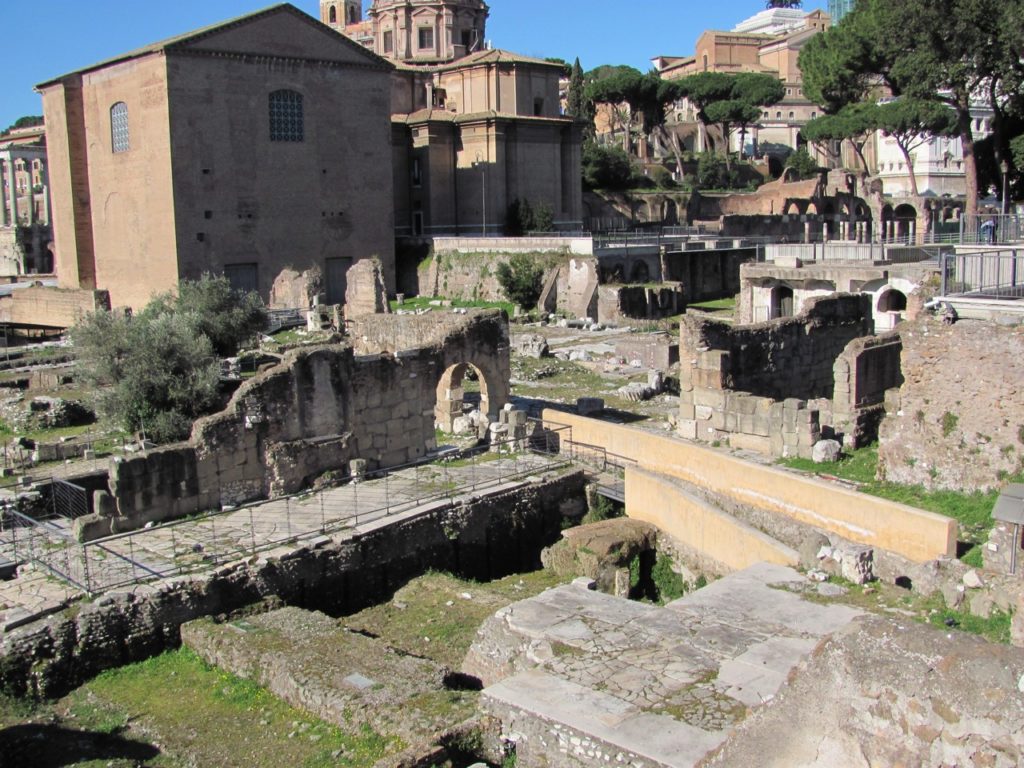
Curia Julia, back (Author photo)

Curia Julia, back (Author photo)

Caesar wanted  to redesign spaces within the comitium (traditional open air meeting place central to Roman political life) and the Roman Forum. The alterations within the comitium would reduce the prominence of the Senate.
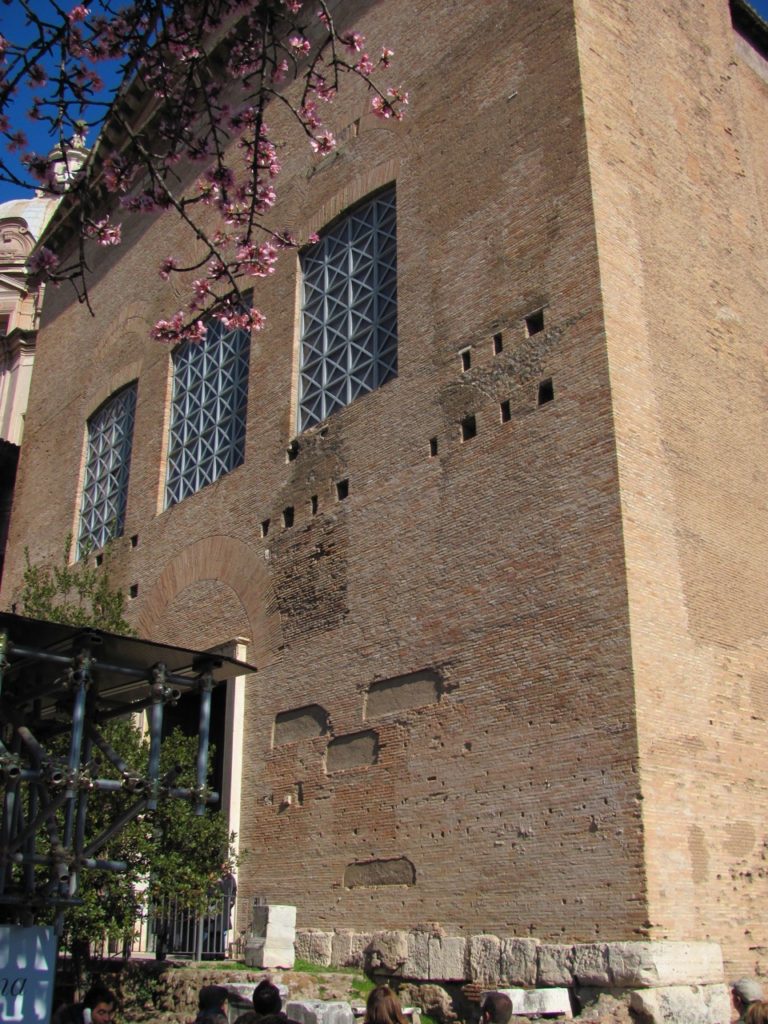
Curia Julia, front entrance (Author photo)

Curia Julia, front entrance (Author photo)

But the work was interrupted by Caesar’s assassination at the Theatre of Pompey, where the Senate had been meeting temporarily during construction. The project was eventually finished in 29 BC by Augustus (or more likely Agrippa, his fixer).
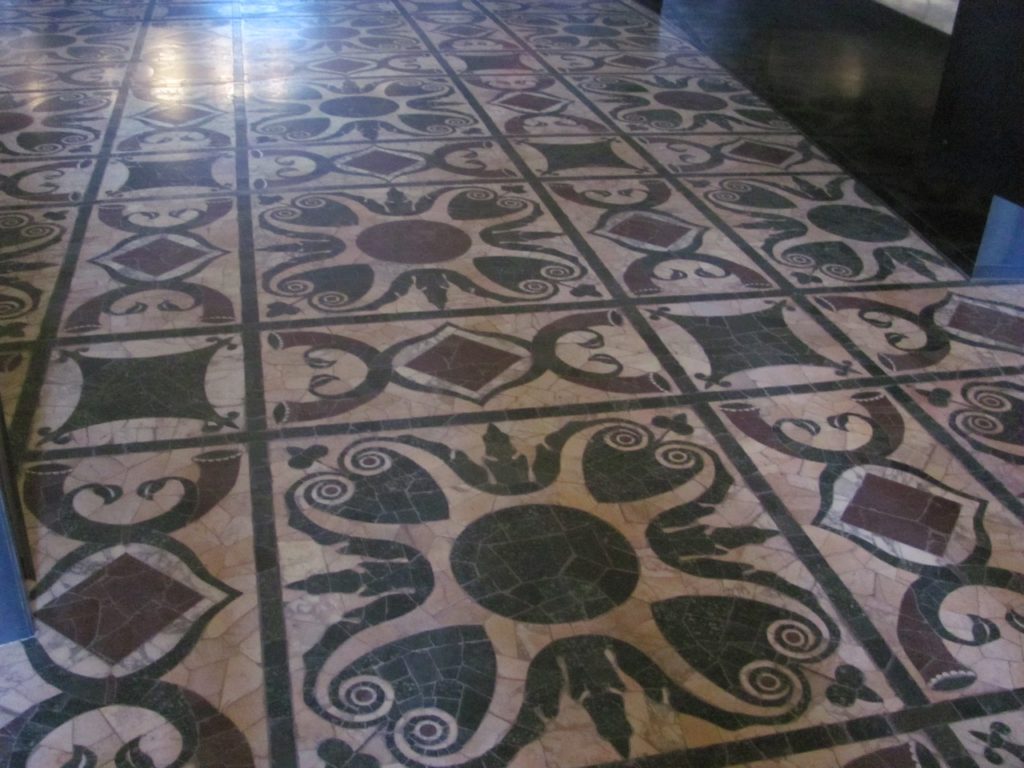
Curia Julia, floor (Author photo)

Curia Julia, floor (Author photo)

The Curia Julia is one of a handful of Roman structures that has survived mostly intact; it was converted into the basilica of Sant’Adriano al Foro in the 7th century and underwent several later restorations. However, the roof, the upper side walls and rear façade are modern and date from the ‘remodelling’ of the deconsecrated church under Mussolini in the 1930s.

But the height is still impressive as shown my (amateur) video shot in the inside in 2012.

Even though heavily visited, the Curia Julia is well worth an hour of your time. It has, after all, been a central point for Roman life for over two millennia.


Alison Morton is the author of Roma Nova thrillers –  INCEPTIO,  PERFIDITAS,  SUCCESSIO,  AURELIA,  INSURRECTIO  and RETALIO.  CARINA, a novella, and ROMA NOVA EXTRA, a collection of short stories, are now available.  Audiobooks are available for four of the series. NEXUS, an Aurelia Mitela novella, is now out.

Download ‘Welcome to Roma Nova’, a FREE eBook, as a thank you gift when you sign up to Alison’s monthly email newsletter. You’ll also be first to know about Roma Nova news and book progress before everybody else, and take part in giveaways.

INCEPTIO goes on a blog tour in its new clothes!

INCEPTIO went off on a blog tour last week in its new cover and attracted a lot of attention as well as some detailed and thoughtful reviews. It’s such a pleasure opening the world of Roma Nova to new readers!

Do have a look at these bloggers – they are dedicated, probably voracious, readers and offer insight into a huge variety of work. And they are volunteers who do it for the love of books. You could start with the visits INCEPTIO made… 😉

A Little Book Problem  @book_problem  Guestpost

The Shelf of Unread Books  @shelfofunread  Interview

Jan’s Book Buzz  @janjanmel  Review

Stacy Is Reading  @stacyisreading  Review

MADE UP Book Reviews @MADEUP_group  Review

Northern Reader @NorthernReader  Review

Random Things Through My Letterbox  @annecater  Interview

Cheryl M-M’s Book Blog  @mm_cheryl  Review


And finally, special thanks to Anne Cater of Random Things Blogtours who set it all up. Very professional and highly recommended!

Happy reading!


Alison Morton is the author of Roma Nova thrillers –  INCEPTIO,  PERFIDITAS,  SUCCESSIO,  AURELIA,  INSURRECTIO  and RETALIO.  CARINA, a novella, and ROMA NOVA EXTRA, a collection of short stories, are now available.  Audiobooks are available for four of the series. NEXUS, an Aurelia Mitela novella, will be out on 12 September 2019.

Download ‘Welcome to Roma Nova’, a FREE eBook, as a thank you gift when you sign up to Alison’s monthly email newsletter. You’ll also be first to know about Roma Nova news and book progress before everybody else, and take part in giveaways.

Who is Carina Mitela?

Carina, warrior, councillor and mother

Carina, warrior, councillor and mother – purely some suggestions!

When you invent a character like Carina Mitela, you need to know who she is, where did she come from, what does she want, and fear? What’s stopping her? What does she like? What are her values? What are her strengths and weaknesses?

Carina had to go through a ‘birthing’ process or perhaps even a regression; she’d started off fully formed in my imagination at the start of INCEPTIO, the first of her adventures.

So I had to lay some clues to get her to where I wanted her…
We first see her working in the New York Kew Park as a weekend volunteer.
What this tells us – she loves the outdoors and works happily with others.

She enjoys running and keeping fit.
What this tells us – she’s sporty.

At the beginning of INCEPTIO, Karen (not yet Carina) is not particularly happy or unhappy, although she’s not achieving anything in her life.
What this tells us – she’s unsure of her abilities, and unsettled, but resilient.

The early loss of her parents and fostering with cold relatives forces her to be self-contained and not a little wary of others.
What this tells us – she needs to feel safe. Part of the urge to protect herself makes her a smartmouth.

She defends an older person from some young bullies.
What this tells us – she has a strong sense of fairness and has the courage to put it into action.

She has a hot temper and makes snap decisions, not always wise ones.
What this tells us – she’s passionate and fallible.

She enjoys the movies and subscribes to a movie periodical.
What this tells us – she has a nice, normal, safe hobby.

The foundations are then laid. The traumatic events in INCEPTIO reveal her innate toughness and determination, her sense of fairness, her hot temper and compassion. Now I had to build in some factual background.

A brief biography
Born in the Eastern United States (EUS), father William Brown, ex-UK citizen, mother Marina Mitela, daughter of one of the Twelve Families who founded Roma Nova in ancient times. Although registered with the Roma Novan authorities at birth as Carina Mitela, she was raised as Karen Brown in the EUS. For her first twelve years, she lived in New Hampshire. Sadly, she lost her mother in a mysterious car accident when she was three, and her father from cancer at twelve. Fostered adequately, but unlovingly, with distant Brown cousins in Nebraska on the edge of the Indigenous Nations’ territories, she left for the autonomous city of New York the day after graduating high school. After several jobs, at the beginning of INCEPTIO she has ended up as an assistant account executive in Bornes & Black Ad Agency.

Physically, she is too tall and angular to be classically pretty, she has an athletic build, blue eyes and red-blonde hair. She doesn’t know it yet, but she bears a striking resemblance to her grandmother, Aurelia, as a young woman.

Deeper and deeper…
Carina’s backstory is reinforced when we see her mother, Marina, as a young child in the late 1960s in AURELIA and as a young woman in  the early 1980s in INSURRECTIO and RETALIO. William Brown, Carina’s father, not only courts Marina, but helps Aurelia in INSURRECTIO and RETALIO. And Carina is born in RETALIO. Although these incidents are subplots to Aurelia‘s story – she is after all the heroine of these three books –  this fleshes out Carina‘s background, only part of which which emerges from the books where she is the lead character – INCEPTIO, CARINA, PERFIDITAS and SUCCESSIO.

In the novella CARINA, our heroine leads her first overseas mission and some of the eager newbie enthusiasm fades as the realities of political and professional life touch her. In PERFIDITAS and SUCCESSIO, she matures, becoming a parent as well as an effective special forces soldier. She has found her place in life, but the heart-wrenching challenges she faces test her loyalty and duty to the full and nearly break her profound love for her life partner, Conrad. In ROMA NOVA EXTRA, we see all these aspects in different stories.

Later, she becomes a senior officer in the Praetorian Guard Special forces, a senator and imperial councillor, and heads the Twelve Families of Roma Nova, yet remains a loving mother and granddaughter and not without her doubts and worry about fouling up. Not an easy combination at any stage of her life!

Over the series we see different parts of each individual’s story – I love hooking the past, present and future together – but Carina retains her basic character traits and values throughout, although how she expresses them and assesses her reactions develop through the stories.

She is only human, after all!


Alison Morton is the author of Roma Nova thrillers –  INCEPTIO,  PERFIDITAS,  SUCCESSIO,  AURELIA,  INSURRECTIO  and RETALIO.  CARINA, a novella, and ROMA NOVA EXTRA, a collection of short stories, are now available.  Audiobooks are available for four of the series. NEXUS, an Aurelia Mitela novella, is out.

Download ‘Welcome to Roma Nova’, a FREE eBook, as a thank you gift when you sign up to Alison’s monthly email newsletter. You’ll also be first to know about Roma Nova news and book progress before everybody else, and take part in giveaways.