(Public domain, Wikipedia) Size always matters, and the Romans knew it. A quick look at land, coins and a load of old rubbish…
The Roman Empire once included all, or part of, nearly 50 countries
At the empire’s greatest extent in AD 117 under Trajan, Roman territory stretched from northern Britain to southern Egypt near the Sudanese border, from the Atlantic coast of Portugal to the Persian Gulf and from Casablanca in northern Africa almost to the Caspian Sea. If you include the territorial waters controlled (most of the time) by Rome such as the Mediterranean, which they called Mare Nostrum (‘our sea’), the empire would rank as the fifth-largest country on Earth if it still existed in that form today.
Due to the Empire’s extent and endurance, its institutions and culture had a lasting influence on the development of language, religion, art, architecture, literature, philosophy, law and forms of government across its territories. And who today still doesn’t think, even occasionally, about the Roman Empire?
The Romans produced more than 25 million coins each year
When we see a news headline about a new discovery of a hoard of Romans coins found in Turkey, Yorkshire, southern France, Egypt or Sicily, some of us yawn – “not another one!” – although some of us become very excited. Every museum in Europe seems to have at least a small display and some have truly spectacular collections.
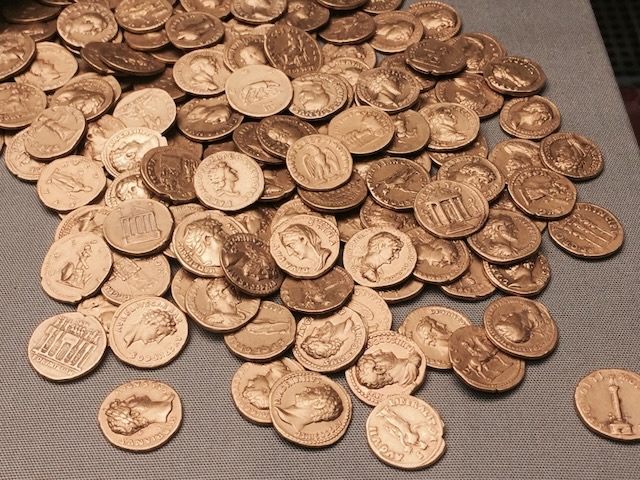 Corbridge Hoard AD160, British Museum (Author photo) But these represent a small percentage of reality.
Following a reform instituted by joint emperors Diocletian and Maximian in AD 294, the Romans established a network of 15 mints across the empire – all the way from Londinium (London) to the Egyptian city of Alexandria. (See some interesting calculations in the Forum Ancient Coins) Although production slowed down around 100 years later, no state in the world would again match Rome’s numismatic productivity until the 19th century.
Rome’s ‘eighth hill’ is a load of old rubbish… literally
Monte Testaccio is a huge artificial hill south of the Aventine and stands currently at 35 metres tall – an odd site in the middle of contemporary Rome. It arose (literally!) from the shards of ceramic shipping containers offloaded from barges along the Tiber. It’s reckoned to contain the remains of an estimated 53 million amphorae. That’s a lot of olive oil – estimated at around 6 billion litres. We should remember that imperial Rome was at the time the world’s largest city, with a population of at least one million people. It was probably even higher in ancient times. Most of the pottery has been dated to the period between AD 140 and 250, though the base of the hill may be much older.
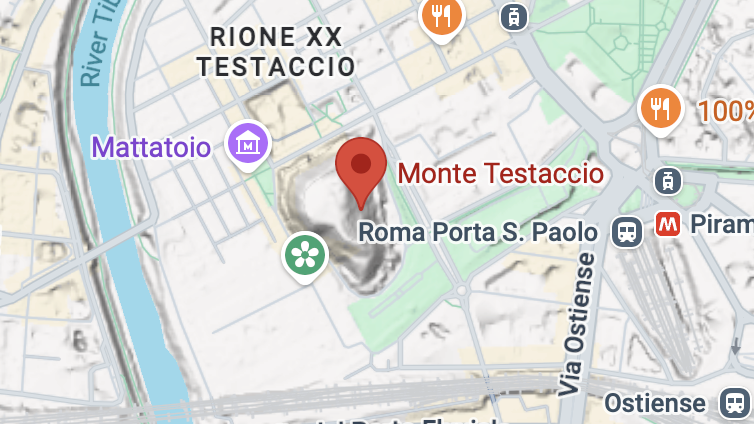 Monte Testaccio in Rome (Google Maps) With a circumference of nearly a kilometre (0.6 mi), it’s one of the largest spoil heaps found anywhere in the ancient world, covering an area of 2 hectares (4.9 acres) at its base and with a volume of approximately 580,000 cubic metres (760,000 cu yd).
Monte Testaccio was not simply a haphazard waste dump; it was a highly organised and carefully engineered creation, presumably managed by a state administrative authority.
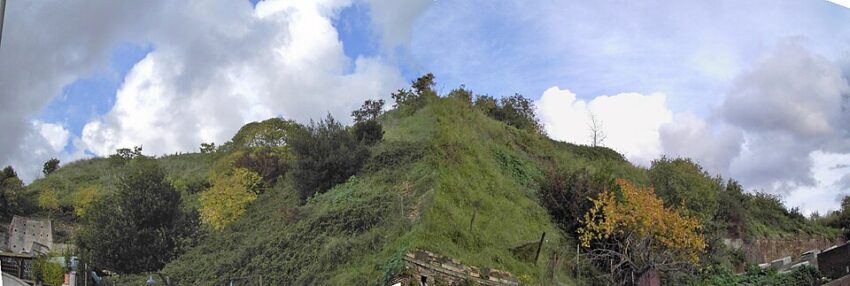 Summit of Monte Testaccio (Wikipedia, public domain) An unusual addition to the seven ‘official’ hills within the city walls: Aventine, Caelian, Capitoline, Esquiline, Palatine, Quirinal and Viminal.
So there are three examples of ‘big’ in respect of the Romans. Any others spring to mind?
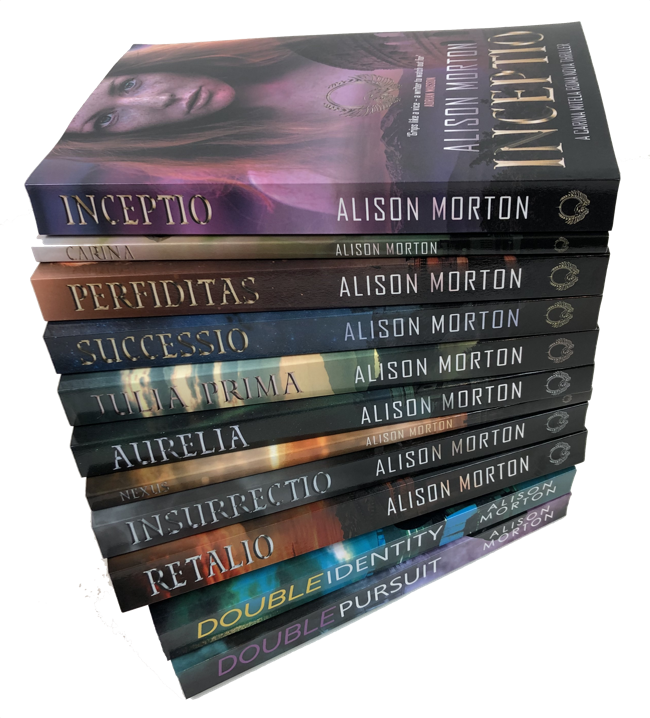
Alison Morton is the author of Roma Nova thrillers – INCEPTIO, CARINA (novella), PERFIDITAS, SUCCESSIO, AURELIA, NEXUS (novella), INSURRECTIO and RETALIO, and ROMA NOVA EXTRA, a collection of short stories. JULIA PRIMA and EXSILIUM, set in the late 4th century, tell the story of Roma Nova’s foundation. Audiobooks are available for four of the series. Double Identity, Double Pursuit and Double Stakes form a new contemporary thriller series. A new collection of Roma Nova short stories, HEROICA, is now out.
Download ‘Welcome to Alison Morton’s Thriller Worlds’, a FREE eBook, as a thank you gift when you sign up to Alison’s monthly email update. As a result, you’ll be among the first to know about news and book progress before everybody else, and take part in giveaways.
If you enjoyed this post, do share it with your friends!
Are ebooks and print books in some sort of fierce battle to the death with one another in which the only outcome is total dominance?
Will ebooks soon drive their dinosaur cousin to extinction or will print books will see ebooks off and show the whole digital phenomenon to be a mere flash in the pan?
Neither of these outcomes is likely
I’m a typical fence-sitting Libran and love both; I don’t see it as a battle to be ‘won’, but as providing a choice.
Once a story is written and edited, an ebook version can be produced relatively easily, and then uploaded to a digital retail outlet within minutes. Stories in some genres, such as romance and science fiction, are often only produced in this format. Authors often use a short story or novella in digital format to test out a series idea or to supplement an established series.
If the ebook sells well, then it can be produced in print format (after reformatting) either as a print run of a few hundred or thousand or individually as print-on-demand. And this is not the exclusive domain of indie authors/publishers; some traditional publishing houses have adopted print-on-demand.
From the reader’s point of view
Limiting your book to one format cuts your potential audience. Readers may have a strong preference for one format or other. Writers shouldn’t assume they know how the reader wants to read their books.
Hybrid readers may enjoy a physical book relaxing at home then switch to an e-reader while travelling, especially if they have cabin luggage only. When I was younger in pre-digital times, my brother and I were rationed to six books each for a holiday of three weeks; I was usually done within the first ten days – horrendous. If only ebooks had existed then!
Physical books take up space and are heavy. But a book chosen at an event and signed by an author is very special. I’m there in the queue and literary festivals and conferences waiting for my minute with the star author. The smell of fresh paper and the crisp pages all contained in a beautiful cover – heaven!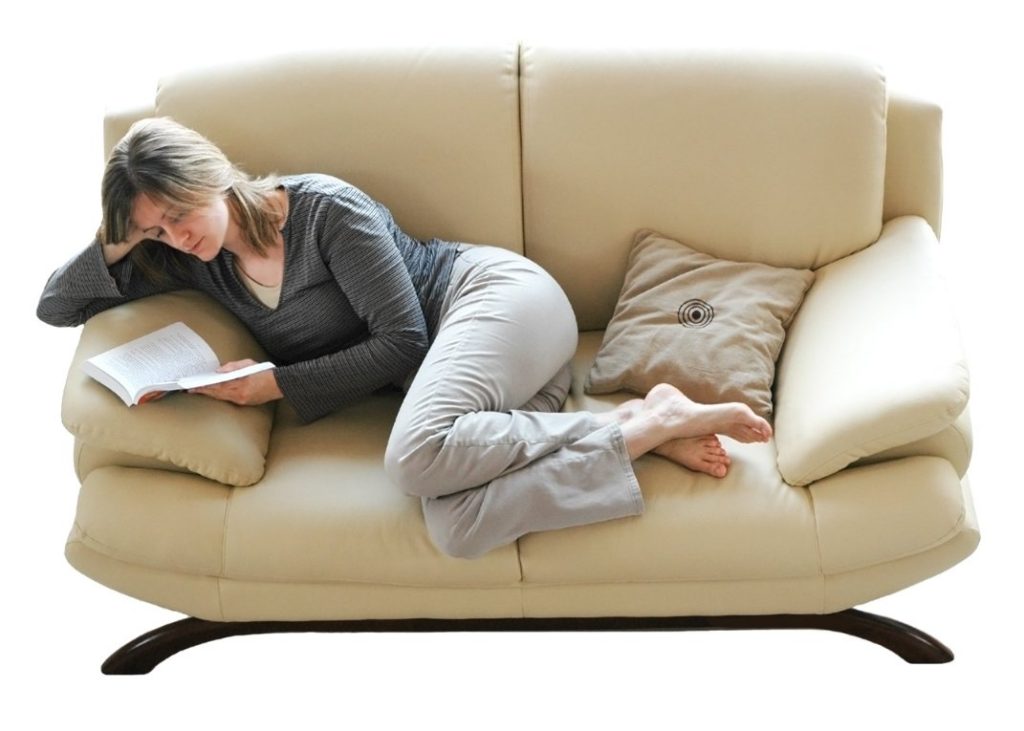
Ebooks may not be the miracle they’re cracked up to be
Backlit e-readers are said to have an adverse impact on overall health, alertness and the circadian clock, which synchronises the daily rhythm of sleep to external environmental time cues. People go to bed later and are much tireder the next day. And when sleeping, they spend less time in REM sleep. Even though they were still getting eight hours of sleep, they feel significantly less rested than when they read a print book. And apparently we remember less about stories we read on ereaders than those read from a hard copy.
Frontlight technology (the vast majority of e-readers today) projects light onto the screen from the front, mainly used in E Ink readers and tablets and are more eye-friendly. Light is distributed across the screen via a guide layer. LEDs sit around the bezel or frame and shine light down across the surface of the screen, mimicking reflected light. This reduces direct glare which helps minimise fatigue. This approach creates a paper-like viewing effect without shining directly into the eyes. It significantly reduces blue light, making it ideal for comfortable reading in various lighting conditions.
However, while ebooks can’t be loaned or shared and the e-reader needs charging, ebooks are much cheaper than print books. Ebooks can be bought instantly from your desk or armchair and you’re reading in seconds. Unlike printed books, ebooks don’t require trees for paper and petroleum for ink.
I should say that very many people read now on their phone or tablet such as iPad. I really should do a survey on this!
However…
The joy of spending time wandering round a bookshop
You can feel books, look at a beautiful cover design spread over the front and back, dip in, settle down in a chair (at the best bookshops!) and find a new world. Taking a new book home with you is one of life’s pleasures. I am incapable of walking past a bookshop in any town. I must go in and browse.
In print books, maps, place names, cast of characters, glossaries, etc. are far easier to access – you just flick back – and they are in full (readable) size. It’s so frustrating when on my e-reader they don’t expand and I end up squinting at tiny print and often give up. I included all of the above additional elements in, for instance, JULIA PRIMA, and because of the squinting problem, I ensured the maps were readable in the ebook format. I wish every publisher did that!
At literary festivals and conferences, I love to browse the speakers’ books after I’ve heard their presentations. There’s the added bonus of having a personalised signature from the author as well!
As an author, I love it when somebody buys a print book I’ve written and asks me to sign it. I always personalise it to make it special to that reader.
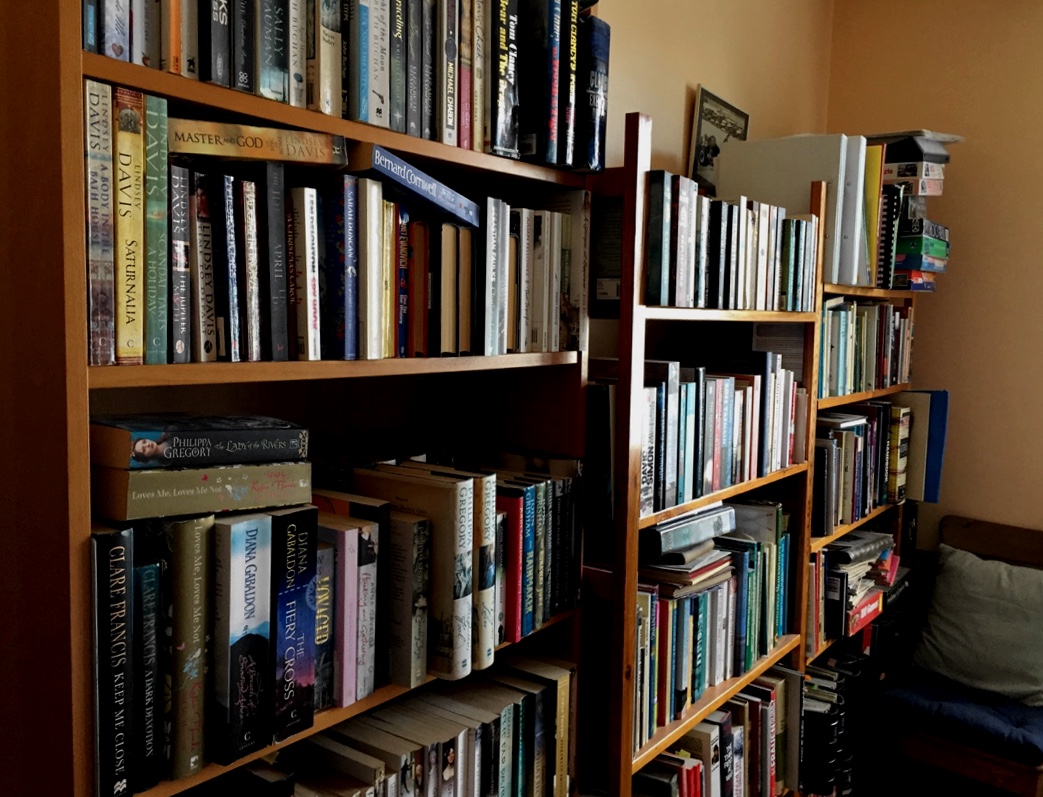
Shelves of books are like piles of treasure you can explore on a rainy day and re-discover that book you enjoyed on a holiday or bought at a special time. An ebook doesn’t do that for me.
So each format has its pros and cons
My woolly wandering around the topic shows how unclear the whole thing is. When the Kindle came out, minor tech nerd me bought one straight away, even before my major tech nerds husband and son. Ha!
I’ve heard anecdotally that sales of print books are increasing especially by Millennium and GenZ readers. This is very good news!
I’ll be buying and reading both for the foreseeable future.
Which do you prefer? Or are you another hybrid reader?
Do leave a comment and tell me why. I’m intrigued by what you think.
__________________
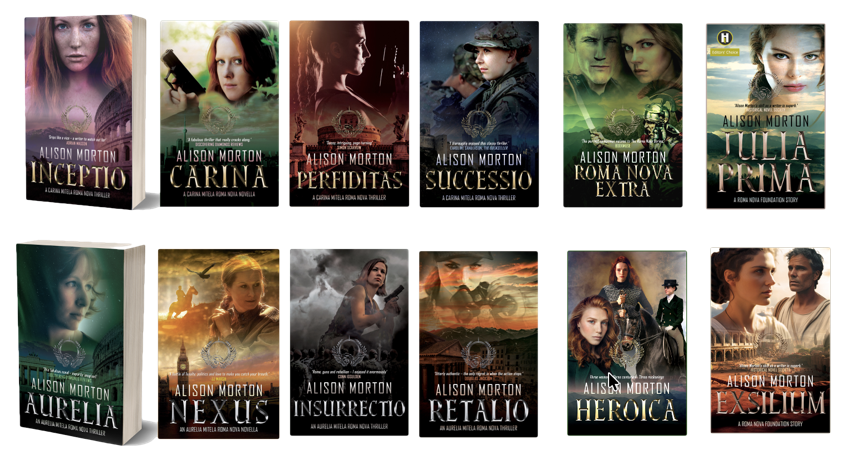
And the INCEPTIO 10th Anniversary special hardback with bonus material!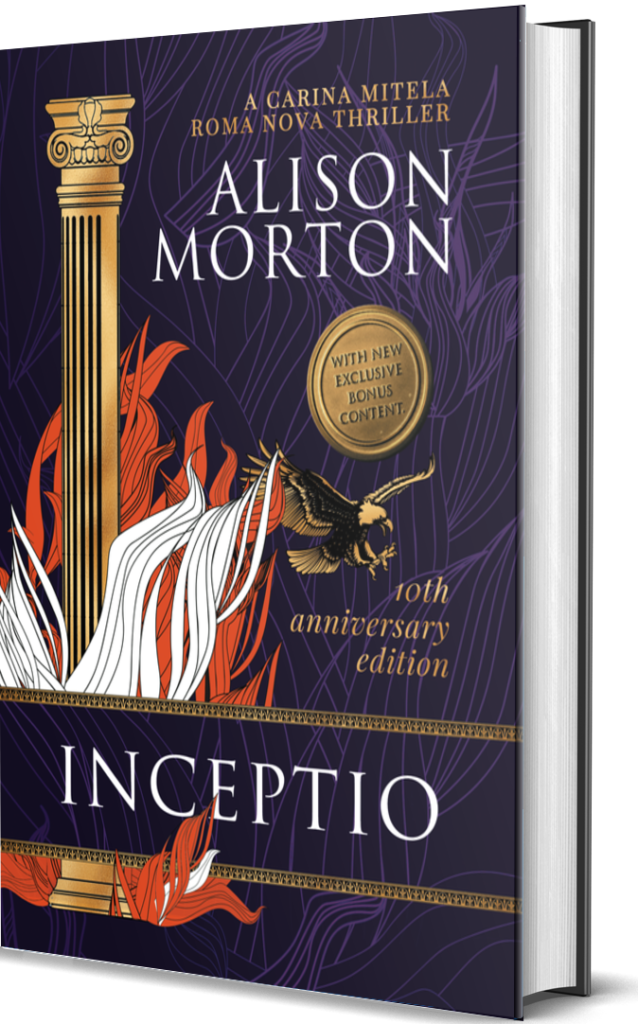
Not forgetting the Mélisende ‘Doubles’ crime thriller series
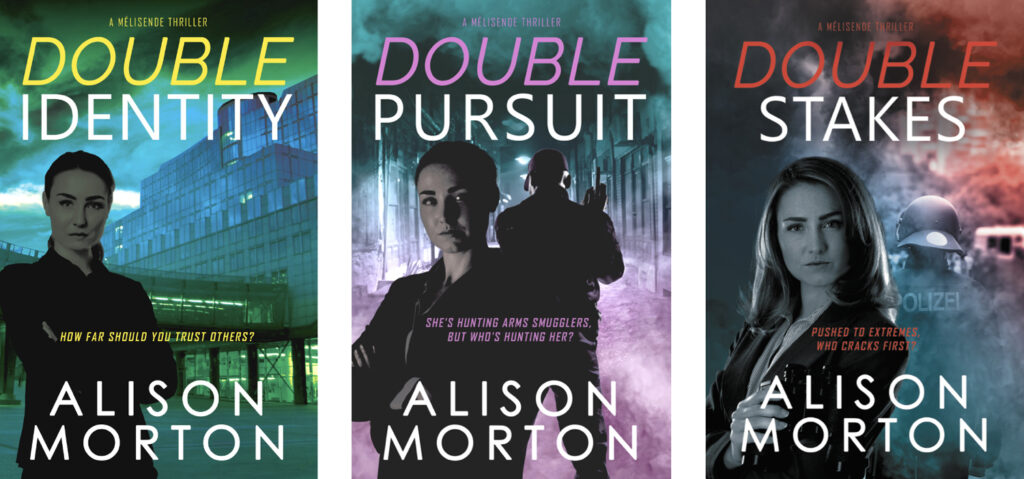
All the individual Roma Nova books and the Mélisende Doubles thrillers are available in paperback through bookshops, libraries or from online retailers. To buy, select the book of your choice on the Books page to find direct links to various retailers for that book. If you prefer to buy at a book shop, just order quoting the ISBN number you can find on each book page.
Or stroll down to your local library and if it’s not there, put in a request and they’ll get it for you.
______________
Alison Morton is the author of Roma Nova thrillers – INCEPTIO, CARINA (novella), PERFIDITAS, SUCCESSIO, AURELIA, NEXUS (novella), INSURRECTIO and RETALIO, and ROMA NOVA EXTRA, a collection of short stories. JULIA PRIMA and EXSILIUM, set in the late 4th century, tell the story of Roma Nova’s foundation. Audiobooks are available for four of the series. Double Identity, Double Pursuit and Double Stakes form a new contemporary thriller series. A new collection of Roma Nova short stories, HEROICA, is now out.
Download ‘Welcome to Alison Morton’s Thriller Worlds’, a FREE eBook, as a thank you gift when you sign up to Alison’s monthly email update. As a result, you’ll be among the first to know about news and book progress before everybody else, and take part in giveaways.
If you enjoyed this post, do share it with your friends!
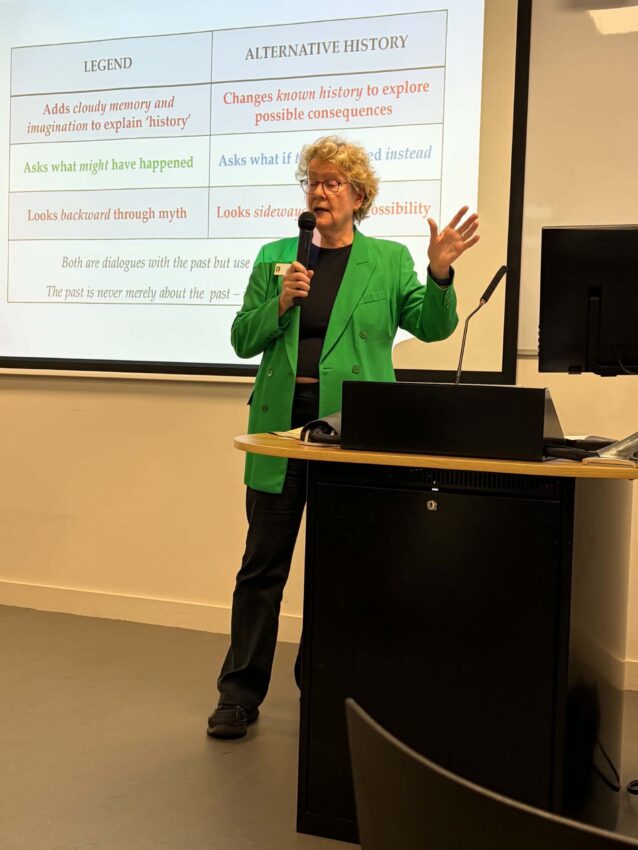 (Photo courtesy of Sophie Perinot) The (in)famous green jacket and I went to the very green island of Ireland for this year’s three-day Historical Novel Society conference.
West of Dublin, Maynooth University is a constituent university of the National University of Ireland and combines historical roots with modern technology – perfect for our conference.
I was delighted to contribute a talk on alternative history on the Saturday – more below!
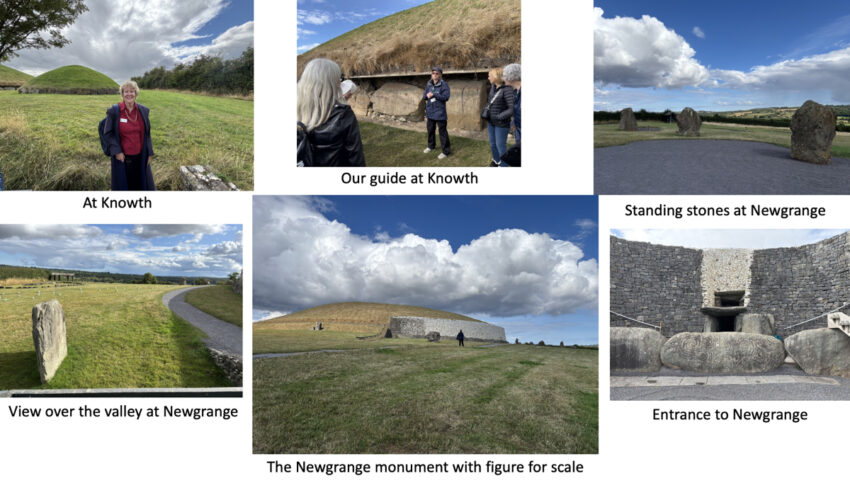
Never having visited it, I enthusiastically went on the Friday excursion to the Newgrange complex of ancient monuments (UNESCO World Heritage Site).
Set on a rise in a curve of the river Boyne, it dates from 3,100 BC making it older than Stonehenge or the pyramids in Egypt.
First off though was nearby Knowth, the site of numerous passage tombs, but containing the largest passage tomb ever built. Next on to Newgrange itself which is massive!
We were allowed inside for a few minutes and stood under 5,000 tons of Neolithic stone. Then the guide switched the lights out. Spooky, but in a positive way. A simulation of the midwinter sun piercing the chamber gave us an eerie connection back to people thousands of years ago.
A supper in the Pugin Hall (reminded me of Hogwarts) restored our strength ready for the conference proper on Saturday. Full Saturday programme here, but some sessions need a special mention. After the organising team was introduced – an excellent touch! – Professor Terence Dooley gave us an informative and lively guide to tracing the eventful and tragic life of Hermione, 5th Duchess of Leinster (1864-95) by means of estate papers.
We all took notes during BooksGoSocial‘s marketing expert Laurence O’Bryan’s presentation. I always learn something new from Laurence!
My own presentation ‘Alternative history – the stuff of legend or made-up twaddle?‘ was the first after a delicious sandwich lunch. (The food was outstanding during the conference: salad boxes and wraps, and pastries with tea and coffee in the breaks.) I was amazed and rather pleased that so many people came. They just kept filing in! And they looked interested, even when I kept referring to the Romans!
After explaining how althist worked and highlighting things to consider when writing stories in this framework, I gave some examples. People were surprised at the range of writers who had tackled them from Livy to Kingsley Amis, Kazuo Ishiguro, C J Sansom to Robert Harris. Great questions afterwards and I think that we may have some new althist readers…
The Gala Dinner on Saturday was lively, friendly and noisy! When you have hundreds of people in one room all eagerly talking, you’re bound to not hear everything above the hubbub.
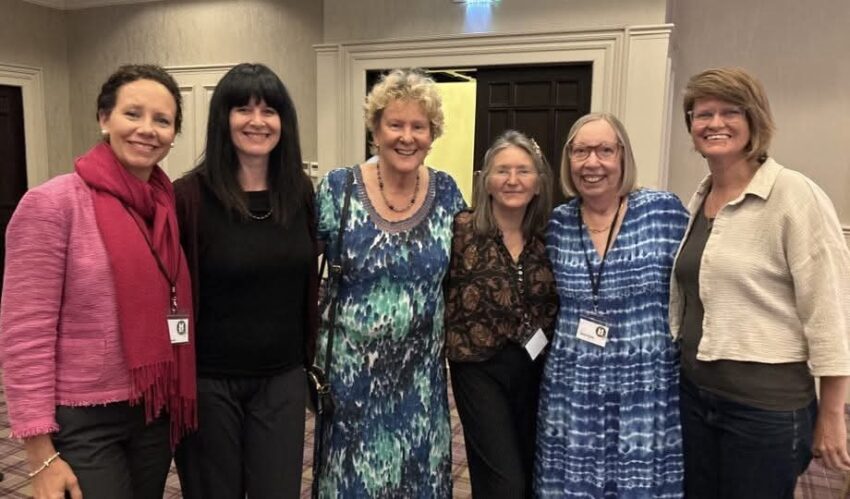 Left to right: Laura Morelli, Jessica Bell, me, Jean Gill, Clare Flynn, Amie McCracken (Photo courtesy of Jessica Bell) But we all quietened down for Justin Hill and Matthew Harffy’s dynamic duo after dinner speech. I stayed for a few minutes of joyful Irish music which followed, but I was quite tired by this stage, so called it a night.
Three highlights from Sunday
- Vaseem Khan’s Who Owns the Legend, an insightful talk delivered with sharp insights, balance and occasional wry humour
- Jean Gill, Justin Hill and Matthew Harffy’s panel on Beyond Kings and Queens: Giving Voice to the Hidden Folk, mostly in the Viking and Medieval periods
- Essie Fox and Karen Sullivan (publisher) on Gothic Legends for Today’s Readers
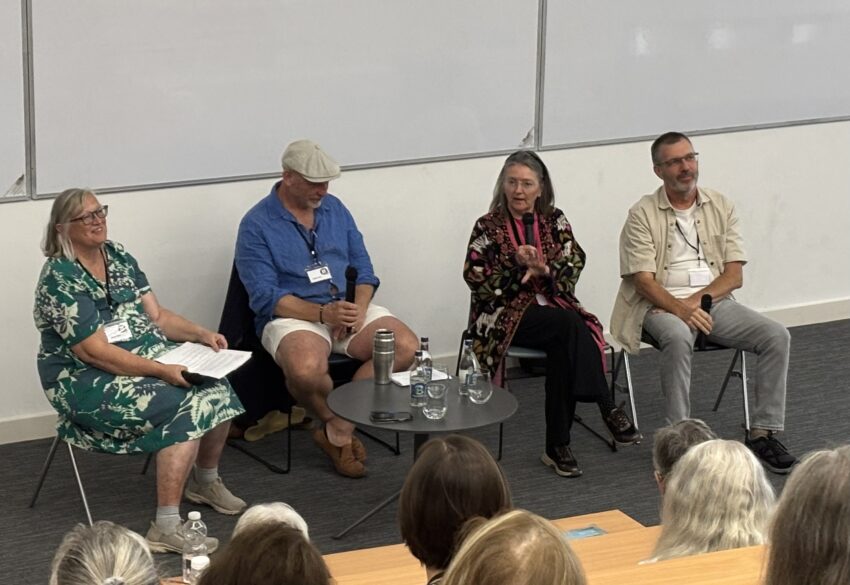 Left to right: Tracey Warr (chair), Justin Hill, Jean Gill, Matthew Harffy Full Sunday programme here
But I particularly enjoyed Confronting the Legend with Christopher Cevasco (participating chair), Sophie Perinot and Michelle Moran. How do writers manage reader expectations for a book that seeks to be faithful to ‘history’ when that history is merely a familiar legend or a beloved pop-cultural depictions of characters? Then I asked about Robin Hood… 😉
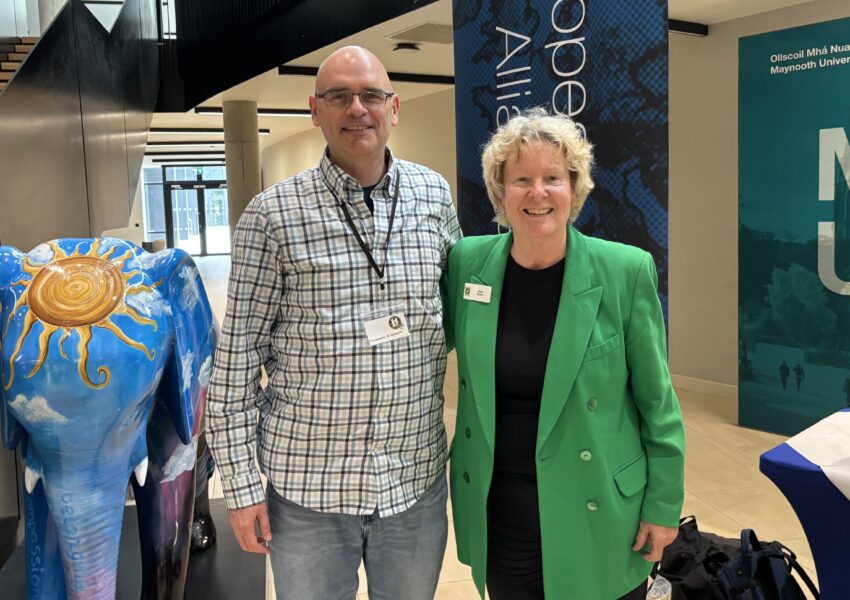 Alison Morton with Christopher Cevasco HNS 2026 (I have no idea why the blue elephant is in the foyer but it adds to the photo.) What did I take away from the conference?
A lot of very positive memories. The silken cord running through was warmth and friendship. I reconnected with many historical fiction friends from both sides of the Atlantic and made new ones from even further afield. Much socialising occurred at Brady’s Pub a couple of streets away in Maynooth as well as at the hotel itself.
Even though I’ve been going to HNS conferences since 2012, including one in the USA in 2015, I always learn something from the other speakers.
You share experiences, meet fellow sufferers, celebrate with colleagues, discuss writing and publishing with people whose eyes don’t glaze over when you mention the ‘W’ word. And in our solitary creative life, that’s immensely valuable.
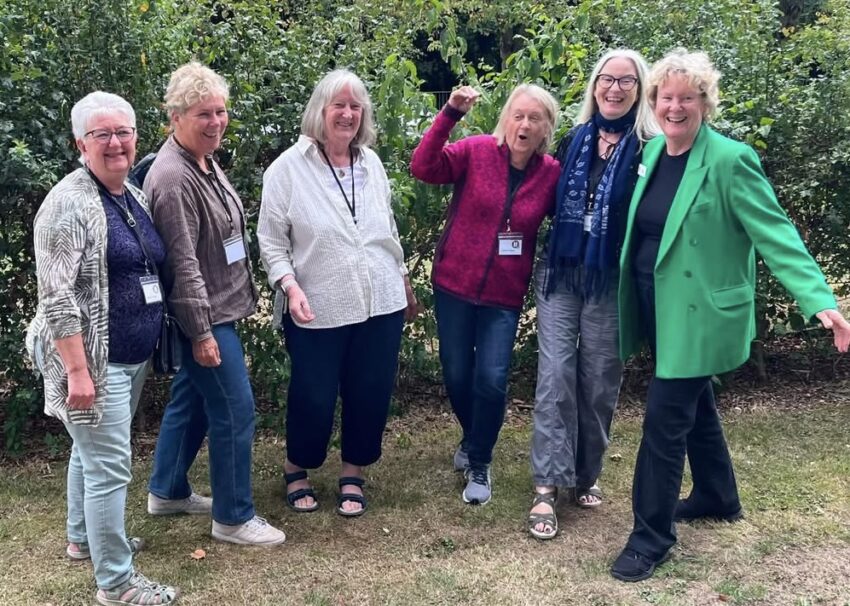 Left to right: Nancy Jardine, Anna Belfrage, Carolyn Hughes, Linnea Tanna, Cathie Dunn, me. (Photo courtesy of Cathie Dunn)
Alison Morton is the author of Roma Nova thrillers – INCEPTIO, CARINA (novella), PERFIDITAS, SUCCESSIO, AURELIA, NEXUS (novella), INSURRECTIO and RETALIO, and ROMA NOVA EXTRA, a collection of short stories. JULIA PRIMA and EXSILIUM, set in the late 4th century, tell the story of Roma Nova’s foundation. Audiobooks are available for four of the series. Double Identity, Double Pursuit and Double Stakes form a new contemporary thriller series. A new collection of Roma Nova short stories, HEROICA, is now out.
Download ‘Welcome to Alison Morton’s Thriller Worlds’, a FREE eBook, as a thank you gift when you sign up to Alison’s monthly email update. As a result, you’ll be among the first to know about news and book progress before everybody else, and take part in giveaways.
If you enjoyed this post, do share it with your friends!
|
Subscribe to Blog via Email
Join 37 other subscribers.
Buy AURELIA from Apple!
UK

US
|