1066 and all that, or not...

1066 TUDSuppose there had been a Roma Novan around trying to intervene in 1066 between Harold’s Saxon England and William’s Normandy? Could she have influenced either of these tough, ambitious and determined men?

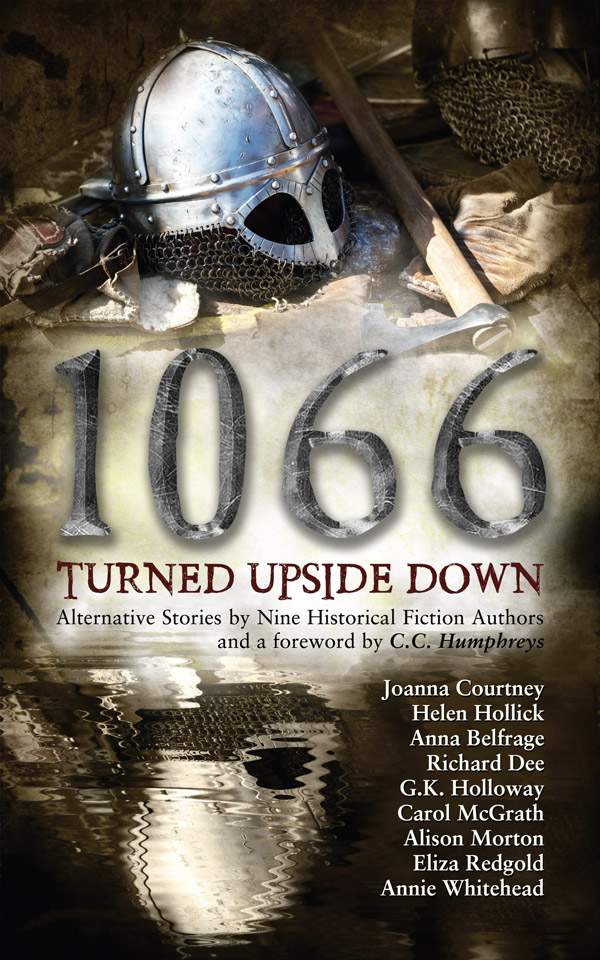
No, I’m not veering off and writing a new book – I’m too immersed in drafting RETALIO, Book 6 of the core Roma Nova series. But I was invited by period specialist fiction writer Helen Hollick to take part in a collaborative venture, a collection of “what if” stories around the 950th anniversary of the Battle of Hastings. She and fellow author Joanna Courtney hatched up the whole idea of turning 1066 upside down. As a writer of alternate timelines, I leapt at the chance.

1066 is probably one date most British people know, even if it’s only from the comic spoof “1066 And All That” by Sellar and Yeatman, a beloved comic history published well before the Horrible Histories. More seriously, 1066 was a change point of massive proportions in English history irrespective of whether you support Saxon Harold or Norman William.

I was writing out of my comfort zone and had to undertake massive research on the minutiae. Helen Hollick’s own epic Harold the King was invaluable – highly recommended! But what fun it was looking at the 11th century through Roman eyes. Just wait until you read Galla Mitela’s opinion of the Normans!

Apart from Helen and Joanna, I’m very excited at working alongside authors are: Anna BelfrageRichard Dee, G.K. HollowayCarol McgrathAnnie Whitehead and Eliza Redgold with a foreword by C. C. Humphreys. Genius Cathy Helms of Avalon Graphics designed the cover.

UPDATE! The 1066 Turned Upside Down blog is now open for business!

EVEN MORE IMPORTANT UPDATE: Now available for pre-order!
http://mybook.to/1066TurnedUpsideDown


Alison Morton is the author of the alternate history Roma Nova thrillers, INCEPTIO, PERFIDITASSUCCESSIO and AURELIA. The fifth in the series, INSURRECTIO, was published on 12 April 2016.

Find out Roma Nova news and book progress before everybody else, and take part in giveaways by signing up for her free monthly email newsletter.
Historical fiction set in the ancient world

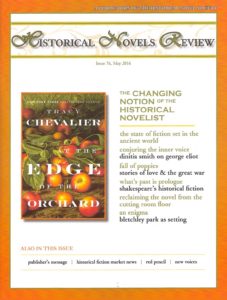
HNRCover_May 2016I was delighted to receive the quarterly jewel, the Historical Novel Review, May 2016 edition, published by the Historical Novel Society.  Even more delighted as my writing friend Judith Starkston had written a terrific article about ancient world themed historical fiction.

She asked several authors for contributions – Maggie Anton, Geraldine Brooks, Gary Corby, Ruth Downie, Stephanie Dray, Margaret George, Libbie Hawker, Tim Leach, Rebecca Lochlann, Alison Morton, Kate Quinn, Elisabeth Storrs and Stephanie Thornton.

I was honoured to be included!

“Alison Morton carries an ingrained knowledge of Roman life forward into a Roman colonia that survives into the modern world.”

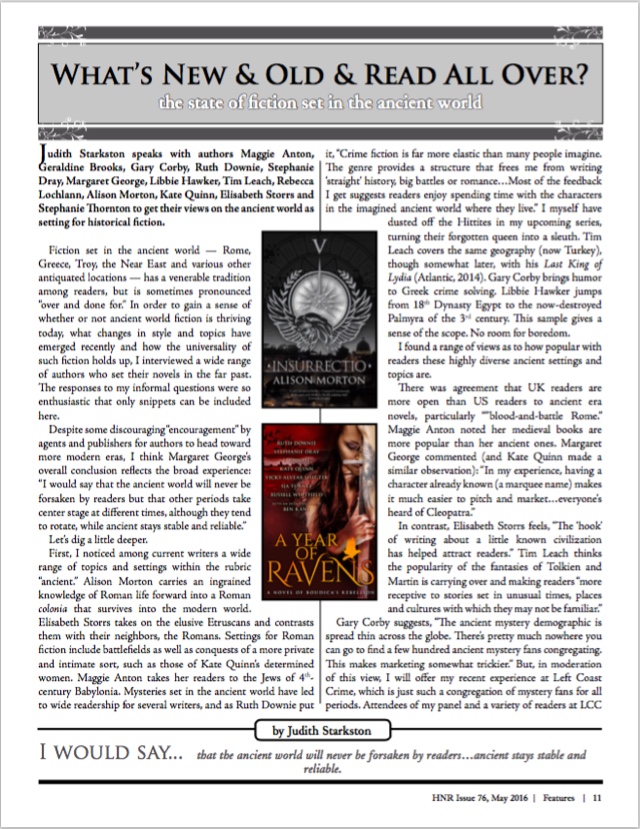
New and Old article_HNR


Read the full article(click on the icon below)
Adobe_PDF_icon


But I was even more delighted to see the cover image for INSURRECTIO had been used as an illustration!

The HNS is a great organisation to belong to if you are a reader, writer or any kind of enthusiast for historical fiction. The quarterly print magazine sent to members is packed with reviews, often over 300.

HNS16logoAnd the conference in September promises a meeting of enthusiasts as well as a rich package of talks and panels. Find out more here: https://hnsoxford2016.org


Alison Morton is the author of Roma Nova thrillers, INCEPTIO, PERFIDITASSUCCESSIO and AURELIA. The fifth in the series, INSURRECTIO, was published on 12 April 2016.

Find out Roma Nova news and book progress before everybody else, and take part in giveaways by signing up for her free monthly email newsletter.
The Roman way

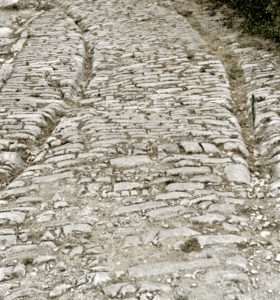
Roman road, Ambrussum, Via Domitia, France

Roman road, Ambrussum, Via Domitia, France

Yes, this is a Roman road. And yes, it does eventually lead to Rome, the centre of the world at that time. It was part of a superhighway network that replaced mud tracks with paved, drained and fast roads which not only facilitated conquest but also economic expansion through the Roman world. Imperial couriers raced along the roads out of Rome, commandeering changes of horses from different cities and provinces, with orders from the centre of power reaching governors and commanders hundreds of miles  away within days.

One of the most evident expressions of Roman power was through infrastructure – roads, bridges, aqueducts, theatres – and town planning – forums, temples, markets, grid systems, water supplies and baths.

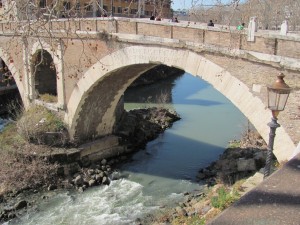
Roman bridge from 76BC

Wherever Rome went, so did all the paraphernalia of Roman urban life. Villas were built, mosaics laid, walls painted, fountains set playing. Farmland was cultivated, trees felled, minerals extracted. Rome was nothing if not efficient and consuming. At one stage, its mineral extraction and industrial activity was so intense the pollution shows up today on geological ice bore samples.

So how did they do it? We know of military conquest; for the British Isles, we know Caesar boasted ‘Veni, vidi, vici’ although it was actually under Claudius that serious conquest began. Feature films have graphically, if not always accurately, given us the idea of an effective,  disciplined, state-financed military organisation advancing through Europe, Asia and North Africa. But what happened afterwards?

Seduction.

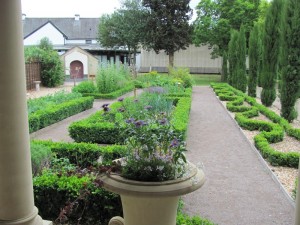
Roman garden, Caerleon

Roman garden, Caerleon

Rome offered inclusion and prosperity, ruling through local power holders by making them part of the Roman success story. These leaders were granted Roman citizenship which gave them civic rights, their children were educated in the Roman way, albeit sometimes as semi-hostages, and resplendent villas were built for them; they sometimes received significant gifts of money. Their men of fighting age were drafted into the Roman army with the possibility of also attaining citizenship with land grants at the end of their service.

With such enticements, local leaders  bought into the Roman style of gracious living, the ideas of the rule of law, culture and literacy and the considerable increase in trade and prosperity.  Of course, the iron fist of Roman military might was ready to retaliate in the event of rebellion, which it did.

People travelled, emigrated and worked throughout the Roman administered world using one system and one currency. Personal evidence  like pottery, jewellery, coins, messages and graves as well as skeletons show that people of all races and backgrounds, whether free or slave, highborn or plebeian, male or female, circulated within this world.

Rome last over 1200 years, but didn’t break out from village status until after fierce local wars in Italy, sacking by Celts and near annihilation by Hannibal. But once out of the Italian Peninsula, they evolved a colonial system that pushed the Roman ‘brand’ throughout most of Western Europe. Love it or loath it, Rome brought complexity, literacy and an approach to life that still resonates in Western life today.


Alison Morton is the author of Roma Nova thrillers –  INCEPTIO,  PERFIDITAS,  SUCCESSIO,  AURELIA,  INSURRECTIO  and RETALIO.  CARINA, a novella, and ROMA NOVA EXTRA, a collection of short stories, are now available.  Audiobooks are available for four of the series. NEXUS, an Aurelia Mitela novella, is now out.

Download ‘Welcome to Roma Nova’, a FREE eBook, as a thank you gift when you sign up to Alison’s monthly email newsletter. You’ll also be first to know about Roma Nova news and book progress before everybody else, and take part in giveaways.