From SilverWood to Pulcheria – Roma Nova steps out

When I typed the last word of the first draft of INCEPTIO in 2009 I didn’t have a clue what to do with it. After advice, professional assessment, and submitting to a lot of agents whose response was “great concept, great story, great writing – not sure I could sell it” I decided to go the independent route. Following my nature and professional experience, I researched it to death. I’d self-published a history book in 2012, so I knew how hard it was! Although a computer geek, when it came to publishing and printing I knew enough to know that I didn’t have the fine skills to achieve the top of the trees result I wanted for INCEPTIO.

So I searched for help and found what I was looking for – assisted publishing – in SilverWood Books of Bristol. That first telephone conversation with publishing director Helen Hart has stayed with me. She was encouraging but realistic, emphasising that they didn’t accept every manuscript, that I might not get the costs back, that publishing under your own steam was hard work. She was very straightforward about the services that SilverWood offered and what it didn’t.

I was impressed. What a contrast to the overdone enthusiasm of others I’d approached. I’d run a business for 20 years and could smell the difference between a cabbage and a bouquet (no offence to cabbages).

So began a very productive business relationship.

SilverWood Books emulate the traditional publishing process; their books are indistinguishable from (and often better than) many mainstream ones and they are one of the few ethical publishing services providers around.

INCEPTIO (2013), PERFIDITAS (2013), SUCCESSIO (2014), AURELIA (2015) and INSURRECTIO (2016) – have all been produced with SilverWood Books’ expert help. As I worked with them on AURELIA in 2015 I realised just how much I’d learned in the previous three years. I became more confident about both my writing and the publishing process. With INSURRECTIO, the fifth book, I was almost firing on automatic.

So when discussing RETALIO (out this spring), SilverWood’s publishing director Helen Hart suggested a different arrangement. She felt that I had outgrown the full support package suitable for less experienced or less knowledgeable authors and was ready to fly by myself. Talk about a light bulb moment! She was, of course, completely right.

If SilverWood hadn’t been behind me I would not have had such an easy time of publishing my work, especially with the first and second books. It’s been a mutually beneficial business relationship but with a huge dollop of personal as well as professional support and guidance.

But now I’m ‘graduating’.

SilverWood Books will continue to produce my book files; I need their quality. But my own imprint, the sparkling new Pulcheria Press, will be the publisher. (I think we all know where ‘Pulcheria’ came from…)

Helen Hart from SilverWood says,’I’ve worked with Alison on the publication of five Roma Nova titles so far. When it came to SilverWood starting production on her sixth, it seemed natural for us all to consider whether the time and circumstances might be right for Alison to set up her own imprint. With her business skills, and having been taken on by a literary agent, she’s perfectly positioned to make the transition from assisted publishing to accomplished independent status.

Alison is a consummate professional, as well as a superb writer, so it’s wonderful for me and the SilverWood team to be alongside her as her knowledge and experience develops. We’re now starting production on the sixth book, RETALIO, and it’s exciting to be part of the Roma Nova/Pulcheria Press journey.’
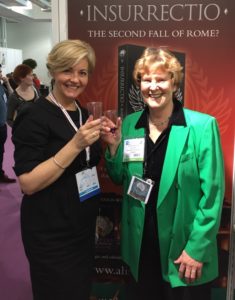
With SilverWood Books director Helen Hart, launching INSURRECTIO

Thanks to SilverWood I’ve gone from newbie author to multi-published author with my last book, INSURRECTIO, launched at the 2016 London Book Fair. And Blake Friedmann, sold the first four books to AudibleUK, (audiobooks just released!).

Being part of the self-publishing sector as it matures exponentially with the best ‘professional indies’ selling millions and gathering acclaim is a heady ride. SilverWood Books has been an essential part of that journey for me.

Now I’m travelling on.

Pulcheria Press site       Twitter:  @PulcheriaPress


Updated November 2021: Alison Morton is the author of Roma Nova thrillers –  INCEPTIO, CARINA (novella), PERFIDITAS, SUCCESSIO,  AURELIA, NEXUS (novella), INSURRECTIO  and RETALIO,  and ROMA NOVA EXTRA, a collection of short stories.  Audiobooks are available for four of the series. Double Identity, a contemporary conspiracy, starts a new series of thrillers. Double Pursuit, the sequel, is now out!

Download ‘Welcome to Alison Morton’s Thriller Worlds’, a FREE eBook, as a thank you gift when you sign up to Alison’s monthly email newsletter. You’ll also be among the first to know about news and book progress before everybody else, and take part in giveaways.
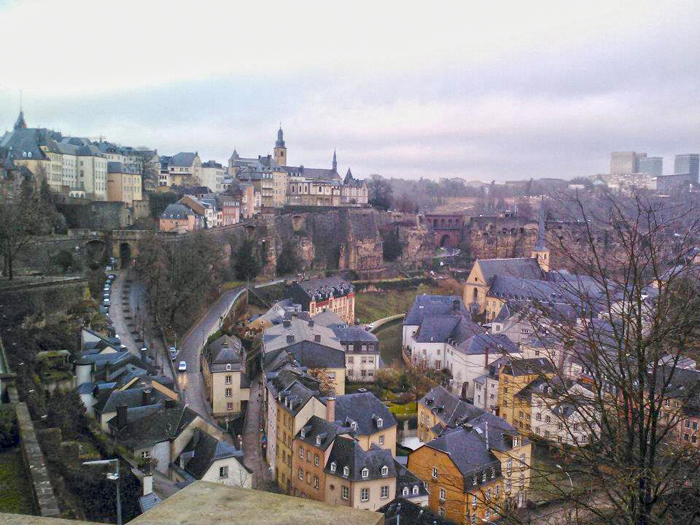
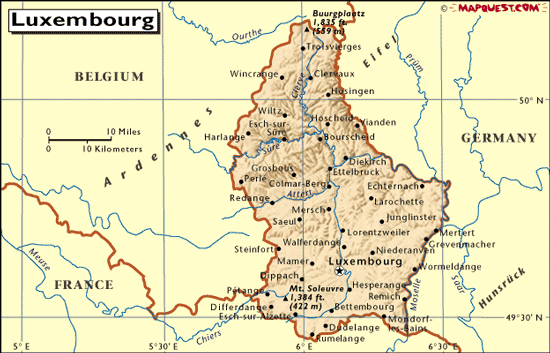
Comparing Roma Nova with the Grand Duchy of Luxembourg

This is a treat from a reader in Luxembourg! How does Roma Nova measure up against the Grand Duchy of Luxembourg? Dylan Harris has kindly given me permission to reproduce his post  https://dylanharris.org/blog/2017/b8.shtml

Roma Nova is Alison Morton’s series of alternative history novels set in a surviving remnant of the Roman Empire, also called Roma Nova, thriving in the 21st century. The author has compared her fictional small country with Luxembourg, among others.

I like the Roma Nova novels, and I live in Luxembourg. I find myself tempted to explore the comparison.

My knowledge of Roma Nova is small—all I know is what’s been published in Morton’s books, which is (rightly) only what’s necessary to tell the stories. Similarly, although I’m slowly accumulating information about my prospective adopted homeland, I’m certainly not knowledgeable—for some reason, it wasn’t covered during my British education. All the same, I found Morton’s comparison amusing, so will delve, even though anything I say will only really compare my misunderstanding with my ignorance.

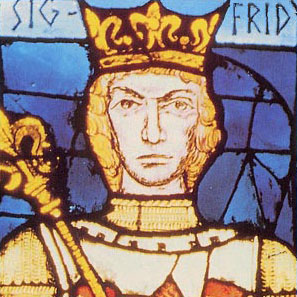
Count Siegfried of the Ardennes (c. 922 – 28 October 998)

The countries’ origins have nothing in common. Luxembourg is no remnant of a once great empire, and its only certain Roman connections are ruins. A true link with Rome lies across the border in the German town of Trier, once a regional Roman capital, and sometime second city of the Western empire. In Luxembourg, there was a Roman fortification, but that was abandoned after the collapse of the empire. Luxembourg is far younger than Roma Nova, founded in the 10th century from, well, nothing much, by Count Seigfried. About the only possible direct connection with ancient Rome is the country’s name, which probably derives from that of the ancient Roman fortress, Lucilinburhuc.

The rare thing both Roma Nova and Luxembourg do have in common, though, is that they have both survived. Almost all the small countries that used to decorate maps of Europe have been lost. Roma Nova is the only remaining part of the once huge Roman empire. Luxembourg is the world’s one remaining Grand Duchy.

Luxembourg lost much of its original territory to its three neighbours—France, German and Belgium—but it endures. For much of the first thousand years, the Gibraltar of the North was a small but significant military state, or more often the province of a larger power. Its survival since its military was neutralised and its independence guaranteed by the then superpowers in 1867 seems to have been partially down to luck; it lies between stronger powers and seems to have played them off against each other. None of its three larger neighbours have been willing to let another take it. If one of France or Germany invaded, the other fought to free it. Belgium gave it softer economic strength. Things became easier with the creation of the force for peace now called the European Union.

Roma Nova lies in the Alps, roughly where you’ll find Slovenia on modern maps (once the northern part of Yugoslavia), in an alternative history with no European Union, and quite different conflicts between quite similar powers. Luxembourg is in the Ardennes, which may be challenging hills (consider the Battle of the Bulge), but they are certainly not mountainous.

Like Roma Nova, Luxembourg punches well above its weight. Unlike Roma Nova, this is a recent thing. Luxembourg is a founder member of NATO, Benelux, the UN, the OECD, and the European Union (it is one of the three capitals). It has significant influence in the EU. For example, the current European Commission President, Jean–Claude Juncker, along with two of his predecessors (Jacques Santer and Gaston Thorn) are Luxembourgish, which is impressive when you remember the EU has 28 members but the European Commission has had only thirteen presidents.

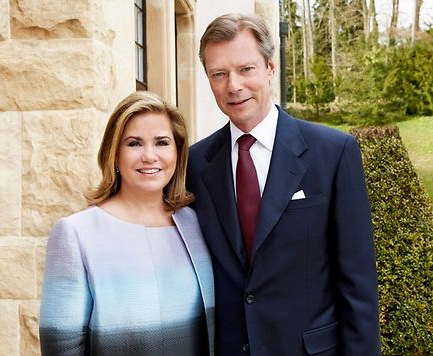
Grand Duke Henri and Grand Duchess Maria Teresa of Luxembourg

Like Roma Nova, Luxembourg is a constitutional monarchy, and the monarch, currently Grand Duke Henri, has a role in the government. I know little of the actual power of the Grand Duke, although I don’t think he has the military muscle of the Roma Novan Imperatrix, and he’s hardly put anyone to death recently.

Roma Novan wealth ultimately derives from its high quality silver deposits. Luxembourg has massive iron ore deposits, but the changing world economy meant much of its iron economy was lost in the late twentieth century, although a significant remnant survives.

However, it has made a very successful transition into finance, so much so that it is currently one of the richest country in the world per head of population (nominal GDP per capita, 2015 figures), richer even than Roma Nova. Unlike Roma Nova, it is not a hotbed of technological innovation, although the government here is very keen to correct that lack with the creation of universities, significant funding for entrepreneurial start–ups, and even creating a legal infrastructure for the commercialisation of outer space.

Culturally, Roma Nova’s distinction is that it is a matriarchal society, built around strong families led by women. In this one respect, it is more Celt than Roman. Luxembourg’s distinction is that it has the highest proportion of foreign residents of any European country, nearly half. Moreover, the population doubles during the day as workers commute from neighbouring Belgium, France, and Germany.

Roma Nova speaks Latin, which would make it one of the oldest languages still alive in Europe. It hasn’t changed as much as those dialects that became French, Spanish, Portuguese, Italian, Romanian, and many other modern languages. Luxembourg, on the other hand, speaks probably the youngest language in Europe, Luxembourgish, which was only officially codified in 1946, and is rapidly changing. It’s derived from the local Moselle–Frankish German dialect. Its modern development arose in reaction to the Nazi occupation and annexation during the Second World War, as Luxembourgers found the need to assert their independence and identity from the Germanic.

Another core difference between the real and imaginary country is something that makes the real country seem deeply imaginary. Luxembourg has three official and four actual languages: Luxembourgish, French, German and English. In most countries with multiple languages, which language you use depends on where you are. Here, which language you use depends on what you’re doing. As a foreigner intending to settle, this makes it feel a little odd, almost like something out of a China Miéville novel. Roma Nova is much more ordinary: it uses its one language, modern Latin.

There’s only so far I can take this comparison, giving it’s mostly based on my ignorance. The two countries are quite different, but it pleases me to imagine that perhaps Morton took a little from Luxembourg when she created Roma Nova.

Thank you so much, Dylan, and for your on-going interest in Roma Nova!

(Photos supplied by Alison)


Alison Morton is the author of Roma Nova thrillers –  INCEPTIO,  PERFIDITAS,  SUCCESSIO,  AURELIA,  INSURRECTIO  and RETALIO.  CARINA, a novella, and ROMA NOVA EXTRA, a collection of short stories, are now available.  Audiobooks are available for four of the series. NEXUS, an Aurelia Mitela novella, will be out on 12 September 2019.

Download ‘Welcome to Roma Nova’, a FREE eBook, as a thank you gift when you sign up to Alison’s monthly email newsletter. You’ll also be first to know about Roma Nova news and book progress before everybody else, and take part in giveaways.
Naples underground

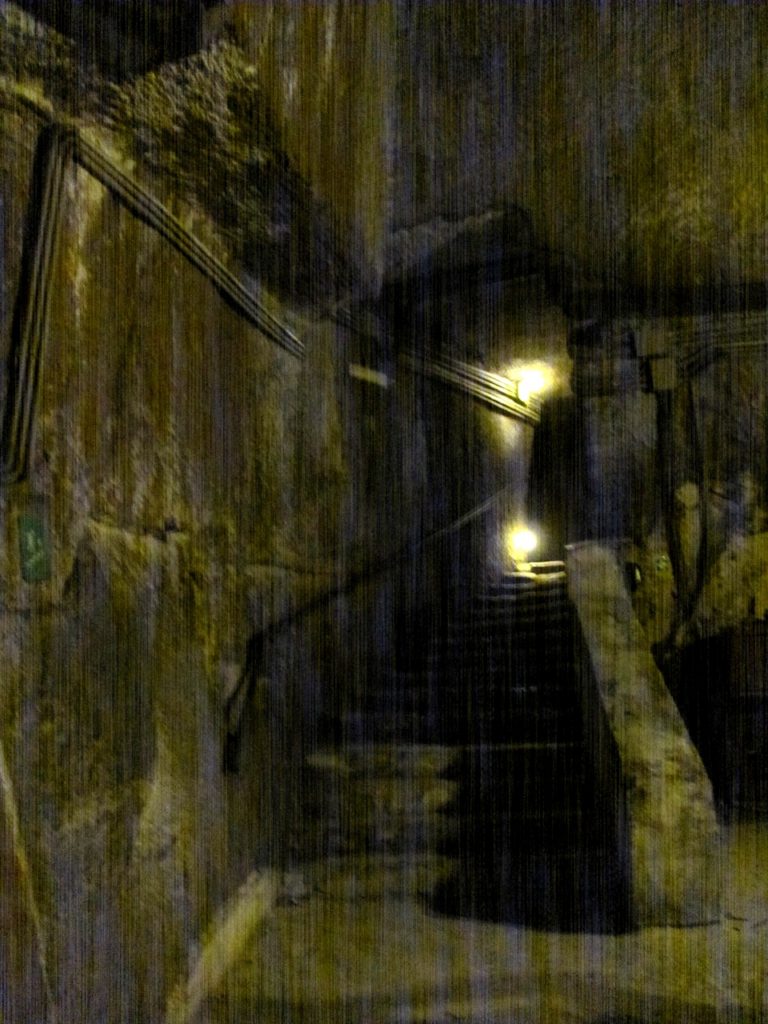
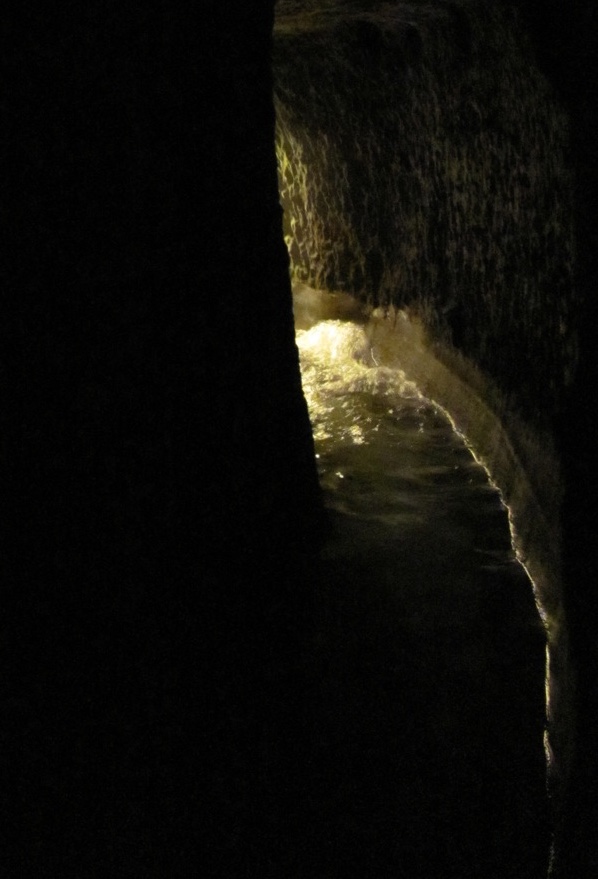
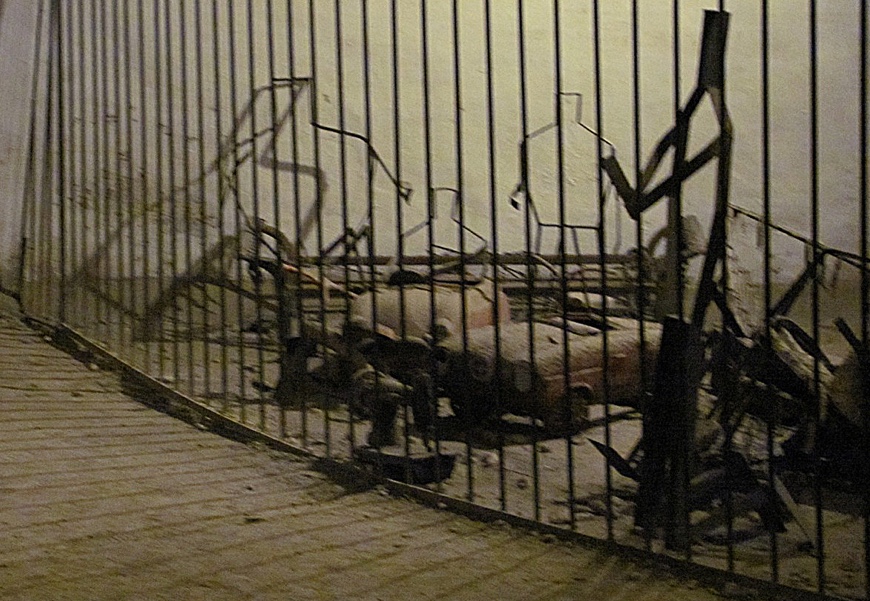
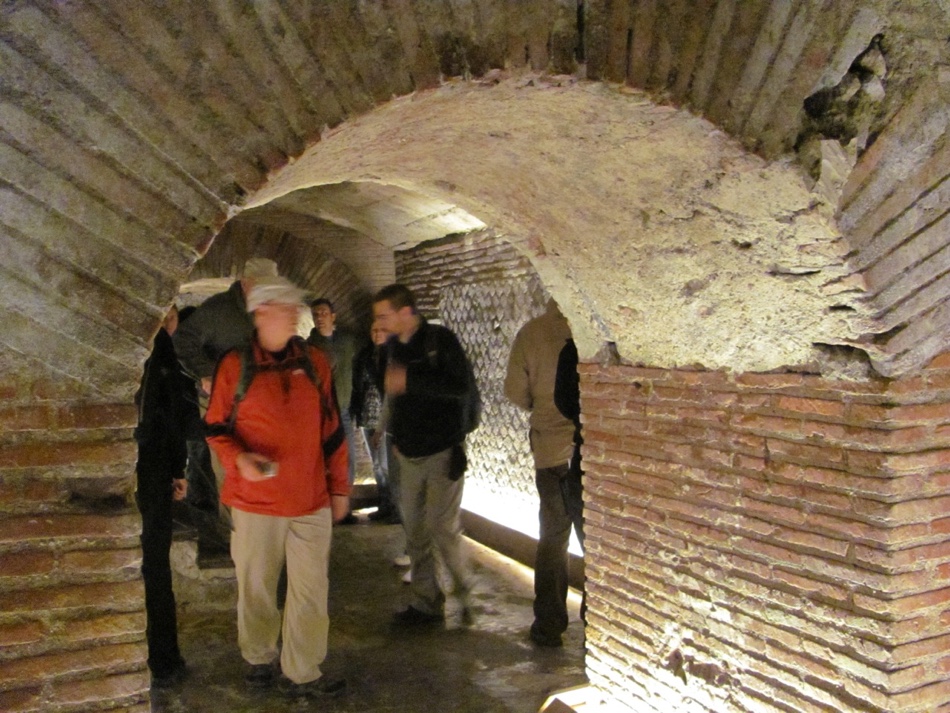
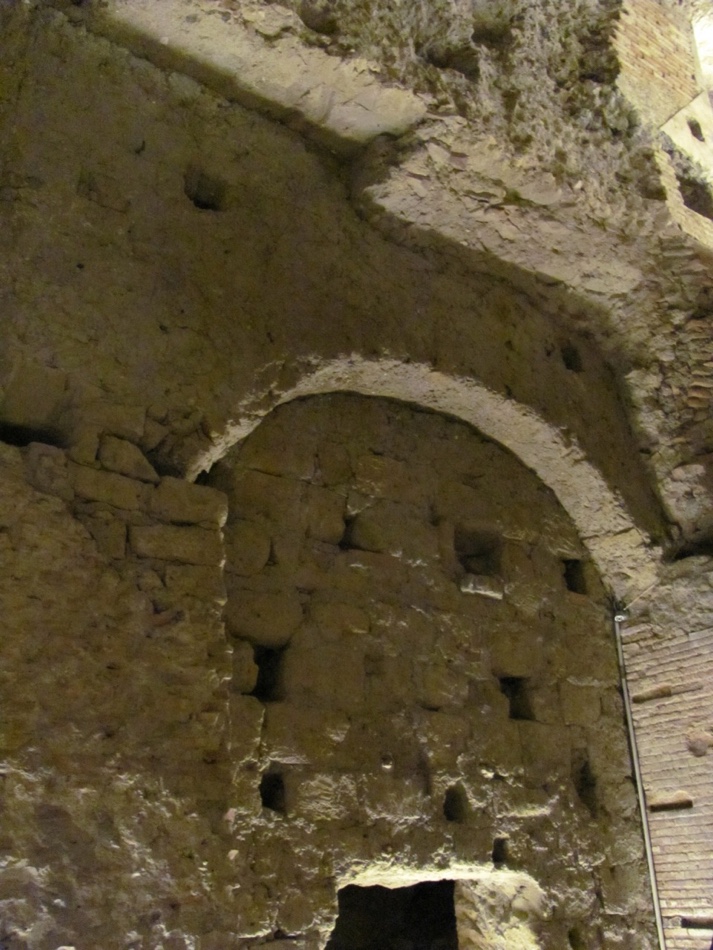
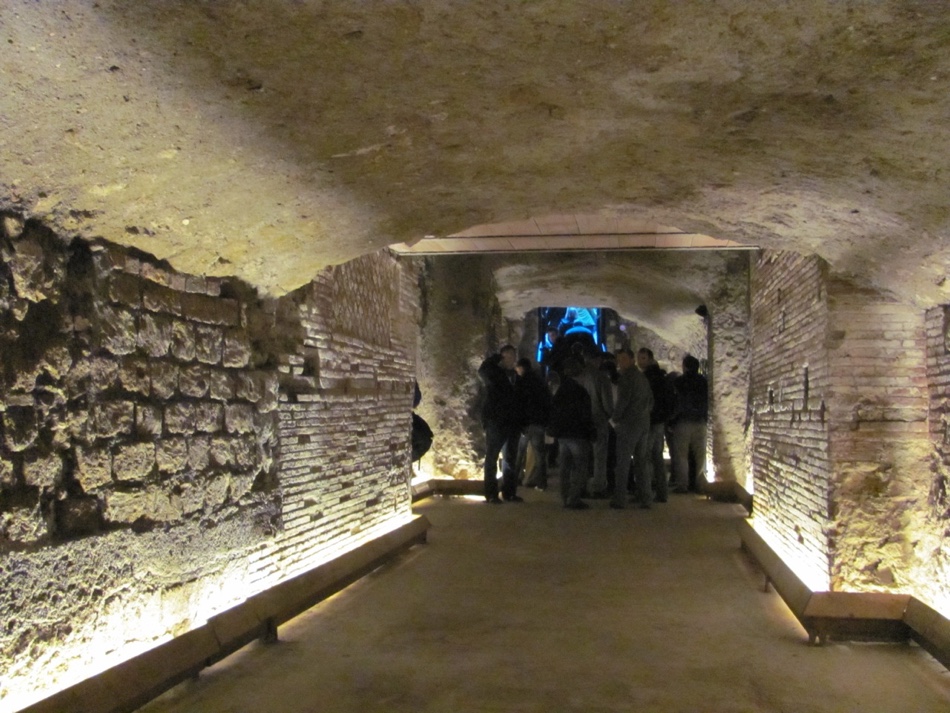
The BBC’s series that started last week with fabulous film and virtual reconstructions of tunnels and monuments under present day Naples (#invisiblecities #italy) reminded me of my mini-excursion underground in 2012. Roman remains are built into the arteries of underground Naples and I was fascinated to see how Roman walls and arches were criss-crossed with later construction. First we visited some later tunnels where watercourses ran, then on to the Roman stuff!

Down the steps…

Underground watercourse – not sure of the contents, but it didn’t smell!


Poignant reminders from the 1940s when people sheltered from bombing and set up home underground.


A small Roman arch to gladden any heart!


A much, much bigger arch, filled in.

Recycled street archway


Decorative Roman wall to the right – note the diamond pattern and even brickwork – crossed at 90 degrees by some later jumbled bodgy construction.


Making our way out along a former Roman street


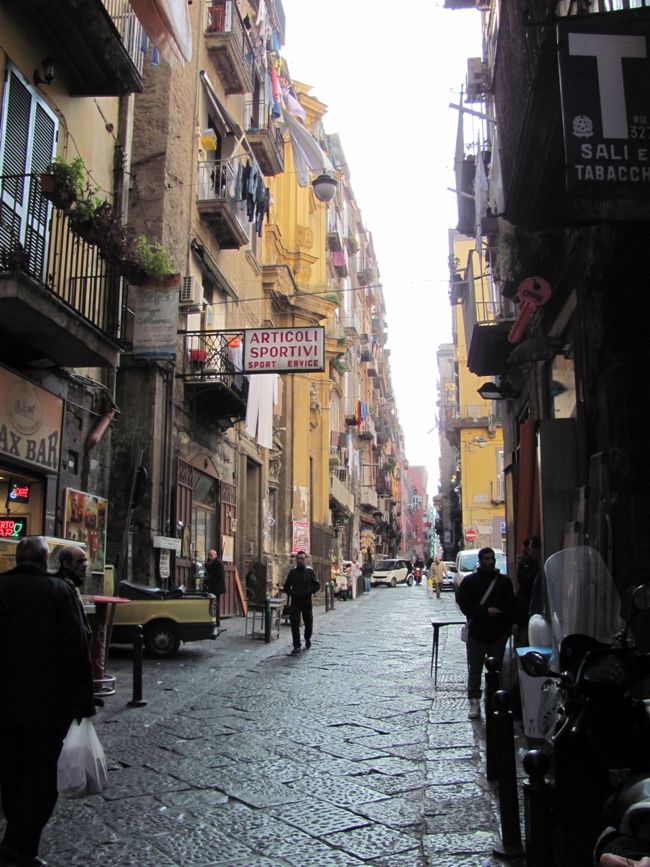
Naples today, overground


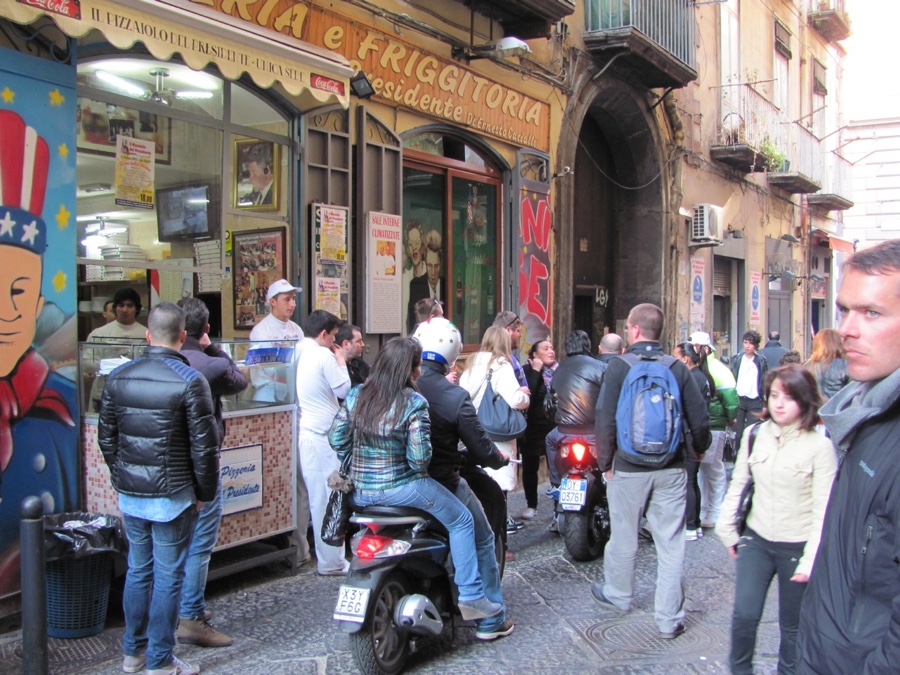
Pizza, anyone?

See much more at BBC One – Invisible Cities with Dr Michael Scott and Alexander Armstrong.


Alison Morton is the author of Roma Nova thrillers INCEPTIO, PERFIDITAS, SUCCESSIO, AURELIA and INSURRECTIO. The sixth, RETALIO, will be published in Spring 2017. Audiobooks now available for the first four of the series

Get INCEPTIO, the series starter, for FREE when you sign up to Alison’s free monthly email newsletter. You’ll also be first to know about Roma Nova news and book progress before everybody else, and take part in giveaways.