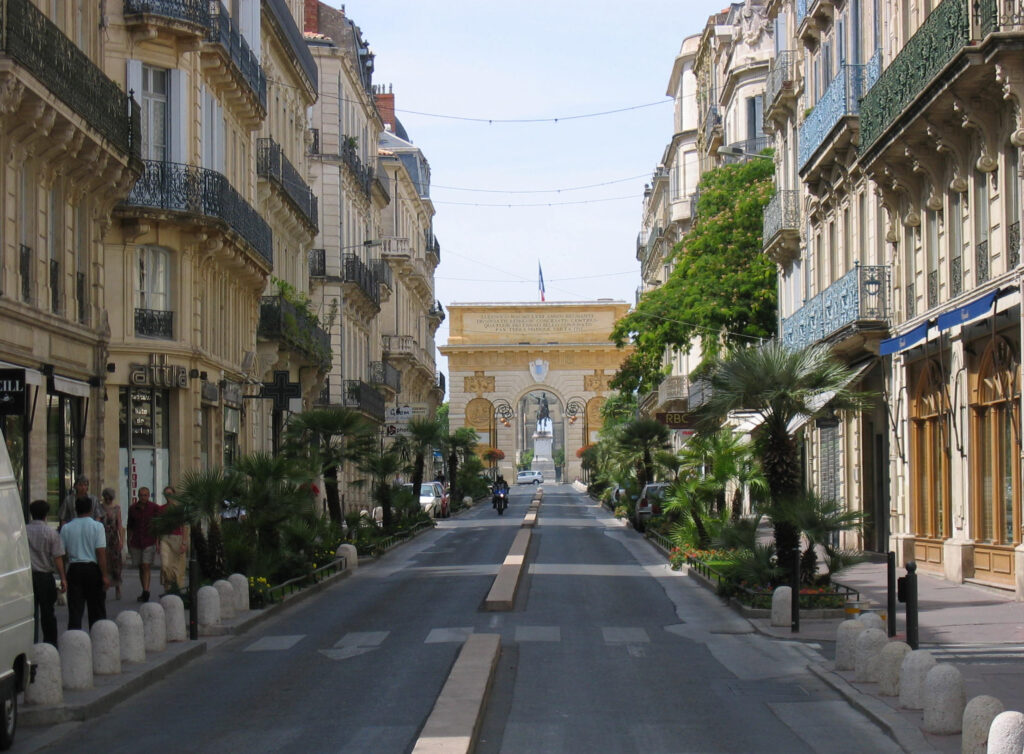
 Avenue Foch, Montpellier (Photo: Jonaslange CC Commons Wikipedia) (There is Roman stuff.)
Mel/Mélisende does a lot of travelling round in Double Pursuit, often on the TGV (train grande vitesse) the high speed train famous in France.
At a critical stage, she has to interview ‘a person of interest’ in Montpellier, a beautiful city, only eleven kilometres from the Mediterranean. One of the most popular TV soap operas in France Un Si Grand Soleil known as USGS is based there. But Montpellier is a bit more than a drama serial.
Sadly, it wasn’t Roman – it was ‘missed’ by the Via Domitia, the great route from Italy along southern France to Spain. The nearest settlement was Sextantio, a mansio – a stopover for travellers needing food and accommodation, and a change station for horses and chariots for public service couriers. Inscriptions and finds including mosaics usually reserved for public buildings or wealthy individuals people back this up.
 Roman places mentioned: Sextantio, Sentius Mons and Agatha (Map from the Digital Atlas of the Roman World CC Commons licence)
In the Middle Ages, Montpellier was an important city belonging to the Crown of Aragon and before its sale to France in 1349. Established in 1220, the University of Montpellier is one of the oldest universities in the world and oldest medical school still in operation, with notable alumni such as Petrarch, Nostradamus and François Rabelais. Oh, and law. Above the medieval city, the ancient citadel of Montpellier is a stronghold built in the seventeenth century by Louis XIII of France.
Curious fact – it was the centre of the spice trade on France and supplied the royal court.
Since the 1990s, Montpellier has experienced one of the strongest economic and demographic growth in the country. 70,000 make up a quarter of its population, one of the highest proportions in Europe. It enjoys one of Europe’s largest pedestrian areas, a rich cultural life and Mediterranean climate and is ranked as a ‘Sufficiency’ city by the Globalisation and World Cities Research Network.
But Mel doesn’t really have time enjoy all this.
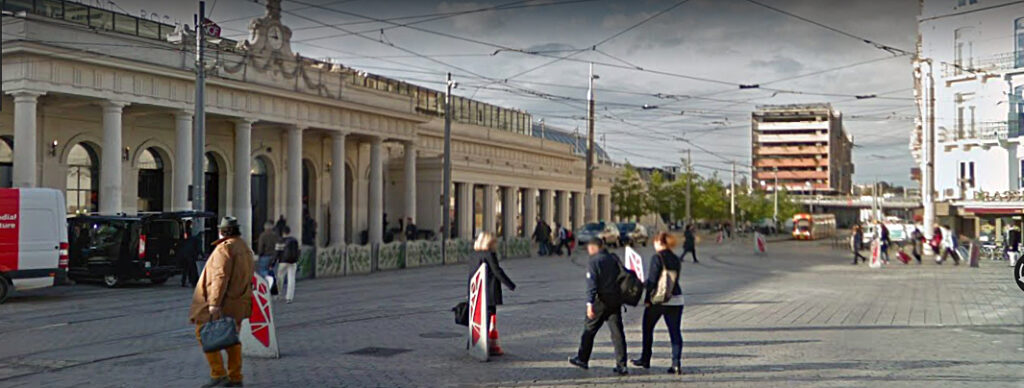
For Mel, it’s Montpellier station (left in the above photo), the St Roch multi-storey car park (centre) and the brasserie (right).
However, she has to drive to Sète, a gem on the Mediterranean coast, much visited by tourists. Known as the Venice of Languedoc and the singular island, it’s a port and a seaside resort on the Mediterranean with its own strong cultural identity, traditions, cuisine and dialect. The oldest form of the city’s name comes from Strabo, the 1st century CE Greek geographer who called it Sigion oros. Ptolemy (2nd century) referred to it as Sêtion oros then a Festus Avienus, in the 4th century called it in Latin Setius mons. (Hooray!)
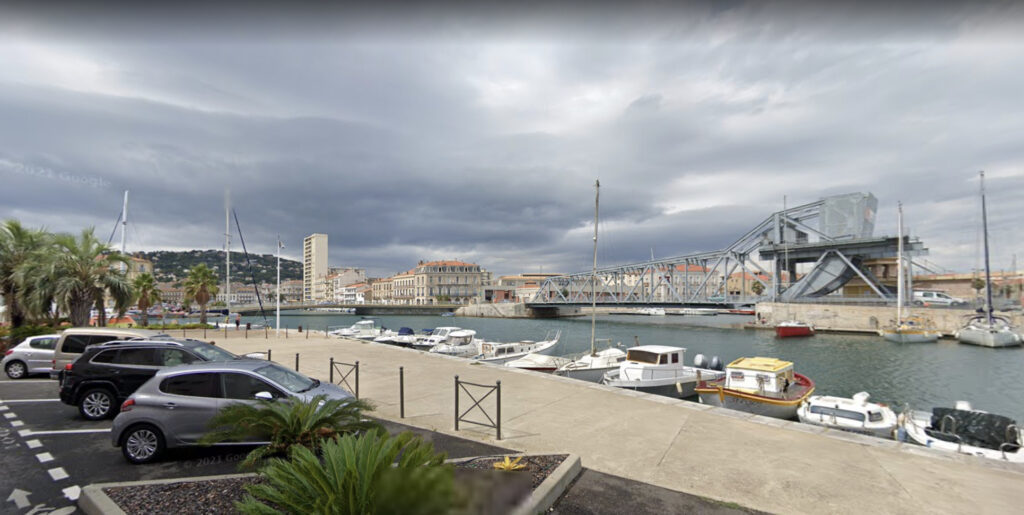
Anyway, back to the present day… Mel drives through the busy outskirts and across the metal bridge (centre of above photo) through the picturesque old town brimming with tourists – she manages not to run any over in her hurry – and then up on to Mont Saint-Clair, the prestigious wooded hill scattered with private villas (the hill rising to the left the original Roman Setius Mons)
Just in case she might be followed, she drives on to Agde on the narrow causeway between the huge Étang de Thau and the Mediterranean. Joy of joys, it has ancient history.
Agde is one of the oldest towns in France. Founded in 525 BCE as a Greek colony settled by Phocaeans from Massilia who traded in anything and everything. They exported grain, wool, basalt millstones and perhaps slaves and are said to have introduced olive oil and vine cultivation to southwestern France. And they there was that very valuable export – salt – produced the plentiful salt pans in the area. Fortunes were made, but then the Romans came along…
In 118 BCE, Roman consul Cneus Domitius Ahenobarbus led a campaign against the Allobroges to conquer southern Gaul . Domitius was active in the early development of southern Roman Gaul, establishing the first Roman colony at Colonia Narbon Martius, and sponsored projects such as the Via Domitia connecting Italy to Spain through southern Gaul.
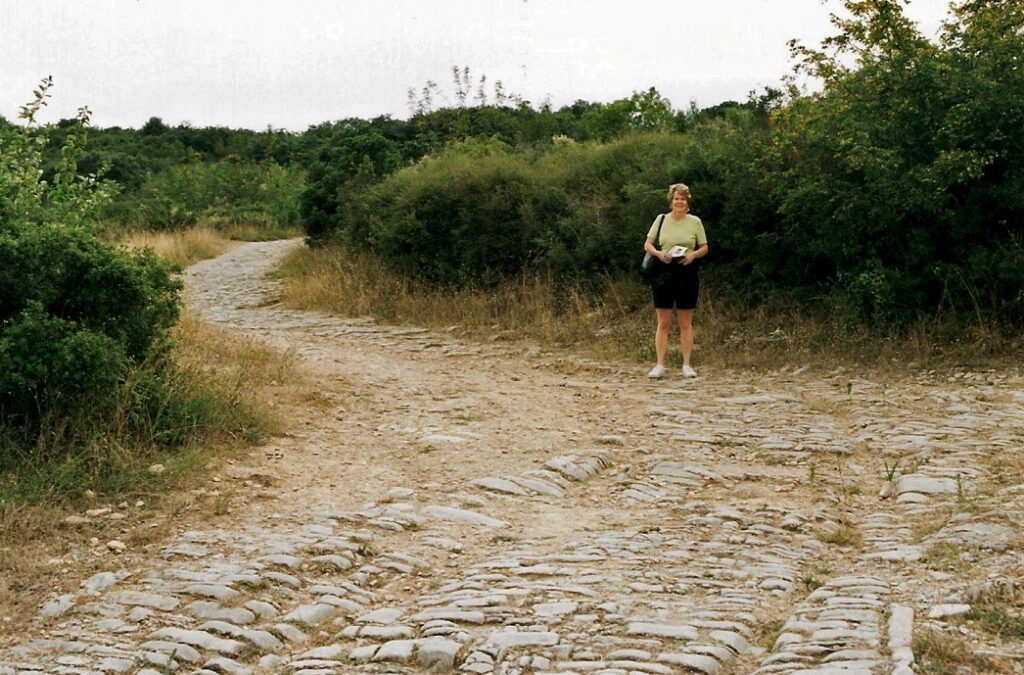 Part of the via Domitia (Author photo with, er, author) Mel doesn’t see all the pleasures of Agde as she’s on the case, but I strongly recommend you to visit it as well as Montpellier and Séte.
Alison Morton is the author of Roma Nova thrillers – INCEPTIO, CARINA (novella), PERFIDITAS, SUCCESSIO, AURELIA, NEXUS (novella), INSURRECTIO and RETALIO, and ROMA NOVA EXTRA, a collection of short stories. Audiobooks are available for four of the series. Double Identity, a contemporary conspiracy, starts a new series of thrillers. Double Pursuit, the sequel is out on 19 October 2021.
Download ‘Welcome to Alison Morton’s Thriller Worlds’, a FREE eBook, as a thank you gift when you sign up to Alison’s monthly email newsletter. You’ll also be among the first to know about news and book progress before everybody else, and take part in giveaways.
If you enjoyed this post, do share it with your friends!
Mel turned over in the bed trying to find a cool spot. Even the thin cotton sheet felt hot and heavy. Her skin was damp with light sweat; everywhere, especially in her groin and under her breasts. Rome in a heatwave was purgatory. Not so much the temperature – she’d experienced over 40°C every day when on operation with her regiment in the African Sahel – but the humidity. She leant over and drank tepid water from the glass on the bedside table.
Andreas was still asleep beside her; his blond curls reminded Mel of a Renaissance angel. Even though separated by several centimetres, just the extra heat from his body made the room so much warmer. The fan was no substitute for broken air conditioning, but it wasn’t the heat that was keeping Mel awake. It was frustration.
Their investigation had stalled. Their one contact was dead. Mel had knelt by the body in the street last night and touched the dark hair on the back of his head to find it matted and wet with blood and tissue. When they’d turned him over, she’d shivered at the small round hole in his forehead stark black under the dim streetlights. However distressing brutal death was, she had to focus. The reaction would come later. Today would be the first of several of long interviews and endless paperwork with the police.
She pulled herself out of bed and opened the louvred shutters. They’d opened the windows wide at two this morning but closed the shutters when the carabinieri had at last let them go back to their pensione. The small side-street hotel covered in ochre stucco and festooned in flags and geraniums was more discreet than a big hotel, but at this precise minute Mel yearned for the efficient if sterile, air-conditioned box of a four-star international.
In the bathroom, she yanked off the nightshirt she’d been wearing for decency’s sake. Andreas Holzmann was the perfect gentleman, but she didn’t want to embarrass him or herself. That was the problem working undercover as a married couple with a colleague who was a friend who’d rather be more than a friend. She could have told Director Stevenson ‘no’ when he’d outlined their assignment, but that would have been cowardly and Mélisende des Pittones was no coward. Besides, she’d always worked in mixed groups since she’d joined the French Army, often sleeping in a stuffy tent with the rest of her detail, mostly male. At least Andreas didn’t belch or fart in bed.
But Jeff McCracken, whom she was dating, had been furious.
‘Why does Holzmann have to go with you? He just wants to get into your knickers.’
‘God, Jeff, it’s just an assignment. A professional one. It’s because both of us speak some Italian. I’m perfectly aware Andreas has feelings for me, but he knows how to behave.’
‘As long as you do your ice maiden act, I suppose that’ll have to do.’
Mel had put her hand out and caught his. McCracken’s mouth had been a tight line, his grey eyes flint hard and his whole body tense. She’d known it was anxiety. Bit by bit, Mel had gleaned from him that he’d come up the tough way. His family, really his mother, had strained every nerve and bone in the body in a daily struggle to ensure they survived until the next pay day. With his father’s drinking habit and her low-wage jobs it had been a gamble, he’d said, given she had to clothe and feed four children on fresh air and handouts. There hadn’t been much space or energy for anything like emotional nurturing, although his mum always came to school open evenings with them all. Joining the London police had saved him from the life of a petty criminal that had crushed his father, but he found it hard to throw off the cynicism that had protected him all his life.
Mel’s upbringing had been more than comfortable, in a rural château in France her family had owned for centuries. Although grounding their children in the realities of life – they’d all had to learn how to milk cows and goats and muck in with harvesting – her father and mother had given them all the best education possible along with unconditional love.
But somehow, a spark of recognition and working together in the European Investigation and Regulation Service had made them friends, then lovers. For Mel, in Jeff McCracken she had found safety, a straightforward and honest man and a strong and considerate lover. Was it love? After two relationships when she’d thought she’d found her life partner had ended disastrously, she’d shut those thoughts away in a locked cupboard in the back of her mind.
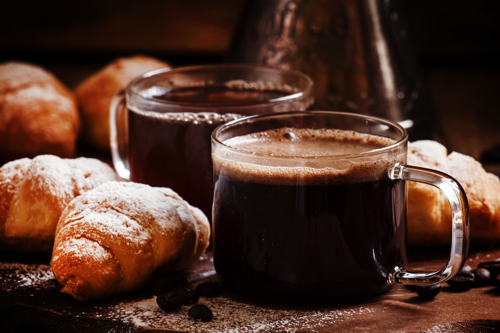
After a breakfast of cappuccino and over-sweet cornetti served by a smiling but silent mamma hovering round them in the shaded courtyard behind the pensione, Mel and Andreas set off in the glaring sunshine.
‘I don’t know how you can bear to wear longs in this,’ Mel said and waved her hand towards the brilliant blue sky.
‘Well, I don’t want to look like a tourist when we meet our Italian colleagues this time,’ Andreas said.
Mel smoothed her hand down the skirt of her linen sleeveless sundress and prodded the bridge of her sunglasses. She’d piled her fair hair up into a pleat to keep her neck and shoulders cool.
‘Well, I’m certainly not putting a suit on for a day like this.’
‘Do you ever?’ Andreas smiled at her.
‘Ha!’ True, she was a jeans and shirt type or until recently, combats. But this morning her practical side had led her to choose thick-soled canvas shoes for Rome’s hard pavements.
The police building on the Quirinal Hill stretched up in front of them from a ground floor of grey masonry blocks to the upper three floors covered in red stucco. No window boxes of scarlet geraniums. Inside, the carabiniere radioed through their names and a few minutes later a man in a light grey suit entered the lobby.
‘Buongiorno,’ he said, his face solemn. His black, slicked-back hair and slender frame gave him a youthful look, and he radiated fitness in his stride. But Mel saw wrinkles at the outside edges of his eyes and some grey hair at his temples. A fit operative, experienced but still actively in the game, but not as an ordinary policeman.
She glanced at Andreas who gave her the briefest of nods in return.
‘I am Captain Giordano,’ the man said. ‘Your ID, please.’
He took their EIRS warrant cards, studied them, turned them over then handed them back without a comment. He gestured them to follow him and set off down a corridor, obviously confident they would follow him. At a security arch, he flashed a plastic card across a reader pad.
‘Please use your EIRS cards to pass through.’ Two peeps and a green light for both Mel and Andreas. Giordano opened the next door and they entered a meeting room complete with polished table and uncomfortable-looking chairs.
‘Now,’ he said, fixing them with a hard stare, ‘Investigator des Pittones and Kriminalkommissar Holzmann, please tell me why two officers from the European Investigation and Regulation Service are sneaking around Rome under false names and without the courtesy of at least informing us.’
———————
Read more about Double Pursuit here
Available from:
Ebook: Amazon Kobo B&N Nook Apple
Paperback: Barnes & Noble Book Depository Amazon
Other paperback retailers
Alison Morton is the author of Roma Nova thrillers – INCEPTIO, CARINA (novella), PERFIDITAS, SUCCESSIO, AURELIA, NEXUS (novella), INSURRECTIO and RETALIO, and ROMA NOVA EXTRA, a collection of short stories. Audiobooks are available for four of the series. Double Identity, a contemporary conspiracy, starts a new series of thrillers. Double Pursuit, the sequel is now out.
Download ‘Welcome to Alison Morton’s Thriller Worlds’, a FREE eBook, as a thank you gift when you sign up to Alison’s monthly email newsletter. You’ll also be among the first to know about news and book progress before everybody else, and take part in giveaways.
If you enjoyed this post, do share it with your friends!
(There are even Romans in this post!)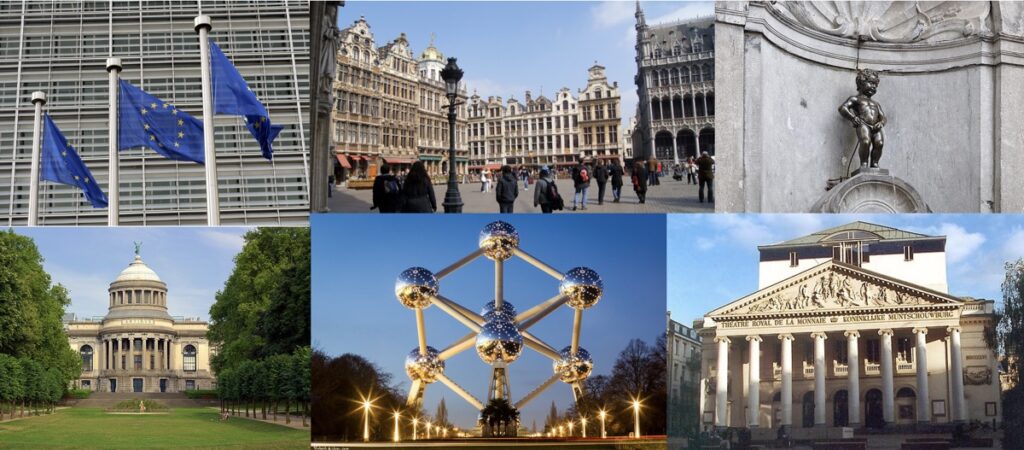
What comes to mind when somebody says ‘Brussels’? The EU, Grand-Place, Manneken Pis, the Atomium or perhaps its cultural institutions such as La Monnaie/De Munt and the Museums of Art and History.
Due to its long tradition of Belgian comics, Brussels is also known as a capital of the comic strip. Bas, a Belgian military colleague of my heroine Mel, asks her in Double Pursuit what she’s doing in ‘Comic City’. She replies:
‘This and that.’ Mel shrugged. ‘Stuff.’ He waited for more, but she just drank up then glanced at her watch.
Talking of food and drink, we also think of beer, moules-frites and, of course, chocolate. Let’s not mention sprouts (although I love them!)
But there’s a lot more to Brussels…
Belgium occupies a funny place in history – a crossroads readlly well beyond the founding of the modern state. Remarkable for a European nation it contains, and is divided by, a language boundary between Latin-derived French and Germanic Dutch. But more often than not, it’s been part of somewhere else, although the name is an old one. Yes, we’re talking Romans here.
Gallia Belgica (“Belgic Gaul”) was a province of the Roman Empire located in the north-eastern part of Roman Gaul, in what is today northern France, Belgium, and Luxembourg, along with parts of the Netherlands and Germany. When Julius Caesar arrived in the region in the 1st century BCE, as he recorded in his De Bello Gallico commentaries, the inhabitants of Belgium, northwestern France and the German Rhineland were known as the Belgae and considered to be the northern part of Gaul.
The exact nature of the distinction between the Belgae to the North and the Celts to the south, and the Germani across the Rhine, is disputed (of course!). Caesar said that the Belgae were separated from the rest of Gaul by language, law and custom and they had Germanic ancestry, but frustratingly, he doesn’t go into detail.
Much later, around 300 CE, Emperor Diocletian restructured the provinces and split the remaining Belgica into two provinces: Belgica Prima and Belgica Secunda. The first, the eastern part with Trier as its main city, also included part of today’s Belgian province of Luxembourg. Trier itself became one of the most important Roman cities in Western Europe in the 3rd century.
As for Brussels itself… Traces of human settlement go back to the Stone Age, with vestiges and place-names related to the times of megalith, dolmen and standing stones builders. Sadly, no actual Roman town found so far. ;-(. However, traces of farmhouses have been found to the west of Brussels at Anderlecht, Jette and Laeken, plus remnants of a ‘wooden structure’ on the northwest edge of the original city. We live in hope of greater things!
The nearest recorded settlement was Asse to the northwest of Brussels. From the middle of the first century, a Roman military road connected it to the capital of the Roman province of Nervii in Bavay (Bagacum Nerviorum). It continued northwards as far as the naval port at present-day Rumst (near Antwerp), with various side roads to the east and west. There may have been a Roman military camp to the southwest, though not proven.
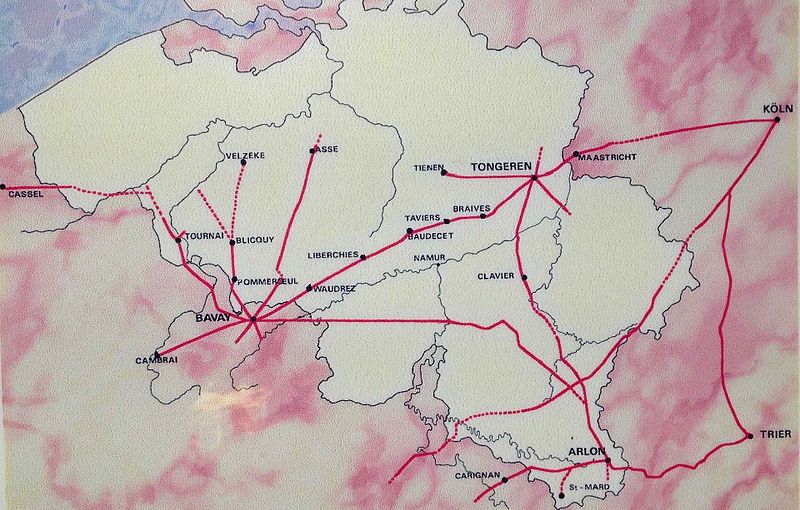 Roman roads in Belgium, Rjdeadly, CC Commons But Asse grew to be a substantial settlement or vicus at a locally important road junction. Though no Roman buildings have been discovered, there have been frequent archaeological finds including in 2007 a pottery and in 2008 a section of what looks like an intra-urban Roman road. It is possible that there was local cult of Epona as a large number of clay horse figurines, presumably votive offerings, have been found. So no Roman Brussels as yet.
The origin of the settlement which was to become Brussels lies in Saint Gaugericus’ construction of a chapel on an island in the River Senne around 580 CE. Any other buildings from then were probably scrubby wooden huts long crumbled into the earth.
Saint Vindicianus, (c. 632 – 712) the Bishop of Cambrai, made the first recorded reference to the place Brosella in 695 when it was still a hamlet (see scrubby wooden huts above). However, the official founding of Brussels is generally agreed to be around 979 , when Duke Charles of Lower Lotharingia transferred the relics of Saint Gudula from Moorsel to Saint Gaugericus’ chapel. Charles would construct the first permanent fortification in the city on that same island.
In the Middle Ages, the old Roman civitates became the basis of Christian dioceses, and the string of dioceses which form the core of modern Belgium (Tournai, Cambrai, and Liège) were the most northerly continental areas to retain a Romanised culture. The modern Belgian language boundary probably derives from this period, as the area was a contact point of Frankish and Romanized populations; it’s still a sensitive subject today.
In the medieval period, Brussels became renowned for the production of, and trade in, textiles and from the 17th century on a centre for the lace industry. In the 20th, it’s famous for conferences, fairs, exhibitions and ongoing language and cultural disputes.
The Pentagon – no, not that one
The five-sided, vaguely heart-shaped original city of Brussels, centred round the Grand-Place, is located within the 14th century walls of Brussels. As in many European cities, these walls were replaced by large boulevards at the end of the 19th century.
 Tourist Map in the street near Manneke Pis, Brussel, gildemax, CC Commons By the way, ‘pentagon’ comes from Middle French pentagone, from Late Latin pentagōnum, pinched (as often happens) from Ancient Greek πεντάγωνον.
Zaventem/Melsbroek Airport (featured in Double Identity and Double Pursuit)
Brussels Airport at Zaventem has a grim origin in 1940, when German occupying forces claimed 600 ha (1,500 acres) of agricultural fields as a back-up airfield. The Luftwaffe established Fliegerhorst Melsbroek and built three runways in the shape of a triangle: two of which are still in use today. An urban legend says that the site of the airport was chosen by the Germans after asking locals about the best place to build it – the Belgians then pointed to this location but omitted to tell the Germans it was often foggy…
After liberation on 3 September 1944, the German infrastructure at Melsbroek was used by British, Canadian and US military aircraft. Afterwards, Belgian authorities decided to use the aerodrome at Melsbroek for the new national airport. By 1948, a new terminal building was constructed to the southwest to replace the old wooden building, and runways extended.
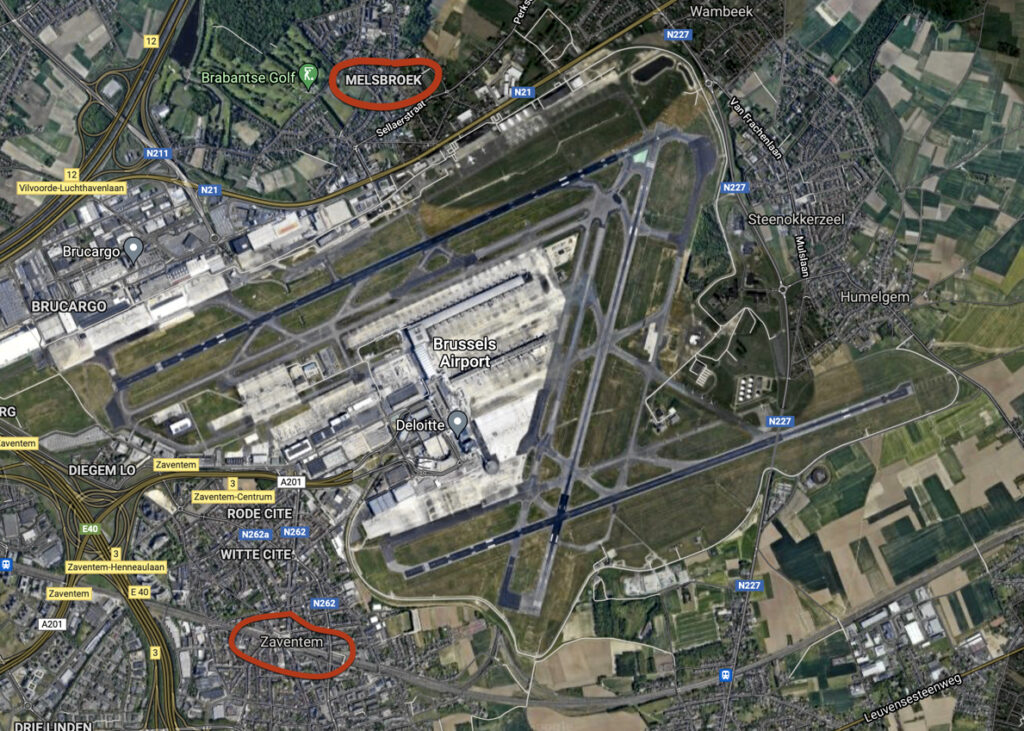 Map courtesy of Google. Melsbroek and Zaventem circled in red The buildings on the Melsbroek side to the north are still in use by the Belgian Air Force now known as Melsbroek Air Base. Both Zaventem Airport and Melsbroek Air Base share the same runways.
Green Brussels
Brussels is one of the greenest capitals in Europe, with over 8,000 hectares of green space. Even the office of Patrick Stevenson (Mel’s boss at the EIRS) in the Triangle Building in the middle of the concrete and glass EU quarter overlooks the impressive Parc du Cinquantenaire. But don’t let’s mention the vehicle traffic. Just use the buses, trams and metro or walk as Mel does.
The most important thing about Brussels…
Ever since the Brussels chocolatier Jean Neuhaus invented the praline a hundred years ago, the city has been at the forefront of the chocolate business. There are 1.2 million residents and around 500 chocolatiers, about one chocolatier for every 2,400 people. The average Belgian consumes over 15 pounds (nearly 7kg) of chocolate each year, one of the highest rates in the world.
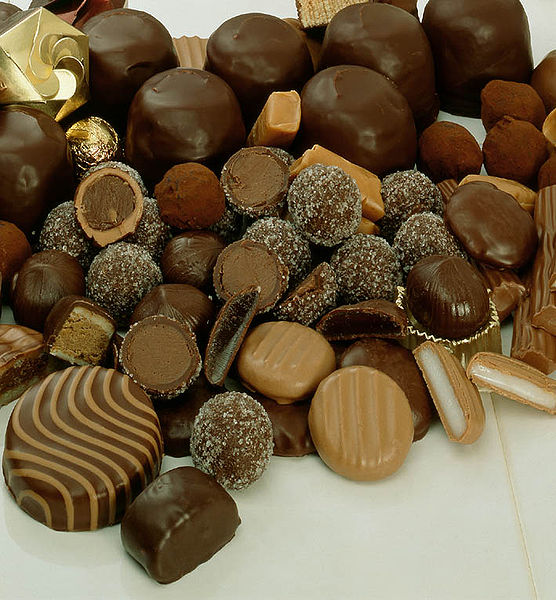 Pralines (Klaus Höpfner, GNU licence) Belgium’s association with chocolate actually goes back as far as 1635, when the country was under Spanish occupation shortly after chocolate had been brought to Europe from Central America. By the mid-18th century, chocolate had become extremely popular in upper and middle class circles, particularly in the form of hot chocolate drink. However, it expanded massively in the 19th Century, when cocoa was shipped ‘home’ from Congo, which had become its new African colony. Then along came praline…
A must visit: Museum of Cocoa and Chocolate
This personal tour of Brussels is a quirky one. Who else could bring Romans in alongside airports and chocolates? For heroine Mel, it’s ‘the office’, metro, her flat, the airport and a few restaurants. Each of us probably has the same everyday experience in our own lives in respect of our home town/city/village. But do you have any off-the-beaten-track places in Brussels you’d like to share?
All about Double Pursuit
Alison Morton is the author of Roma Nova thrillers – INCEPTIO, CARINA (novella), PERFIDITAS, SUCCESSIO, AURELIA, NEXUS (novella), INSURRECTIO and RETALIO, and ROMA NOVA EXTRA, a collection of short stories. Audiobooks are available for four of the series. Double Identity, a contemporary conspiracy, starts a new series of thrillers. Double Pursuit, the sequel is out on 19 October 2021.
Download ‘Welcome to Alison Morton’s Thriller Worlds’, a FREE eBook, as a thank you gift when you sign up to Alison’s monthly email newsletter. You’ll also be among the first to know about news and book progress before everybody else, and take part in giveaways.
If you enjoyed this post, do share it with your friends!
|
Subscribe to Blog via Email
Join 37 other subscribers.
Buy AURELIA from Apple!
UK

US
|