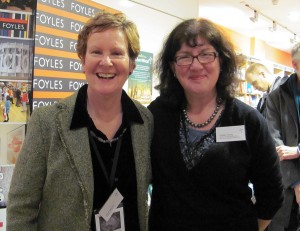
 With Debbie Young of Off the Shelf Book Promotions/The Alliance of Independent Authors (ALLi) Foyles Bristol was the venue for joining up with around thirty other SilverWood Books authors, plus a crowd of writers eager to learn about getting their books to publication.
The writing and publishing open day was brilliantly organised by Helen Hart and her SilverWood team and run jointly with Rob Norton events supervisor at Foyles.
The mood was informative, professional and above all fun. I talked to so many people that I needed regular injections of caffeine from the Foyles coffee shop.
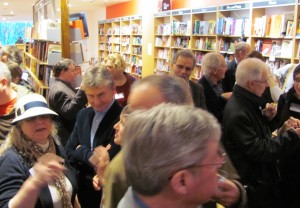 Historical author Helen Hollick (left) with other SilverWood authors
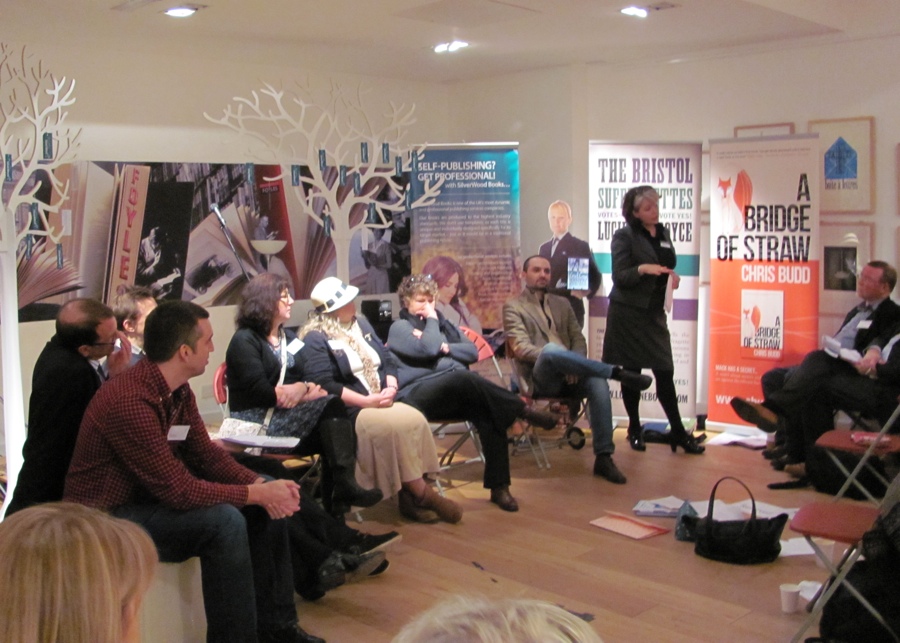 Panel session Q&A
Topics covered an enormous range. The writing and editing process, of course. Nothing happens without a well-written story.
Next, we heard about book design – covers and interiors – and how important this was to demonstrate quality and make your finished book stand out in an increasingly crowded market.
Then onto many authors’ unfavourite topic – book marketing and promotion which covered author platform, getting your book into bookshops, audiobooks and crowd-funding.
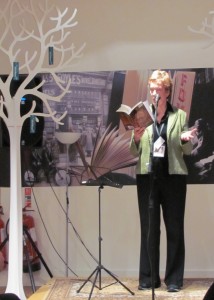 Reading from PERFIDITAS!
Authors read from their own books (including moi). The big challenges were talking into the microphone without making the sound blurred and harsh and (more importantly!) not overdoing the drama queen act!
(I’m not entirely sure I succeeded in avoiding both of those!)
But I had spoken at many professional events before I turned to writing. Still, it’s somewhat unnerving spouting stuff you made up from your imagination in front of other creatives.
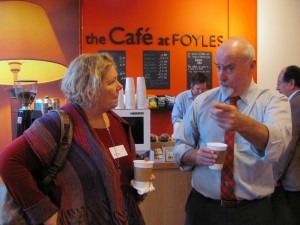 Historical authors Anna Belgrage and David Ebsworth discussing a serious point.
Some authors using SilverWood Book services had only ever met each other and the SilverWood team virtually. They lost no time swapping notes about writing, research and promotion! And many of us enjoyed talking to their fans who came along as well as to the SilverWood Books team.
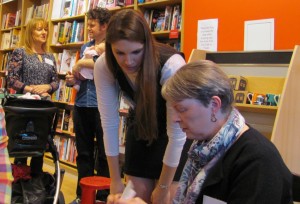 Publishing assistant Joanna Zefron from SilverWood Books and historical author Lucienne Boyce
Self-published/independent authors can sometimes feel isolated, but this was very much the meeting of a community which regularly interacts virtually but on Saturday took enormous pleasure in meeting in ‘real life’. And I loved chatting with fans (yes, there were some Roma Nova ones!) and talking to new and potential authors just starting on their publishing path.
Updated February 2023 Alison Morton is the author of Roma Nova thrillers – INCEPTIO, CARINA (novella), PERFIDITAS, SUCCESSIO, AURELIA, NEXUS (novella), INSURRECTIO and RETALIO, and ROMA NOVA EXTRA, a collection of short stories. Audiobooks are available for four of the series.Double Identity, a contemporary conspiracy, starts a new series of thrillers. JULIA PRIMA, a new Roma Nova story set in the late 4th century, is now out.
Find out more about Roma Nova, its origins, stories and heroines and taste world the latest contemporary thriller Double Identity… Download ‘Welcome to Alison Morton’s Thriller Worlds’, a FREE eBook, as a thank you gift when you sign up to Alison’s monthly email update. You’ll also be among the first to know about news and book progress before everybody else, and take part in giveaways.
If you enjoyed this post, do share it with your friends!Like this:Like Loading...
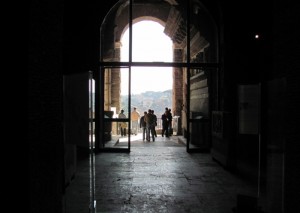 Basically, alternate history is a type of speculative fiction where stories are set in a world where historical events have unfolded differently from the way they did in the real world. Basically, alternate history is a type of speculative fiction where stories are set in a world where historical events have unfolded differently from the way they did in the real world.
The event that changed history (point of divergence or PoD) must be in the past from when the story is set and have affected the present in such a way that it can part-resemble our timeline or be very different. Sometimes there are actual historical characters, sometimes entirely fictional ones or a mixture of both.
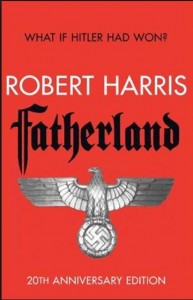 Although there’s a lot of it about and modern favourites of mine include Robert Harris’s Fatherland, Keith Roberts’ Pavane and C J Sansom’s Dominion, it’s nothing new. Roman historian Livy suggests that the Romans would have beaten Alexander the Great if he had lived longer and had turned west to attack the Romans (Book IX, sections 17-19 Ab urbe condita libri (The History of Rome), Titus Livius). Although there’s a lot of it about and modern favourites of mine include Robert Harris’s Fatherland, Keith Roberts’ Pavane and C J Sansom’s Dominion, it’s nothing new. Roman historian Livy suggests that the Romans would have beaten Alexander the Great if he had lived longer and had turned west to attack the Romans (Book IX, sections 17-19 Ab urbe condita libri (The History of Rome), Titus Livius).
Louis Geoffroy’s Histoire de la Monarchie universelle: Napoléon et la conquête du monde (1812–1832) (History of the Universal Monarchy: Napoleon And The Conquest Of The World) (1836) imagines Napoleon‘s French Empire victorious in its invasion of Russia in 1811 and England in 1814, later unifying the world under Bonaparte’s rule.
But how plausible is alternate history?
I’m very grateful to TV Tropes for dissecting and qualifying the main types so clearly on the sliding scale of alternate history plausibility, and I’ll use their categories to explain in more detail.
 Like science fiction, alternate history varies in ‘hardness’ with readers and fans grading it by how plausible the alternation is measured against historical reality. Like science fiction, alternate history varies in ‘hardness’ with readers and fans grading it by how plausible the alternation is measured against historical reality.
At the ‘hard’ end are well-researched pieces that take into account historical sources and trends, logical changes due, for instance, to the butterfly effect, and try to relate events that flow logically from the point of divergence. At the ‘soft’ end are works of pure fantasy and ‘Rule of Cool’ (the level of ‘awesomeness’), generally a result of alien space bats (more classically, the dei ex machina).
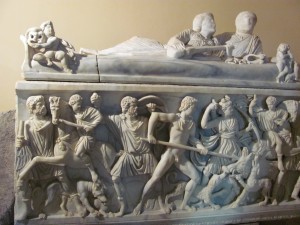 Sarcophagus frieze Type I – Hard Alternate History: These are works that stick to strict, sometimes scientific, standards in their plausibility. Research is often detailed and intensive. Most historical counter-factuals fall into this category.
Type II – Hard/Soft Alternate History: Often well researched with historical logic and methodology, but allows room for adventurous outcomes or Rule of Drama/Cool/Comedy (sound familiar?)
Type III – Soft Alternate History: Here, setting up a world that fits the writer’s creative objectives is more important than the plausibility of the setting’s alternate history. Research is often minimal to moderate and plausibility will take a back seat to Rule of Drama/Cool/Comedy.
Type IV – Utterly Implausible Alternate History: These are works that are so ‘soft’ that they melt and so implausible as to be effectively impossible. Often, the author puts their own ideology to the fore at the expense of research, historic details or sensible logistics. Readers with even a passing familiarity with history can’t take it seriously. The original term alien space bats was coined to refer to this level of implausibility.
 Type X – Fantastical Alternate History: In contrast with Type IV, these works are deliberately designed as pure fantasy, typically following the Rule of Cool. Mad ideas prevail such as Nazis on the moon in the 2012 film Iron Sky. Type X – Fantastical Alternate History: In contrast with Type IV, these works are deliberately designed as pure fantasy, typically following the Rule of Cool. Mad ideas prevail such as Nazis on the moon in the 2012 film Iron Sky.
Perception is, of course, subjective and depends upon the individual reader’s personal interpretations or on whether they are looking for serious historically logic development, a lighthearted, if not positively wacky, adventure story or something along the scale in-between. But no amount of plausibility, research or attention to ‘the rules’ or sense of fun will disguise poor writing, shallow characterisation and losing the plot.
Alison Morton is the author of Roma Nova thrillers – INCEPTIO, CARINA (novella), PERFIDITAS, SUCCESSIO, AURELIA, NEXUS (novella), INSURRECTIO and RETALIO, and ROMA NOVA EXTRA, a collection of short stories. Audiobooks are available for four of the series. Double Identity, a contemporary conspiracy, starts a new series of thrillers.
Download ‘Welcome to Alison Morton’s Thriller Worlds’, a FREE eBook, as a thank you gift when you sign up to Alison’s monthly email newsletter. You’ll also be among the first to know about news and book progress before everybody else, and take part in giveaways.
If you enjoyed this post, do share it with your friends!Like this:Like Loading...
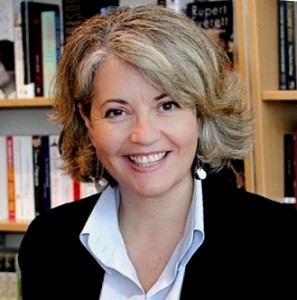 Today, I’m delighted to welcome Helen Hart, publishing director at SilverWood Books. She has written novels under pseudonyms for Scholastic, Virgin Books, OUP and HarperCollins. One of her Young Adult novels, written as Maya Snow, was shortlisted for the Solihull Children’s Book Award 2010. Today, I’m delighted to welcome Helen Hart, publishing director at SilverWood Books. She has written novels under pseudonyms for Scholastic, Virgin Books, OUP and HarperCollins. One of her Young Adult novels, written as Maya Snow, was shortlisted for the Solihull Children’s Book Award 2010.
Helen was on the judging panel for the 2010 and 2011 the Bristol Short Story Prize and has reviewed books for the Historical Novel Society (HNS) Indie Reviews.
I’m looking forward to hearing about her views on the ever-changing world of publishing!
Hi Helen. Welcome to the world of Roma Nova!
We’ve been working together for just over a year now since I decided to self-publish INCEPTIO and PERFIDITAS through SilverWood Books, but do satisfy my curiosity: why the name?
 That’s a nice question! I come from a small village in Dorset, which as far back as the Domesday Book was known by its old Celtic name of Litchet, meaning ‘the grey wood’. I like the name as it’s a piece of my heritage, and of course woods and trees are an important element of printed books (although nowadays wood pulp comes from sustainable and managed sources). Silver seemed a more appealing version of grey, so SilverWood Books was born. That’s a nice question! I come from a small village in Dorset, which as far back as the Domesday Book was known by its old Celtic name of Litchet, meaning ‘the grey wood’. I like the name as it’s a piece of my heritage, and of course woods and trees are an important element of printed books (although nowadays wood pulp comes from sustainable and managed sources). Silver seemed a more appealing version of grey, so SilverWood Books was born.
When talking to other people and indeed writing on this blog, I’ve referred to SilverWood Books as a “publishing services provider” Is this accurate?
I would say it is – at the moment. The publishing landscape is changing so fast, and new terminology is constantly being proposed for what we do, so we might also need to be flexible and change the way we refer to ourselves. It’s vital that the terms are widely recognized, so that writers can establish what we do and if we’re offering what they’re looking for. The Alliance of Independent Authors (ALLi) has recently referred to us as providing “author services”. I like that term because it brings the author to the centre of what we do rather than placing the publishing/publisher there, and that reflects our ethos of being what ALLi term “authorcentric”.
What marks SilverWood Books out in the publishing services market?
I’d like to think it’s friendliness and expertise of the SilverWood team, as well as the high quality of our books, in terms of design, layout and typesetting. One of our strengths is that our books aim to match the production values of traditional publishing houses such as Faber and Harper Collins. This means our authors can be confident about going out and marketing their book. Our authors also stand a good chance of persuading bookshops to stock their book, and of arranging author events and book signings.
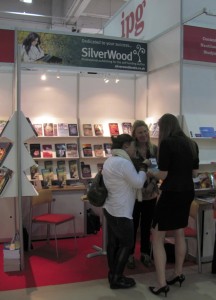 SilverWood Books at the London Book Fair 2013 What do authors report is the chief benefit of working with you from their point of view?
Most authors say it’s the close and supportive working relationship. Many seem to place great value regular contact, thoughtful advice, and having someone knowledgeable to run ideas past. With SilverWood, the support doesn’t end when the book is published but is on-going. Our preference is to work with a writer through their whole career rather than on a one-off book, and many authors return to work with us for a number of books.
How do you think the relationship a between self-publishing and the traditional publishing is evolving? For instance has self-publishing become a replacement slush pile or test-bed for traditional publishing?
I’m not sure how the test-bed is working. Some agents and publishers seem receptive, while others are a little more resistant. It’s a constantly evolving landscape, and attitudes are shifting all the time.
Sometimes all self-published authors are lumped together from the enthusiastic, but unskilled, DIY author at one end and the top of the range providers like SilverWood Books at the other. Do you think the self-publishing market is changing, polarizing into different quality layers?
That’s an interesting thought. Possibly, although it’s slow progress. The perception of “all self-published books are rubbish” has such a strong hold that it can be hard work for authors to overcome that prejudice. The good news is that there are new initiatives which are helping to raise awareness of books which have been published well, from IndieBRAG’s recommended self-published book “Medallion” scheme, to ALLi’s “Open Up to Indies” and the recent Guardian newspaper blog posts which acknowledge that self-published books can be good. Recently the Guardian online invited readers to recommend good self-published books, and received over 3,400 entries. Of the top two dozen that made it onto their published list, we were really pleased and proud to see not one but two SilverWood authors – travel writer Ed Hancox and historical novelist Helen Hollick.
And how do you see the self-publishing sector maturing in say the next 12 and 24 months?
“Maturing” is a good word. I feel confident that self-publishing will go from strength to strength and continue to become more and more acceptable. Things can only improve as recognition builds that the self-publishing sector is producing well-written, professionally-edited and expertly-designed books. I genuinely believe that readers don’t care who funded the book as long as it’s a good read, and they can get hold of it relatively easily.
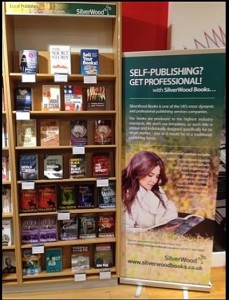 I’m looking forward to meeting up with Helen again at the SilverWood Books Writing and Self-Publishing Open Day at Foyles, Bristol on 25 January. It’s fully booked, but there’s another scheduled for September. I’m looking forward to meeting up with Helen again at the SilverWood Books Writing and Self-Publishing Open Day at Foyles, Bristol on 25 January. It’s fully booked, but there’s another scheduled for September.
Left: Display in Foyles, Bristol of SilverWood Books. INCEPTIO and PERFIDITAS are on the third shelf down!
Find out more about SilverWood Books here: www.silverwoodbooks.co.uk
Alison Morton is the author of Roma Nova thrillers, INCEPTIO, and PERFIDITAS. Third in series, SUCCESSIO, is out early summer 2014.
If you enjoyed this post, do share it with your friends!Like this:Like Loading...
|
Subscribe to Blog via Email
Join 37 other subscribers.
Buy AURELIA from Apple!
UK

US
|