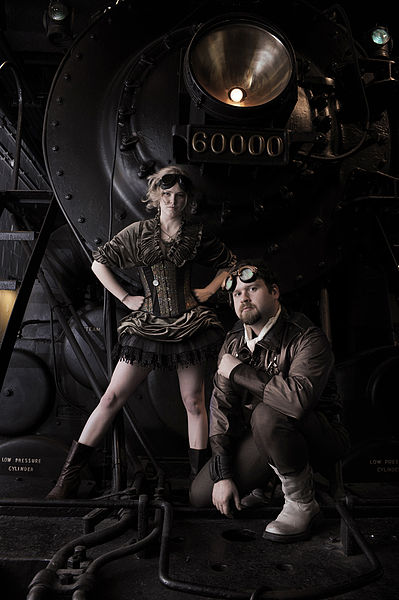
 Steampunk themed photo: Kyle Cassidy When people ask me about my books, I say “Thrillers – alternative history thrillers. They’re set in a world where the historical timeline changed in the past and a different looking world evolved.”
But the reactions can be interesting. Here’s one typical conversation I had at a book event.
Person browsing table with books for sale, ‘Oh, steampunk, then?’
I gnash my teeth, but put on a pleasant smile.
“No, actually, they’re adventure stories set in our world, but where a remnant of the Roman Empire survived and is now governed by women. Writing in that changed timeline means we can explore what would have happened if things has developed differently. Sometimes in alternative history, technology and values don’t change much, but sometimes they do.”
“Oh, steampunk, then?”
“No, that’s more fantastical and based on Victorian technological ideas. If you want to be formal, it’s a subgenre of science fiction that incorporates retrofuturistic technology and aesthetics inspired by 19th-century industrial steam-powered machinery. There’s often an element of magic plus fantastical creatures.
“My alternative history world exists in the 21st century based on the difference caused by a small dissident Roman colony surviving from ancient times. The timeline – which doesn’t rely on having a Victorian tone as steampunk does – diverged in the past from the one we know and events changed. Often one small change can alter the following centuries significantly. And unlike time travel, there’s no going back.”
“Oh, not steampunk, then?”
‘No, steampunk often features things like steam-powered machinery, steam cannons, lighter-than-air airships, analogue computers, such as Charles Babbage’s Analytical Engine. It sometimes borrows additional elements from the genres of fantasy, horror, historical fiction, alternate history or other branches of speculative fiction, making it often a hybrid genre.
’So steampunk’s not alternative history?’
‘No, I’m afraid not. Both have strong historical fiction connections and both are considered sub-genres of historical fiction. Steampunk’s one version of a possible historical development, but often with elements which tip it into fantasy or science-fiction. Recently, it’s expanded from the Victorian period into American West or post-apocalyptic-themed, sometimes off-world. Steam spaceships with lots of goggles and long leather coats!”
 “Alternative history, on the other hand, can include every period where the timeline changed but it has no fantastical elements such as in Naomi Novak’s Dragon series set during the Napoleonic Wars. Some alternative history can be off the scale bonkers, but most writers like to keep to historically logical timeline development when considering ‘what if’. I can certainly say that doing it properly, alternative history needs just as much research and standard historical fiction as the traps are legion! “Alternative history, on the other hand, can include every period where the timeline changed but it has no fantastical elements such as in Naomi Novak’s Dragon series set during the Napoleonic Wars. Some alternative history can be off the scale bonkers, but most writers like to keep to historically logical timeline development when considering ‘what if’. I can certainly say that doing it properly, alternative history needs just as much research and standard historical fiction as the traps are legion!
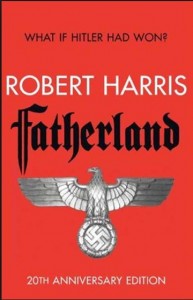
“Favourite themes include what if the Spanish Armada had succeeded in invading Elizabethan England or if the Nazis had won the Second World War as in Robert Harris’s Fatherland. Here are some of the best depending on other periods and events.”
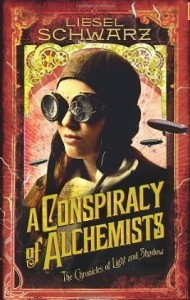 ‘If you want a great example of steampunk that really defines the genre, read Liesel Schwarz’s Chronicles of Light and Shadow. Here’s the first one – A Conspiracy of Alchemists.’ ‘If you want a great example of steampunk that really defines the genre, read Liesel Schwarz’s Chronicles of Light and Shadow. Here’s the first one – A Conspiracy of Alchemists.’
‘Okay, good tip.’
She picks up INCEPTIO and PERFIDITAS and hands over 22€. I smile and wish her happy reading.
She turns and asks, ‘So when are you going to write a proper steampunk story?’
I collapse on to my chair and weep.
Updated 2024: Alison Morton is the author of Roma Nova thrillers – INCEPTIO, CARINA (novella), PERFIDITAS, SUCCESSIO, AURELIA, NEXUS (novella), INSURRECTIO and RETALIO, and ROMA NOVA EXTRA, a collection of short stories. Audiobooks are available for four of the series. Double Identity, a contemporary conspiracy, starts a new series of thrillers. JULIA PRIMA, Roma Nova story set in the late 4th century, starts the Foundation stories. The sequel, EXSILIUM, is now out.
Download ‘Welcome to Alison Morton’s Thriller Worlds’, a FREE eBook, as a thank you gift when you sign up to Alison’s monthly email update. You’ll also be among the first to know about news and book progress before everybody else, and take part in giveaways.
Download ‘Welcome to Roma Nova’, a FREE eBook, as a thank you gift when you sign up to Alison’s monthly email newsletter. You’ll also be first to know about Roma Nova news and book progress before everybody else, and take part in giveaways.
If you enjoyed this post, do share it with your friends!
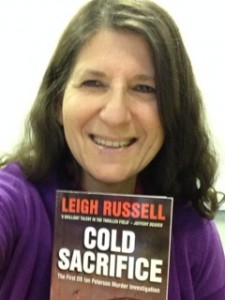 Today I’m welcoming the fabulous Leigh Russell to the blog. Hailed as ‘a brilliant talent’ by Jeffery Deaver and ‘a deeply human voice’ by Peter James, Leigh writes the internationally bestselling Geraldine Steel series of psychological crime thrillers. Her first novel, Cut Short was shortlisted for a CWA Dagger Award for Best First Crime Novel. The series reached Number 1 on Kindle for female sleuths, Top 50 Bestsellers Chart for WH Smith’s Travel, Top Reads list on Eurocrime. As well as the bestselling Geraldine Steel series, Leigh is currently writing a spin off series featuring Geraldine’s popular colleague Ian Peterson. Today I’m welcoming the fabulous Leigh Russell to the blog. Hailed as ‘a brilliant talent’ by Jeffery Deaver and ‘a deeply human voice’ by Peter James, Leigh writes the internationally bestselling Geraldine Steel series of psychological crime thrillers. Her first novel, Cut Short was shortlisted for a CWA Dagger Award for Best First Crime Novel. The series reached Number 1 on Kindle for female sleuths, Top 50 Bestsellers Chart for WH Smith’s Travel, Top Reads list on Eurocrime. As well as the bestselling Geraldine Steel series, Leigh is currently writing a spin off series featuring Geraldine’s popular colleague Ian Peterson.
Now I only have two questions for you, Leigh, but you need to answer them fully. Anything you say…Well, you know the rest.
Ever since Geraldine Steel burst on to the (crime) scene, she has had unparalleled success (CWA awards, #1 on Amazon, Eurocrime Top Read and hundreds of 5 star reviews); readers have taken her to their hearts. What makes her such an attractive heroine?
My interest in people is what inspires my writing, and people who kill really fascinate me. What is it that drives one person to take another person’s life?
Of course, there can be a number of motives driving such behaviour. It seems to me there is always an element of madness about it. Do you remember Anders Breivig who killed eight people in Norway and claimed to be sane? All I can say is, if that is sane behaviour, then I must be even more crazy than I thought, because I don’t believe that killing other people is ever a sane way to behave. I am opposed to physical violence of any kind. Aggression is never an answer to a problem. And yet… if someone was threatening the life of a member of my family, and I had a gun – and knew how to use it – would I pull the trigger? Of course I would. Does that mean I’m insane?
When I started writing, it was the killer, and not my detective at all, who engaged my attention. I wrote pages and pages about him, “taking the reader into the darkest recesses of the human psyche”, as Barry Forshaw kindly said of my books. Having established the premise for my debut, Cut Short, and explored the lives of my killer and his victims, the next step was to introduce a detective to solve the crime. So Geraldine Steel was created.
You might think – as I did – that a credible ‘normal’ detective would be far easier to create than a plausible killer. Paradoxically, Geraldine took longer to emerge than that first killer. Creating a detective inspector imposes certain restraints. She has to behave in a way that is believable. So I had to stay within certain unwritten parameters of ‘normality’ if my readers weren’t going to dismiss my story as too far-fetched. I have a following on the police force. They know what life is like for a detective inspector. So I wanted to get my detective right.
With my killer I had absolute artistic and creative licence to make him do whatever I wanted. He didn’t need to be sane. His actions needed to make sense only within the world of his own mind. No reader could say to me, ‘I don’t believe a killer would do that,’ because how would the reader know what might go on in a killer’s mind? Writing my killer, I was free of all rules. It was incredibly liberating.
Readers’ reactions to both Geraldine Steel and Ian Peterson has taken me completely by surprise. Some of my fans know more about my detectives than I do! I am really grateful to the many fans who contact me wanting to know about them. It has been genuinely surprising, and really thrilling. So if you are a fan of my work – thank you!
What is the most frequent question that fans/readers ask you and how do you answer it?
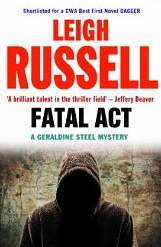 Readers contact me every week via my website, with all sorts of questions. I always respond in person. Most frequently I’m asked when my next book will be published. This question has become rather complicated to answer. When my debut came out in 2009, there was one launch date, and that was it. Now I’m not only writing two series a year, but the ebooks and print books come out at different times, which is effectively four publication dates a year in the UK alone, plus large print editions and audio, and now there are publication dates overseas as well, with editions in French, Italian, Turkish, and German, and books published in the US by Harper Collins. Readers contact me every week via my website, with all sorts of questions. I always respond in person. Most frequently I’m asked when my next book will be published. This question has become rather complicated to answer. When my debut came out in 2009, there was one launch date, and that was it. Now I’m not only writing two series a year, but the ebooks and print books come out at different times, which is effectively four publication dates a year in the UK alone, plus large print editions and audio, and now there are publication dates overseas as well, with editions in French, Italian, Turkish, and German, and books published in the US by Harper Collins.
Here are the remaining UK publication dates for 2014. The sixth Geraldine Steel title, Fatal Act, is available in paperback this month. The seventh will be out as an ebook in December, as yet untitled.
The second Ian Peterson title, Race to Death, is out as an ebook in June, with the paperback out in September.
…And looking at that schedule, I think I’d better get back to writing! Thank you very much for inviting me onto your blog, Alison. I look forward to seeing you at the St Clementin Literary Festival in France in August!
After chatting together at the London Book Fair in April, it will be great to meet up with you again in France, Leigh!
More about Leigh on her website
If you enjoyed this post, do share it with your friends!
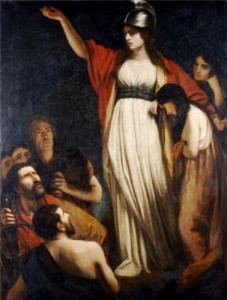 “Boadicea Haranguing the Britons” by John Opie (1761-1807) ‘Tough’, ‘feisty’, ‘kick-ass’ – clichés, ironic or signposts? And, provocative question, would you apply them to men? Perhaps the first one and possibly the third, but I can’t remember reading about a ‘feisty hero’.
That aside, how do you recognise a tough heroine?
Boudica, queen of the British Iceni tribe – led an uprising against the occupying forces of the Roman Empire.
Katniss Everdeen from The Hunger Games – physical skill and strength of character
Eowyn from Lord of the Rings – fights for what she believes to be right
Jane Eyre – strength of will and character to survive challenges in her life
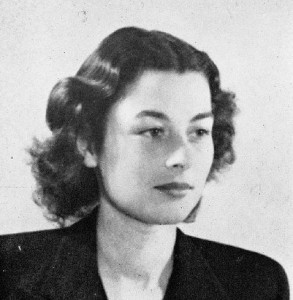 Violette Szabo GC Or perhaps Violette Szabo – a true story immortalised in Carve her Name with Pride – courageous, understated, self-sacrificing
Lizzie Bennett – smart, witty, full of integrity to the point of recklessness, but honest enough to admit when she’s wrong.
Early Roman Cloelia who led the escape of hostages from Lars Porsena c.508 BC
Arya Stark from Game of Thrones – tough physically, mentally and emotionally
Some common themes here…
So how do you write a tough heroine?
 The biggest challenge is plausibility. A completely accomplished all-singing, all-dancing toughie doesn’t work. Yes, this kind of operator needs to be strong, skilled and savvy, but her life will be much more than that. And she’s unlikely to have been born like that, unless genetically altered in a future far, far away. Even Hanna, (2011), the sixteen-year-old girl who was raised by her father to be the perfect assassin started as a ‘standard’ child. Readers need to see where she came from, what turned her from an ordinary girl into the book’s heroine. Usually she passes through a formative traumatic event but writers need to give hints about resilience, integrity and an ability to develop confidence as well as physical abilities. Undoubtedly, a strong female character has to have an equally strong will and a passion to drive through what she believes in. The biggest challenge is plausibility. A completely accomplished all-singing, all-dancing toughie doesn’t work. Yes, this kind of operator needs to be strong, skilled and savvy, but her life will be much more than that. And she’s unlikely to have been born like that, unless genetically altered in a future far, far away. Even Hanna, (2011), the sixteen-year-old girl who was raised by her father to be the perfect assassin started as a ‘standard’ child. Readers need to see where she came from, what turned her from an ordinary girl into the book’s heroine. Usually she passes through a formative traumatic event but writers need to give hints about resilience, integrity and an ability to develop confidence as well as physical abilities. Undoubtedly, a strong female character has to have an equally strong will and a passion to drive through what she believes in.
 Photo: Ariel da Silva Parreira In INCEPTIO, Karen starts off as an office worker, but we see from the first page that she’s prepared to stand her ground against people doing wrong, even knocking them to the ground when they’ve attacked her. Within the first chapters we know she goes to the gym, we’re with her when she jogs in the park; she’s outdoorsy and sporty. Her disrupted childhood with a barren and loveless adolescence has made her learn to protect herself emotionally, and question everything. She demonstrates signs of mental and physical toughness and resilience, even when living in a ‘normal’ existence, almost to the level of not feeling completely at ease in her own skin. So when she becomes an undercover operative, she already has many latent characteristics required.
Beware of bunny rabbits and kittens…
The second challenge is not falling into the trap of making a strong character have moments of unbelievable weakness. Doubt, a temper, love for movies, joking with colleagues, buying gifts for friends help to round a character out, but writers must not go too far into fluffy-bunny-land and over-compensate for the toughness.
 A military type will drink and swear – it’s the pressure of the job – but she will have the normal emotions of any other woman, although expressed differently. Karen/Carina under pressure often feels aggressive towards people who have hurt the people she cares about, but it’s her way of showing she cares. Other times she finds everything too much and we see tears and fears. But her habit of picking herself up and facing up to what has to be done has been her way of coping since the death of her parents. A military type will drink and swear – it’s the pressure of the job – but she will have the normal emotions of any other woman, although expressed differently. Karen/Carina under pressure often feels aggressive towards people who have hurt the people she cares about, but it’s her way of showing she cares. Other times she finds everything too much and we see tears and fears. But her habit of picking herself up and facing up to what has to be done has been her way of coping since the death of her parents.
Courage doesn’t come from ‘boldly going’, but from ‘boldly going’ when you are half scared to death and you’re not at all sure you’re going to get out of the situation without being killed.
What do you think makes a strong heroine?
Updated 2021: Alison Morton is the author of Roma Nova thrillers – INCEPTIO, CARINA (novella), PERFIDITAS, SUCCESSIO, AURELIA, NEXUS (novella), INSURRECTIO and RETALIO, and ROMA NOVA EXTRA, a collection of short stories. Audiobooks are available for four of the series. Double Identity, a contemporary conspiracy, starts a new series of thrillers.
Download ‘Welcome to Alison Morton’s Thriller Worlds’, a FREE eBook, as a thank you gift when you sign up to Alison’s monthly email newsletter. You’ll also be among the first to know about news and book progress before everybody else, and take part in giveaways.
If you enjoyed this post, do share it with your friends!
|
Subscribe to Blog via Email
Join 37 other subscribers.
Buy AURELIA from Apple!
UK

US
|