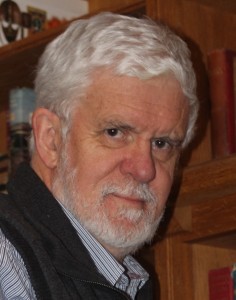
 Today my blog guest is Antoine Vanner, a man of many parts. Before writing historical naval fiction, he spent many years in the international oil industry and travelled extensively. He has survived military coups, guerrilla warfare, a militia attack, storms at sea and life in mangrove swamps, tropical forest, offshore platforms and the boardroom.
His passion for nineteenth-century political and military history and first-hand experience of their locales provide the background to his historical novels based on naval officer Nicholas Dawlish’s life. The first to be published was Britannia’s Wolf, in which Dawlish is attached to the Ottoman Navy as the Russo-Turkish War of 1877-78 enters its critical final stage. The next book, Britannia’s Reach, finds Dawlish enmeshed not only in a vicious river war in the heart of South America but also an ethical dilemma where he must make a terrible choice if he is to return to Britain with some shreds of integrity remaining.
Now I like a good heroine or hero particularly in a uniform and serving their country. But usually there’s a human being underneath with frailties we may not suspect and one who has to learn about themselves as well as take risks in the personal sphere. I’ve read the first two Dawlish adventures and am burning to find out more…
Welcome, Antoine! The Dawlish Chronicles are in the relatively rare genre of Victorian naval fiction. What attracts you to this era?
Two reasons. One is from the naval and historical point of view. As an engineer, I find the Victorian era fascinating in terms of its developing technology as well as its political and intellectual ferment. The other reason is more personal. For my generation the Late Victorian age is almost the day before yesterday. Our grandparents grew up during it so we learned much about it from people with first-hand experience. In addition, much of the infrastructure and technology still with us was built or developed during that time. But there was rapid change – urban electrification had arrived and radio and flight were almost realities. These aspects come together for me – the fascination of the politics and technology, the expansion of western nations to global power status and our own ability to reach back through our grandparents and almost touch it.
Your protagonist Nicholas Dawlish is tough, no doubt of that! He has a high moral character and thus torn between duty and doing the right thing, as we saw in Britannia’s Reach. He’s driven by ambition, but does this make him vulnerable to pressure? Tell us more about this complex man.

 Through the early books of the Dawlish Chronicles we are meeting Dawlish in his mid-thirties, and by this time he has already established himself professionally. He is a good seaman, a good officer and a good leader of men. But now he is on the cusp of senior command. As he reaches more senior levels the challenges become much more complex. It was easier to be ethical when he was a lieutenant or sub-lieutenant following relatively simple orders. But at a more senior command level, it’s no longer just a matter of getting the job done in purely technical and operational terms, it’s one of taking into account political, ethical, financial and other considerations also. That’s what he is facing right now, and he’s confronted with hard choices, difficult compromises and fine balances if he is to move ahead.
Dawlish was deeply attracted to Florence Morton in Britannia’s Wolf, but ambivalent about her servant origins. She proved as tough and resilient as him. We know of outstanding Victorian women, such as Florence Nightingale and Mary Kingsley, but these were from privileged backgrounds. What made you write Florence against the usual perception of Victorian women?
I was aware that many Victorian women of humble background managed, against all odds, to educate themselves. They achieved great things, but often had to go overseas to do it, for example as missionaries, where social class was less important. I spent many years in Nigeria and became intrigued there by the personality of Mary Slessor. She was a Scottish mill girl from a poverty-stricken family. She was self-educated and went to Calabar in Eastern Nigeria as a missionary, staying for some 40 years. Still revered there for wonderful work among the local population, she became the first female magistrate and vice-consul in the British Empire. Florence is of similarly humble origin and in Britannia’s Wolf she thrives on the challenges of assisting wartime refugees in Bulgaria and Turkey. Dawlish recognises and admires her character and courage – which he might never had an opportunity to do in Britain – and decides to commit to her, difficult it may be in pure social terms for a man of his class.
You bring in historical characters: John Philip Holland, inventor of the modern submarine, and Adam Worth, described by Scotland Yard as “The Napoleon of Crime” and the inspiration of Conan Doyle’s Professor Moriarty. What is the biggest challenge of mixing real and fictitious characters in novels?
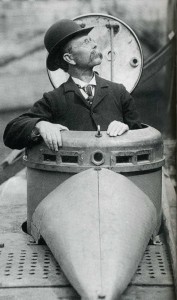
John Philip Holland
When you do so, you have got to make sure they think and act in character. You are obviously putting them into fictitious situations and it’s important that they react as that individual would have done in real life if confronted with the same challenges. A good example here is Adam Worth in Britannia’s Shark, is a man totally without any ethical standards, and yet in his own way quite an attractive character. Holland on the other hand was something of a naive genius. Similarly, in Britannia’s Wolf we met the devious Sultan Abdul Hamid II and the exuberant Hobart Pasha. In each case the challenge was to make them behave in a way which is credible and consistent with their actual personalities. That demanded me knowing a lot about them and being able to imagine how they would have reacted to the situation in the story.
Have we lost the opportunity to have real adventures today? And with heroes like Dawlish?
Adventures are “challenges confronted”. If we sit about waiting for them to come to us we won’t have many. There are always indomitable souls who will seek out challenges willingly. They’ll either prevail, or they’ll fail heroically. The challenges can be in any sphere and a dogged resolution never to be beaten can make heroes of the most unlikely people. Heroes will always be with us and it is largely by them that Mankind advances.
So what’s Britannia’s Shark about…
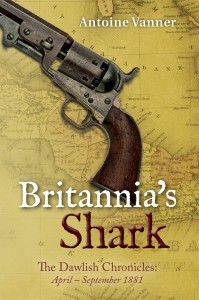 1881 and the power of the British Empire seems unchallengeable.
But now a group of revolutionaries threaten the economic basis of that power. Their weapon is the invention of a naïve genius, their sense of grievance is implacable and their leader is already proven in the crucible of war. Protected by powerful political and business interests, conventional British military or naval power cannot touch them.
A daring act of piracy draws the ambitious British naval officer, Nicholas Dawlish, into this deadly maelstrom. Drawn in too is his wife Florence, for whom the glimpse of a half-forgotten face evokes memories of earlier tragedy. For both a nightmare lies ahead, made worse by a weakness Dawlish never suspected he had. Amid the wealth and squalor of America’s Gilded Age, and on a fever-ridden island ruled by savage tyranny, and manipulated ruthlessly from London by the shadowy Admiral Topcliffe, Nicholas and Florence Dawlish must make some very strange alliances if they are to survive – and prevail.
Britannia’s Shark continues Nicholas Dawlish’s story. Daring and initiative can earn him the advancement in the Royal Navy which he hungers for. But is the price too high, for himself, for his principles and for the woman he loves?
Find out more about Antoine and about the Dawlish Chronicles on his website: http://dawlishchronicles.com/home-page and follow his blog at http://dawlishchronicles.blogspot.co.uk
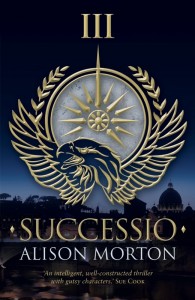
Alison Morton is the author of Roma Nova thrillers, INCEPTIO, and PERFIDITAS. Third in series, SUCCESSIO, is now out.
Find out about Roma Nova news, writing tips and info by signing up for my free monthly email newsletter.
If you enjoyed this post, do share it with your friends!
Like this:
Like Loading...


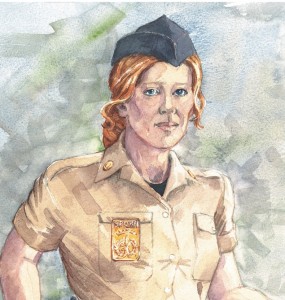 Carina, the heroine of the first three Roma Nova books, has an honorary title of ‘Countess Carina’ as her grandmother’s heir. As the head of the family/tribe, Aurelia is called ‘Countess Mitela’. Now why do the descendants of Romans have these titles? And how does the relationship work between the imperatrix, the ruler of Roma Nova and the leading families?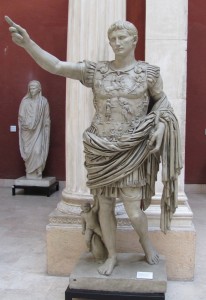
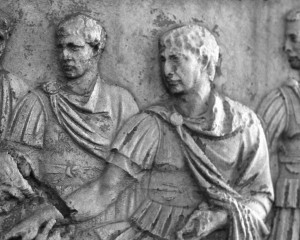
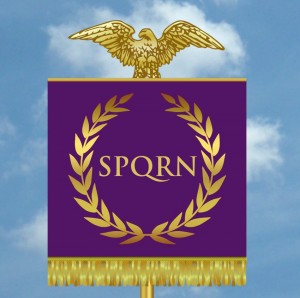 The head of each of the Twelve Families gives an honorific title and a measure of power and responsibility to their heir, so that in the event of sudden demise, the transfer of power and responsibility to the new head of family is, in theory, smooth. Since the earliest times, the leader of each of the Twelve Families is personally accountable for their family members’ behaviour and is also expected to respond positively if the imperatrix asks them to carry out a task or mission.