Confession time: Descent from antiquity is a non-starter

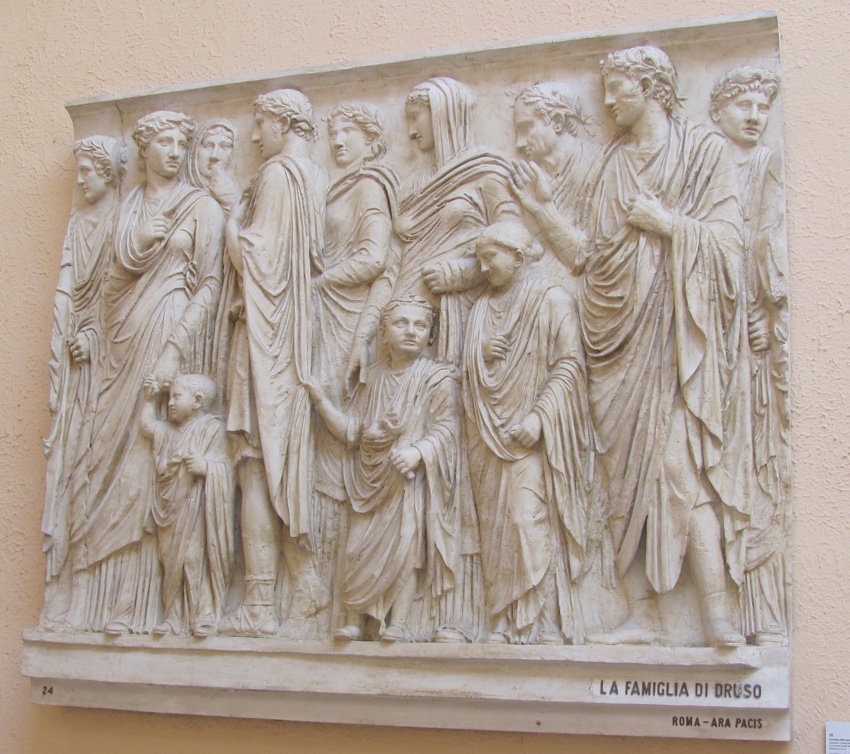
Wall frieze of the family of Drusus, National Museum of Civilisation, Rome (Author photo)

The family of Drusus, National Museum of Civilisation, Rome (Author photo)

Some Roma Novans, particularly the founding Twelve Families, pride themselves on their descent from named Roman ancestors such as Mitelus, Julia Bacausa, Apulius. As a small colony determined to survive in an unstable world, the children of those founders made a decision in the fifth century to keep records so that they did not intermarry to extinction.

Although Plutarch and Livy indicated the proscription of cousin marriage in the early Republic, it was legal in ancient Rome from the Second Punic War (218–201 BC) until banned by the Christian emperor Theodosius I in 381 in the West, and until after the death of Justinian (565) in the East, but the proportion of such marriages is not clear.

Roman civil law prohibited marriages within four degrees of consanguinity and whatever we know about emperors marrying their niece (Claudius) or sleeping with their sisters (Caligula), closer unions than between cousins were considered nefas (against the laws of gods and man) in ancient Rome.

Roma Novans changed inheritance to go through the female line (You can tell who a child’s mother is; you can’t necessarily guarantee its paternity.) and encouraged relationships with outsiders in order to produce the next generation thus ‘refreshing the gene pool’. Of course, they didn’t call it that then, but they’d raised enough agricultural stock to know about possible adverse consequences of inbreeding. It’s a nice piece of background to the stories that the modern Roma Novans could draw on ancient family records, so charting descent through the centuries is plausible in that timeline, even if it is a fictional one. 😉

Back to reality…

What is Descent from Antiquity (DFA) and its controversies?
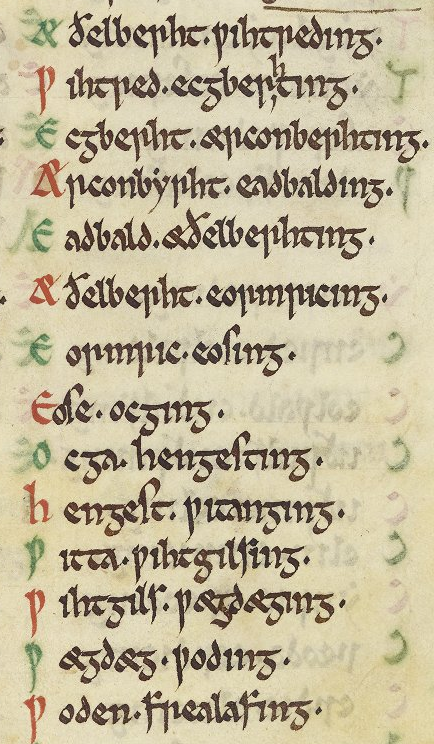
The ancestry of King Æthelberht II of Kent in the Textus Roffensis

The ancestry of King Æthelberht II of Kent in the Textus Roffensis (Public domain)

In European genealogy, a ‘descent from antiquity’ is a proven unbroken line of descent between specific individuals from ancient history and people living today.

It’s a gloriously romantic idea. Who wouldn’t want to claim Julius Caesar, Cornelia Africana, Livia Augusta, Trajan or Marcus Aurelius (insert a Roman of your choice here) as their ancestor? You may even by a quirk of fate have a drop of their blood in your veins, but you wouldn’t know it.

Most genealogical records in Europe only date back as far as the 1500s, unless you have noble, royal or aristocratic lineage, then you can probably reach back to the 11th  or 12th century. The Anglo-Saxons, uniquely among the early Germanic peoples, preserved royal genealogies; a number of them date from the 8th to 10th centuries.

Before then, we have a great big yawning gap and a lot of myths, legends and speculation.

Individuals may indeed have a family legend that traces their lineage back to Roman times, but there are no currently available historical records to verify or dispute these.


Roman bureaucracy and record-keeping was famous and comprehensive, wasn’t it?

Yes, they were, especially when it came to recording consuls, censuses, tax, trade, property ownership and transfers, but the vast majority of those records have been lost. Such records, kept in archives, tended to be pillaged and/or destroyed – especially once Roman-governed territory was conquered by ‘barbarians’.
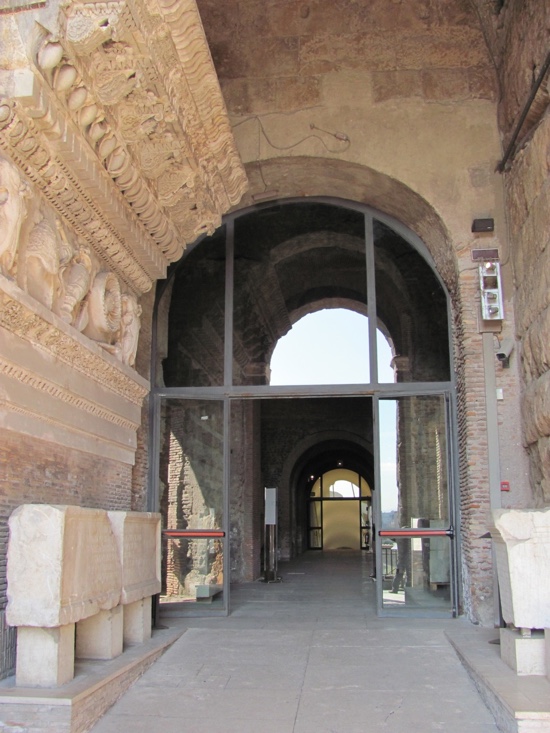
Tabularium Rome

Inside the Tabularium, Capitoline, Rome – the official records office of ancient Rome (Author photo)

Despite this widespread loss, a few records survived. Most have been transcribed and are kept in special archives, libraries, or universities. However, of the surviving records, few contain known or relevant genealogical information. In other words, available Roman records don’t contain that much information that would help you add an ancestor to your family tree.

Mix in the Roman practice of adoption of heirs and duplication of names in families and any remaining puddles of information become even more muddy.

The widespread disappearance during the sacking or looting of Roman cities especially towards the final collapse of empire is depressing. Ancient conquering peoples such as the Franks, Goths, Alemanni were usually too busy with their fighting and looting to worry about saving important genealogically helpful documents.
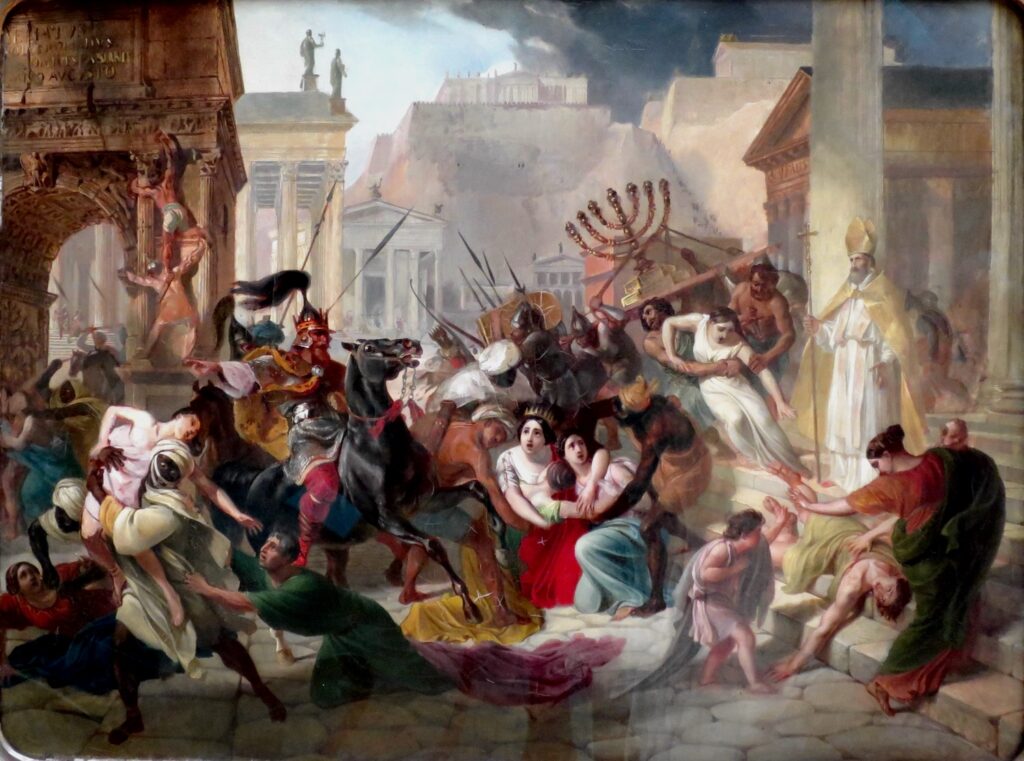
Painting of Genseric sacking Rome 455 by Karl Bryullov (1799–1852) (Public domain)

Genseric sacking Rome 455 by Karl Bryullov (1799–1852) (Public domain)

Naming conventions changed over the centuries: the decline of the classic trinomina of the Romans, the ongoing use of Celtic tribal affiliation names, the single names with ‘son of’ or locality names of later groups broke many possible lines of family continuity.

As literacy fell, written records became scarcer and legends grew…

Nevertheless, some of those legends persist. The surname Neri was first found in the Tuscan hills in the city of Lucca in 1200, when the aristocratic Neri family were believed to be descendants of Roman Emperor Nero. Who knows?

In truth, Western Europeans are a mongrel lot and descendants from a mixture of ancient peoples: Celtic, Roman, Saxon, Franks, Normans, Goths of various sorts, Angles, Danes, let alone from incomers during the historical and modern periods. While modern DNA tests may indicate which groups our ancestors came from, our trail back to antiquity is lost.

Roma Nova is fiction, but I was not immune from the idea of being able to reach back through the centuries when I wrote the stories so I drew on the Roman instinct for recording everything. Somehow, the information survived. Retaining the essential nature and values of their society is crucial to the Roma Novans’ sense of who they are. And although we can’t know exactly who our distant ancestors were, the whole idea probably appeals strongly to us as well.


Alison Morton is the author of Roma Nova thrillers –  INCEPTIO, CARINA (novella), PERFIDITAS, SUCCESSIO,  AURELIA, NEXUS (novella), INSURRECTIO  and RETALIO,  and ROMA NOVA EXTRA, a collection of short stories.  Audiobooks are available for four of the series. Double Identity, a contemporary conspiracy, starts a new series of thrillers. JULIA PRIMA,  Roma Nova story set in the late 4th century, starts the Foundation stories. The sequel, EXSILIUM, is now out.

Download ‘Welcome to Alison Morton’s Thriller Worlds’, a FREE eBook, as a thank you gift when you sign up to Alison’s monthly email update. You’ll also be among the first to know about news and book progress before everybody else, and take part in giveaways.
Location, location, location

Readers who are kind enough to write reviews for my stories have often mentioned the settings. You can see (speculative) views of Roma Nova here.

But Double Identity is set in the ‘real’ world. I’ve changed the names of some buildings, but kept their characteristics.

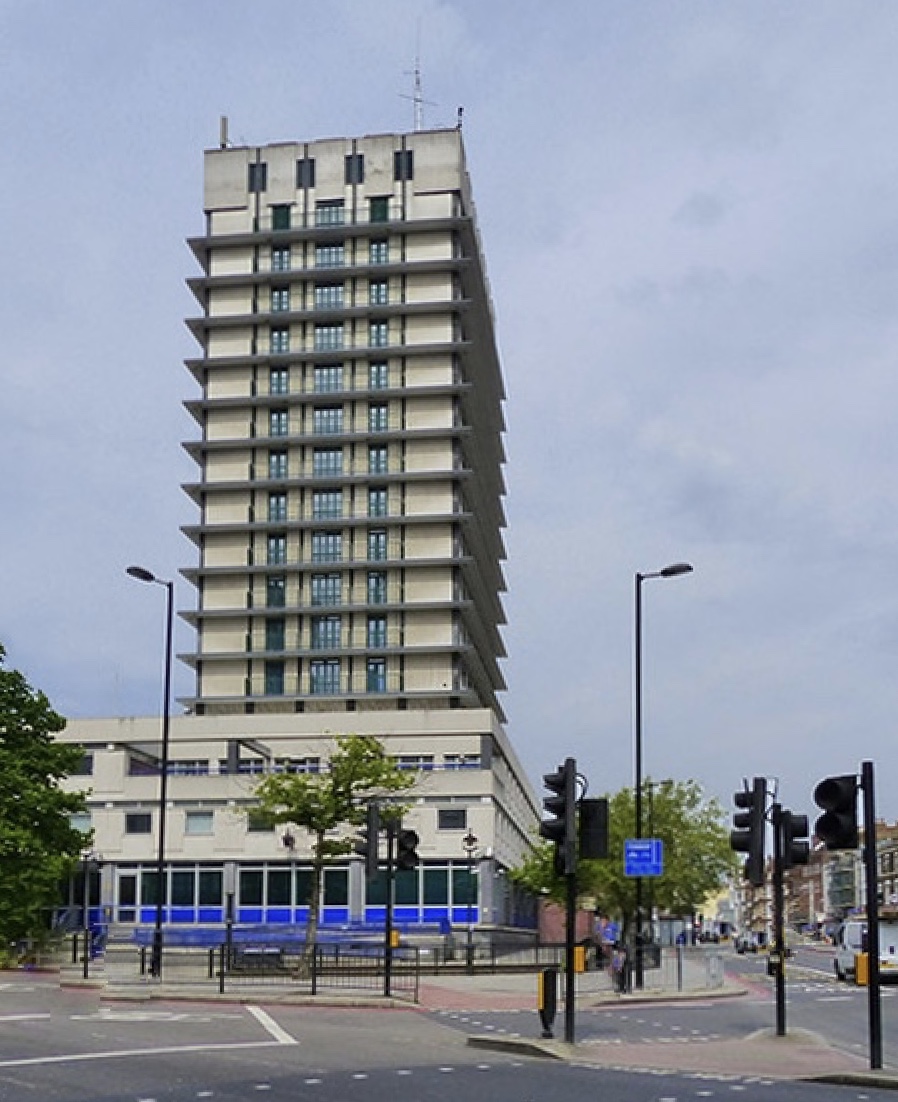
‘Friars Green’ Police Station

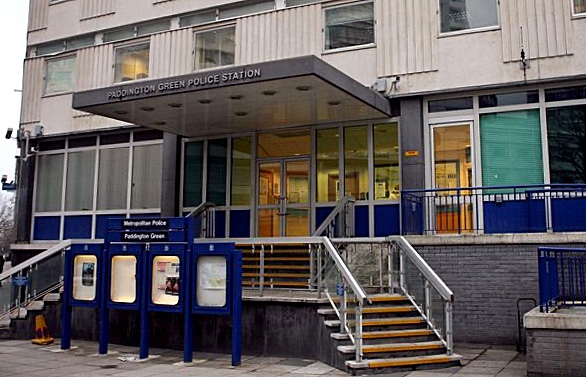
Former Paddington Green Police Station – ‘Friars Green’

Modelled on the former Paddington Green Police Station, closed in 2018,  which was used primarily for processing terrorist suspects. This is where Jeff McCracken works at the beginning of the book and where Mel is taken to for examination and questioning.

The embassy car pulled up in front of the concrete police station. With its brutal architecture, not softened by square fascia panels, it squatted like a nuclear bunker at the corner of the clearway. Mel shivered.

She later returns in an entirely different context.

She tucked her scarf more tightly into her neck and dived across the road. She trotted up the steps of Friars Green Police Station, eager to be out of the weather, but at the street door, bundled up and sheltering under the canopy, stood an armed policeman, something that hadn’t been there when she’d left.

Entrance to ‘Friars Green’


After he checked her ID, he grunted and took a step back so she could swipe her EIRS card to open the door. Inside, Mel had expected to see people rushing about, but it was deserted except for the desk sergeant who looked up with mild interest when she showed her ID again.

‘Where are they all?’

‘Out or resting. Bit busy last night.’ He buzzed her through the door at the side. ‘You know your way,’ he added.

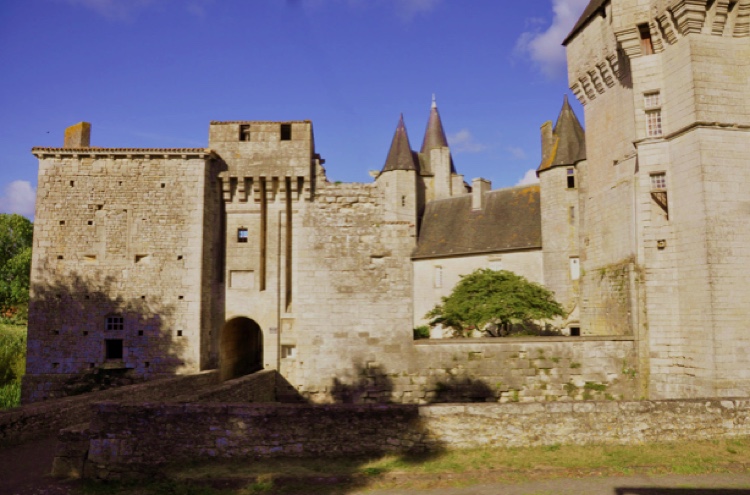
Mel’s home – Château des Pittones

Not a grand Loire Valley type château, more of a fortified early medieval manoir with attached farm and woods that’s been added to and refurbished over the years.

We get glimpses of it…

Although the trees had shed the last of their leaves, they were so tall they cast giant shadows in the last of the evening light. Mel had known these old woods since she could walk. She wove in between the trunks, running steadily, breathing regularly. Now only a kilometre out, she upped her speed at each step. Some seconds later, she was only five hundred metres to the house.

She went to the kitchen, grabbed the yellow-fobbed key off the row of key hooks and jogged down the drive to the tall gates.

Through the gate bars, she’d watch the almost silent electric La Poste van glide up the narrow, metalled road.

and

He was looking round the ornate drawing room decked out with Christmas greenery. The tree blazed with lights and reflecting coloured baubles. The tip almost touched the ceiling with its Fragonard panels.

The EIRS office in Brussels

Photo: J Logan Creative Commons licence

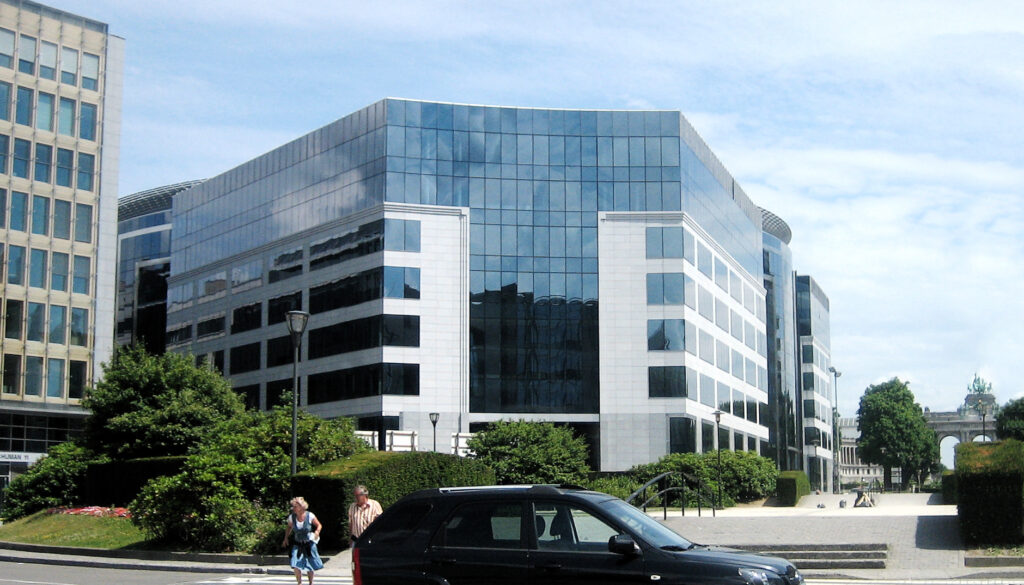
I’ve unashamedly pinched the Triangle Building where a number of EU institutions are based, including their External Action Service.

It’s a fascinating building and has a large circular garden in the middle! There really is a garage entrance in the Avenue de Courtenbergh (the road to the left of the building in the photo).

The internal layout and underground walkway under the Rond-point Robert Schuman exist only in my imagination…  (As far as I know!)

Leroy said nothing as they navigated the short distance to a large building – the EU Triangle Building where the EIRS was based. Mel recognised it from Google Earth.

Leroy navigated the roundabout heaving with morning rush-hour cars, then drove along the side towards a service entrance. At a barrier five metres in, the security guards seemed to know Leroy, but they still scrutinised his credentials. Mel handed over her normal French ID card which the guard scanned in, waited, then nodded and handed it back.

Upstairs, they emerged into a small reception area, staffed by an efficient-looking woman and a security guard who frowned. The tradesmen’s entrance, Mel thought, but the security was tight, as it should be with all the sensitive services here.

Strasbourg barracks

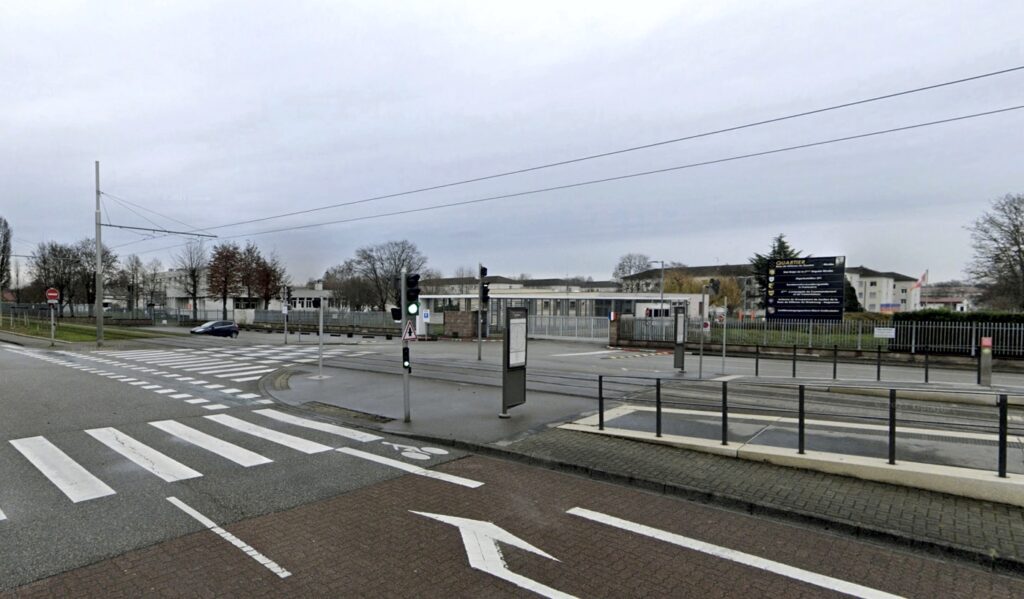
Front gate area of barracks

At various stages in Double Identity, Mel goes back to her old unit in Strasbourg. Now, in real life there is a large barracks and a military airfield in two different outer parts of the city.

I haven’t been able to look inside for obvious reasons, but I served six years in uniform and have seen the inside of a fair few military establishments.

Colonel Vasseur assigned her a desk in a side room next to his assistant so she could tackle the mound of paperwork and local reports. 

Caporal-chef Barceaux looked in halfway through the morning and asked her for a countersignature on his report for the gendarmerie. He looked round at the tiny room with its plain walls, old-fashioned heater gurgling away, then shut the door before settling himself in the chair on the other side of her desk.

‘So, have you missed us?’

‘Dieu, non. It was a relief to get away.’

He laughed and she grinned back at him.

and

‘Sorry to interrupt you, Sergent-chef, but the guardhouse has rung through. There’s an English policeman who’s arrived wishing to see you. He’s from your department in London, he says. They’ve taken him to the reception point downstairs and ask you to attend.’

Through the glazed door leading to the cream-painted hall, she watched McCracken for a couple of seconds. The only inhabitant apart from the soldier standing at his side, he was sitting on a padded bench next to the glazed service counter and glancing at paintings of former generals and famous battle scenes hung around the walls.

Apart from keeping me firmly grounded in reality when putting my characters through hell, being able to visualise the locations when writing helps me convey the sense of place to readers where they can share Mel and Jeff’s story as it unfolds. I hope you’ve enjoyed this quick tour round Mel’s world.


Alison Morton is the author of Roma Nova thrillers –  INCEPTIO, CARINA (novella), PERFIDITAS, SUCCESSIO,  AURELIA, NEXUS (novella), INSURRECTIO  and RETALIO,  and ROMA NOVA EXTRA, a collection of short stories.  Audiobooks are available for four of the series. Double Identity, a contemporary conspiracy, starts a new series of thrillers.

Download ‘Welcome to Alison Morton’s Thriller Worlds’, a FREE eBook, as a thank you gift when you sign up to Alison’s monthly email newsletter. You’ll also be among the first to know about news and book progress before everybody else, and take part in giveaways.