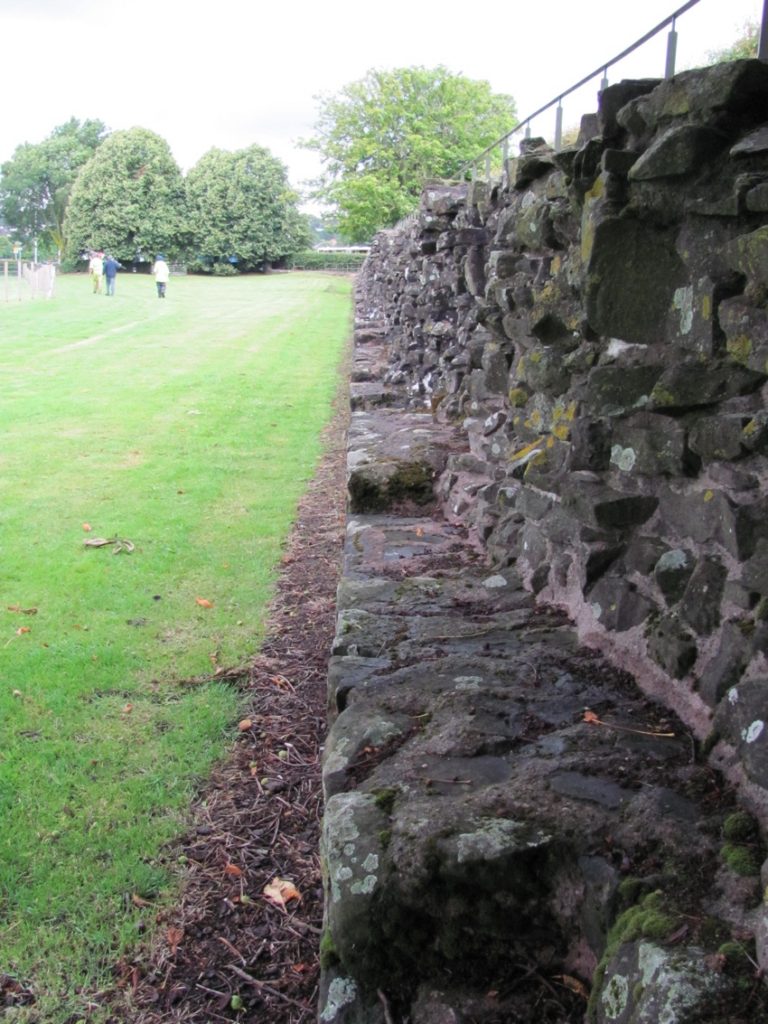
Carleon (Isca) Roman fortress wall
Last weekend, I was in Caerleon, South Wales attending the Romantic Novelists’ Association conference. It’s a joyous event, where you re-affirm old friendships and form new ones, where you’re are reminded of old things you’ve forgotten and learn new ones. Talks on characters, publishing contracts, marketing; presentations by those who have made it and those who hope to; meetings with publishers, agents and industry gurus. And the wine…
For a flavour of the event, have a look at these. Warning! May contain shoes and smiles.
RNA blog – Day 1 pictures RNA blog – Gala dinner (and shoes) A first timer’s view
I’m not going to repeat their words – they’ve said it all. But I’m going to tell you about something else I did that weekend before the conference got started.
I went off on a Roman holiday. Caerleon or Isca Augusta was one of the three permanent Roman military HQs in Britain. Isca became the headquarters of the II Legion Augusta in about AD 75, when Governor Sextus Julius Frontinus began the conquest of Roman Wales. Recent finds suggest Roman occupation of some kind as late as AD 380. More info here.
Being me, I took a load of photos. The most impressive remains are of the amphitheatre, the only fully excavated one in Britain. (Click to play my video in the rain.)

Nearby are part of the fortress wall and the Prysg Field Barracks (right) the only Roman legionary barracks visible in Europe.
After arriving here in AD 75 from the other Isca (Isca Dumnoniorum, or Exeter as we now know it) the 5,000 strong Legio II Augusta stayed for 200 years.
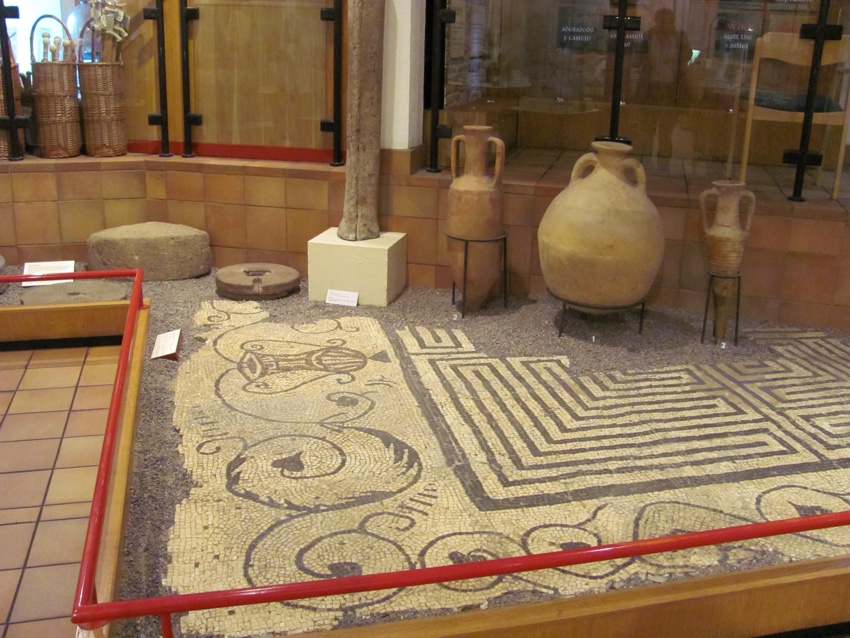
The National Roman Legion Museum contains a wealth of finds, including carved gemstones lost down the drains! Of course, there are amphorae on display and a nice piece of mosaic, as well as coins, funerary stones, domestic and military detritus. A reconstructed barrack room gives you an idea how small the soldiers’ quarters were. If you are visiting, they have a schedule of events not to miss.

Roman garden
Behind the museum is a Roman-inspired garden which gave me a few ideas for my own.
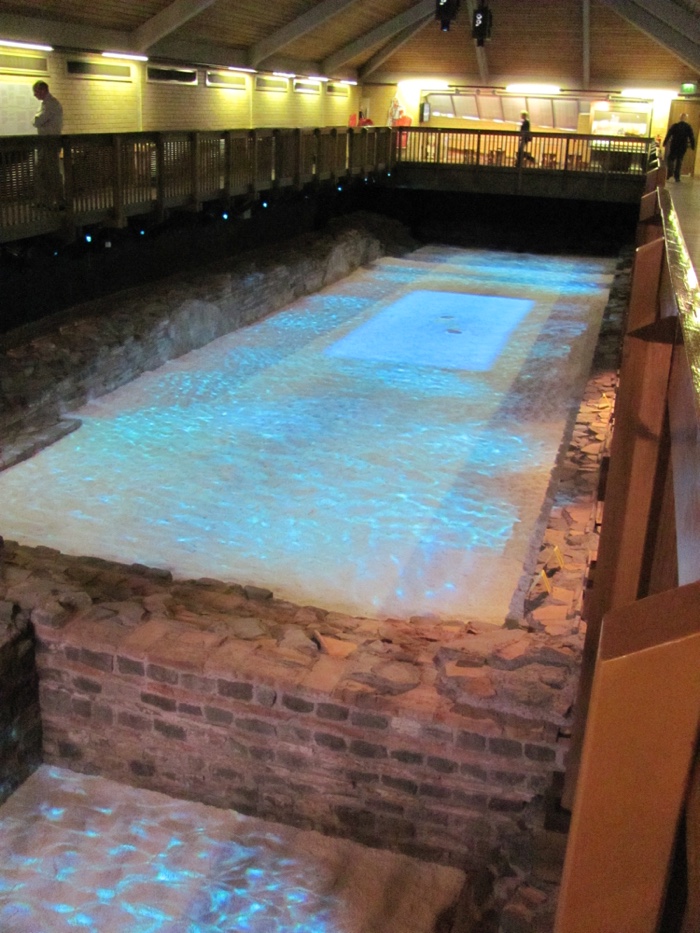
And if you fancied a swim, then the fabulous display at the Roman baths museum could entice you in. (It’s only a hologram, so I wouldn’t dive in, but very effective at giving you an idea.)
And there is more to come. Last year archaeologists found traces of a huge building which may turn out to be the size of Fishbourne Roman Palace in Sussex.
Update: Walking by the fortress wall in the fine rain, but still loving and absorbing everything, I bumped into a fellow walker. We chatted and he obviously caught on that I was a ‘Roman nut’. He told me he was a member of the University of Cardiff faculty involved in digging the site. Poor man! He was bombarded with questions.
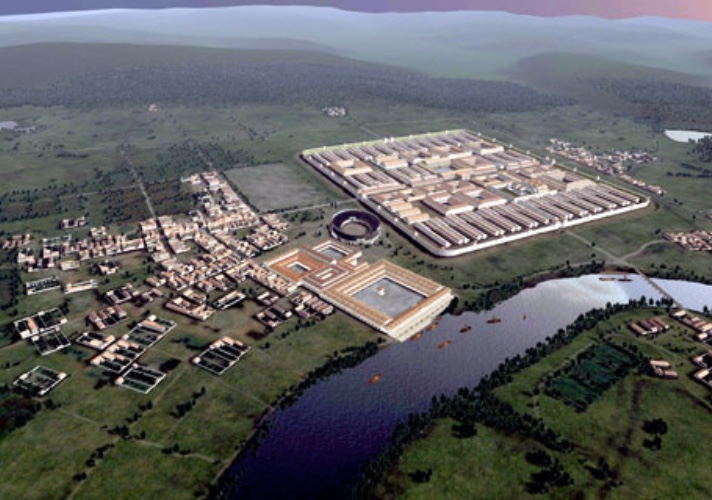
Photo courtesy of the South Wales Argus
But as he was speaking to another enthusiast, he said they were developing excavations as there had been indications there was much more to find. There always is, of course, but his was a humdinger. He revealed that remains of a Roman harbour had been found in a meadow by the river. All very hush-hush, so please not to speak about it. I almost jumped up and down, but did manage to keep my dignity.
Look through the gallery of pictures for more images of what Roman Caerleon might have looked like.
Alison Morton is the author of Roma Nova thrillers INCEPTIO, PERFIDITAS, SUCCESSIO, AURELIA and INSURRECTIO. The sixth, RETALIO, came out in April 2017. Audiobooks now available for the first four of the series
Get INCEPTIO, the series starter, for FREE when you sign up to Alison’s free monthly email newsletter. You’ll also be first to know about Roma Nova news and book progress before everybody else, and take part in giveaways.