If it doesn’t display properly (sigh) click here: https://youtu.be/DpBVLxTGrQ0
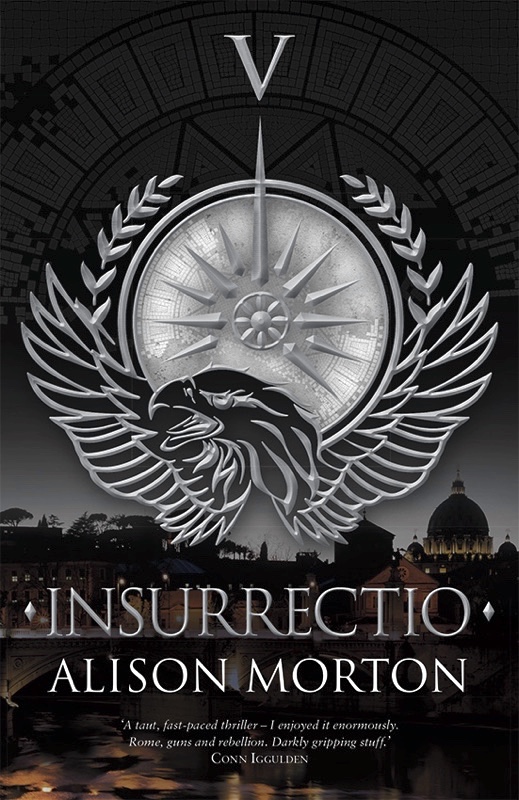
Last week, I released the book trailer for my new novel INSURRECTIO due out on 12 April. Hooray! But are they worth the effort of making them or the cost of commissioning them? And do readers watch them?
A trailer is basically a short video introducing a book. They can be a scene from the book, a clip of the author speaking about their novel, or a slide show relevant images and text. As we live in the digital age, and it can be shared all over the world, a trailer might be the ideal marketing tool.
I’ve listed a few tips below, but first, let’s look at pros and cons…
Pros
1. Book trailers can make a lasting impression
With music, text, images and sometimes little movie clips, a trailer offers a greater sensory experience than a print advert or static online announcement. Trailers are relatively new and not every book has one, so a book with a trailer has the chance to make a stronger impression on a potential reader.
2. Easy to consume and easy to share
I love going in a bookshop, but more people look online for their reading matter. In an age of information overload, it’s easy to sit back and watch a one-minute clip, especially if it’s one you stumble upon in your Facebook newsfeed or YouTube suggestions.
Viewers see video as entertainment, so while a book trailer might be quite labour intensive it is one of the most shareable, with potential to go viral.
3. Book trailers are eternal
While the financial investment in a book trailer might not pay off right away, it may over time. One of the greatest strengths of a book trailer is that unlike other book marketing efforts, such as adverts or launch parties which have a have temporary reach, a trailer will live on as long as it remains online. Over time, it continues introducing new readers to an author’s work.
Cons
1. Book trailers are expected to be of a high standard
Anyone who comes across a book trailer will expect a high-quality cinematic experience; it may be unfair, but book trailers are compared to movie trailers which have high-quality editing, emotion-grabbing audio and exciting visual effects.
A poorly made book trailer sticks out and can damage the image of the book and the author and thus hurt sales. Worse they can make people laugh in derision and go viral for all the wrong reasons.
2. Book trailers are not universally accepted as a marketing tool
Some authors, publishers and readers are wary of the emergence of book trailers, because they intrude on the reading experience. They can take away the magic of discovery. I’m not so sure about this objection as a detailed blurb on the back of the book or spoilers on Amazon can do this equally well/badly.
3. A good book trailer involves a significant investment of time, money and skill
A 45-second book trailer may look easy to produce, but video is an entirely different medium to print. Depending upon the sophistication of the trailer, it can involve storyboard, script, music, purchased images, film clips plus editing skill and a deep bucketful of patience!
4. It’s hard to determine return on investment
It’s said that 50% of marketing works but nobody know which 50%. Opinions differ about the number of views of any one trailer and conversions into sales. It may well not be the persuading factor leading to a sale, but I think it provides some fun plus builds awareness about an author’s books. If the video is placed on an author’s website home page, potential readers will have the chance to find out more about the book in an entertaining way.
My conclusion?
If you’re prepared to make the effort, it’s a good visual way to make people aware of your book. If commissioning a trailer from somebody else, you’ll have to think hard about whether and how much to spend some of your marketing budget on it. It’s one more tool in the famous marketing toolbox. As a reader, I like watching them to get a flavour of the book, but a boring or too long one will put me off.
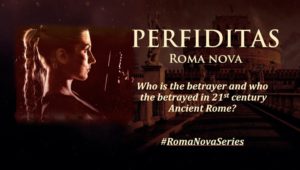
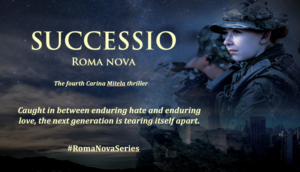
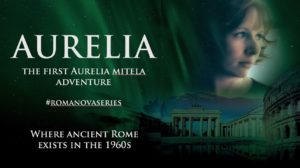
I make my own book trailers – I’m clearly a geek – and so far nobody has said anything rude. I’ve even had some compliments and requests to make them for other people. Don’t ask!
 |
 |
 |
 |
Some tips…
If you’re a Windows user, you can download Photo Story or Movie Maker from Microsoft. Mac computers come pre-loaded with iMovie software. If you have PowerPoint, you can add soundtracks, slide animations and slide transitions to presentations, and then export to video. All of these options produce a video file that must be hosted somewhere usually YouTube or Vimeo.
A possible ‘quick-and-easy’ solution is using Animoto ; the ‘lite’ version is free and enables you to create 30-second animated trailers. They are a tad formulaic, though.
So how do you start?
1. Write a script, known as a storyboard
You can start with the cover blurb, but cut and edit it severely. People digest text very differently when watching video so keep the subtitles short and snappy. Make sure the text and images carry the same message.
2. Select images very carefully
If you haven’t any suitable photos you can adapt or manipulate, buy in from a photo library. don’t be tempted to pinch them from Google or you’ll find it could be extremely expensive when you are sent an invoice by the image copyright owner.
3. Work with a graphics package (Photoshop, Pixelmator, PaintShopPro) to crop, colorise, sharpen, blur, etc. your images until they are just right for your storyboard. ‘Will do’ won’t do.
4. Start strong
You want to grab people’s attention from the beginning so you need to start with something engaging. Put the protagonist in a tricky situation in the first or second image.
5. Keep it steady
If inserting movie clips you’ve made yourself, use a tripod when shooting or improvise. Very few of use can keep our hands that steady.
6. Simple ideas are the best – KISS mode
As long ago as the 1960s, the US Navy used “Keep it simple, stupid” as a design principle. Using too many different elements can make a book trailer confusing and hard to watch, so keep it to the strongest themes of the book should .
7. Don’t just summarise the plot
A trailer should have enticing hints but never reveal the ending of the book otherwise viewers won’t want to go and read the book. But there must be enough emotional pull to arouse curiosity, to make the viewer care what happens to the protagonist.
8. Choose music carefully
If you use somebody else’s songs/music in your trailer, you must have their written permission as it’s their copyright. You can visit iStockphoto or similar to purchase music clips or if you’re musically inclined (or have friends who are) compose your own soundtrack.
9. Keep it short!
If you have made an intense, fast-paced, immensely attractive trailer, viewers will love it, but can’t take more that two minutes max., preferably one minute, of finished trailer. Mine come in at 1:20 mins.
10. Make a thumbnail title image
After uploading to e.g. YouTube you can upload a front title and image of your own choosing. You then control how it will be seen all over social media plus it will look far more professional.
Alison Morton is the author of Roma Nova thrillers – INCEPTIO, PERFIDITAS, SUCCESSIO, AURELIA, INSURRECTIO and RETALIO. CARINA, a novella, and ROMA NOVA EXTRA, a collection of short stories, are now available. Audiobooks are available for four of the series. NEXUS, an Aurelia Mitela novella, is now out.
Download ‘Welcome to Roma Nova’, a FREE eBook, as a thank you gift when you sign up to Alison’s monthly email newsletter. You’ll also be first to know about Roma Nova news and book progress before everybody else, and take part in giveaways.