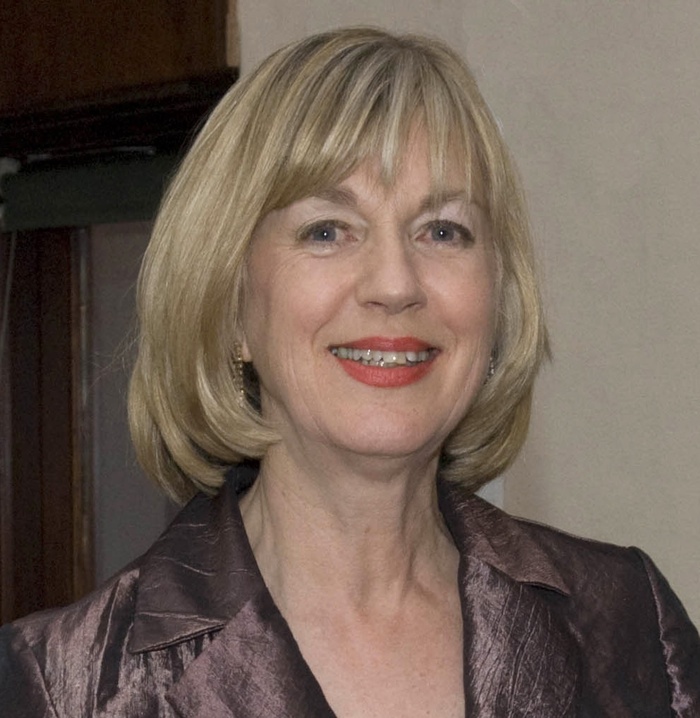
 Today’s guest, Denise Barnes, tells us not only about writing and her current novel, but how her year in Germany prompted her to write her hilarious book, from Bad to Wurst.
How did you get started with writing? I’ve written since primary school; I wrote a chapter of a serial once a week and put it on the notice board. I loved it when other kids would ask me when the next chapter would be ready. It was very Enid Blyton stuff. One of my heroines, Fennella, was always getting into trouble. My heroines still are!
What is the hardest part of the writing process for you? Making sure I have an idea and a plot which is strong enough to carry a whole book. Then getting the sub-plots to be interesting enough but not to take over.
Do you enjoy research, and how do you set about it? I adore research. My first novel, The Voyagers, is mainly set in Australia, so for research only—you understand—I was forced to go and see it for myself. I found out a lot about my own grandparents who emigrated there in 1913 and who were the inspiration for the novel. My second novel, Kitty’s Story, is going to be partly set in Italy in the Second World War, and it won’t be any problem for me to pack my case and spend time in my favourite country.
How do you develop your characters? I’ve always been fascinated with people, especially the way they sometimes behave out of character, and discovering what motivates them. Luckily, owning my own chain of estate agents, I’ve seen people’s hopes and dreams as well as the worst in owners selling their houses. This gives me all sorts of character ideas! I try hard to develop my heroine and hero gradually so they change in some positive way to keep the reader empathic and ultimately satisfied.
To plot or not to plot? Are you a planner or do you just dive in? Being a visual person, I planned The Voyagers by making a detailed memory map. I had two timelines: one in 2005 and the other in 1913. But juggling the two periods was hard until my writing buddy, Alison (that’s me!), emailed me through her designer time-grid, and I was able to be much more accurate on dates and length of pregnancies, etc. I shall always use this brilliant tool. She should market it!
However, I didn’t expect the second heroine’s ending to turn out the way it did, nor did I have any idea that a wallpaper character would push her way forward, demanding a leading role. She sent the plot spinning in another direction!
Which authors have influenced or inspired you? Charles Dickens for characterisation and, of course, anything written by Jane Austen; I adore her wry wit. I read several books with two timelines as I needed to have an idea of how authors tackled them, particularly as The Voyagers was my first novel. I found Kate Morton, Kate Mosse, Susanna Kearsley and Deirdre Purcell very helpful and loved their books for entertainment value as well.
How do you relax? What interests do you have other than writing?
I love classical music, opera, theatre, reading, reading and more reading, travelling, anything to do with property improvements, singing, performing in the local operatic and dramatic society, anything to do with the ancient Greeks and Romans, art and spending time with family and friends. Shopping is pretty minor but I do have a spree once in awhile.
Are you into social networking, and in what way do you feel it helps your career? I have a website which concentrates on from Bad to Wurst at present. But Alison (Me again!) persuaded me to get on to Twitter. At first I was reluctant as some of the tweets I read seemed very trite, but when I got to know people it was fun as well as helpful. I entered a novel-writing competition which was advertised through Twitter; I wouldn’t have seen it otherwise. However, I’m conscious that when you write words down and press that Tweet button, if the recipient doesn’t know you that well, particularly your humour, it can be taken the wrong way. But it is lovely to chat to other writers, as being a writer can be a lonely old life.
 What’s your current book? In 2008 I self-published a memoir, from Bad to Wurst, about my experiences in 1973 as a veggie cook in a sanatorium in Bavaria. I always knew I would write a book about this unusual year, not thinking it would take nearly thirty years before I got down to it! It’s a light-hearted account of work and romance, including my personal observations of the social differences between the Germans and the English. Self-publishing is now more respectable, and Waterstone’s, Daunts Travel in London, and Amazon all stock it. It has just been published as an ebook so it will be interesting to note if sales increase.
Can you tell us something of your work in progress? The Voyagers is a family drama about Juliet, a modern businesswoman who goes to Australia, ostensibly to follow her grandparents’ trail, but in truth she has a secret mission. In every second chapter it drops back to 1913 when Juliet’s grandparents emigrated to Australia as newly-weds. There are strong links between the two stories and plenty of shocks along the way. I’ve finished editing it and it’s off out on submission after Christmas.
My current WIP, Kitty’s Story, could be loosely described as a sequel, but the two will very much stand alone. I am only just a few chapters into this one and haven’t fully formed my characters yet, or the whole story. I just hope it comes to me as I press along!
And finally, what advice would you give a writer just starting out? Make sure you are absolutely certain of your spelling, grammar and layout. If this isn’t right your MS will have a greater chance of being dumped before the first paragraph’s read. As well as investing in some excellent self-help books and adult education courses in English, I strongly suggest finding a creative writing course and/or writing group nearby to give you feedback and support you in your writing.
You should read profusely in the genre you are writing, but also try books out of your comfort zone which show you what you can and can’t do. And lastly, write what you are absolutely passionate about. You’ve got to stay in love with your book and your characters for a long time! Good luck!
Thank you very much, Alison, for inviting me as a guest on your blog. It’s been fun for me and I hope I have given some hints which might be useful to new writers so they have the very best chance for publication.
Great to have you here, Denise. If you want a chuckle to relieve the midwinter gloom, order Denise’s book now: paperback via the link in left-hand box below or download the new Kindle version by clicking on the right-hand box.
I thought it was so funny, I even bothered to write an Amazon review.
If you enjoyed this post, do share it with your friends!