(Don’t miss the update at the end!) (Don’t miss the update at the end!)
The what?
In the large sea of self/independently published work, there is a lot of flotsam and jetsam and not all of it is worth picking up. How to tell? Well, indieBRAG, a privately held organization has brought together a large group of readers, both individuals and members of book clubs, located throughout the United States, Canada, and the European Union to address this.
Their mission is to recognise quality on the part of authors who self-publish both print and digital books, principally fiction. Staying with the nautical image, they provide a rudder, possibly now becoming a compass.
So how do they do it?
First, they select titles from the large and rapidly growing pool of indie books available, then members drawn from their reader group evaluate and judge the merits of each book based on their list of criteria. The single most important criterion they ask their readers to use in judging a book is whether or not they would recommend it to their best friend. Once a book meets this standard of quality, they award it the B.R.A.G. MedallionTM.
 They are known to be very picky so it’s a great honour to be on the list and it’s a recognised standard in the independent sector. They are known to be very picky so it’s a great honour to be on the list and it’s a recognised standard in the independent sector.
Now INCEPTIO continues on its voyage, happily on board a solid ship and will soon be wearing a new gold sticker…
UPDATE
A writing friend of mine, Jane Steen adds this:
“On Saturday (28 September 2013) I went to the IndieB.R.A.G. lunch in Chicago. No sales pitch, just a warm friendly welcome (with book-themed cupcakes finishing off a delicious lunch!) and a real interest in promoting author-published books.
I submitted my novel to them for the BRAG Medallion some time ago, and was recently approved so I was curious (and a little wary) of who these people are and how they choose books. Apparently, after the initial selection process (to screen out the obvious “no” candidates of the unedited first draft kind) each book is read by 5 readers, who vote yes or no. About 90% of the books submitted to them don’t make it through. They are beginning to gain some traction as a “gatekeeper” and have plans to work with bookstores etc. to make author-published books more widely available.
They are currently closed to unsolicited submissions because of the volume they receive every time anyone like me mentions them, but they will open up as soon as they get their TBR pile down. Just wanted to let you guys know they’re on the level and encourage you to go to the next event they arrange.”
Ninety per cent rejected. There you have it.
Alison Morton is the author of Roma Nova thrillers, INCEPTIO, and PERFIDITAS. Third in series, SUCCESSIO, is out early summer 2014.
If you enjoyed this post, do share it with your friends!Like this:Like Loading...
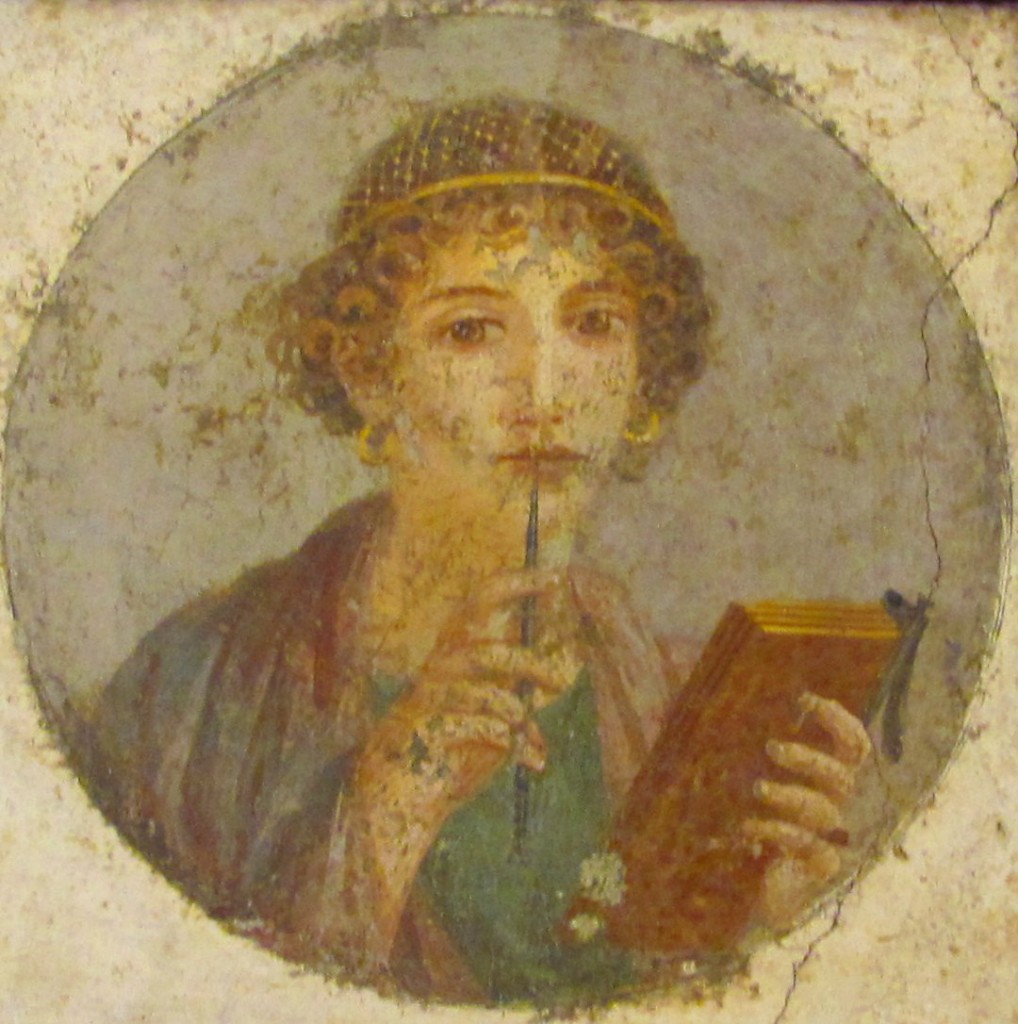
Money-making booksellers, exploited and impoverished authors, celebrity book launches and the danger of writing controversily. Sound familiar?
Although without the current technology of print-on-demand, digital publishing, even the lithographic or moveable type of not so long ago, the Roman world had a thriving publishing industry. Production was by teams of slaves (and some freedmen) who copied original manuscripts which were then sold in shops. Copyright didn’t exist, so publishers didn’t have to pay authors for their work.
The only way writers could make a good living out of their work was to be sponsored by a wealthy Roman, i.e. to become the ‘client’ of an influential ‘patron’. The writer could produce his own work, but he was under a strong obligation to write what the patron wanted. He would also be trotted out to give readings of his work to the patron’s friends at parties. However, it was an opportunity for the writer to launch his latest work in front of other potential patrons, to network and possibly find a new, better sponsor.
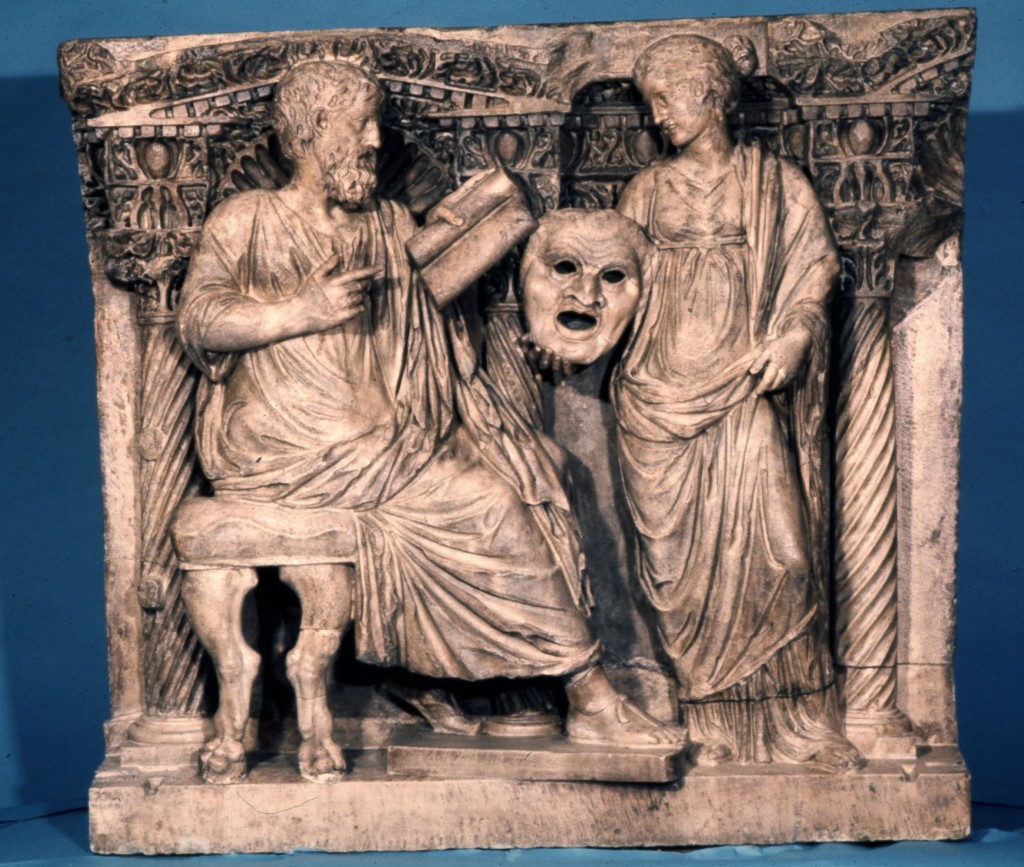 Seated man reads from a scroll to Thalia, the Muse of comedy AD 180-200 © Trustees of the British Museum However, woe betide (thrice woe!) if the author wrote something that displeased his patron. Apart from losing his livelihood an author could face more serious penalties. Books were seen as dangerous because they spread ideas; political control of the media was exercised firmly. The punishment for writing something libellous was death.
As the writer Juvenal pointed out, the best thing to do was to wait until someone died before you criticised them. Historians were considered to be particularly dangerous. Emperor Domitian disapproved of books written by the historian Hermogenes of Tarsus and had him executed. As well as ordering the destruction of all the books written by Hermogenes, Domitian also had all the slaves killed who had done the copying.
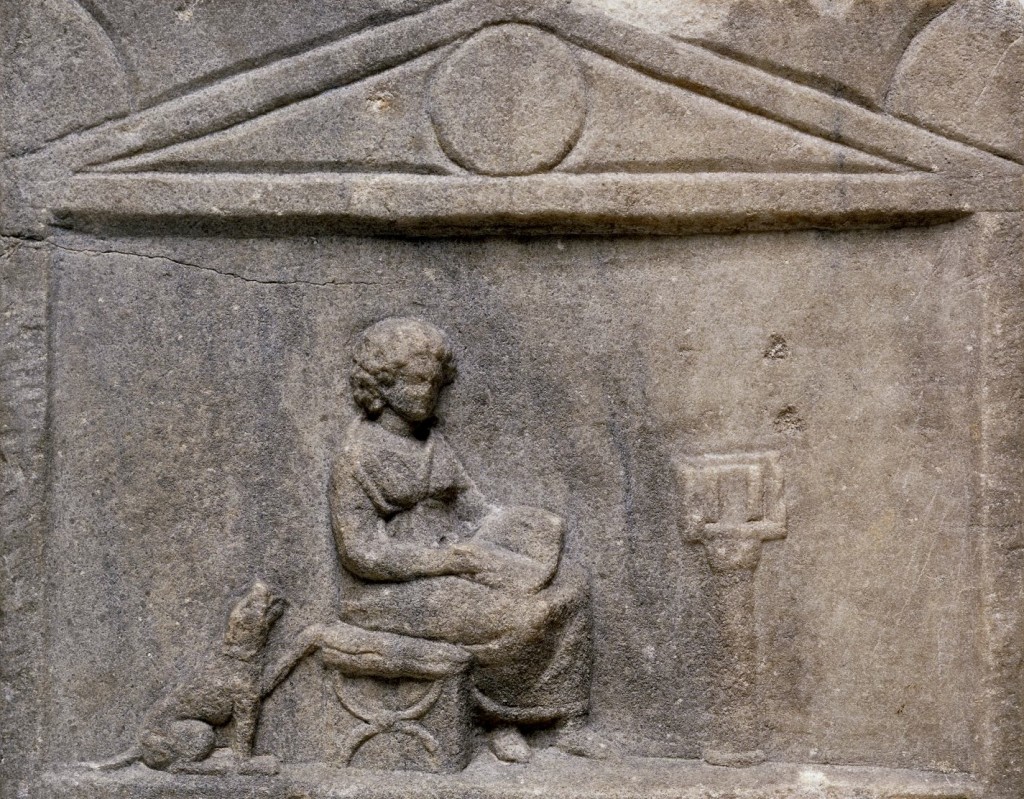 Gravestone of Avita, who is reading from a scroll; second scroll on a reading-stand. © Trustees of the British Museum The first books published in Rome took the form of a long roll of papyrus consisting of about twenty sheets glued together. These volumenes were both difficult to read and easy to damage, especially if produced on cheaper, poorly produced papyrus. If handled clumsily, the scrolls would crack or disintegrate, if exposed to the damp the papyrus rotted, and the ink made from soot, resin and the black liquid from cuttlefish, would begin to fade. Insects liked eating papyrus so books had to be stored in boxes.
In about AD 365 Romans began to make books of parchment. The sheets were folded and sewn together and looked much more like modern books. However, parchment was expensive and as with the papyrus scrolls, few people could afford them.
 Photo courtesy of Benh LIEU SONG under Creative Commons Most major cities in the Roman Empire had public libraries such as this remarkable one in Ephesus built in honour of the Roman senator, Tiberius Julius Celsus Polemaeanus by Celsus’ son, Gaius Julius Aquila. Celsus had been consul in 92 AD, governor of Asia in 115 AD. Influential private citizens, including G. Julius Caesar, established them as status symbols. By AD 377 Rome had twenty-eight large libraries where citizens could go and read books free of charge. However, to maintain tight control over what people read, government officials called prefects selected the books that appeared on the shelves.
There must have been a fascinating black market trade in books and not just pornography…
For further reading(!), I thoroughly recommend Mary Beard’s article “Scrolling Down the Ages” 16 April 2009 New York Times and Lindsey Davis’ Ode to a Banker where her irrepressible detective Falco fancies himself as a poet, but comes up against things far more sinister than a poetry reading evening…
Alison Morton is the author of Roma Nova thrillers – INCEPTIO, CARINA (novella), PERFIDITAS, SUCCESSIO, AURELIA, NEXUS (novella), INSURRECTIO and RETALIO, and ROMA NOVA EXTRA, a collection of short stories. Audiobooks are available for four of the series. Double Identity, a contemporary conspiracy, starts a new series of thrillers. Double Pursuit, the sequel, is now out!
Download ‘Welcome to Alison Morton’s Thriller Worlds’, a FREE eBook, as a thank you gift when you sign up to Alison’s monthly email update. You’ll also be among the first to know about news and book progress before everybody else, and take part in giveaways.
If you enjoyed this post, do share it with your friends!Like this:Like Loading...
  Recently, I’ve heard mixed things about Goodreads and Amazon, so I thought I’d explore a little more. Recently, I’ve heard mixed things about Goodreads and Amazon, so I thought I’d explore a little more.
My initial and anecdotal impression has been that Goodreads encouraged fairly considered and balanced observations, while Amazon often offered either blatant adoration of a book or a flippant rejection. Goodreads reviewers were tied to a social profile where people discussed books in a wide variety of group, listed them, commented about reviews and interacted on a more personal basis. And importantly, until Amazon bought them, Goodreads was not directly tied to any retailer. Thus, it would seem Goodreads was more valuable to readers.
Or is it?
Well, neither Goodreads nor Amazon “reviews” are really reviews in the classic sense; they’re recommendations, and anybody can contribute. Many customer reviews aim to provide readers with a reason to either read a book or pass it over. Some are short and sweet, others contain three or more paragraphs of well-supported argument. Some readers like to compare a book to others by the same author or to books by different authors but with similar themes.
These are conversations about books, or, more strictly, they are conversations people have on social media, because online review forums are social media; all part of a great big online book club. Like any social media, the system allowing open reader review of books can be abused; anyone can say anything they like about any book they wish. Both sites invite any reader to contribute; opinion of books is not limited to professional reviewers. As a result, reviews can vary widely, but this is not necessarily a bad thing.
I looked to see how some of my favourite novels were treated and found that Amazon raters were the most critical and Goodreads raters were generally closest to my own opinions about the books, but not always! Sometimes Amazon reviewers rated books on tangential issues like ebook pricing, slow shipping and cynicism, which drove the rating down – a shame as the intrinsic value of the work was not assessed.
So what did I conclude?
Well-reasoned ratings and reviews appear on both, but probably more on Goodreads. The best analysed the books in terms of what their creators intended to do. What did this author mean to achieve? Did he or she achieve it and how? How well?
Showing that books can contain good and bad but are still be worth reading is just one of the ways in which good reviewers can benefit readers. Other recommendations may be expressed in simple terms, but if they contain a lot of passion and enthusiasm they show the reader has become involved with the book and wishes to share those feelings, something equally valid. After all, a book is meant to take you into an emotional experience.
Customer appraisal is vital for decent online sales; in today’s recommendation world this is indisputable. And I relish reading mine for the feedback – gold for any writer. But do readers today care whether they have access to other people’s reviews and recommendations? What do you think?
If you enjoyed this post, do share it with your friends!Like this:Like Loading...
|
Subscribe to Blog via Email
Join 37 other subscribers.
Buy AURELIA from Apple!
UK

US
|


 (Don’t miss the update at the end!)
 They are known to be very picky so it’s a great honour to be on the list and it’s a recognised standard in the independent sector.