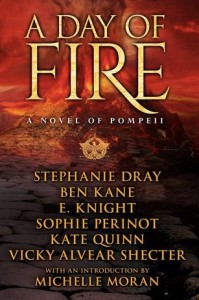
 Today, I don’t have one special guest but six! My writing friend Ben Kane has been working with a group of other historical authors to write a collaborative novel in six stories. This venture could have been as risky as the eruption of Vesuvius, the volcano at the centre of their story, A Day of Fire… Today, I don’t have one special guest but six! My writing friend Ben Kane has been working with a group of other historical authors to write a collaborative novel in six stories. This venture could have been as risky as the eruption of Vesuvius, the volcano at the centre of their story, A Day of Fire…
Pompeii was a lively resort flourishing in the shadow of Mount Vesuvius at the height of the Roman Empire. When Vesuvius erupted in an explosion of flame and ash, the entire town would be destroyed. Some of its citizens died in the chaos, some escaped the mountain’s wrath . . . and these are their stories:
A boy loses his innocence in Pompeii’s flourishing streets.
An heiress dreads her wedding day, not knowing it will be swallowed by fire.
An ex-legionary stakes his entire future on a gladiator bout destined never to be finished.
A crippled senator welcomes death, until a tomboy on horseback comes to his rescue.
A young mother faces an impossible choice for her unborn child as the ash falls.
A priestess and a whore seek redemption and resurrection as the town is buried.
Six authors bring to life overlapping stories of patricians and slaves, warriors and politicians, villains and heroes who cross each others’ path during Pompeii’s fiery end. But who will escape, and who will be buried for eternity?
I asked Ben to explain…
Why does Pompeii have an enduring attraction and why did you choose it as the focus for this book?
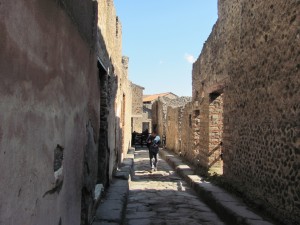 I think that its terrible history – a busy town that was destroyed by a volcanic eruption, with terrible loss of life – says it all – and the fact that it has been so well excavated. It’s the most amazing place to visit, because so much of it remains. In most ancient ruins, it’s hard to get a sense of what life might have been like. In Pompeii, with its citizens in their houses, bread still in ovens, guard dogs in their places, it is impossible not to get a feeling of Roman life. We chose it as a focus for the book because of its appeal – there are relatively few events in Roman history as recognisable as the eruption of Vesuvius in 79 AD. I think that its terrible history – a busy town that was destroyed by a volcanic eruption, with terrible loss of life – says it all – and the fact that it has been so well excavated. It’s the most amazing place to visit, because so much of it remains. In most ancient ruins, it’s hard to get a sense of what life might have been like. In Pompeii, with its citizens in their houses, bread still in ovens, guard dogs in their places, it is impossible not to get a feeling of Roman life. We chose it as a focus for the book because of its appeal – there are relatively few events in Roman history as recognisable as the eruption of Vesuvius in 79 AD.
Were the group of authors self-selected or chosen? And how did you find working together?
The authors were chosen by the three people whose idea it had been in the first place, that is, Kate Quinn, Stephanie Dray and Sophie Perinot. I had never collaborated with anyone else before, so I approached the whole thing with enthusiasm but a little trepidation. However, my concerns soon vanished. It was a real pleasure from beginning to end – and I would have no hesitation in working with the group again.
What do you think is in it for the reader having such a diversity of author styles?
One thing stands out for me – the cross-section of society that’s covered, which is from soldiers to politicians to tradespeople, gladiators and prostitutes. And because the focus of the eruption is so vital to the storyline, I think that any quibbles the reader might have will be smoothed out by the impending tragedy that unfolds through the book.
Will there be another book focusing on a different event?
An interesting question, and one I’ve been asking myself since we finished. I’d be open to the idea, certainly!
Thank you, Ben.
Well, I enjoyed A Day of Fire immensely – the six different voices were distinct but the whole thing melded together seamlessly. The intimate stories of real people trying to accept then survive the terrifying cataclysm seem so real in a way that we can understand today. You know people like these. Recommended.
——————————-
The authors:
 STEPHANIE DRAY is a multi-published, award-winning author of historical women’s fiction and fantasy set in the ancient world. Her critically acclaimed historical Nile series about Cleopatra’s daughter has been translated into more than six different languages, was nominated for a RITA Award and won the Golden Leaf. Her focus on Ptolemaic Egypt and Augustan Age Rome has given her a unique perspective on the consequences of Egypt’s ancient clash with Rome, both in terms of the still-extant tensions between East and West as well as the worldwide decline of female-oriented religion. Before she wrote novels, Stephanie was a lawyer, a game designer, and a teacher. Learn more at: StephanieDray.com STEPHANIE DRAY is a multi-published, award-winning author of historical women’s fiction and fantasy set in the ancient world. Her critically acclaimed historical Nile series about Cleopatra’s daughter has been translated into more than six different languages, was nominated for a RITA Award and won the Golden Leaf. Her focus on Ptolemaic Egypt and Augustan Age Rome has given her a unique perspective on the consequences of Egypt’s ancient clash with Rome, both in terms of the still-extant tensions between East and West as well as the worldwide decline of female-oriented religion. Before she wrote novels, Stephanie was a lawyer, a game designer, and a teacher. Learn more at: StephanieDray.com
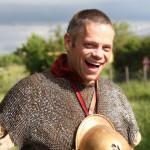 BEN KANE worked as a veterinarian for sixteen years, but his love of ancient history and historical fiction drew him to write fast-paced novels about Roman soldiers, generals and gladiators. Irish by nationality but UK-based, he is the author of seven books, the last five of which have been Sunday Times top ten bestsellers. Ben’s books have been translated into ten languages. In 2013, Ben walked the length of Hadrian’s Wall with two other authors, for charity; he did so in full Roman military kit, including hobnailed boots. He repeated the madness in 2014, over 130 miles in Italy. Over $50,000 has been raised with these two efforts. Learn more at http://www.benkane.net/ BEN KANE worked as a veterinarian for sixteen years, but his love of ancient history and historical fiction drew him to write fast-paced novels about Roman soldiers, generals and gladiators. Irish by nationality but UK-based, he is the author of seven books, the last five of which have been Sunday Times top ten bestsellers. Ben’s books have been translated into ten languages. In 2013, Ben walked the length of Hadrian’s Wall with two other authors, for charity; he did so in full Roman military kit, including hobnailed boots. He repeated the madness in 2014, over 130 miles in Italy. Over $50,000 has been raised with these two efforts. Learn more at http://www.benkane.net/
 E. KNIGHT is an award-winning, indie national best-selling author of historical fiction. Under the name, Eliza Knight she writes historical romance and time-travel. Her debut historical fiction novel, My Lady Viper, has received critical acclaim and was nominated for the Historical Novel Society 2015 Annual Indie Award. She regularly presents on writing panels and was named Romance Writer’s of America’s 2013 PRO Mentor of the Year. Eliza lives in Maryland atop a small mountain with a knight, three princesses and a very naughty puppy. For more information, visit Eliza at www.elizaknight.com. E. KNIGHT is an award-winning, indie national best-selling author of historical fiction. Under the name, Eliza Knight she writes historical romance and time-travel. Her debut historical fiction novel, My Lady Viper, has received critical acclaim and was nominated for the Historical Novel Society 2015 Annual Indie Award. She regularly presents on writing panels and was named Romance Writer’s of America’s 2013 PRO Mentor of the Year. Eliza lives in Maryland atop a small mountain with a knight, three princesses and a very naughty puppy. For more information, visit Eliza at www.elizaknight.com.
 SOPHIE PERINOT is the author of the acclaimed debut, The Sister Queens, which weaves the story of medieval sisters Marguerite and Eleanor of Provence who became queens of France and England respectively. Perinot has both a BA in History and a law degree. A long-time member of the Historical Novel Society, she has attended all of the group’s North American Conferences, serving as a panelist at the most recent. When she is not visiting corners of the past, Sophie lives in Great Falls, VA. Learn more at: www.SophiePerinot.com SOPHIE PERINOT is the author of the acclaimed debut, The Sister Queens, which weaves the story of medieval sisters Marguerite and Eleanor of Provence who became queens of France and England respectively. Perinot has both a BA in History and a law degree. A long-time member of the Historical Novel Society, she has attended all of the group’s North American Conferences, serving as a panelist at the most recent. When she is not visiting corners of the past, Sophie lives in Great Falls, VA. Learn more at: www.SophiePerinot.com
 KATE QUINN, a native of southern California, is the national bestselling author of the Empress of Rome novels, which have been variously translated into thirteen different languages. She first got hooked on Roman history while watching “I, Claudius” at the age of seven, and wrote her first book during her freshman year in college, retreating from a Boston winter into ancient Rome. She and her husband now live in Maryland with an imperious black dog named Caesar. KATE QUINN, a native of southern California, is the national bestselling author of the Empress of Rome novels, which have been variously translated into thirteen different languages. She first got hooked on Roman history while watching “I, Claudius” at the age of seven, and wrote her first book during her freshman year in college, retreating from a Boston winter into ancient Rome. She and her husband now live in Maryland with an imperious black dog named Caesar.
Learn more at http://www.katequinnauthor.com
 VICKY ALVEAR SHECTER is the award-winning author of the young adult novel, Cleopatra’s Moon (Arthur A. Levine Books/Scholastic, 2011), based on the life of Cleopatra’s only daughter. She is also the author of two biographies for kids on Alexander the Great and Cleopatra. The LA Times called Cleopatra’s Moon – set in Rome and Egypt –”magical” and “impressive.” Publisher’s Weekly said it was “fascinating” and “highly memorable.” Her young adult novel of Pompeii, Curses and Smoke (Arthur A. Levine/Scholastic), released in June 2014. She has two other upcoming books for younger readers, Anubis Speaks! and Hades Speaks! Vicky is a docent at the Michael C. Carlos Museum of Antiquities at Emory University in Atlanta. Learn more at http://www.vickyalvearshecter.com/main/ VICKY ALVEAR SHECTER is the award-winning author of the young adult novel, Cleopatra’s Moon (Arthur A. Levine Books/Scholastic, 2011), based on the life of Cleopatra’s only daughter. She is also the author of two biographies for kids on Alexander the Great and Cleopatra. The LA Times called Cleopatra’s Moon – set in Rome and Egypt –”magical” and “impressive.” Publisher’s Weekly said it was “fascinating” and “highly memorable.” Her young adult novel of Pompeii, Curses and Smoke (Arthur A. Levine/Scholastic), released in June 2014. She has two other upcoming books for younger readers, Anubis Speaks! and Hades Speaks! Vicky is a docent at the Michael C. Carlos Museum of Antiquities at Emory University in Atlanta. Learn more at http://www.vickyalvearshecter.com/main/
Alison Morton is the author of Roma Nova thrillers, INCEPTIO, and PERFIDITAS. Third in series, SUCCESSIO, is now out.
Find out about Roma Nova news, writing tips and info by signing up for my free monthly email newsletter.
If you enjoyed this post, do share it with your friends!Like this:Like Loading...
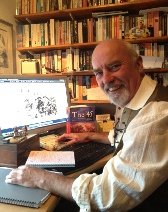
A welcome return visit from my writing friend David Ebsworth telling us about his next project …
1815. The 200th anniversary is looming. A passion for the Napoleonic period is tugging at my writing hand. Yes, I thought, my next one will be about Waterloo. But from what angle?
I began looking for the real-life experiences of women who may have been on the battlefield itself, rather than mere observers. And there were many. Like the story of Jenny Jones, from Talyllyn, and the other soldiers’ wives who accompanied the British army. But then I came across the tale of the beautiful Frenchwoman, in cavalry uniform, found among the dead by Volunteer Charles Smith, 95th Rifles, where the fighting had been thickest during that hot June afternoon.
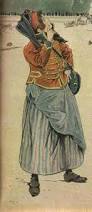 Marianne Tambour It occurred to me that we don’t have too many English-language novels that look at the Hundred Days from a French perspective. And I also couldn’t remember reading anything about the French women who might have been present at Waterloo. So I began to read everything available on Frenchwomen and their relationship to the armies of Napoleon Bonaparte.
Suddenly, as often happens when we research for historical fiction, I found myself in a very different world. One in which women were not confined to simply following the army, and perhaps helping to tend the wounded at the battle’s end, or nurse the fever cases, but in which there was a well-established tradition of women soldiers or, at least, of women who thought little of being in the centre of the action. Feisty women. A gap had opened up, a void that begged to be filled. So the research for The Last Campaign of Marianne Tambour began in earnest.
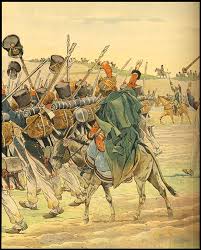
And I loved writing this story. It was finally inspired when I read a factual account of French Napoleonic cantinière, Madeleine Kintelberger, who served with Bonaparte’s 7th Hussars during the Austerlitz campaign and was caught up in fighting against the Russian Cossacks while protecting her children who were also with her on the battlefield. Her husband had been killed by cannon fire and Madeleine held off the Cossacks with a sword that she had picked up, losing her own right arm in the process. She was slashed by sabres and speared by lances during the same engagement, as well as shot in each leg. Yet she was also eight months pregnant with twins. It seems nothing short of a miracle that she survived at all. The Russians took her prisoner and she eventually returned to France with her children, where she was received in person by the Emperor and awarded a military pension. But the most astonishing aspect of all this was the fact that Madeleine was only one of hundreds of women serving in such positions in the French army’s front lines, many of them with similarly incredible tales to tell and yet largely ignored, both in fiction and non-fiction alike.
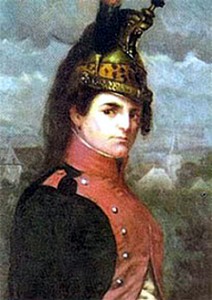 Mari-Thérèse Figueur (unattributed) Then, almost immediately afterwards, I also came across the equally remarkable exploits of Marie-Thérèse Figueur who in 1793 had joined the French revolutionary army, though she had originally fought for the counter-revolutionary Federalists. But she enlisted as a cavalry trooper, all the same, in her own right as a woman, and served with distinction in various Dragoon regiments at Toulon, Savigliano-Genola, Ulm, Austerlitz, Jena, Burgos and the battles of the 1814 Campaign. She was captured, and escaped, both from the Austrians and, later, from Spanish guerrilleros, though not without suffering several serious wounds. Her reputation made her an object of curiosity in fashionable French society and she found herself invited to dinner with Bonaparte himself when he had still been First Consul of the Republic – the first of several face-to-face meetings with Napoleon. She was not present at Waterloo, however, since she had retired in 1814 and opened a table d’hôte restaurant in Paris – though that was certainly not the end of her adventures. Once again, her story was unusual but not unique.
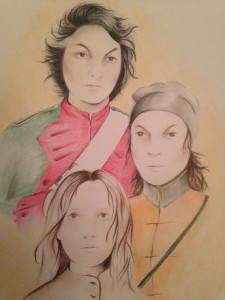 Liberté & Marianne So the proposition was simple. What if two fictional women, but based on the real-life characters of Kintelberger and Figueur, were brought together by something more than a simple twist of fate during Bonaparte’s final campaign, in June 1815, that culminated in the Battle of Waterloo? And what if that “something” had a mystical element that would have been very typical of the age’s flirtations between the scientific and the spiritual? The result: two of the most feisty women ever to hit the pages of historical fiction – Dragoon trooper, Liberté Dumont, and the eponymous Imperial Guard cantinière, Marianne Tambour, each of them easily capable of putting Richard Sharpe to shame. I hope readers enjoy them as much as I enjoyed the telling of their tale!
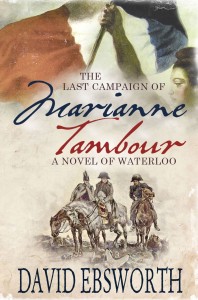 You can follow the exploits of Dumont and Tambour in David Ebsworth’s novel, The Last Campaign of Marianne Tambour, due to be released on 5th December. You can follow the exploits of Dumont and Tambour in David Ebsworth’s novel, The Last Campaign of Marianne Tambour, due to be released on 5th December.
David Ebsworth is the pen name of writer, Dave McCall, a former trade union negotiator, born in Liverpool (UK) and now living in North Wales. He has published three previous novels: The Jacobites’ Apprentice, Finalist in the Historical Novel Society’s 2014 Indie Award; The Assassin’s Mark, set during the Spanish Civil War; and The Kraals of Ulundi: A Novel of the Zulu War. Each of these books has been the recipient of the coveted B.R.A.G. Medallion for independent authors.
More details of David’s work are available on his website: http://www.davidebsworth.com
STOP PRESS: Out now!
Amazon Kobo
Alison Morton is the author of Roma Nova thrillers, INCEPTIO, and PERFIDITAS. Third in series, SUCCESSIO, is now out.
Find out about Roma Nova news, writing tips and info by signing up for my free monthly email newsletter.
If you enjoyed this post, do share it with your friends!Like this:Like Loading...
 After my awayday in London, I arrived back on Saturday evening at The Old Swan in Harrogate in perfect time for a glass of red with Conn Iggulden, Simon Turney, Angus Donald, Harry Sidebottom, Derek Birks and Giles Christian. And what a sparky group that was; Viking axes, Roman ball-bearings and medieval sex! After my awayday in London, I arrived back on Saturday evening at The Old Swan in Harrogate in perfect time for a glass of red with Conn Iggulden, Simon Turney, Angus Donald, Harry Sidebottom, Derek Birks and Giles Christian. And what a sparky group that was; Viking axes, Roman ball-bearings and medieval sex!
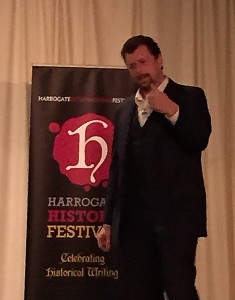 Conn Iggulden
This was to be a Roman evening and one I had scheduled as a “must attend”. First up was Conn Iggulden in a wide-ranging, often moving and highly entertaining talk about his writing, research and family. His book The Gates of Rome (the start of the Emperor series about Julius Caesar) had engaged me ass soon as I started reading it. Author of the famous/notorious Dangerous Book for Boys, he’s now writing about the War of the Roses.
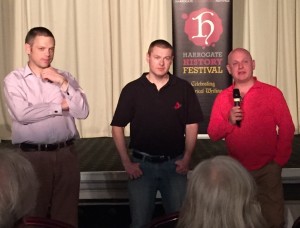 Ben Kane, Russell Whitfield and Anthony Riches Next, it was the much anticipated film of the 194 km Romani Walk film from Capua to Rome by Roman authors Ben Kane, Russell Whitfield and Anthony Riches. Russell had talked about it on this blog in May. Now it was the real thing. Hilarious, laddish and moving at times, the three of them toughed it out, following the route taken by the ancients. Foot problems and falling in ditches went hand in hand with admiration for the scenery and a deepening respect for the original Romans. And they fell into character, too: Ben, the wounded veteran, Russ, the moaning squaddie and Tony, the tough, impassive centurion. A real treat, masterminded by Phillip Stevens and narrated by Ian McKellen (or Gandalf, if you will).
Here’s a taster they made when training: http://vimeo.com/99783796
So far, they’ve raised over £20,000 for their joint charities Médicins Sans Frontières (or Doctors Without Borders) and Combat Stress. Hats off (or should that be helmets off?) to them.
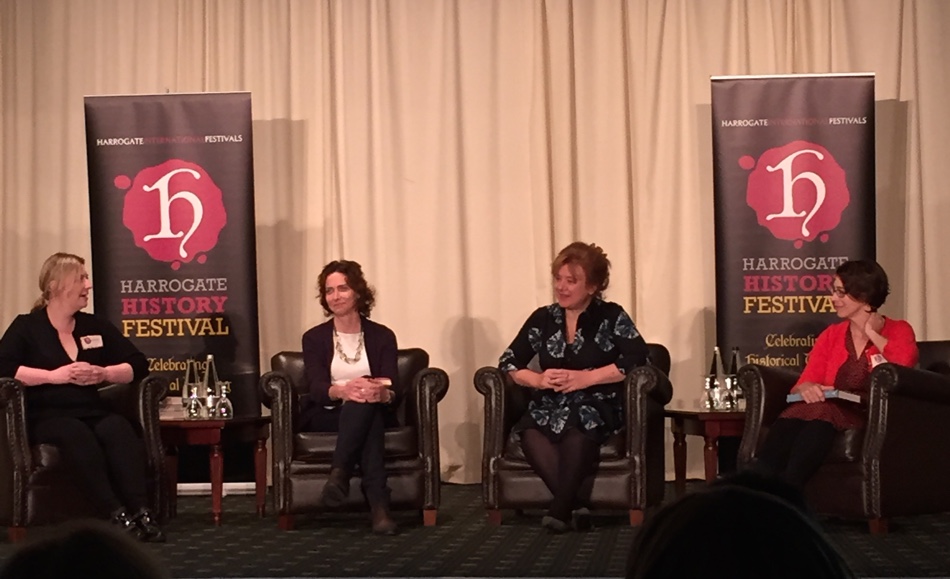 Antonia Hodson, Dr Pamela Cox, Lucy Lethbridge and Tessa Boase Sunday morning I was entranced by Antonia Hodgson (The Devil in Marshalsea) and colleagues Lucy Lethbridge, Tessa Boase and Dr Pamela Cox talking about women’s work, specifically about those in service or serving in shops. Apart from details of how tough, prestigious or precarious those jobs were, I was particularly struck by how many million women kept the domestic and retail economies going. The panel demonstrated in clear detail how our perception of stereotypes (Upstairs Downstairs, Downton Abbey, The House of Eliot, Mr Selfridge, The Paradise) was a broken one.
My immediate reaction was to want to find out more. Off to the bookshop…
 Harry Sidebottom, Simon Scarrow Another Roman treat followed with writers Simon Scarrow and Harry Sidebottom in conversation. Historical reality, interacting with fans and research flavoured the cheerful banter. I’m a keen fan of Simon’s Macro and Cato, but both writers are renowned for their action-packed tales of Rome where imperial politics were decided as much behind closed doors as during epic battles, and the small people caught in the backlash had to fight to find their power or event survive.
Next, we were deep in the age of blood and poetry with the Vikings of the north with ferocious warriors, intrepid explorers and tough women.
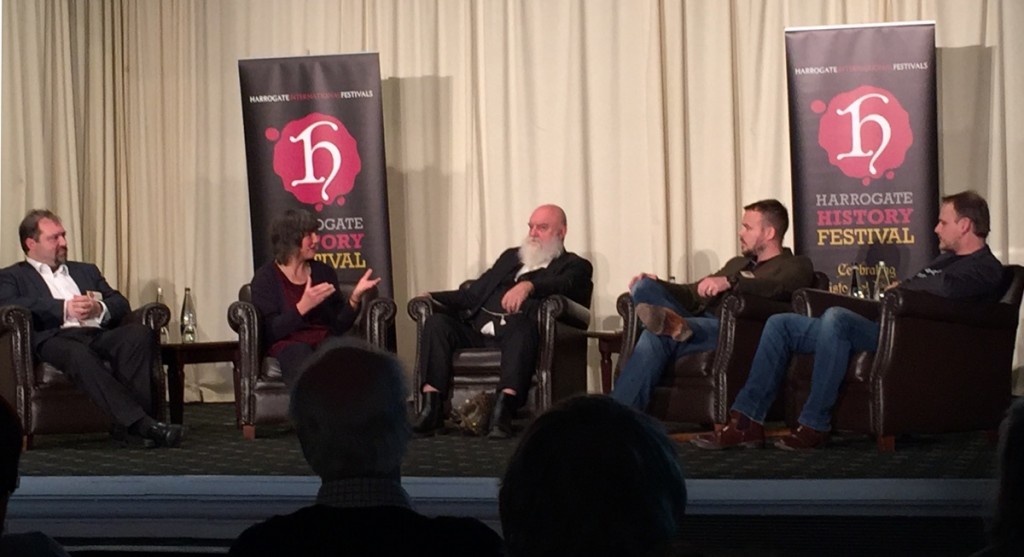 Chair Gareth Williams, Margaret Elphinstone, Rob Low, Giles Kristian, Phillip Stevens teased out the differences between perception and reality, brutality and democracy, Christianity and paganism. Chair Gareth Williams, Margaret Elphinstone, Rob Low, Giles Kristian, Phillip Stevens teased out the differences between perception and reality, brutality and democracy, Christianity and paganism.
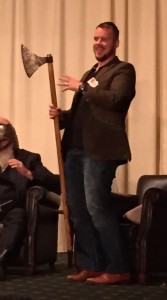 And Giles showed us his axe. And Giles showed us his axe.
And the weekend ended with debunking myths: Tom Harper, Angus Donald and James Wilde under the chairmanship of William Ryan deconstructed Robin Hood, Templars, Arthur and the Grail and Hereward the Wake.
What a weekend! I have to admit to a certain amount of overstimulated brain as I waved good-bye to Harrogate for another year.
First report from the Harrogate History Festival here
Alison Morton is the author of Roma Nova thrillers, INCEPTIO, and PERFIDITAS. Third in series, SUCCESSIO, is now out.
Find out about Roma Nova news, writing tips and info by signing up for my free monthly email newsletter.
If you enjoyed this post, do share it with your friends!Like this:Like Loading...
|
Subscribe to Blog via Email
Join 37 other subscribers.
Buy AURELIA from Apple!
UK

US
|