What? Oh, yes. I just have to finish my coffee, load the dishwasher, clean the cat’s bowl, check my Facebook author page, nip on to Twitter – but only for five minutes – do the filing, have a Skype with my critique partner… What? Oh, yes. I just have to finish my coffee, load the dishwasher, clean the cat’s bowl, check my Facebook author page, nip on to Twitter – but only for five minutes – do the filing, have a Skype with my critique partner…
Um, what book?
Even writing this blog is a distraction. So why don’t I settle down and do what I love and lose myself in my book’s imaginary world for hours on end? This is a question that burns into every writer’s consciousness.
Facts:
- Books will not write themselves; whatever fantasy you conjure up, the writing elves do not visit overnight.
- Editors get cheesed off with undisciplined writers. And then there’s the fearsome agent stalking you… or your self-publishing colleagues repeatedly asking when your next book is out.
- The only way to sell more books is to write more books.
Three things to consider:
Lack of concentration
Is your physical environment comfortable? Are your chair and desk at the right height? Are you alone with your door shut to the rest of the world? Is the voice mail/answerphone on?
You can fix the physical. Even if it’s only half an hour or an hour, everybody is entitled to some “me time”. Be ruthless during that time – no Twitter, etc. I was cheered last weekend when a famous author admitted to me that she wrote one paragraph at a time, flitting back and forth to the computer for intense bursts of half an hour at a time in between doing a million other things. She dismissed the idea of x words per day with a wave of her hand. Yet her output is prolific.
Lack of confidence
You ask yourself, ‘Am I churning out rubbish or is there a possibility that somebody, somewhere will love my work?‘
If you’ve had critique or assessment through a writing group, a writers’ organisation, a reputable on-line critique site, feedback from an agent/editor or published authors, you’ve probably got some idea of that and of where to concentrate in order to improve. Even if you think your latest work is total rubbish, you can give yourself permission to write badly because you have the luxury of going back and fixing it by rewriting it. Again and again. And it will improve. 😉 And sometimes, doubt about your beauteous prose can make you look at it with a sharp eye. Perhaps you do need to change that character’s story arc, or inject some emotional punch into that boring scene.
Guilt
Does that doubt whether writing is a proper job still hammer away in the back of your brain?
This is the one that assails many writers. Here’s the answer: yes, it is a proper and fit occupation. How do you think all those books you love to read came about? Some people can’t string a sentence together. It’s a great skill as well as a gift to be able to put together a coherent story of tens of thousands of words that makes people’s spirits soar, takes them on an emotional journey, puts them in the middle of the struggle for survival, or in the shield wall of a famous battle of antiquity. It’s like any other art form, difficult to make a living at, but what is produced brings enormous pleasure individually to many and makes the world a far better place.
If you have any magic solutions, please let me know!
Alison Morton is the author of Roma Nova thrillers, INCEPTIO, and PERFIDITAS. Third in series, SUCCESSIO, is out early summer 2014.
If you enjoyed this post, do share it with your friends!
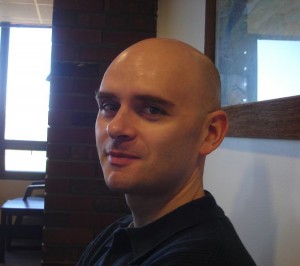 That the HNS included a workshop on alternate/alternative history at the 2012 was a factor in my signing up to go. Christopher Cevasco (editor/publisher of the award-winning, but now sadly defunct, Paradox: The Magazine of Historical and Speculative Fiction), led it with verve and patience. That the HNS included a workshop on alternate/alternative history at the 2012 was a factor in my signing up to go. Christopher Cevasco (editor/publisher of the award-winning, but now sadly defunct, Paradox: The Magazine of Historical and Speculative Fiction), led it with verve and patience.
My earlier post on this blog on alternate history gives some background, but at the conference Christopher led us into a lively interactive discussion. Alternate history could, he said, be regarded as overlapping two spheres: history and science fiction, something to be borne in mind when preparing work for publication.
What it was not was secret or hidden history, i.e. a fictional or real history which is supposed to have been deliberately suppressed, forgotten, or ignored by established scholars. The classic was the famous (and unflattering) Historia Arcana (Secret History) by the Byzantine scholar Procopius, discovered centuries later in the Vatican Library, and which paralleled his official, sycophantic history of Justinian and Theodora. Modern fictional examples include e.g. The Da Vinci Code by Dan Brown, The Day of the Jackal by Frederick Forsyth, The Eagle Has Landed by Len Deighton.
Neither was it micro alternate history where nothing changed the world globally; examples include the film Sliding Doors and Charles Dickens’ A Christmas Carol. Parallel worlds and dimensions and second worlds such as seen in Naomi Novik’s Temeraire series also fell outside the definition.
So what counts as alternate history?
Firstly, although the time when the story in the book (or film) takes place can be in the past, present or future, the Point of Divergence (POD) from the standard timeline must be in the past.
Secondly, there is no going back; the trigger for the POD must alter history and once the timeline has changed, it can’t be changed back by some clever plot development, time machine or technical gizmo.
And lastly, the narrative should show at least some of the ramifications of that change.
The POD can be a famous event, e.g. the Battle of Hastings in 1066, the Armada succeeding and Spain successfully invading England in the sixteenth century (Keith Roberts’ Pavane) or that firm favourite, Hitler winning the Second World War (Robert Harris’ Fatherland). Or it can be something a little more obscure but which has a significant impact, e.g. the final suppression of paganism by Roman Emperor Theodosius in the fourth century, or the thought not occurring to Tim Berners-Lee to link up hypertext, the Internet and multifont text objects.
And what about known historical characters in the standard timeline? Could writers bring them in? If very soon after the POD, then probably, but the further away in time and distance, then the bigger the likelihood the characters might not even be born.
As with any story, the writing must create a plausible world, backed by meticulous research, but the writer is, of course, the master of their universe.
Christopher M. Cevasco (www.christophermcevasco.com) is an author whose historically themed fiction has appeared in Black Static, The Leading Edge, and A Field Guide to Surreal Botany, among many other magazines and anthologies. He is a 2006 Clarion workshop graduate and a 2007 Taos Toolbox graduate. He was also the editor/publisher of the award-winning Paradox: The Magazine of Historical and Speculative Fiction, which garnered two nominations for the Sidewise Award for Alternate History during its thirteen-issue run. Chris writes in Myrtle Beach, South Carolina, where he lives with his wife and their two young children. He is seeking representation for two recently completed novels, an alternative history of 1066 and an historical thriller about Lady Godiva.
If you enjoyed this post, do share it with your friends!
 I’m (literally) thrilled to welcome Adrian Magson to my blog today. A freelance writer, reviewer and creative writing tutor, he’s the author of the Riley Gavin & Frank Palmer series of crime novels set in London and is currently writing two new series, the Harry Tate spy thrillers and the Lucas Rocco French police stories. I’m (literally) thrilled to welcome Adrian Magson to my blog today. A freelance writer, reviewer and creative writing tutor, he’s the author of the Riley Gavin & Frank Palmer series of crime novels set in London and is currently writing two new series, the Harry Tate spy thrillers and the Lucas Rocco French police stories.
Buckle up!
We met at the Festival of Writing in York when you ran a crime and thrillers workshop, but how did you get going with writing?
I started writing short stories in my teens, won a couple of school prizes, then sold my first crime story to a newspaper when I was 18. It all stemmed from reading crime novels as a boy. The idea of making stuff up for a living really appealed to me, and that was pretty much it. It took a long time before I sold my first book, however. In between writing unpublished novels, I wrote many short stories and features for women’s magazines, which was the only ready market at the time. They weren’t crime stories, but it did serve as a terrific apprenticeship in writing for a market and observing style notes and word counts. I also wrote short stories for BBC radio, gags for comedian Roy Hudd, had a short play performed, and even wrote slogans for t-shirts, beer mats and greetings cards – anything that would pay money, basically. I guess that suggests that you have to be a bit of a literary tart if you want to be published. But really, it was all about finding out what I was good at and what I enjoyed. Apart from now writing crime and thrillers, I also got the gig to write the ‘Beginners’ page in Writing Magazine, which I was very pleased to do.
Although Harry Tate’s adventures are high-octane, intelligent, teetering on the edge of seat stuff, I particularly enjoy your Lucas Rocco stories at an altogether different pace. What drew you to 1960s France?
That’s very kind of you! I lived in northern France as a boy and went to a village school there, so I have a bit of an in-built feel for the place and time. Not that it makes me any kind of historian. But writing the Lucas Rocco series came about after having several crime novels published and completing a spy thriller. I decided to see if I could write a crime novel featuring a French detective, using the familiar backdrop where I used to live (and where my brother still lives). I don’t classify it as a police procedural, however; Rocco is not a man who follows rules very easily, and quite often operates on the outside of what might be accepted behaviour. But he is a good cop who has been taken out of his comfort zone (fighting gangs in Paris) and dumped into a rural setting as part of a nationwide police initiative. He finds his new boss is his former army C.O. in Indochina (France’s own Vietnam), with whom he has serious issues, and the locals are very suspicious of this city cop who has landed among them. But he also discovers that crime in the country can be just as nasty as in the city. Plenty of areas of conflict!
I like to use some true historical colour as a backdrop to the series, such as echoes of the war, Indochina, the effects of Algerian independence, an assassination attempt (one of 30+) on President de Gaulle and so forth. It helps anchor it for me in a way, to hook onto an aspect of reality.
Back to Harry Tate, what makes a hero/heroine in the special forces or MI5/MI6 so attractive, or not? And why do we love them to get chucked out and go maverick?
I think it’s because they can then do things other people can’t. They don’t have to observe the rules, they have all the skills to sort out the villains, and the pace of reading (and writing) is generally faster than many other novels. For the writers, they allow a scope of invention that brings in all manner of excitement and pace and tension, and while to some readers it might call for a suspension of disbelief, that’s exactly what so many other books do – or should, if we enjoy books for the entertainment value. I know I do!
About WRITE ON! – The Writer’s Help Book, you hoped “this book inspires, encourages, fires up, unblocks and cajoles, from hopeful start to triumphant, rampaging finish, helping scribes of all kinds to write rather than staring defeat in its dark, unwholesome face and downing their own bodyweight in black coffee, alcohol and biscuits.”
It’s a world away from your other books. How do you flex your writing muscles on such different projects?
I treat it like putting on a different hat each time. It requires a bit of focus so as not to confuse the various issues (and writing styles – especially jumping from fiction to non-fiction), but I always have written in a variety of genres, so I got used to it. In fact, going from one to the other is quite refreshing. With the Rocco series (1960s) I can forget all about computers and mobile phones, which is quite challenging (I haven’t had Lucas reach for his Nokia yet!), and conversely, with Harry Tate (present day), I can pretty much let go on the technology and weapons front – which is great fun. When it comes to non-fiction, it’s purely fact-based, but I have to inject some humour to make it interesting to write.
How do you research the secret world of spies? Or is this personal experience?
There’s a lot of research material available now, especially for technical detail. But it’s probably like writing sci-fi or the paranormal – there are things you cannot verify, so have to make them up. I trawl for ideas all the time from press and other sources, and while it’s great to use factual material, you have to remember that you’re still telling a story, not writing a manual on espionage.
To plot or not to plot? Are you a planner or do you just dive in?
Definitely not a planner. I’ve tried, but always gone off at a tangent and ended up junking the plans. I prefer to simply take the kernel of an idea, usually with a few scenes to begin with, then dive in. I work on the basis that if it surprises me, it should surprise the reader.
From a technique point of view, is it easier writing thrillers set in the past, such as the Rocco stories?
Well, not having to worry about mobiles and computers is great – but having your characters find a public phone, or using data-cards and paper records to check on criminals and so forth can be a pain. The main thing for me is, I have to do a lot of fact checking, such as models of cars, popular songs of events of the era, locations, routes – all the things that give background colour, yet which will have changed vastly since then. Whole cities have sprung up since the sixties, for example. I haven’t yet been pulled up successfully on detail like that, but I guess there will be something I get wrong one day. But the research aspect is fascinating, so it does have its advantages.
What is the hardest part of the writing process for you?
The proof-reading at the end. I mean, reading isn’t hard. But when you’ve lived and breathed the book for six months or a year, and probably re-written huge chunks of it in the process, having to go through it another two or three times line by line can be hard work. Still, it’s part of the process, so I can’t complain. I’d rather do that than have a mistake go to print. As I found out early on writing for women’s mags, when one used an illustration of a wartime WAAF and RAF officer in one of my stories. Readers wrote in complaining that the gas-mask bag the WAAF was carrying would have only been issued to officers. It wasn’t my fault, but was a valuable lesson. I’d rather avoid making similar mistakes myself.
Which authors who have influenced you?
First was Leslie Charteris (The Saint). He set me off wanting to be a writer from the age of about 8, when I discovered his books. The whole idea of making up stories for a living had huge appeal. Then a number of authors made me think, ‘I’d like to be that good’. Louis L’Amour (westerns) was another great storyteller, along with Mickey Spillane and Hank Janson (hardboiled PIs), Berkeley Mather, Alistair McLean, Gavin Lyall, (spies), Peter O’Donnell (Modesty Blaise series), Adam Diment (spoof spies) – then latterly, Lee Child, Robert Crais, Harlan Coben, John Sanford… the list is enormous.
 Tell us about your latest book! Tell us about your latest book!
The latest one, due out 27 September, is ‘Retribution’ (Harry Tate No 4).
This finds Harry working for the UN and going into his own past when he was the leader of a Close Protection team in Kosovo. The team is being killed off one by one and Harry has to track down the killer and find out who among them committed a rape. It takes him from the UK to the US and Kosovo, with events happening in Paris, Brussels and elsewhere.
Can you tell us something of your work in progress?
Yes. It’s Harry No 5 (so far untitled), and brings back Clare Jardine, a former MI6 officer and a fellow member of ‘Red Station’. She was also seen in ‘Deception’ where she got shot. This follows on from that, and Clare has disappeared from the Major Trauma Centre at King’s College Hospital the same night as a Russian dissident is murdered. The question is, why? And who killed the Russian – the Russians or MI6 renegades? Was she involved and can Harry find her before the killers do? Also back is Paulton, Harry’s former MI5 boss, who tried to have him terminated in ‘Red Station’. Showdown time!
I recently completed Lucas Rocco No 4 (‘Death at the Clos du Lac’), which is due out next year, and brings Lucas into conflict with his bosses at the Ministry of the Interior and a shadowy department of heavies. France is negotiating with China for huge aircraft manufacturing deals, and somebody wants to spoil the party.
And finally, what advice would you give a new writer?
Decide what you really want to write – fiction, short or books; what genre – romance, crime, sci-fi, fantasy, etc; non-fiction, plays, film, comedy… and go for it. Only think about submitting when you’ve got something completed. And edit the heck out of it before you do. The divide between acceptance and refusal can be so marginal, and you don’t want to spoil your chances by hasty work. The more you enjoy your writing, the greater chance someone else (like an agent or publisher) will, too.
Thank you, Adrian, for an excellent interview. This is where I admit to a shared fascination with The Saint and the Modesty Blaise when I was a kid
Adrian’s latest, RETRIBUTION is thoroughly recommended. Out on 27 September
If you enjoyed this post, do share it with your friends!
|
Subscribe to Blog via Email
Join 37 other subscribers.
Buy AURELIA from Apple!
UK

US
|


 What? Oh, yes. I just have to finish my coffee, load the dishwasher, clean the cat’s bowl, check my Facebook author page, nip on to Twitter – but only for five minutes – do the filing, have a Skype with my critique partner…