Adventurous, empowering, high-concept, kick-ass, human

eaglePerhaps I should add fun…

What in Hades am I talking about?

I stumbled upon this post from Author Learning Centre called ‘Brand Development for Authors: Discovering Your Visual Identity‘. It encouraged you to list five words that sum up your book or series in order to help develop a visual image to firm up your ‘brand’.

So what is a brand?

–  A trademark or distinctive name identifying a product or manufacturer
–  A product line so identified
–  A distinctive category; a particular kind
–  The act of giving a product a distinctive identity by means of characteristic design, packaging, etc
–  Placing a product indelibly in the memory

I think the keywords here are distinctive, identity and memory.

How to find yours

Jot down the five words that come to your mind immediately when you think of the books you’ve written. Ask members of your writing group, ask your readers, your fans and followers. Once the five most frequent words have floated to the top, close your eyes and let an image comes to mind when you think about the meaning of those words. Try not to overthink it, but go with the first image that comes to mind.

Make a note or scribble a quick sketch of the images. Next, can you put those images together into one idea/concept? Here you have to be a bit arty and left your mind go. Leave it for a few hours or even overnight.

When something occurs, make another note or drawing. Sometimes it comes in a flash, sometimes, it drifts into being. Once you have settled on an image, go back to your original five words. Do they plus your visual image work as a message with impact? If they do, you have your brand and essential elements for your message to market your books.

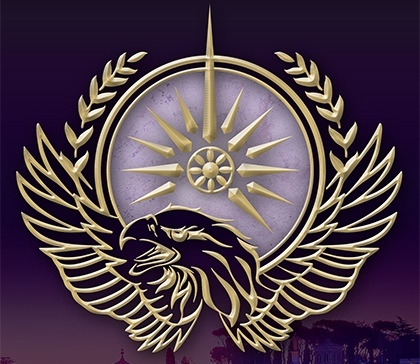
My five words are in the title; my visual image is the Roma Novan eagle.

What are yours?


Alison Morton is the author of Roma Nova thrillers, INCEPTIO, and PERFIDITAS. Third in series, SUCCESSIO, is now out.

Find out about Roma Nova news, writing tips and info by signing up for my free monthly email newsletter.
Conferencius interruptus

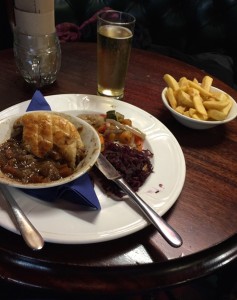
Pie and chipsLast weekend (well, from Thursday evening), I attended the Harrogate History Festival, but I took a break on the Saturday for an awayday to London.

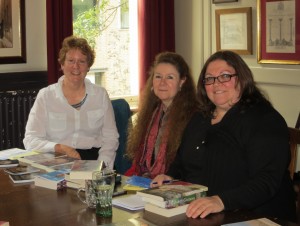
And I wasn’t in the bar at The Lamb in Conduit Street just for the mouthwatering steak & kidney pie and chips! Upstairs in the meeting room,   Christina Courtenay (historical and Young Adult fiction), Monica Fairview (world of Darcy sub-genres) and I gave a workshop to fellow London & South-East chapter members of the Romantic Novelists’ Association about writing in a specialist genre with in the romantic field.

So what are Darcyworld, YA and althist?

Jane Austen’s books are immensely popular and Mr Darcy is the favourite of all her heroes, Monica said. Sequels, spin-offs, pastiches, modernisations, or paranormal, there have been hundreds of variations. However, the hero had to retain Darcy’s essential nature (even as a vampire!), his inner conflict and his journey out of unwarranted pride. Elizabeth and Darcy need to be the core couple as in Pride and Prejudice.

Christina followed with a definition what is meant by ‘Young Adult’: a readership of 13 to 18 years old and shorter books, often 60,000 words, centred on teenage concerns, especially teenage angst and first love.

I outlined how alternative history differed from fantasy, paranormal and science fiction; I wrote at the history end of the scale. Plausibility and consistency were key and it was important to follow historical logic to project the alternative path that history had taken. (More about ‘althist’)

Language, violence and sex

These should be readership and age appropriate, especially for the YA readers. All three of us who were to some extent historical writers were very aware of using straightforward language with no ‘prithees’ and no very date-specific slang.

The Darcy sub-genre, Monica said, included work from sweet and inspirational to erotica, but courtship was the most important element. The Roma Nova books are mainly for adults – I have readers from 16 to 85 years old – so I include levels of language, violence and sex as appropriate to any contemporary set novel with a core romantic relationship.

YA tends to concentrate on the ups and downs of the main character’s first love/crush. Bering in mind the age range of 13-18, YA writers would not describe sex and sexual tension in the same way as in books for adults. Each publisher had its own guidelines, but Christina was firm in saying she would’t write explicit sex scenes in her YA novels.

Tips and hints 

RNA panel Oct 2014

Alison, Christina and Monica (photo courtesy of Janet Gover)

Althist – If you want to write in an alternate history setting, two things: do your historical research and build your new world. You won’t use more that a small proportion of that accumulated knowledge and invention, but you must immerse yourself in it if you are to write in a way to convince your readers.

Young Adult – Read a lot of YA books and watch YA films and TV programmes. Chat with a friend who was a teenager when you were. Dig out the old photos and reminisce.

Darcy/Jane Austen’s world – If you haven’t yet, immerse yourself in the Austen books, especially Pride and Prejudice. Interact with fans online and find out why they love the books, spinoffs and sequels.

My main message: The story, whatever the setting, must be strong enough to stand as a narrative in its own right as must the development of the emotional relationship.

So that’s knocked firmly on the head the popular, but unwarranted, view that romantic writing is all about pink gauze and marrying a duke. Today’s reader wants more, a lot more, and the romantic field is widening into every sort of sub-genres to meet this demand. Any more suggestions?


Alison Morton is the author of Roma Nova thrillers, INCEPTIO, and PERFIDITAS. Third in series, SUCCESSIO, is now out.

Find out about Roma Nova news, writing tips and info by signing up for my free monthly email newsletter.
A historically festive weekend in Harrogate - Part One

IMG_0155Conferences can be stimulating, fun or exhausting, or possibly all three. It’s wise to prepare beforehand, not just your travel tickets and hotel bookings, but which sessions you want to go to. Then you find out you want to go to all of them. Then you discover the conference clashes with a promised speaking engagement.

Okay, let’s do both.

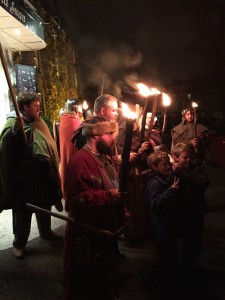
Harrogate History Festival started dramatically enough with a Viking invasion last Thursday evening,  The Ormsheim Vikings, a Dark Ages reenactment group brought fire and presence to The Old Swan Hotel.

This was followed by Bernard Cornwell presenting the Historical Fiction Writers’ Association debut fiction award to Kate Worsley for She Rises. At the party afterwards, I was really brave and spoke to some of the Vikings…

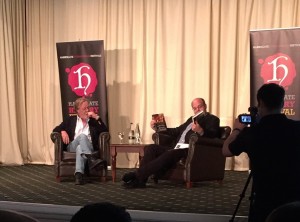
Bernard Cornwell and Mark Lawson

“So is this book any good, then?”


Bernard Cornwell’s interview with arts broadcaster Mark Lawson jump-started Saturday morning. Nobody tells politically incorrect, but riveting, stories like Bernard Cornwell does.


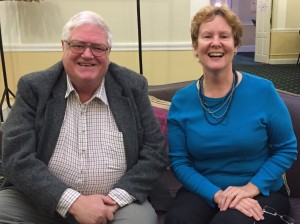
John Jackson and Alison Morton

With John Jackson


During the interval, I was grabbing a cup of coffee, when I heard a voice say, ‘Hello Alison.’ It was John Jackson, Romantic Novelists’ Association friend and reader and Twitter friend. Living locally, he’d popped in to hear Bernard Cornwell.

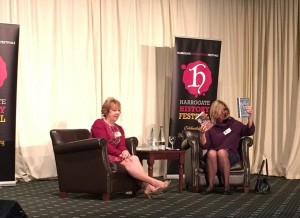
Elizabeth Chadwick and Vanora Bennett

Elizabeth Chadwick and Vanora Bennett


Writing friend Elizabeth Chadwick was up next, interviewed by Vanora Bennett and talked about her writing life, methods, research and next book in her Eleanor of Aquitaine series. Approachable and friendly in her manner, Elizabeth gave us insights in both an entertaining and informative way. You can find her research photos, sample book sentences and reading choices on her  daily Facebook posts – she loves social media!

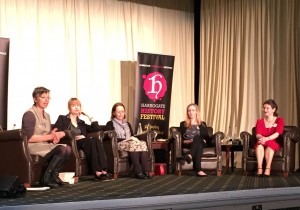
Manda (MC) Scott introducing the shortlistees

Manda (MC) Scott introducing the shortlistees

Dipping out at this stage to chat to a couple of friends and mooch around the bookshop, I went back after lunch to hear from the debut award shortlistees about how they started, their research, themes and the experience of the first novel. Interesting there was nothing before the 18th century…

Alison Weir and Sarah Gristwood picked up the thorny and well as evergreen(!) subject of Richard III and the princes in the Tower, but from the point of view of the women involved – Elizabeth Woodville, Cecily Neville, Margaret Beaufort and Elizabeth of York. The answer still isn’t as clear as it could be…

IMG_0193


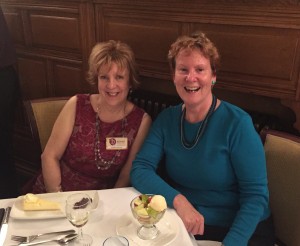
At dinner Elizabeth Chadwick and I compared notes on the day’s events, books, publishing and how to solve the world’s problems.

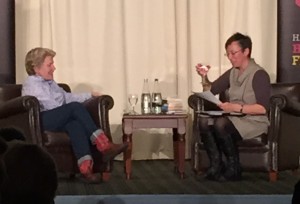
Sandi Toksvig and Manda Scott

Sandi Toksvig and Manda Scott


Friday ended on a comedy high as Sandi Toksvig was interviewed by festival organising chair, Manda Scott. Sandi had to choose  eight books she would take to the fictional desert island.

 Now read the second part of my histfest report.


Alison Morton is the author of Roma Nova thrillers, INCEPTIO, and PERFIDITAS. Third in series, SUCCESSIO, is now out.

Find out about Roma Nova news, writing tips and info by signing up for my free monthly email newsletter.