


 When we say Roman, we generally think of Rome, Britannia, possibly Constantinople.
But the Romans were everywhere. Gaul was an early conquest and the Roman life style was fully implanted for many hundreds of years.
Indeed, one of the last outposts of Roman life in the West in the fifth century was in Gaul – the Domain of Soissons in northern France.
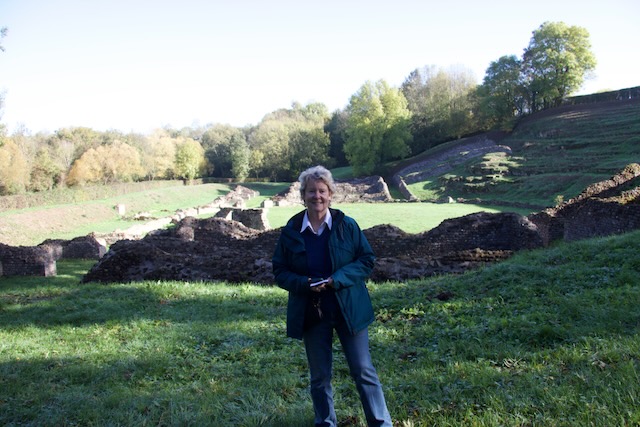
But there are ruins everywhere and people have been fascinated by them since at least the Renaissance. As a self-confessed ‘Roman nut’, I’m always delighted to visit one new to me at Sanxay in the Vienne department of the Nouvelle-Aquitaine region in western France.
Why is it ‘Gallo-Roman’ in France and not just ‘Roman’?
Ducks to water – The civilisation that evolved in ancient Gaul (modern France) was a unique cultural synthesis between native Celtic/Gallic traditions and Roman rule, rather than a simple military occupation. The pragmatic Romans found it easier to control such a large area via baths, roads, legal systems and togas rather than by continuous and expensive military action.
- Cultural fusion: After Gaius Julius Caesar’s conquest, the Gauls didn’t just vanish nor were all wiped out despite Caesar’s aggressive campaigns. Local elites bought into the Roman lifestyle (See What did the Romans do for us? video 😉 ) People at every level found that adopting Roman law, architecture, Latin and trading opportunities was A Good Thing. At the same time, they retain indigenous traits, tribal loyalties and social structures while pragmatically merging Celtic and Roman gods in their religion.
- Language evolution: Latin spoken in Gaul absorbed a distinctive Celtic/Gaulish layer influencing pronunciation and vocabulary, a language that evolved into an early Romance language in what would become France.
- Local identity & self-image: The inhabitants of Gaul increasingly viewed themselves as part of the Roman world while keeping a distinct regional identity tied to the old Gallic geography. L’exception française is still a strong concept in France today. (I know the Franks came along after the Celts and Romans, but some ideas persist…)
- 19th century nationalism: French scholars heavily promoted the “Gallo-Roman” narrative to forge a national origin story especially after the defeat in the Franco-Prussian War of 1870. France could claim both a proud, ancient Gallic ancestral root (nos ancêtres les Gaulois) and the high civilising prestige of the Roman Empire.
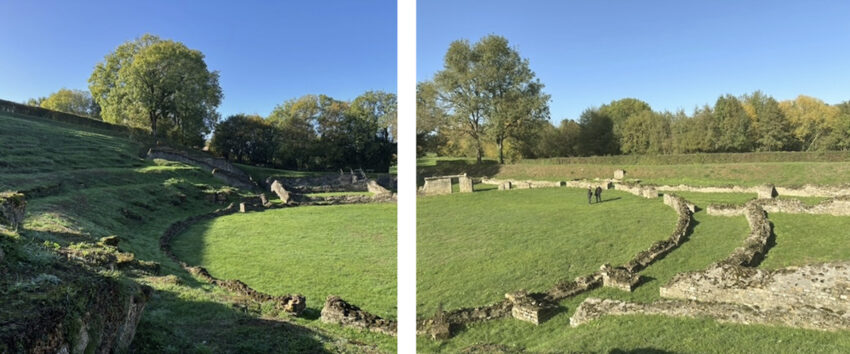
A theatre of two halves at Sanxay – Note the size of the two modern humans!
So what role did Sanxay play?
It’s generally thought the site was a large rural sanctuary related to the cult of healing waters. The central feature is an octagonal temple plan – an uncommon structure – plus a Gallo-Roman theatre and an extensive suite of therapeutic baths. Additionally, some buildings were probably intended to accommodate visitors seeking cures from the natural springs.
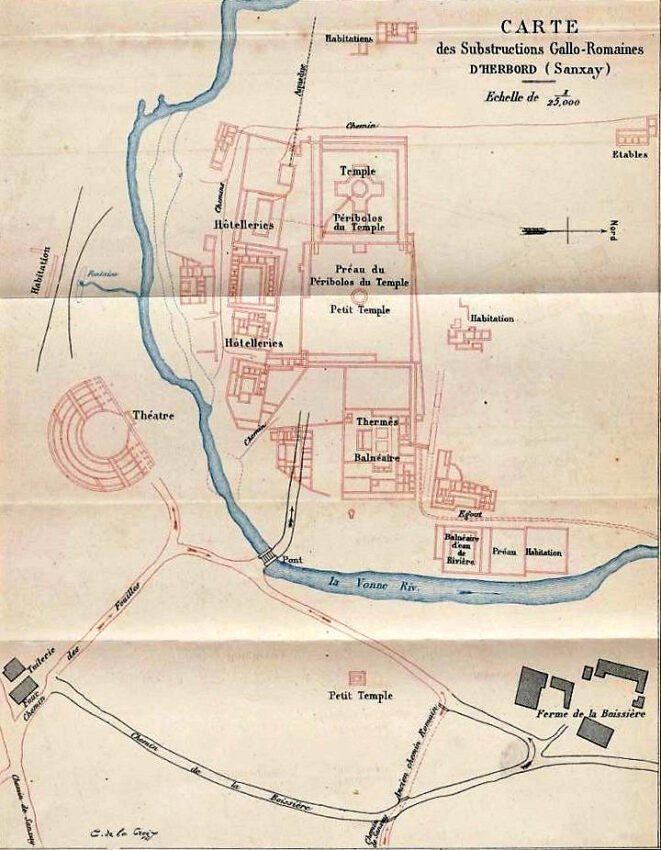
The site is huge, larger than the remains visible today, and reckoned to have covered at least twenty hectares and included dwelling houses, storage warehouses and stables.
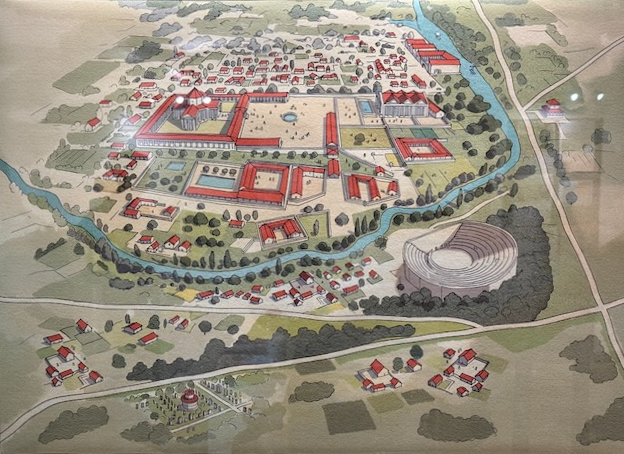
Reconstruction of the Gallo-Roman sanctuary of Sanxay. Display panel at the Sanxay visitor center (© Centre des monuments nationaux).
It was excavated between 1881 and 1883 by Father Camille de La Croix, but the area dug at the time was subsequently backfilled. Only the temple, the theatre and the water sanctuary/baths, classified as historic monuments in 1882, remain visible.
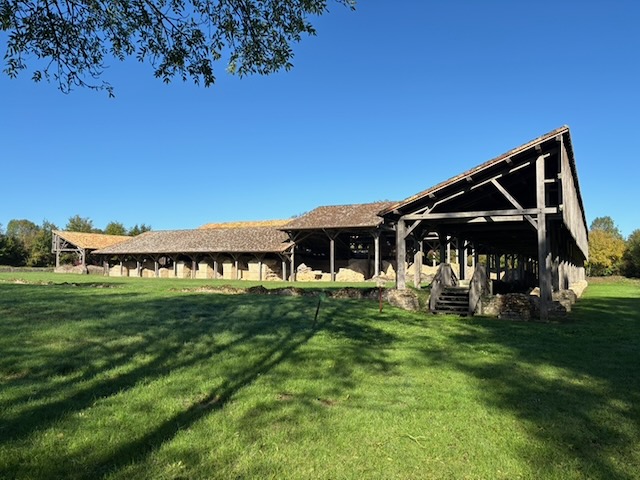
Sanxay baths complex
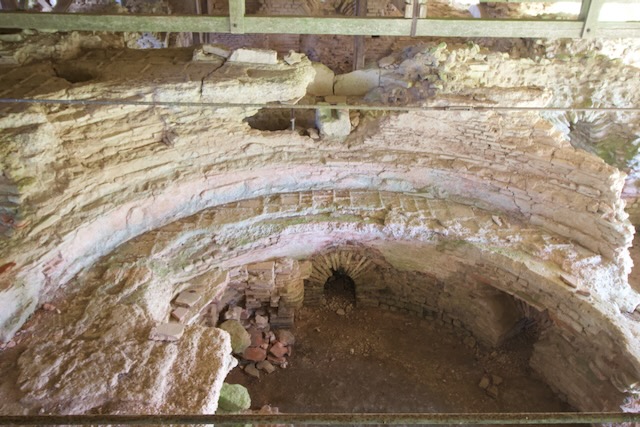
One of the hot pools at Sanxay
The Sanxay timeline
From coin finds, the site was probabaly occupied from the end of the 1st century BC. Around the middle of the 1st century AD, the octagonal temple, the original buildings at the sanctuary and the first permanent residences appeared. Apollo and Mercury are thought to have been the ‘resident’ gods.
Sanxay reached its apogee in the 2nd century with the double cella temple was built and the completion of the octagonal temple. The large bath complex was added at this time. Further expansion continued until the end of the 2nd century.
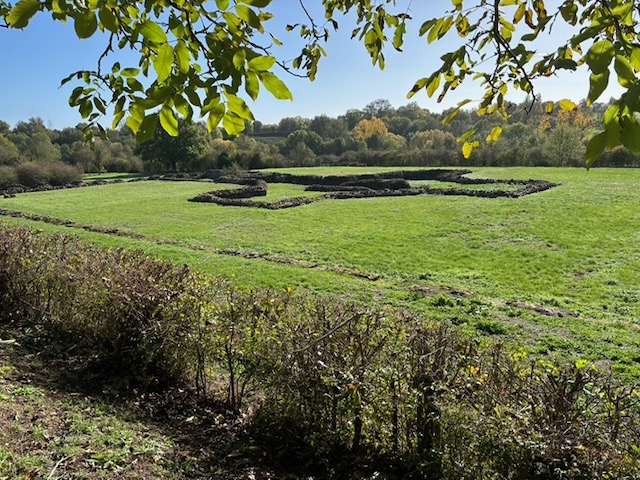
Sanxay sanctuary outline
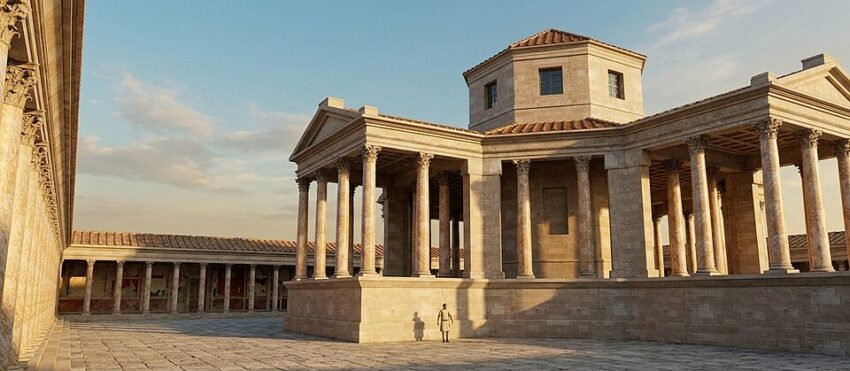
Artist’s impression of Roman temple at Sanxay. Franck devedjian, CC BY-SA 4.0, via Wikimedia Commons
After that, Sanxay seems to have declined, which may have been due to the crisis of the 3rd century or the rise of Christianity. Prominent Christians like Hilary of Poitiers and Martin of Tours in the 4th century may well have overshadowed the traditional Roman religion seeing it as paganism.
The visible remains of Sanxay are now accessible to the public, under the supervision of the Centre des Monuments Nationaux.
I thoroughly enjoyed clambering over the site and am delighted to highlight an ‘undiscovered’ and unusual Roman religious and health establishment.
Alison Morton is the author of Roma Nova thrillers – INCEPTIO, CARINA (novella), PERFIDITAS, SUCCESSIO, AURELIA, NEXUS (novella), INSURRECTIO and RETALIO, and ROMA NOVA EXTRA, a collection of short stories. JULIA PRIMA and EXSILIUM, set in the late 4th century, tell the story of Roma Nova’s foundation. Audiobooks are available for four of the series. Double Identity, Double Pursuit and Double Stakes form a new contemporary thriller series. A new collection of Roma Nova short stories, HEROICA, is now out.
Download ‘Welcome to Alison Morton’s Thriller Worlds’, a FREE eBook, as a thank you gift when you sign up to Alison’s monthly email update. As a result, you’ll be among the first to know about news and book progress before everybody else, and take part in giveaways.









Leave a Reply