What better than a good read over the Saturnalia/Christmas/Hanukkah period? And being slightly biased, I’d suggest a historical novel, so I’m banding together with some fellow writers to showcase a selection for you – all available at 99 cents/pence. Of course, I couldn’t resist putting INCEPTIO forward as my contribution!
Alternate history is the child of a mixed marriage – history and speculative fiction; my Roma Nova books have more history genes, though, with a strong thriller streak and some recessive romance genes thrown in for good measure. INCEPTIO, as the Latin name suggests, is the start of the series.
 We set off from modern day New York, but this isn’t time travel or fantasy.
Sixteen hundred years ago, the historical timeline shifted very slightly in a mountainous area north of Italy when in AD 395, a group of pagan Romans exiles facing persecution from the over zealous Christian emperor Theodosius founded a new ‘colonia’ – Roma Nova.

Photo courtesy of Britannia www.durolitum.co.uk
In the early centuries, daughters and sisters put on armour and hefted swords along with their fathers and brothers.
Grim times.
But fighting alongside their brothers and fathers to defend their homeland and way of life gave women status and equality. Roma Nova survived and prospered. But history had changed forever and Britain, Europe and even the US are not as they are in our timeline…
The original colonists’ tough descendants defend their small state today as fiercely as their ancestors did. Into this steps a lost heir who thinks she’s just another New York office worker but is threatened by a government enforcer with a grievance. Add to this a hot special forces Praetorian Guard on a mission. As the story unfurls, we see Roman virtus and technological genius as it could be in the modern era, a thrilling hunt, and a young woman coming into her own…
Read an excerpt: https://www.alison-morton.com/2013/02/24/inceptio-excerpt-i/
INCEPTIO is available from Amazon (universal link), Kobo, iBooks, B&N Nook (Paperback also available via Amazon or your local bookshop)
For more about the world of Roma Nova, why not read Claudia Dixit’s travel guide to Roma Nova?
If you prefer some history (and who doesn’t?), try the Roma Nova story.
Now, here are some further suggestions…
Kingdom of Rebels – by Derek Birks
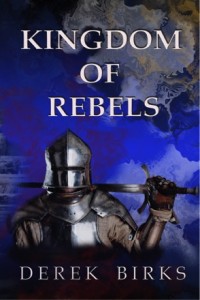 Fifteenth Century – the Wars of the Roses
When all hope is gone, only death lies in wait…
England in 1468 is a nervous kingdom. King Edward IV has fallen out with his chief ally during the Wars of the Roses, the powerful Earl of Warwick.
Ned Elder, a young lord whose sword helped to put Edward on the throne, has been forced out of England by Warwick.
Far away on the Scottish border, a beleaguered fort, Crag Tower, desperately awaits Ned’s return. Led by his fiery sister, Eleanor, the dwindling garrison is all that remains of his brave army of retainers. Unknown to all except the loyal knight, Ragwulf, Eleanor has Ned’s young son in her charge – a son who has never seen his father. But, as border clansmen batter the gates with fire, the castle seems certain to fall.
One by one Ned’s family and friends are caught up in Warwick’s web of treason. The fate of the Elders and those who serve them lies once more in the balance as all are drawn back to Yorkshire where they face old enemies once more. Eleanor can only hope that Ned will soon return. She must fight to keep that hope alive… and when Lady Eleanor fights, she takes no prisoners…
Read more: https://dodgingarrows.wordpress.com/2015/12/01/holiday-historical-fiction-blowout-presents-rebels-and-brothers-a-story-of-the-wars-of-the-roses/
Website: www.derekbirks.com
Buy from: Amazon UK Amazon.com
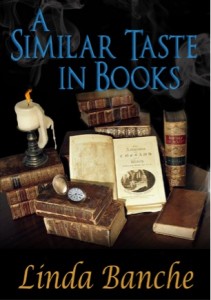 A Similar Taste in Books – by Linda Banche (Book 1 of ‘Love and the Library’)
Regency
Pride and Prejudice has always brought lovers together, even in the Regency. Justin has a deep, dark secret – he likes that most despised form of literature, the novel. His favorite novel is Pride and Prejudice, and, especially, Miss Elizabeth Bennet. Intelligent, lively, fiercely loyal Miss Elizabeth. How he would love to meet a lady like her.
Clara’s favorite novel is Pride and Prejudice and Mr. Fitzwilliam Darcy. Intelligent, steadfast and willing to admit when he is wrong. Can such a splendid man exist? And can she find him?
One day in the library, they both check out copies of their favorite book. When Justin bumps into Clara, the magic of their similar taste in books just might make their wishes come true.
A sweet, traditional Regency romantic comedy novella, but not a retelling of Pride and Prejudice.
Read more here: http://lindabanche.blogspot.com/2015/11/holiday-historical-fiction-blowout-day.html
Website: http://lindabanche.blogspot.com
Buy from Smashwords only with coupon code FF67C (not case sensitive)
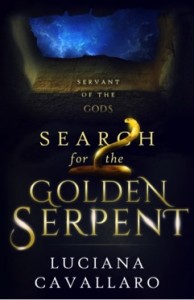 Search for the Golden Serpent – by Luciana Cavallaro (Servant of the Gods Book 1) 600 BCE Ancient Greece
Evan, an architect, has been having strange dreams. Then he received an unexpected phone call from an entrepreneur from Greece who wants Evan to restore his family’s home. He dismissed the caller and regarded the person as a crank. During a dream, he met the mysterious entrepreneur, Zeus, who catapulted him back in time, five hundred years before the birth of Christ. Evan, an unwilling participant finds himself entangled in an epic struggle between the gods and his life.
Read more: http://luccav.com/2015/12/01/hhfb/#more-2071
Website: http://www.luccav.com
Available from Amazon US Smashwords Kobo
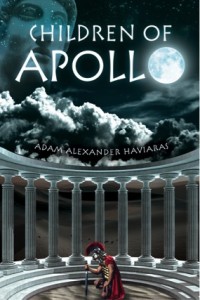 Children of Apollo – by Adam Alexander Haviaras (Eagles and Dragons – Book I) Roman Empire, AD 202
At the peak of Rome’s might a dragon is born among eagles, an heir to a line both blessed and cursed by the Gods for ages.
Lucius Metellus Anguis is a young warrior who is inspired by the deeds of his glorious ancestors and burdened by the knowledge that he must raise his family name from the ashes of the past. Having achieved a measure of success in the emperor’s legions in North Africa, Lucius is recalled to Rome where he finds himself surrounded by enemies, cast into the deadly arena of Roman politics.
Amid growing fears of treachery, Lucius meets a young Athenian woman who fills his darkening world with new-found hope. Their love grows, as does their belief that the Gods have planned their meeting, but when an ancient oracle of Apollo utters a terrifying prophecy regarding his future, Lucius’ world is once more thrown into chaos. Ultimately, he must choose sides in a war that threatens to destroy his family, his faith and all that he has worked for.
Read Adam’s post: http://eaglesanddragonspublishing.com/blog-writing-the-past-2/
Links here to Amazon, iBooks, and Kobo
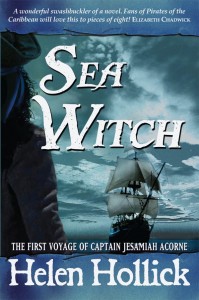 Sea Witch – by Helen Hollick (Voyage One) The Golden Age of Piracy – 1716
Escaping the bullying of his elder half brother, from the age of fifteen Jesamiah Acorne has been a pirate with only two loves – his ship and his freedom. But his life is to change when he and his crewmates unsuccessfully attack a merchant ship off the coast of South Africa.
He is to meet Tiola Oldstagh an insignificant girl, or so he assumes – until she rescues him from a vicious attack, and almost certain death, by pirate hunters. And then he discovers what she really is; a healer, a midwife – and a white witch. Her name, an anagram of “all that is good.” Tiola and Jesamiah become lovers, but the wealthy Stefan van Overstratten, a Cape Town Dutchman, also wants Tiola as his wife and Jesamiah’s jealous brother, Phillipe Mereno, is determined to seek revenge for resentments of the past, a stolen ship and the insult of being cuckolded in his own home.
When the call of the sea and an opportunity to commandeer a beautiful ship – the Sea Witch – is put in Jesamiah’s path he must make a choice between his life as a pirate or his love for Tiola. He wants both, but Mereno and van Overstratten want him dead.
In trouble, imprisoned in the darkness and stench that is the lowest part of his brother’s ship, can Tiola with her gift of Craft, and the aid of his loyal crew, save him? Using all her skills Tiola must conjure up a wind to rescue her lover, but first she must brave the darkness of the ocean depths and confront the supernatural being, Tethys, the Spirit of the Sea, an elemental who will stop at nothing to claim Jesamiah Acorne’s soul and bones as a trophy.
Read Helen’s post: http://ofhistoryandkings.blogspot.co.uk/2015/11/holiday-histories.html
Website: www.ofhistoryandkings.blogspot.com
Buy from Amazon (universal link)
Helen’s Amazon Author link
Men of the Cross – by Charlene Newcomb (Battle Scars I) Medieval – 12th century
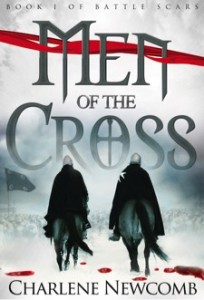 War, political intrigue and passion… heroes… friends and lovers… and the seeds for a new Robin Hood legend await you…
Two young knights’ journey to war at Richard the Lionheart’s side sweeps them from England to the Holy Land in this historical adventure set against the backdrop of the Third Crusade.
Henry de Grey leaves Southampton in high spirits, strong in his faith and passionate about the mission to take Jerusalem back from Saladin’s army. Stephan l’Aigle’s prowess on the battlefield is well known, as are his exploits in the arms of other men. He prizes duty, honour and loyalty to his king above all else. But God and the Church? Stephan has little use for either.
Henry’s convictions are challenged by loss and the harsh realities of bloody battles, unforgiving marches, and the politics of the day. Man against man. Man against the elements. Man against his own heart. Survival will depend on more than a strong sword arm.
Find out more: http://charlenenewcomb.com/2015/11/30/holiday-historical-fiction-blowout
Buy from Amazon (universal link)
Website: http://charlenenewcomb.com
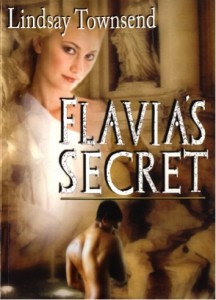 Flavia’s Secret – by Lindsay Townsend Roman Britain, 206 AD
Spirited young scribe Flavia hopes for freedom. She and her fellow slaves in Aquae Sulis (modern Bath) have served the Lady Valeria for many years, but their mistress’ death brings a threat to Flavia’s dream: her new master Marcus Brucetus, a charismatic, widowed officer toughened in the forests of Germania. Flavia finds him overwhelmingly attractive but she is aware of the danger. To save her life and those of her ‘family’ she has forged a note from her mistress. If her deception is discovered, all the slaves may die.
For his part torn between attraction and respect, Marcus will not force himself on Flavia. Flavia by now knows of his grief over the deaths of his wife Drusilla and child. But how can she match up to the serene, flame-haired Drusilla?
As the wild mid-winter festival of Saturnalia approaches, many lives will be changed forever.
Website: www.lindsaytownsend.co.uk
On sale at Bookstrand

Alison Morton is the author of Roma Nova thrillers, INCEPTIO, PERFIDITAS and SUCCESSIO. The fourth book, AURELIA, and the Roma Nova box set are now out.
Find out Roma Nova news and book progress before everybody else, and take part in giveaways by signing up for her free monthly email newsletter.
If you enjoyed this post, do share it with your friends!
Like this:
Like Loading...